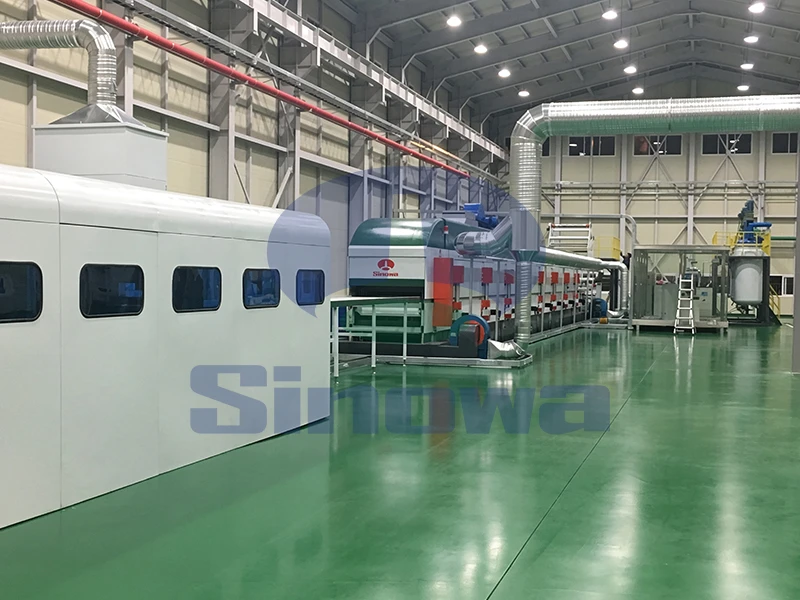
A phenolic panel production line is a set of integrated industrial equipment designed for continuous manufacturing of phenolic resin composite panels. It relies on the curing reaction between phenolic resin and reinforcing substrates under controlled temperature and pressure to form finished panels with stable physical and chemical performance. The whole line converts raw materials into standard finished panels through sequential feeding, forming, hot pressing, post-processing and inspection. Its core working principle is to activate the cross-linking reaction of phenolic resin under specific thermal and mechanical conditions, so that resin fully infiltrates the reinforcing materials and forms a compact, uniform solid composite structure without internal gaps or uneven resin distribution.
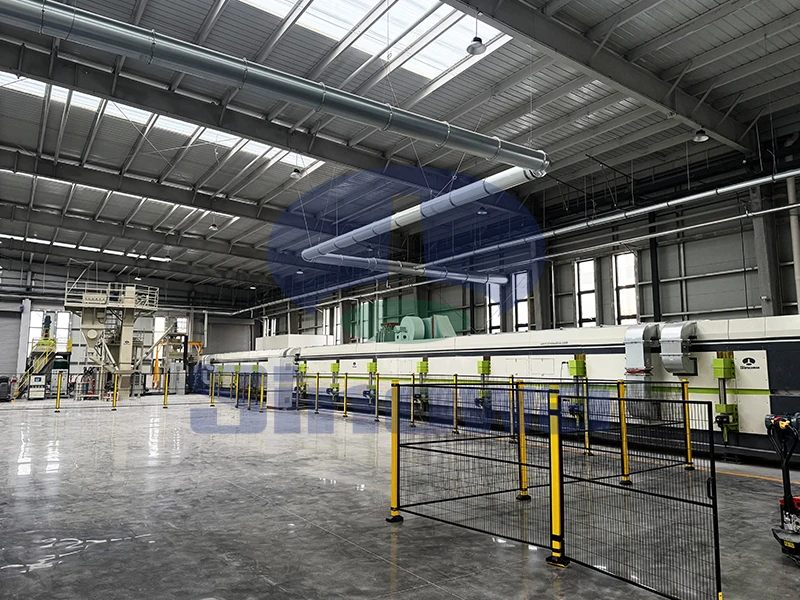
Main Components of the Whole Machine
The phenolic board production line consists of multiple functional units connected in sequence to realize automated continuous operation. Each unit undertakes an independent processing task and matches the running speed of adjacent sections to avoid production stagnation or material damage.
Raw material feeding unit: used for unreeling, conveying and preliminary alignment of reinforcing base materials and surface facing materials
Resin impregnation unit: completes quantitative resin coating, infiltration and excess resin scraping of substrate materials
Preheating and leveling unit: pre-adjusts material temperature to stabilize resin fluidity before pressing
Continuous hot pressing unit: provides constant temperature and pressure environment for resin curing and panel forming
Cooling and setting unit: gradually reduces the temperature of freshly pressed panels to lock structural shape
Cutting and trimming unit: cuts continuous panel strips into specified lengths and trims irregular edges
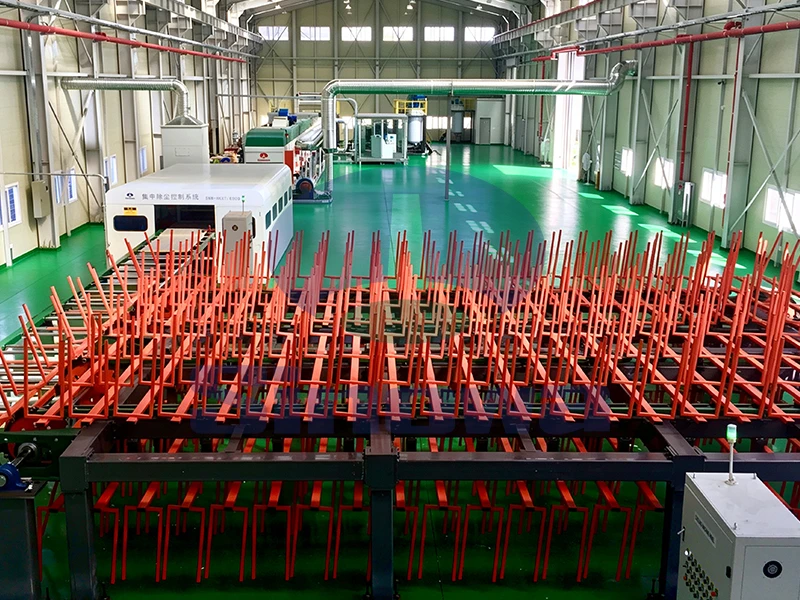
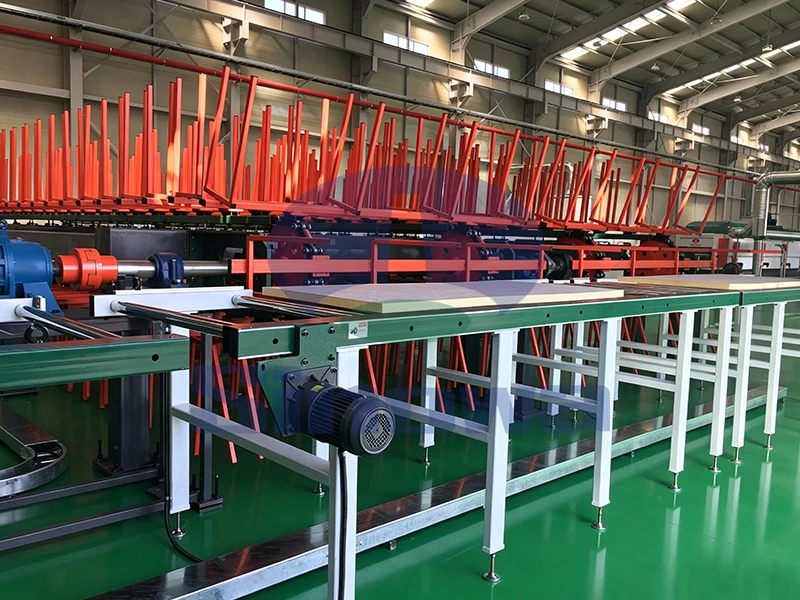
Stacking and conveying unit: transports finished panels and arranges them neatly for temporary storage
Dust collection and waste recovery unit: collects trimming scraps and floating dust generated in processing
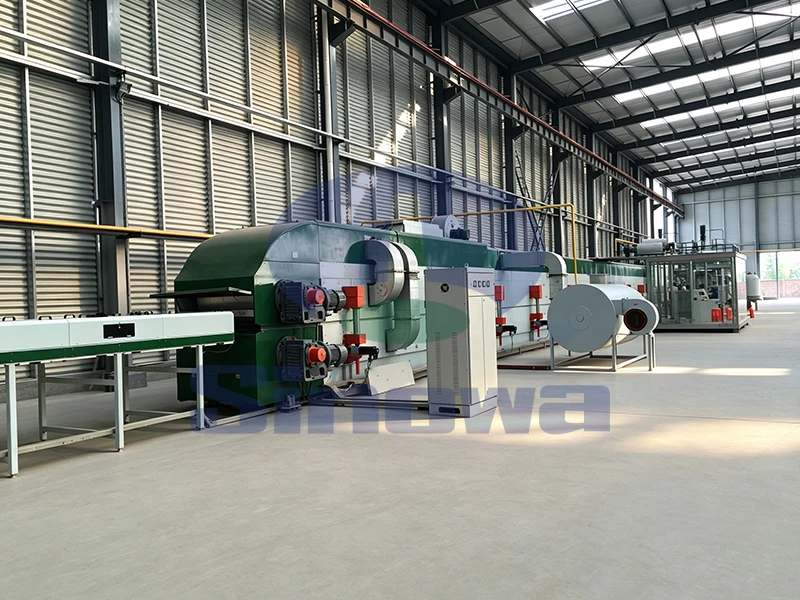
Production Process Flow
The production follows a fixed sequential workflow, and each step affects the final quality of phenolic panels. Parameters such as resin impregnation amount, pressing temperature, holding time and conveying speed can be adjusted according to target product requirements.
Raw material preparation: reinforcing fiber substrates and surface decorative materials are loaded onto feeding racks and inspected for surface defects
Material unwinding and guiding: base materials are pulled forward at a constant speed through guide rollers to keep flat and wrinkle-free
Resin impregnation: substrates pass through the resin tank to absorb phenolic resin, and scraper devices control resin loading capacity
Preheating treatment: impregnated materials enter the preheating section to remove partial volatile components and homogenize resin
Hot press forming: materials enter the hot pressing zone, where cross-linking curing occurs under combined heat and pressure to form a dense panel blank
Slow cooling: hot panels are transferred to the cooling section to avoid rapid temperature change causing warpage or internal stress
Length cutting and edge trimming: continuous panels are cut to required dimensions, and rough edges are trimmed smoothly
Surface cleaning: residual resin burrs and dust on panel surfaces are removed
Online inspection: preliminary appearance and dimensional check are carried out
Finished product stacking: qualified panels are stacked for subsequent packaging and delivery
Available Panel Types and Application Scenarios
This insulation board production line can manufacture multiple categories of phenolic composite panels by switching surface facings, adjusting substrate combinations and modifying resin formula. Different panel variants have different structural properties to fit differentiated usage environments.
Thin decorative phenolic panels: lightweight panels with decorative surface layers, featuring smooth and easy-to-clean surfaces
Thick structural phenolic panels: high-density reinforced panels with enhanced mechanical strength and load-bearing capacity
Core phenolic insulation panels: low-density porous composite panels focusing on thermal insulation performance
Fire-resistant phenolic cladding panels: modified formula panels with outstanding fire retardant performance
Moisture-proof phenolic substrate panels: specially treated panels stable in high-humidity surroundings
These panels are widely used in many fields.
Interior partition and wall cladding for commercial buildings
Ventilation duct lining and air conditioning insulation structures
Cleanroom wall and ceiling panels for dust-controlled spaces
Kitchen and toilet waterproof decorative substrates
Industrial workshop insulation and protective lining boards
Prefabricated temporary building wall and roof components
Equipment Advantages and Characteristics
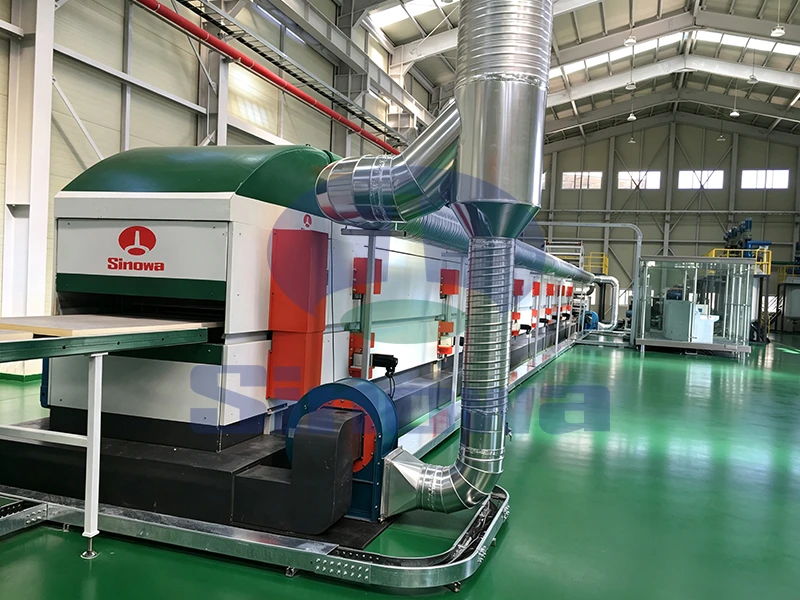
The phenolic panel production line adopts continuous forming design instead of intermittent batch pressing, which improves production continuity and consistency. Modular layout allows flexible adjustment of production configuration according to product specifications.
Stable continuous forming reduces batch quality difference among finished panels
Adjustable impregnation system realizes precise resin dosage control and reduces raw material waste
Closed hot pressing chamber ensures uniform temperature distribution across the whole panel surface
Automatic speed linkage between each section reduces manual intervention and operation error
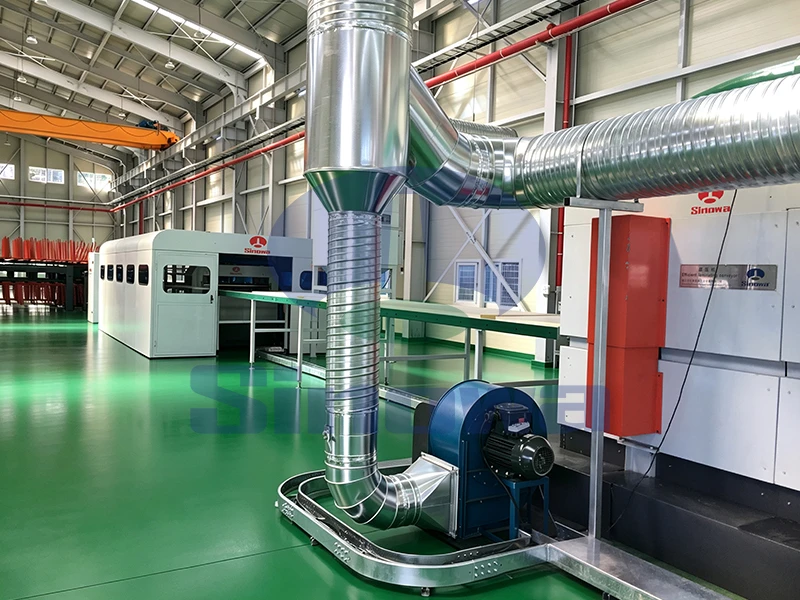
Low-noise transmission structure and centralized dust collection improve on-site working conditions
Wide adjustment range of process parameters, supporting production of panels with different thicknesses and densities
Compact overall layout, saving occupied workshop space while facilitating daily maintenance
Good expandability, compatible with later addition of surface embossing or film covering modules
Control System and Quality Control
The whole insulation panel production line is equipped with a centralized automatic control system. Operators set process parameters on the human-machine interface, and the system synchronously regulates conveying speed, heating power, pressing pressure and impregnation flow. Real-time running data of each unit is displayed on the interface, and abnormal conditions trigger automatic alarm prompts.
Quality control runs through the whole production process. Before forming, resin viscosity and substrate flatness are checked regularly. During hot pressing, temperature and pressure curves are monitored continuously to guarantee sufficient curing reaction. After cutting, panel thickness, flatness, dimension accuracy and surface appearance are sampled and inspected. Unqualified semi-finished products can be separated in time to prevent defective products from entering the stacking link. Historical production parameter records can be stored for traceability of quality problems.
Installation, Matching and After-sales Service
Before installation, the PF panel manufacturing equipment provider supplies layout guidance and basic site requirement instructions, including workshop foundation, power supply configuration and ventilation layout. Professional technicians complete equipment assembly, pipeline connection, calibration and linkage debugging after the equipment arrives at the site. Trial production runs are arranged after debugging to verify the coordination of all units and help operators master basic parameter adjustment operations.
Supporting auxiliary devices can be matched according to actual production needs, including raw material storage racks, waste crushing equipment and finished product packaging tools. The after-sales service covers remote technical consultation for daily operation faults, regular guidance of routine maintenance, and on-site support for complex mechanical or electrical failures. Training for on-site operators includes equipment operation, parameter adjustment, daily maintenance and common fault judgment, helping users maintain stable long-term production of phenolic panels.
Keyword: Phenolic Panel Production Line, Phenolic Board Production Line, PF Panel Production Line, PF Board Production Line