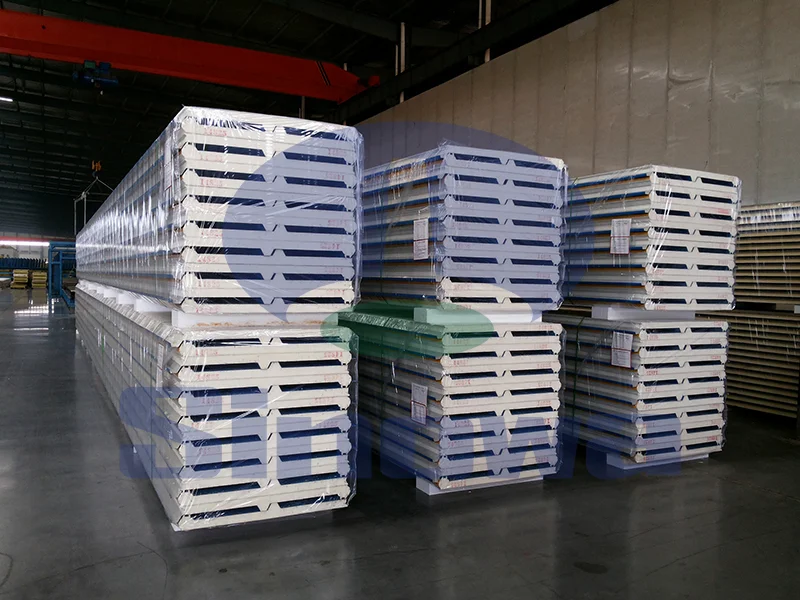
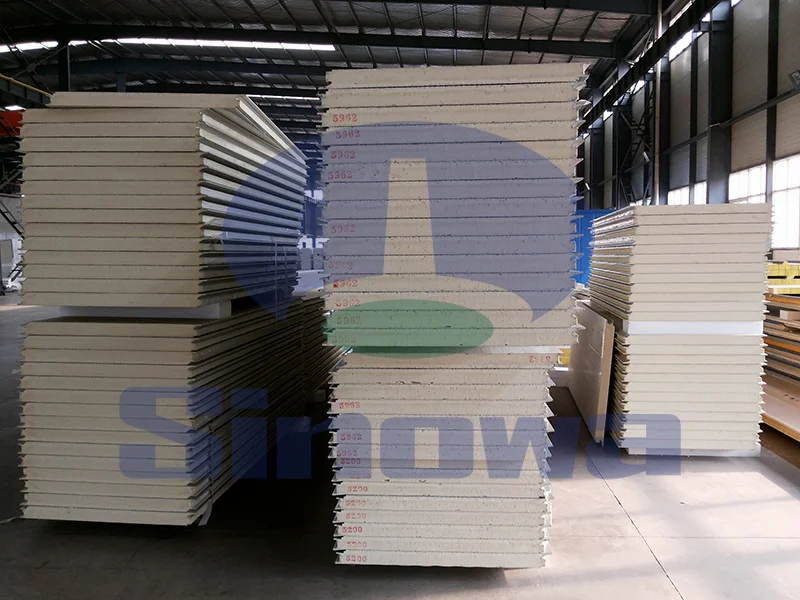
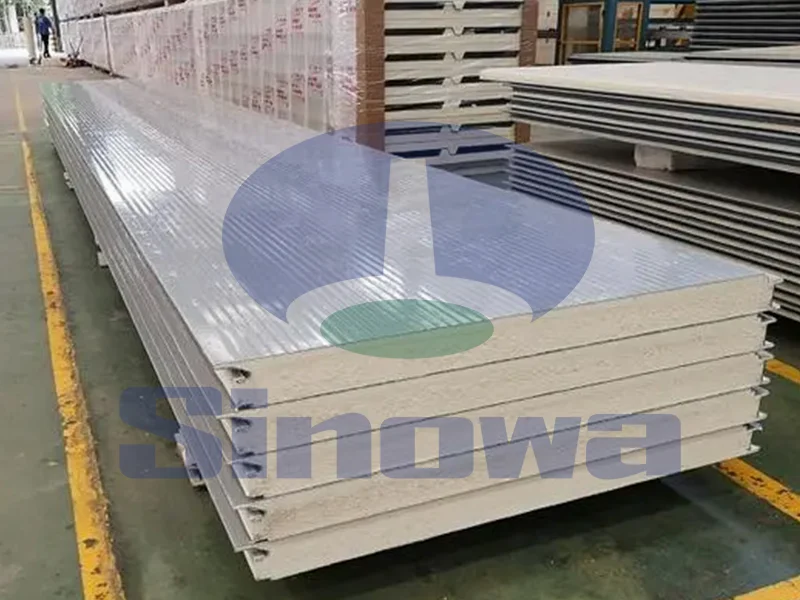
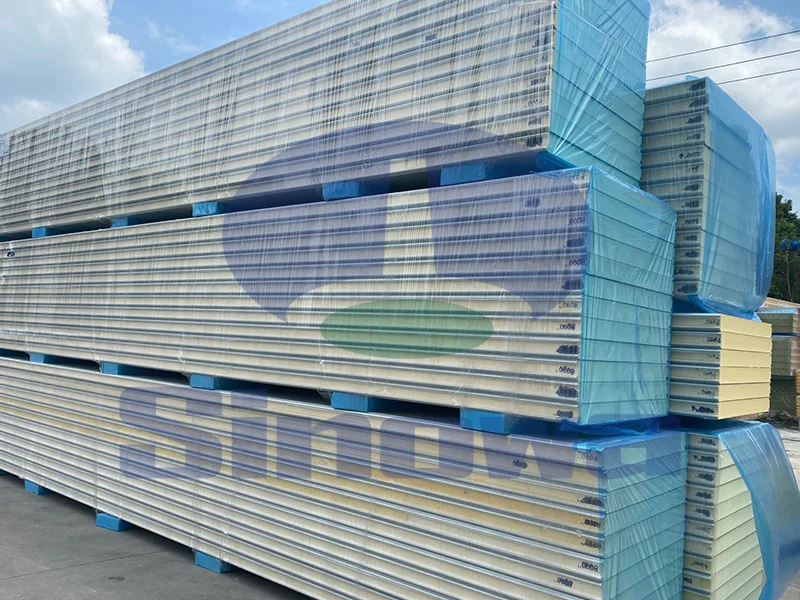
The thermal insulation sandwich panel line is a specialized equipment system used for producing multi-layer composite building panels. It uses automated processes to composite surface materials with insulation core materials, producing building materials with excellent insulation performance. This type of production line represents the technological integration in the field of modern building materials manufacturing, integrating multidisciplinary achievements such as mechanical automation, materials science, and thermal technology.
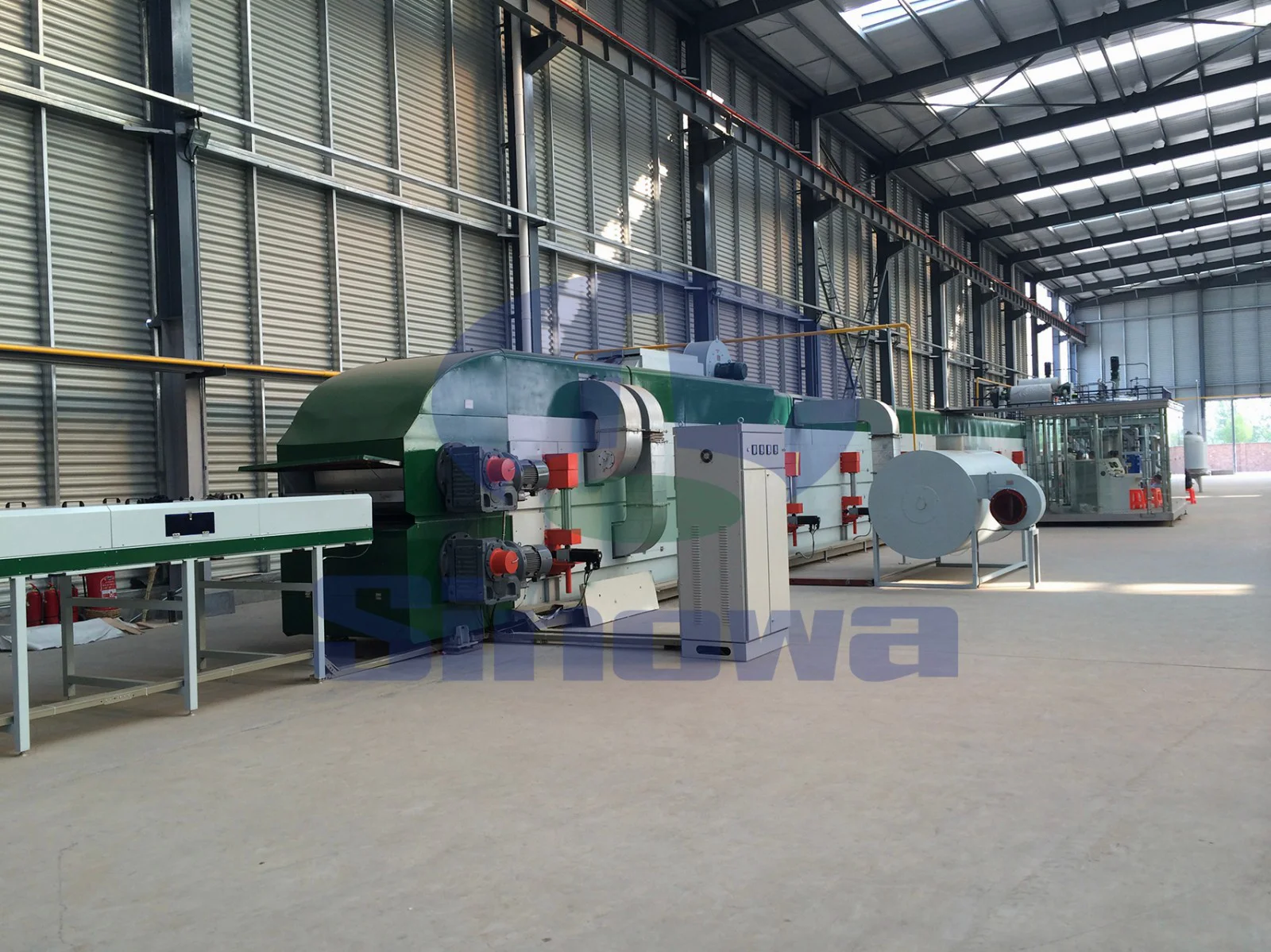
In the field of construction industry, various technological routes have been developed for the production line of insulation sandwich panels, which can produce composite panels with various core materials such as phenolic (PF), polyurethane (PU), rock wool, etc. Modern advanced thermal insulation sandwich panel assembly lines usually have modular design features, which can flexibly switch and produce different types of sandwich panels to meet the needs of multiple application fields such as building exterior wall insulation, cold storage construction, and clean workshops. The continuous production line equipment for phenolic insulation board can produce boards with a thickness of 18-50mm and a width of 1200mm. The length can be customized according to customer needs, and the daily production capacity can reach 3000-5000 square meters.
With the improvement of fire protection requirements, rock wool and glass wool sandwich panel equipment has gradually developed in the production line of thermal insulation sandwich panel. Now, new fire insulation material thermal insulation sandwich panel lines such as phenolic foam have become the mainstream of the market. This evolution process reflects the continuous improvement of the industry's requirements for material performance and safety production. The core technology of the thermal insulation sandwich panel manufacturing line is reflected in its material formula, composite process, and automation control system, which together determine the performance quality and production efficiency of the final product.
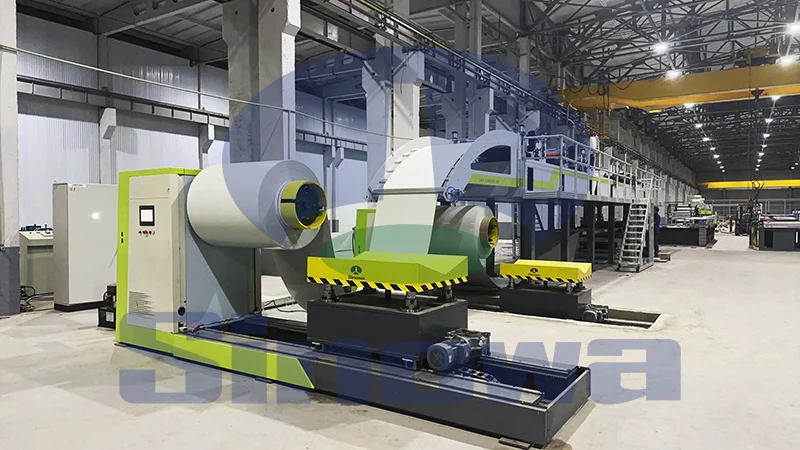
Material composite technology is the core of the thermal insulation sandwich panel production line. Modern advanced continuous insulation sandwich panel lines use high-pressure injection technology to evenly inject core materials between two layers of materials. Taking the polyurethane sandwich panel production line as an example, its core foaming system achieves rapid foaming and curing under temperature conditions of 60-80 ℃ by precisely controlling the mixing ratio of polyols, isocyanates, and foaming agents (usually with an error of no more than ± 1.5%). The production line of phenolic resin insulation board adopts the continuous wrapping process of polymer modified mortar, which makes the product have A1 level fire resistance performance (fire resistance limit exceeding 3 hours), and the thermal conductivity can be as low as 0.023-0.06W/m · K, with a closed cell rate of over 95%. It is worth noting that Sinowa's dual track laminating technology ensures high bonding strength (>0.5MPa) between the core material and the surface layer by precisely controlling the temperature and pressure of the track board (usually 0.5-2MPa), while keeping the thickness tolerance of the board within ± 0.3mm.
The automation control system constitutes the "brain" of modern insulation sandwich panel machines. The application of bus control technology enables the coordinated operation of various modules in the entire insulated sandwich panel production line, including the unwinding system, reinforcement unit, preheating equipment, foaming system, laminating machine, and cutting system. The latest production lines are generally equipped with remote interactive communication functions, which can monitor all process parameters through the central control room, achieve remote fault diagnosis and parameter adjustment. Sinowa's polyurethane rock wool sandwich panel production line adopts a unique servo lifting mechanism to replace traditional hydraulic systems, making the adjustment of panel thickness more precise and convenient, while avoiding common leakage and maintenance problems in hydraulic systems. Monitoring data shows that this design can increase the response speed of thickness adjustment by 40% and reduce energy consumption by 30%.
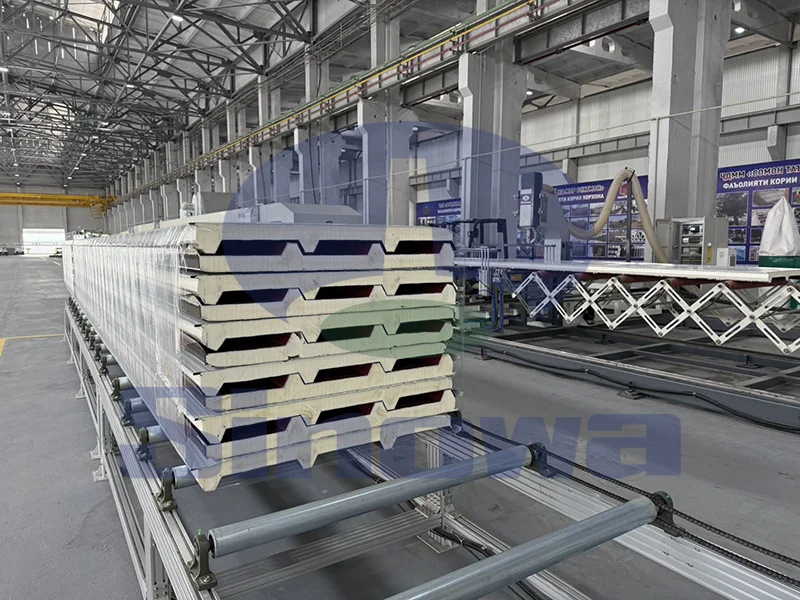
In terms of energy-saving and environmental protection technology, significant progress has been made in the production line of insulation sandwich panels. The advanced pentane foaming system gradually replaces the traditional Freon foaming process, making the production process more environmentally friendly. The application of the heat recovery system in the thermal insulation sandwich panel machinery can increase the utilization rate of waste heat to over 65%. Sinowa also adopts a fully enclosed internal insulation design, which enables the heating system to reach the process temperature within 1 hour after starting at room temperature above 5 ℃, and the overall energy consumption is only 40% of similar traditional equipment. The environmental protection treatment system ensures that volatile organic compounds (VOCs) emissions meet the latest national standards, and the concentration of non methane total hydrocarbons emissions is controlled below 60mg/m ³.
A complete thermal insulation board production line is a system integration of multiple functional modules, each of which undertakes specific process functions. Only by working together can the final product quality be guaranteed to be stable. Understanding the composition and operating principles of these devices is of great significance for the selection, operation, and maintenance of production lines.
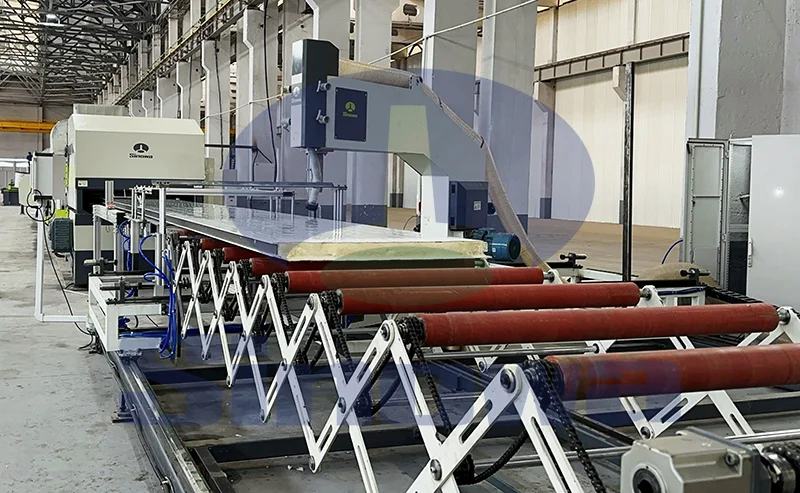
The main equipment modules of the thermal insulation sandwich panel plant usually include the following key parts: the unwinding and leveling system is responsible for unfolding and leveling the rolled surface material, which is the first process to ensure the flatness of the plate surface; The reinforcement unit uses a series of roll forming processes to form reinforcing ribs on the surface material, improving the rigidity and strength of the finished sheet metal; The preheating system heats the surface material to a suitable temperature (usually 40-60 ℃) to promote the bonding between the core material and the surface layer. Core material processing is the core link of the production line. The polyurethane production line is equipped with a high-pressure foaming machine, the phenolic production line is equipped with a resin mixing and infusion system, and the rock wool production line requires precise cutting and conveying equipment. The laminating machine applies uniform pressure (0.3-0.8MPa) to the composite board through a dual track system and controls the curing temperature (between 40-90 ℃ depending on the material) to ensure that the core material is fully foamed and firmly bonded to the surface layer. The final cutting and packaging system includes flying saw trimming, fixed length cutting, automatic stacking and other equipment to achieve automatic packaging of products.
Taking the continuous production line of phenolic insulation board as an example, its typical production process is as follows: firstly, the upper and lower layer surface materials (color steel plate, aluminum foil or non-woven fabric, etc.) are led out from the unwinding system, and after dust removal and preheating, they enter the laminating machine; At the same time, raw materials such as phenolic resin, curing agent, and foaming agent are accurately measured and uniformly mixed in a high-pressure mixing head, and sprayed evenly on the surface material through a reciprocating nozzle; Subsequently, the material enters between the double tracks of the laminating machine and is foamed and solidified under heating and pressure conditions; The formed sheet is trimmed with a flying saw, and the width tolerance is precisely controlled within ± 1mm; Finally, the cutting machine is used to track and cut according to the set length (usually 2-12m), and after inspection, it is packaged and stored. The entire process has been highly automated, with only 3-5 operators required for a standard production line.
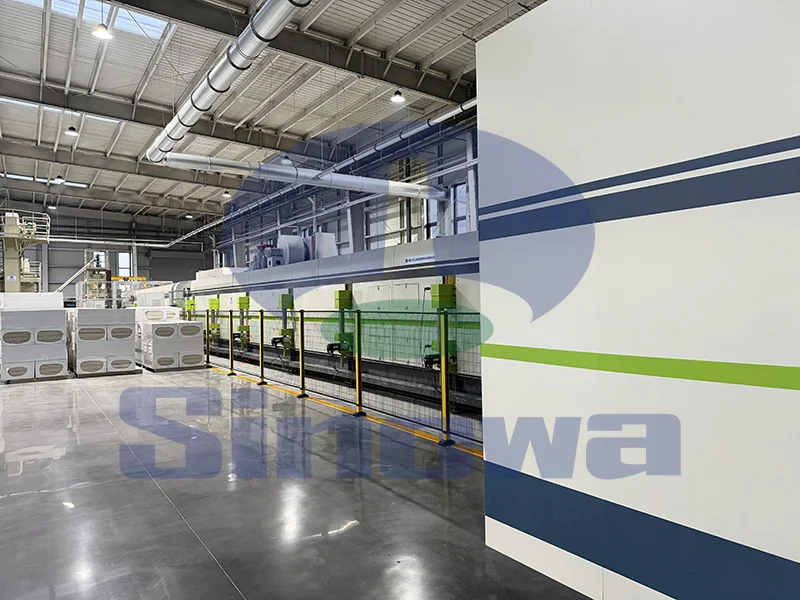
Modular design is a prominent feature of modern insulated sandwich panel lines. Sinowa adopts a "building block" design concept, with standardized interfaces for each functional module that can be flexibly configured according to customer needs. By replacing different molds and adjusting process parameters, a production line can produce multiple types of products: roof sandwich panels (usually with drainage channel design), wall sandwich panels (emphasizing aesthetics and sealing), cold storage panels (emphasizing insulation performance and moisture resistance), and purification panels (emphasizing surface flatness and antibacterial properties). Modular design also significantly shortens the equipment delivery cycle, with some standard modules able to be shipped quickly within 72 hours and on-site assembly and debugging time reduced by more than 30%.
The insulation sandwich panel production line can meet the special needs of different application scenarios in the construction industry due to its excellent production flexibility and product diversity. From the combination of raw materials to the performance characteristics of the final product, the configurability of the production line provides a vast space for innovation for architects and engineers.
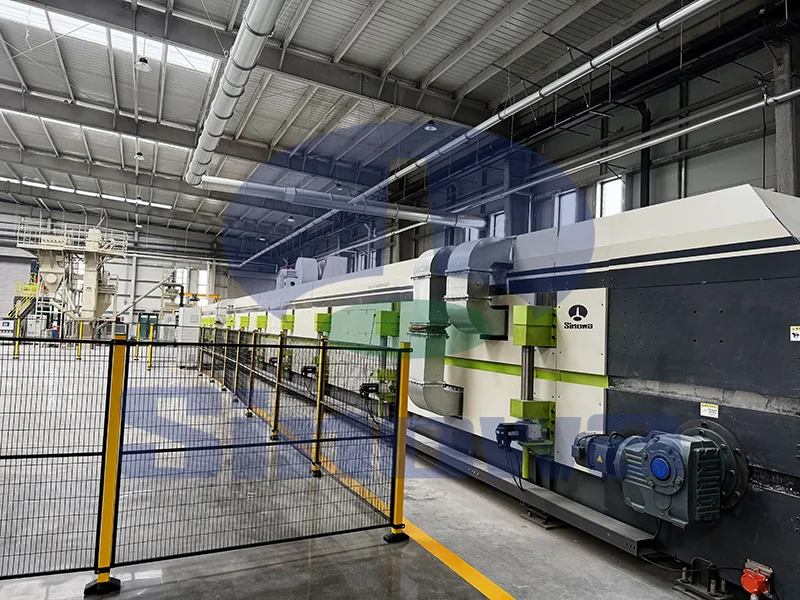
In the context of global emphasis on energy conservation, environmental protection and efficient construction, thermal insulation sandwich panels have emerged as a pivotal composite material widely applied in various industries, ranging from construction to cold chain logistics. The thermal insulation sandwich panel production line, as the core equipment for manufacturing such high-performance panels, integrates multiple technological processes to realize large-scale, standardized and high-quality production. Its rational structure, excellent performance, diverse types and extensive applications jointly promote the popularization and development of thermal insulation sandwich panels, meeting the growing demand for energy-efficient and durable materials in modern society. Understanding the detailed characteristics of these production lines is essential for optimizing manufacturing processes, selecting suitable equipment and expanding application scenarios, which further drives the upgrading of related industries.
The structure of a thermal insulation sandwich panel production line is a sophisticated integration of multiple functional systems, each link cooperating closely to ensure the smooth operation of the entire production process and the stability of product quality. Generally, the production line consists of feeding systems, forming systems, bonding systems, curing systems, cutting systems, stacking systems and control systems, with each part undertaking specific production tasks. The feeding system is responsible for supplying raw materials stably, including surface materials and core insulation materials. For surface materials such as metal coils, the feeding system is equipped with uncoilers and leveling devices to ensure that the surface materials enter the next process in a flat and tension-stable state, avoiding wrinkles or deformation that may affect the final product appearance and structural strength. For core materials, whether granular, sheet or liquid, the feeding system is designed with corresponding conveying mechanisms to achieve accurate and uniform feeding, laying a foundation for the consistency of the panel’s insulation performance.
The forming system is a key part of determining the shape and structural parameters of the sandwich panel. For metal surface materials, roll forming machines are usually adopted to process the coils into preset shapes according to design requirements, such as corrugated, ribbed or flat structures. These structures not only enhance the mechanical strength of the surface layer but also improve the bonding effect with the core material. The forming process is controlled by precise mechanical transmission and adjustment mechanisms to ensure that the dimensional accuracy of the surface layer meets the standards, with small errors in thickness, width and shape. For the core material, if it is a foam-type material such as polyurethane or polystyrene, the forming system will complete the foaming process in the gap between the two surface layers, and the foaming agent will expand and solidify to form a dense and uniform insulation core. If the core material is a sheet-type material such as rock wool or glass wool, the forming system will realize the close fit between the core material and the surface layer through pressing and positioning mechanisms.
The bonding system is crucial to ensuring the structural integrity and service life of the thermal insulation sandwich panel, as it is responsible for firmly bonding the surface layer and the core material into an integrated structure. This system mainly includes adhesive storage, conveying and coating devices, and the selection of adhesive and the control of coating amount are strictly required. The adhesive must have strong bonding strength, good compatibility with both surface and core materials, and excellent resistance to high and low temperatures, humidity and aging, to avoid delamination between layers during long-term use. The coating device adopts uniform coating technology, such as roller coating or spray coating, to ensure that the adhesive is evenly distributed on the surface of the core material or the inner surface of the surface layer, with no missing coating or excessive coating. Excessive adhesive will increase material waste and may affect the foaming effect of the core material, while missing coating will lead to insufficient bonding strength and potential safety hazards.
The curing system is designed to promote the full bonding and solidification of the adhesive and the core material, ensuring that the sandwich panel achieves the required structural strength and performance. The curing method varies according to the type of adhesive and core material: for foam core materials, thermal curing is usually adopted, and the panels are sent to a curing oven or a continuous curing tunnel for heating treatment. The temperature, humidity and curing time are precisely controlled to ensure that the foam core material is fully expanded and solidified, and the adhesive is completely cured to form a stable bond. For sheet core materials bonded with cold-setting adhesives, the curing system may adopt room-temperature curing or low-temperature heating curing, depending on the adhesive’s curing characteristics. The curing process is a key link affecting the production efficiency and product quality; improper curing parameters may lead to insufficient bonding strength, deformation of the panel or prolonged production cycle.
The cutting system is responsible for cutting the continuously produced sandwich panels into specified lengths according to customer requirements, with high cutting accuracy and smooth cutting surfaces. The cutting equipment is usually equipped with high-speed saw blades or cutting knives, and is linked with the control system to realize automatic cutting, avoiding manual operation errors. At the same time, the cutting system is equipped with dust removal and debris collection devices to reduce the impact of cutting waste on the production environment and product quality. The stacking system completes the automatic stacking of the cut sandwich panels, adopting mechanical arms or conveying belts to stack the panels neatly according to specifications, which is convenient for storage and transportation. The stacking process is controlled by a positioning system to avoid collision or damage to the panel surface, ensuring the integrity of the finished product.
The control system is the "brain" of the entire thermal insulation sandwich panel production line, integrating automatic control, parameter adjustment and fault alarm functions. Most modern production lines adopt PLC (Programmable Logic Controller) control systems, which can realize centralized control of each functional system, set and adjust production parameters such as feeding speed, forming pressure, adhesive coating amount, curing temperature and cutting length according to production needs. The control system is equipped with a human-machine interface, which is convenient for operators to monitor the production status in real time, view production data and handle faults in a timely manner. Some advanced production lines also integrate intelligent technologies such as Internet of Things and data analysis, which can realize remote monitoring, production data statistics and process optimization, further improving production efficiency and product quality stability.
The performance of a thermal insulation sandwich panel production line directly determines the quality of the finished panels and the efficiency of the production process, and its core performance indicators mainly include production efficiency, product quality stability, process adaptability, energy conservation and environmental protection, and operational reliability. Production efficiency refers to the output of sandwich panels that the production line can complete per unit time, which is affected by factors such as the speed of each process, the degree of automation and the coordination between systems. Modern high-efficiency production lines can achieve continuous production, with a daily output of thousands of square meters, which is significantly higher than traditional manual or semi-automatic production methods, meeting the demand for large-scale construction projects.
Product quality stability is one of the most important performance indicators of the production line. It requires that the finished sandwich panels produced have consistent dimensional accuracy, bonding strength, insulation performance and surface quality, with small batch-to-batch errors. This is ensured by the precise control of each system of the production line: the feeding system ensures the stability of raw material supply, the forming system ensures the accuracy of the panel shape, the bonding system ensures the uniformity of the adhesive coating and the firmness of bonding, and the curing system ensures the full curing of the panel. At the same time, the production line is usually equipped with online detection devices to detect the thickness, flatness, bonding strength and other indicators of the panels in real time, and automatically remove unqualified products, further ensuring the stability of product quality.
Process adaptability refers to the ability of the production line to produce different types, specifications and performance of thermal insulation sandwich panels by adjusting process parameters and replacing related components. With the diversification of market demand, the production line needs to have strong flexibility to meet the needs of different application scenarios. For example, by replacing the roll forming die, the production line can produce surface layers of different shapes; by adjusting the feeding system and curing parameters, it can produce panels with different core materials (such as polyurethane, polystyrene, rock wool, glass wool) and different thicknesses; by changing the adhesive type and coating process, it can adjust the bonding performance and aging resistance of the panels. Good process adaptability enables the production line to expand its product range, improve market competitiveness and reduce the cost of equipment replacement.
Energy conservation and environmental protection are important performance requirements of modern production lines, in line with the global concept of green development. The energy-saving performance of the production line is mainly reflected in the rational use of energy, such as adopting energy-saving motors, optimizing the curing process to reduce energy consumption, and recycling waste heat generated during production. For example, some production lines use heat recovery systems to collect the waste heat of the curing oven and reuse it for heating or preheating raw materials, reducing energy waste. Environmental protection performance is reflected in the treatment of waste and emissions during production: the dust generated during the cutting process is collected and treated by dust removal devices to avoid air pollution; the waste adhesive and waste core materials are recycled or disposed of in accordance with environmental protection standards to reduce the impact on the environment; the production line is designed with sealed structures to reduce noise pollution and the emission of harmful gases.
Operational reliability refers to the ability of the production line to operate stably for a long time without frequent failures, which is related to the service life of the equipment and the continuity of production. This is guaranteed by the high-quality components, reasonable structural design and strict quality control of the production line. The key components of the production line, such as motors, bearings, saw blades and conveyor belts, are selected from high-reliability products to ensure stable operation; the structural design adopts modular design, which is convenient for maintenance and replacement of components; the production line is equipped with fault alarm and protection devices, which can promptly detect and handle faults, avoid equipment damage and production interruption, and reduce maintenance costs and production losses.
Thermal insulation sandwich panel production lines can be divided into different types according to various classification standards, such as the type of core material, the type of surface material, the degree of automation and the production scale, each type having its own characteristics and applicable scenarios. According to the type of core material, the production line can be divided into foam core sandwich panel production lines and fiber core sandwich panel production lines. Foam core sandwich panel production lines are mainly used to produce panels with foam materials as the core, such as polyurethane (PU) sandwich panels, expanded polystyrene (EPS) sandwich panels and polyisocyanurate (PIR) sandwich panels. These production lines are equipped with special foaming devices to complete the mixing, foaming and solidification of foam materials, and have strict control over foaming parameters to ensure the density, uniformity and insulation performance of the foam core. Among them, PU sandwich panel production lines have the characteristics of fast foaming speed and good insulation performance, and are suitable for producing high-grade insulation panels; EPS sandwich panel production lines have the advantages of low cost and mature technology, and are widely used in general construction projects; PIR sandwich panel production lines have better fire resistance and thermal stability than EPS, and are suitable for projects with higher fire safety requirements.
Fiber core sandwich panel production lines are used to produce panels with fiber materials as the core, such as rock wool sandwich panels and glass wool sandwich panels. These production lines are equipped with fiber conveying, paving and pressing devices to ensure that the fiber core is evenly paved and closely bonded with the surface layer. Rock wool sandwich panel production lines pay attention to the control of fiber density and uniformity to ensure the fire resistance and sound insulation performance of the panels, as rock wool has excellent high-temperature resistance and sound absorption performance, making it suitable for projects with strict fire safety requirements, such as industrial workshops and public buildings. Glass wool sandwich panel production lines are characterized by light weight and good sound insulation performance, and are suitable for interior decoration and light-weight building envelopes.
According to the type of surface material, the production line can be divided into metal surface sandwich panel production lines and non-metal surface sandwich panel production lines. Metal surface sandwich panel production lines are the most widely used type, mainly processing metal coils such as color steel plates, galvanized steel plates and aluminum plates into surface layers. These production lines are equipped with advanced roll forming and surface treatment devices to ensure the flatness and corrosion resistance of the metal surface. Color steel surface sandwich panel production lines are popular for their beautiful appearance and rich colors, suitable for exterior walls and roofs of commercial buildings and residential buildings; galvanized steel surface sandwich panel production lines have good corrosion resistance, suitable for outdoor and humid environments; aluminum surface sandwich panel production lines have the advantages of light weight and high corrosion resistance, suitable for high-end buildings and special environments such as coastal areas.
Non-metal surface sandwich panel production lines are used to produce panels with non-metal materials as surface layers, such as wood-based panels, fiberglass panels and cement-based panels. These production lines are designed according to the characteristics of non-metal materials, with corresponding forming and bonding processes. For example, wood-based surface sandwich panel production lines pay attention to the moisture-proof treatment of surface materials to avoid deformation and mold during use; fiberglass surface sandwich panel production lines have good corrosion resistance and insulation performance, suitable for chemical plants and other corrosive environments.
According to the degree of automation, the production line can be divided into manual, semi-automatic and fully automatic production lines. Manual production lines rely on a large number of manual operations to complete feeding, forming, bonding, cutting and stacking, with low production efficiency, poor product quality stability and high labor intensity, which are gradually being eliminated and are only used in small-scale, low-demand production scenarios. Semi-automatic production lines integrate part of the automatic equipment, such as automatic feeding and automatic cutting, while some processes such as bonding and stacking still require manual operation, which has moderate production efficiency and lower equipment cost, suitable for small and medium-sized enterprises with limited funds.
Fully automatic production lines realize the automation of the entire production process, from raw material feeding to finished product stacking, with no manual intervention required. These production lines are equipped with advanced control systems and detection devices, with high production efficiency, stable product quality and low labor intensity, suitable for large-scale manufacturers and large-volume production tasks. With the development of intelligent manufacturing technology, fully automatic production lines are also integrating more intelligent functions, such as remote control, data analysis and predictive maintenance, further improving production efficiency and management level.
According to the production scale, the production line can be divided into small, medium and large production lines. Small production lines have small output, simple structure, low equipment investment and small floor space, suitable for small enterprises or start-ups with small market demand. Medium production lines have moderate output, complete functions and balanced performance, suitable for medium-sized enterprises with stable market demand, which can meet the production needs of most construction projects. Large production lines have large output, advanced technology, high degree of automation and strong scalability, suitable for large-scale manufacturers with large market share, which can undertake large-scale construction projects and export tasks, and have strong market competitiveness.
The applications of thermal insulation sandwich panel production lines are closely related to the application scenarios of thermal insulation sandwich panels, covering multiple fields such as construction, industrial production, cold chain logistics, transportation and agriculture, and playing an important role in promoting energy conservation, improving construction efficiency and optimizing the use environment. In the construction field, thermal insulation sandwich panels produced by the production line are widely used in exterior walls, roofs, internal partitions and other parts of buildings, including residential buildings, commercial buildings, public buildings, industrial workshops and prefabricated buildings. The panels have excellent thermal insulation performance, which can reduce the energy consumption of building heating and air conditioning, meet the requirements of building energy conservation, and at the same time have the advantages of light weight, fast construction speed and good durability, which can shorten the construction period and reduce construction costs.
For prefabricated buildings, thermal insulation sandwich panel production lines are particularly important, as prefabricated buildings require standardized, modular and large-scale production of components. The production line can produce sandwich panels of specified specifications and performance according to design requirements, which can be directly assembled on the construction site, greatly improving construction efficiency and reducing on-site construction waste, in line with the development trend of green construction. In cold areas, thermal insulation sandwich panels produced by the production line can enhance the thermal insulation effect of buildings, reduce heating energy consumption; in hot areas, they can block external heat from entering the room, reduce air conditioning energy consumption, achieving the goal of energy conservation and emission reduction.
In the industrial production field, thermal insulation sandwich panels are widely used in the construction of industrial workshops, warehouses, workshops and other buildings, especially in industries with special requirements for temperature, humidity and fire safety, such as chemical industry, electronics, food processing and machinery manufacturing. For example, in chemical plants, the panels are required to have good corrosion resistance and fire resistance to adapt to the harsh production environment; in electronic factories, the panels are required to have good insulation performance and dustproof performance to ensure the normal operation of electronic equipment; in food processing factories, the panels are required to have good moisture-proof, mildew-proof and easy-to-clean performance to meet food hygiene standards. The production line can produce panels with corresponding performance according to the special requirements of different industries, providing reliable material support for industrial production.
In the cold chain logistics field, thermal insulation sandwich panels are the core materials for building cold storage, refrigerated warehouses and refrigerated trucks, and the production line plays a key role in ensuring the insulation performance of the panels. Cold storage and refrigerated warehouses require panels to have excellent thermal insulation performance and low thermal conductivity to maintain a stable low-temperature environment, reduce the energy consumption of refrigeration equipment, and ensure the quality of stored goods such as food, medicine and agricultural products. Refrigerated trucks require panels to be light weight, high strength and good thermal insulation performance, to adapt to transportation conditions and ensure the freshness of goods during transportation. The production line can produce panels with different thicknesses and core materials according to the temperature requirements of cold storage and refrigerated trucks, meeting the diverse needs of the cold chain logistics industry.
In the transportation field, in addition to refrigerated trucks, thermal insulation sandwich panels are also used in the production of railway carriages, ship cabins and other transportation equipment. The panels have the advantages of light weight and high strength, which can reduce the weight of transportation equipment, save fuel consumption, and at the same time have good thermal insulation and sound insulation performance, improving the comfort of the carriage and cabin. The production line can produce panels that meet the special requirements of transportation equipment, such as corrosion resistance, impact resistance and light weight, adapting to the harsh working environment of transportation equipment.
In the agricultural field, thermal insulation sandwich panels are used in the construction of greenhouses, livestock houses and agricultural warehouses. Greenhouses require panels to have good thermal insulation performance and light transmittance (when matched with light-transmitting surface materials) to regulate the internal temperature and humidity of the greenhouse, create a suitable growth environment for crops, and extend the growing season. Livestock houses require panels to have good thermal insulation, moisture-proof and sound insulation performance to improve the living environment of livestock, reduce the incidence of diseases and improve breeding efficiency. Agricultural warehouses require panels to have good moisture-proof, mildew-proof and pest-proof performance to ensure the safe storage of agricultural products. The production line can produce panels with corresponding performance according to the needs of agricultural production, promoting the modernization of agriculture.
In addition, thermal insulation sandwich panels produced by the production line also have applications in some special fields, such as the construction of temporary buildings (mobile board houses, disaster relief houses), the renovation of old buildings, and the construction of cultural and sports facilities. Temporary buildings require panels to be light weight, easy to assemble and disassemble, and the production line can produce standardized panels to meet the needs of rapid construction and relocation; the renovation of old buildings uses thermal insulation sandwich panels to improve the thermal insulation performance of buildings without major changes to the original structure, which is economical and practical; cultural and sports facilities require panels to have good appearance and performance, and the production line can produce panels with beautiful appearance and excellent performance to meet the design requirements of cultural and sports facilities.
With the continuous advancement of technology and the increasing emphasis on energy conservation and environmental protection, the thermal insulation sandwich panel production line is also developing in the direction of intelligence, high efficiency, energy conservation and diversification. In the future, the production line will integrate more advanced intelligent technologies to realize more precise control of the production process and more efficient management of production data; the research and development of new processes and new materials will further improve the performance of the production line and expand the product range; the optimization of energy-saving and environmental protection technologies will make the production process more green and low-carbon, meeting the higher requirements of global environmental protection. At the same time, with the expansion of application scenarios, the production line will be more targeted, able to produce customized products according to the special needs of different fields, further promoting the development of related industries and making greater contributions to the realization of energy conservation, environmental protection and sustainable development.