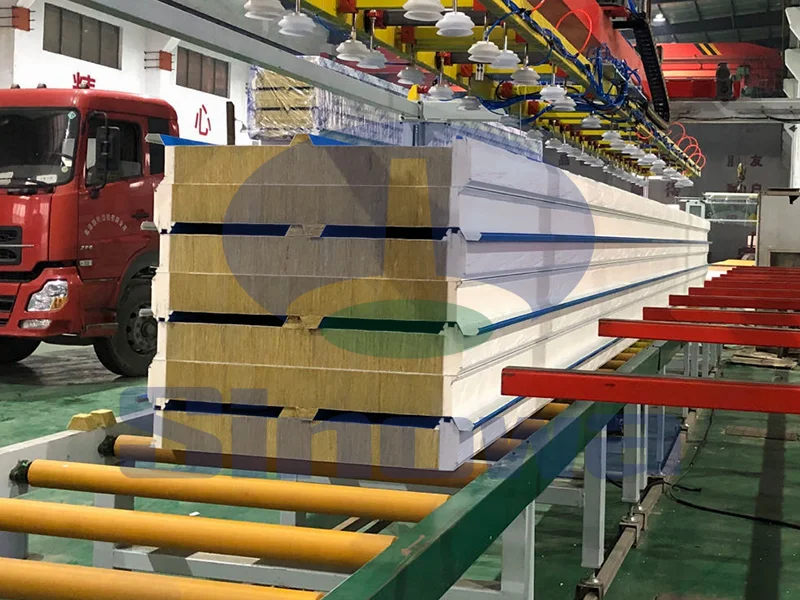
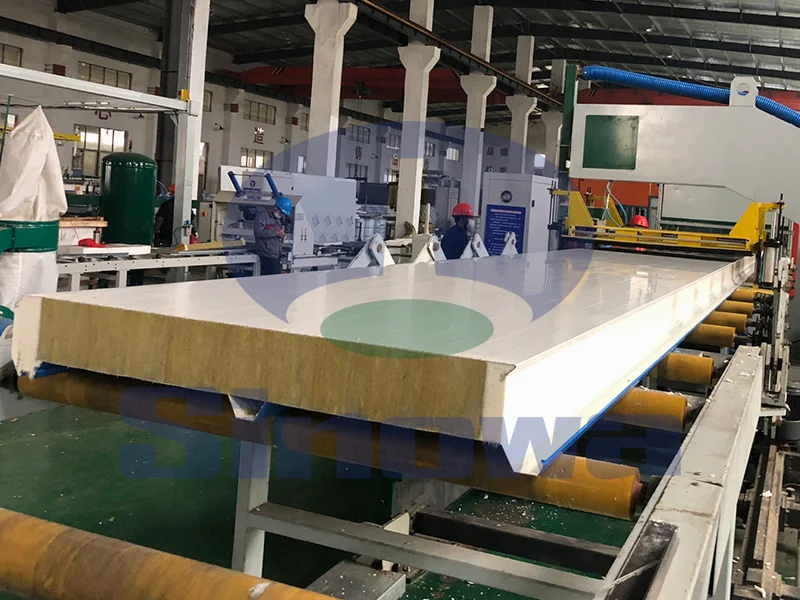
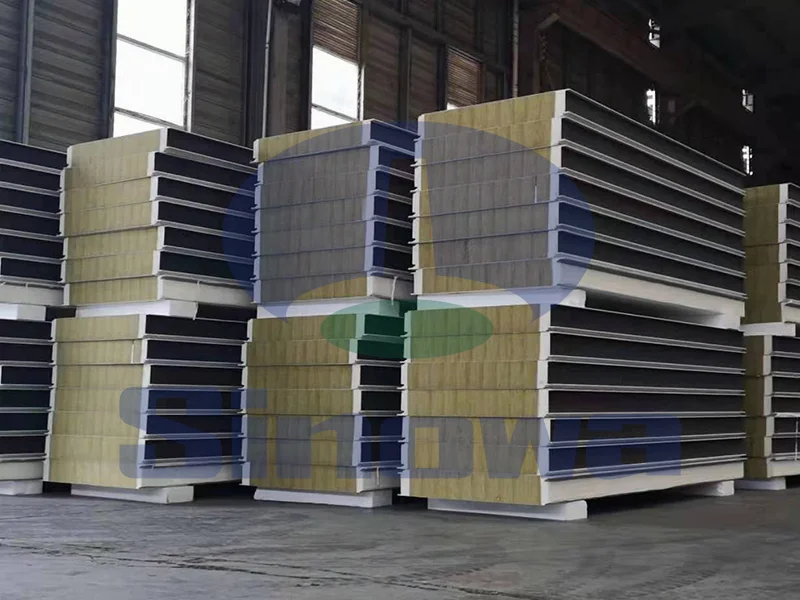
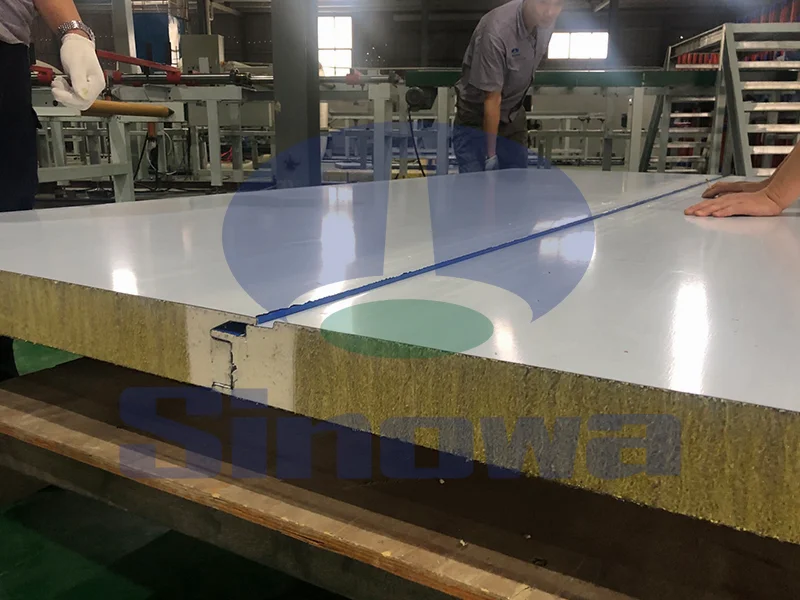
As a new type of building material production equipment, the glass wool sandwich panel line adopts a flexible configuration scheme and is compatible with various core materials such as polyurethane (PU/PIR), rock wool, glass wool, etc. It can achieve automated production of wall panels, roof panels, and cold storage panels through rapid switching.
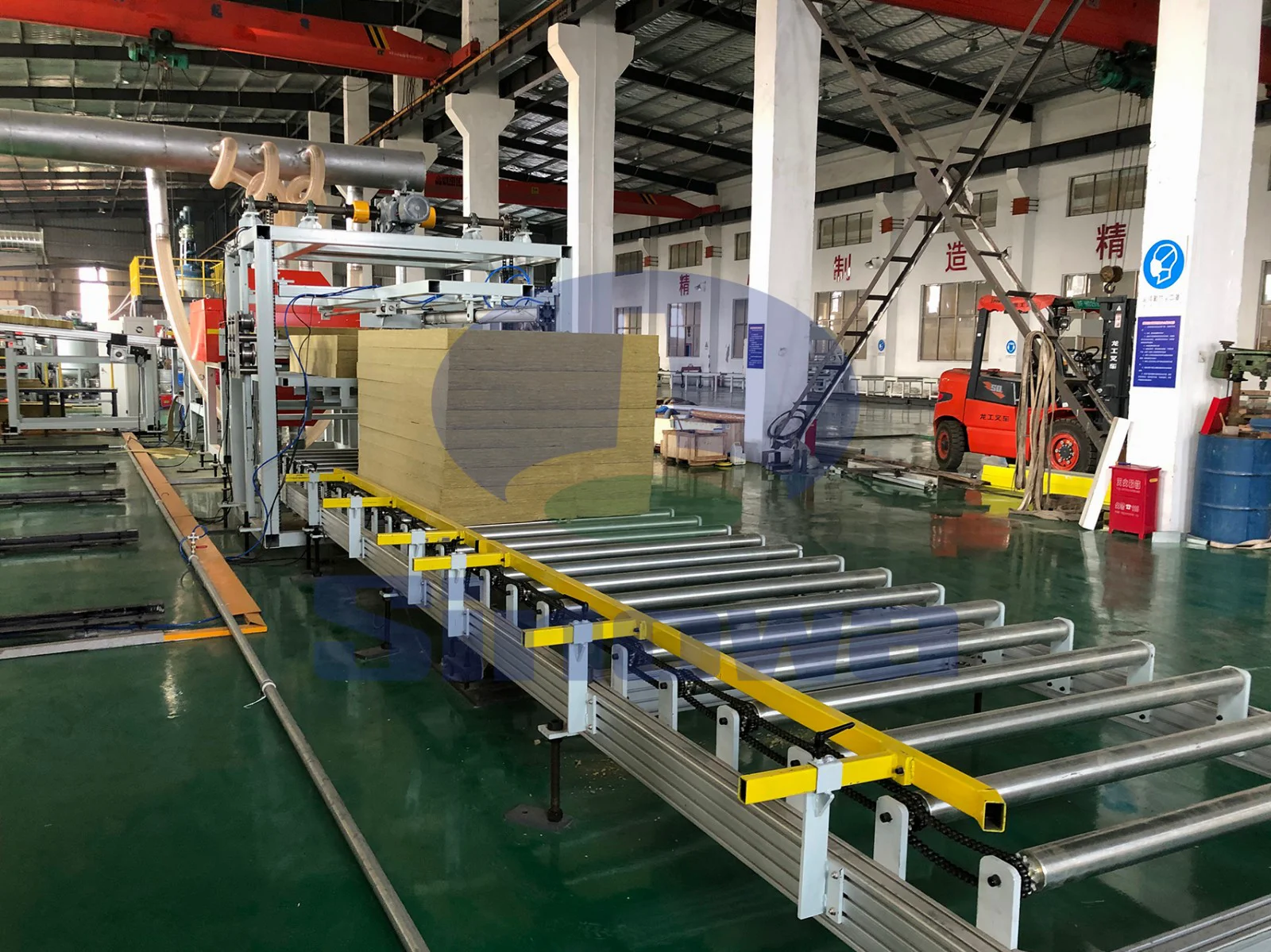
Glass wool sandwich panel as a high-quality insulation material, has a wide range of applications in construction, industrial plants, cold storage and other fields. Glass wool sandwich panel is a composite building panel made of colored profiled steel sheet as the surface layer, with a composite glass wool core material in the middle, and processed through special techniques.
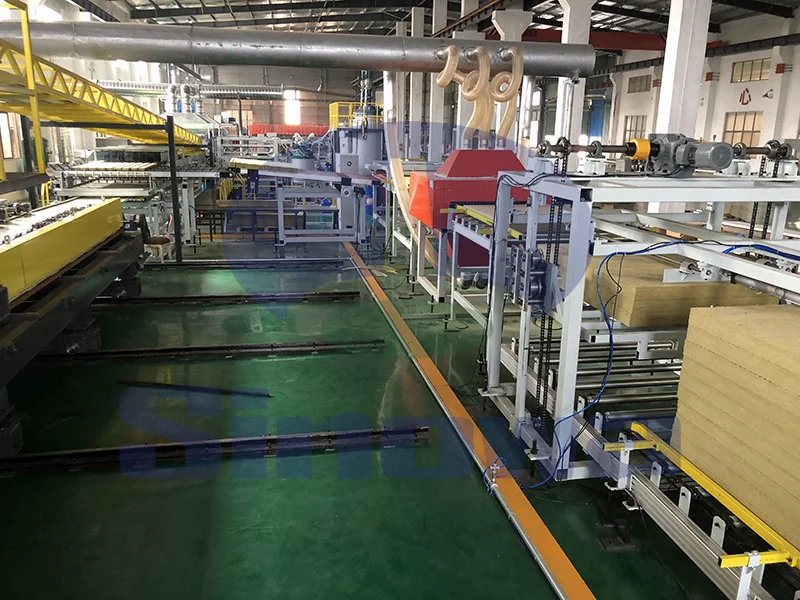
Characteristics of glass wool sandwich panel:
Excellent thermal insulation performance: Glass wool core material has low thermal conductivity and can effectively block heat transfer
Excellent fire resistance performance: reaching Class A non combustible standard, with a fire resistance limit of 1-2 hours
Good sound insulation effect: able to absorb sound in a wide frequency range, with good sound insulation effect
Lightweight and High Strength: Lightweight but with high flexural strength and overall stiffness
Strong weather resistance: with a wide temperature range and excellent chemical stability
Composition of glass wool sandwich panel production line:
Loading system: including color steel plate unwinding machine, leveling machine, cutting head shear, etc
Forming system: The steel plate is pressed into the desired cross-sectional shape through multiple rollers
Foam composite system: core part, realizing the composite of glass wool and surface layer
Laminated conveying system: ensuring the flatness and dimensional accuracy of the board during the composite process
Cutting system: including flying saws, cross cutting machines, etc., to achieve fixed length cutting of sheet metal
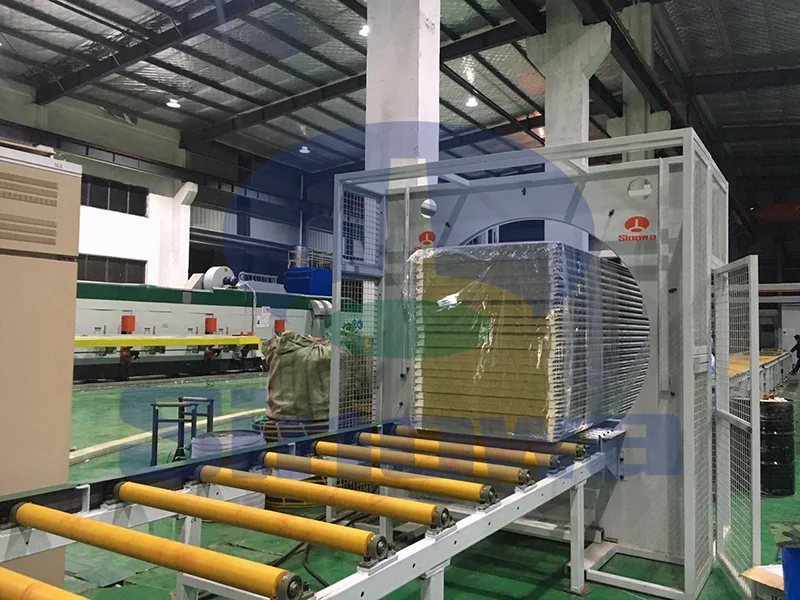
Stacking and Packaging System: Complete the automatic stacking and packaging of finished products
Control system: Adopting PLC centralized control to achieve automated operation of the entire line
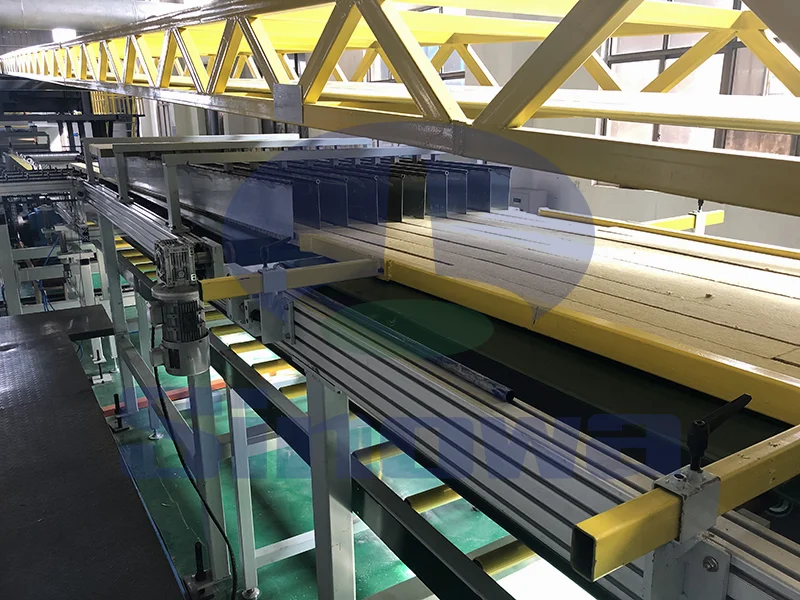
Technical advantages of glass wool sandwich panel line:
Modular design: Each component can be freely combined for easy maintenance and upgrading
Efficient and energy-saving: energy consumption is only 40% of similar products, and the heating time does not exceed 1 hour
High degree of automation: adopting an integrated linkage control system to reduce manual intervention
Flexible production: can quickly switch between producing different thicknesses (10-200mm) and types of boards
Environmentally friendly process: using environmentally friendly foaming media such as cyclopentane or 141B
Precision control: servo lifting mechanism achieves precise control of sheet thickness
Production process of glass wool sandwich panel:
Surface material pretreatment: Color steel plates are prepared through processes such as uncoiling, leveling, and cleaning
Forming processing: Forming into the desired cross-sectional shape through continuous roll pressing
Core material preparation: Cut glass wool according to specifications, with a density typically ranging from 59-120kg/m ³
Composite process: using polyurethane edge sealing technology to firmly bond the core material with the surface layer
Curing molding: curing and shaping composite materials at a specific temperature
Fixed length cutting: precise cutting according to order requirements
Quality inspection: check indicators such as size, flatness, and composite strength
Packaging and storage: Protective packaging and storage as required
When choosing a glass wool sandwich panel machine,
the following factors should be considered:
Production scale: For large-scale production, it is recommended to choose a fully automated assembly line. For small batches, modular equipment can be selected
Product type: If you need to produce sandwich panels with multiple core materials (PU, PIR, rock wool, etc.), you should choose multifunctional equipment
Technical level: Prioritize equipment with energy-saving design and automated control systems
After sales service: Choose a supplier with a comprehensive technical support network
Scalability: Consider the possibility of future product upgrades and choose devices with modular design
With the increasing requirements for building energy efficiency and the growing market demand, efficient, intelligent, and environmentally friendly production equipment will become the mainstream of the industry. When selecting glass wool sandwich panel equipment, enterprises should comprehensively consider their own needs, product positioning, and future development, and choose the most suitable production solution.
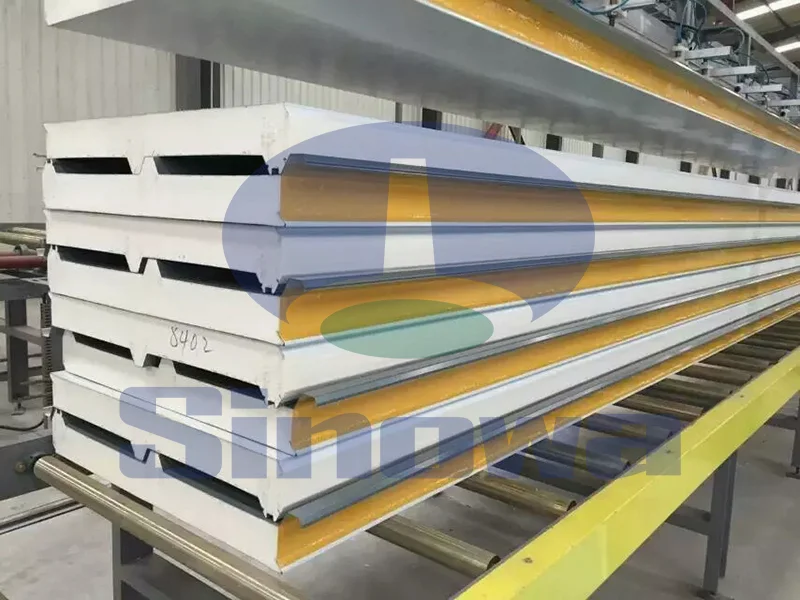
Glass wool sandwich panels have become indispensable prefabricated building materials in modern construction and industrial fields, valued for their integrated advantages of thermal insulation, sound absorption, fire resistance and lightweight properties. The production line that manufactures these panels is a highly integrated system combining mechanical processing, material compounding and automatic control, whose structure, operational performance, and the diversity of end products directly determine the application scope and service quality of glass wool sandwich panels. Understanding the core details of the production line, along with the characteristics and uses of the panels it produces, is crucial for professionals in construction, manufacturing and related industries to make rational application decisions and optimize production efficiency.
The structure of a glass wool sandwich panel production line is designed to realize continuous and automated production, consisting of several functional units that work in coordination to complete the entire manufacturing process from raw material input to finished product packaging. The basic structural components start with the uncoiling system, which is responsible for stably feeding the metal coils (usually steel or aluminum) that form the upper and lower facings of the sandwich panels. Equipped with hydraulic control and tension adjustment devices, the uncoiler ensures consistent feeding speed and avoids material deviation, which is essential for maintaining the flatness and dimensional accuracy of the panel surfaces. Some advanced production lines adopt a 2+2 uncoiling system, allowing for non-stop coil replacement to improve continuous production capacity and reduce downtime.
Following the uncoiling system is the roll forming unit, which processes the metal facings into the required shapes through continuous roller pressing. This unit can be adjusted according to production needs to produce flat, embossed, corrugated or other surface textures, as well as different edge structures to meet the requirements of roof or wall installation. The cassette-type and railway wheel-type design of the roll forming machine enables quick mold replacement, supporting the production of multiple panel specifications with high flexibility. After forming, the metal facings enter a preheating chamber to reach an appropriate temperature, which enhances the adhesion between the facings and the core material, ensuring the structural stability of the composite panels.
The core material processing and feeding system is the key part that distinguishes glass wool sandwich panel production lines from other sandwich panel production equipment. This system includes glass wool cutting and conveying components, which cut the pre-manufactured glass wool boards into specified thicknesses and widths according to the panel design requirements. The glass wool used as the core material is made by melting natural ores such as quartz sand and dolomite, along with chemical materials like soda ash and borax, at high temperatures (1350-1380℃) and then forming fibers through centrifugal spinning. The fiber diameter is usually controlled within 5-11μm, and a three-dimensional cross structure is formed through bonding, giving it excellent thermal insulation and sound absorption performance. The feeding system ensures uniform and continuous delivery of glass wool to the lamination unit, maintaining consistent core thickness across the entire panel.
The lamination and bonding system is responsible for combining the metal facings and glass wool core into an integrated structure. This system includes a glue application device that sprays adhesive evenly on the inner surfaces of the metal facings. The adhesive is usually a modified phenolic resin or starch-based adhesive, which is heated to 150-200℃ to enhance its bonding strength. The caterpillar laminating machine then applies uniform pressure to the upper and lower facings and the glass wool core, ensuring full contact and adhesion between the layers. The lamination process is carried out under controlled temperature and pressure conditions, allowing the adhesive to cure initially and forming a stable composite structure. The length of the mainframe of the production line affects the curing effect; longer mainframes (e.g., 26.3m) can increase the effective curing time by 30%, making the core material cure more fully and improving the overall performance of the panels.
After lamination, the composite panel enters the cutting unit, where an automatic cutting machine trims it to the required length (usually 2-16m) with high precision. The cutting machine is equipped with a length measurement and counting device controlled by a microcomputer, ensuring dimensional accuracy with a thickness tolerance of ±3mm and a density deviation of ±5%. The cut panels are then conveyed to the cooling bed to release internal heat uniformly, preventing deformation caused by uneven temperature distribution and further improving product quality. Finally, the finished panels are transferred to the stacking and packaging system, where they are automatically stacked and wrapped in plastic film for storage and transportation, reducing manual labor and avoiding damage during handling.
In addition to the basic structural units, modern glass wool sandwich panel production lines are often equipped with a centralized control system based on bus control technology, integrating all control points into a single console. This system realizes full automation of the production process, including parameter linkage, fault self-diagnosis and remote communication functions, which not only reduces the number of operators (from 13 to 6 in some cases) but also improves operational stability and production efficiency. The modular design of the entire production line allows for flexible combination of components, enabling manufacturers to adjust the production process according to product types and market demands, enhancing the adaptability of the equipment.
The performance of a glass wool sandwich panel production line is reflected in its production efficiency, product quality stability, energy consumption and environmental protection, which are closely related to the structural design and technical level of the equipment. Production efficiency is measured by production speed and annual output; the speed of general production lines ranges from 5-12m/min, and the annual output can reach 1.3-2 million square meters. The high-efficiency production capacity is attributed to the continuous operation design, quick mold change mechanisms and automated control systems, which significantly reduce manual intervention and production cycle.
Product quality stability is another key performance indicator, mainly reflected in the dimensional accuracy, bonding strength and core material uniformity of the finished panels. The precise control of the uncoiling and roll forming systems ensures the flatness and dimensional consistency of the metal facings; the uniform glue application and sufficient curing process guarantee the bonding strength between layers, preventing delamination during use. The glass wool core processing system maintains consistent density (usually 24-48kg/m³ for construction applications) and thickness, ensuring stable thermal insulation and mechanical performance of the panels. The production line’s ability to maintain consistent quality across large batches is essential for meeting the requirements of large-scale construction projects.
Energy conservation and environmental protection are important performance considerations in modern production lines. The adoption of energy-efficient heating systems and heat recovery technology reduces energy consumption during the preheating and curing processes. The use of environmentally friendly adhesives minimizes the emission of harmful substances, and the recycling of production scraps (such as metal edge trimmings and glass wool leftovers) reduces waste and environmental impact. These features not only comply with global environmental protection trends but also help manufacturers reduce production costs and improve market competitiveness.
The adaptability of the production line is also a crucial performance attribute, referring to its ability to produce different types of glass wool sandwich panels by adjusting process parameters and components. This adaptability allows manufacturers to meet diverse market demands without large-scale equipment modifications, covering a wide range of product specifications and performance requirements. For example, by adjusting the glass wool thickness (40-200mm for wall panels, 50-150mm for roof panels) and metal facing materials, the production line can produce panels for different application scenarios, from industrial warehouses to clean rooms.
Based on the production process, structural design and application scenarios, glass wool sandwich panels produced by the line can be divided into several types, each with distinct characteristics and applicable fields. From the perspective of application, the main types include roof panels and wall panels. Roof panels are specifically designed for industrial and commercial building roofs, featuring lightweight properties to reduce the load on the building structure, as well as excellent waterproof and thermal insulation performance. They are suitable for warehouses, factories, shopping malls and cold storage facilities, helping to regulate indoor temperatures, reduce energy consumption for heating and cooling, and protect against extreme weather conditions such as strong winds and heavy rains.
Wall panels are used for exterior and interior walls in industrial, commercial and public buildings, including load-bearing walls, non-load-bearing walls and curtain walls. They have high compressive strength and impact resistance, as well as good thermal insulation and sound insulation effects, providing a durable and low-maintenance wall solution. In high-occupancy buildings such as hospitals and commercial complexes, wall panels with enhanced fire resistance are often used to meet fire safety requirements and slow down the spread of flames.
From the perspective of structural configuration, glass wool sandwich panels can be divided into composite panels and self-supporting panels. Composite panels consist of two metal facings bonded to a glass wool core, relying on the metal facings for structural strength and the core for insulation. They are lightweight, strong and have high insulation value, suitable for most general construction scenarios. Self-supporting panels have a thicker glass wool core and interlocking edges, enabling them to support themselves over short spans without additional frameworks. They are ideal for temporary shelters, exhibition stands and other applications that require quick assembly and disassembly, as well as projects where load-bearing structures are not available.
Another classification is based on the modification of the core material, which can be combined with other insulation materials to enhance specific performance. For example, some panels combine glass wool with polyurethane foam (PU) or expanded polystyrene (EPS) to improve thermal insulation performance, while others use mineral wool (rock wool) mixed with glass wool to enhance fire resistance. These modified panels expand the application scope of glass wool sandwich panels, making them suitable for more demanding environments such as cold storage, clean rooms and high-temperature workshops.
The diverse types of glass wool sandwich panels correspond to a wide range of applications, covering industrial, commercial, public and even agricultural fields. In the industrial sector, they are widely used in the construction of factories, warehouses, workshops and power plants. Their excellent thermal insulation performance helps maintain stable indoor temperatures, reducing energy consumption for equipment cooling or heating; the fire resistance and sound absorption properties improve workplace safety and comfort, reducing noise pollution from machinery and equipment. For cold storage facilities, glass wool sandwich panels with enhanced thermal insulation and moisture resistance are used to maintain low temperatures, ensuring the quality of stored goods while reducing energy consumption.
In the commercial field, glass wool sandwich panels are used in shopping malls, supermarkets, logistics centers and retail stores. Their lightweight and quick installation features shorten the construction cycle, reducing construction costs and minimizing the impact on business operations. The customizable surface textures and colors allow them to blend with the architectural style, enhancing the aesthetic appeal of commercial buildings. Additionally, their sound insulation performance helps create a quiet shopping environment, improving customer experience.
Public buildings such as hospitals, schools, auditoriums and stadiums also benefit from the application of glass wool sandwich panels. In hospitals, panels with high hygiene standards, moisture resistance and sound insulation are used in operating rooms, wards and clean areas to maintain a sterile environment and reduce noise transmission. In schools and auditoriums, the sound absorption performance of the panels improves the acoustic effect of classrooms and performance halls, while the fire resistance ensures the safety of students and audiences. For stadiums, the lightweight and weather-resistant properties of the panels make them suitable for large-span roof and wall construction, withstanding harsh outdoor conditions.
Specialized fields also rely on glass wool sandwich panels for their unique performance. Clean rooms in pharmaceutical factories and electronic manufacturing plants use panels with smooth surfaces and dust-free properties, which are easy to clean and maintain, meeting the strict hygiene requirements of these industries. Acoustic enclosures for generator sets, noisy machinery and music studios use panels with enhanced sound absorption performance to reduce noise pollution and create a quiet environment. HVAC ducting and insulation systems also adopt glass wool sandwich panels to improve thermal insulation efficiency and reduce energy loss during air transportation.
In the agricultural field, glass wool sandwich panels are used in the construction of greenhouses, livestock sheds and agricultural storage facilities. Their thermal insulation performance helps regulate indoor temperatures, creating a suitable growth environment for crops and livestock, while the moisture resistance and corrosion resistance ensure long-term durability in humid agricultural environments. The lightweight and easy installation features also reduce the construction cost of agricultural buildings, bringing economic benefits to farmers.
The widespread application of glass wool sandwich panels is closely linked to the continuous improvement of their production lines. As technology advances, production lines are becoming more automated, efficient and environmentally friendly, supporting the development of high-performance, multi-functional glass wool sandwich panels. The modular design and flexible configuration of modern production lines enable manufacturers to quickly respond to market changes, providing customized products for different application scenarios. Meanwhile, the optimization of production processes and material selection further enhances the performance of glass wool sandwich panels, making them more competitive compared to other insulation materials such as PU and EPS panels.
In conclusion, the glass wool sandwich panel production line is a highly integrated and automated system whose structure, performance and flexibility directly determine the quality and application value of the finished panels. The rational combination of uncoiling, roll forming, core material processing, lamination and cutting systems ensures continuous and efficient production, while the centralized control system improves operational stability and reduces labor costs. The diverse types of glass wool sandwich panels produced by the line, classified by application, configuration and core material modification, cover a wide range of industrial, commercial, public and agricultural applications, providing solutions for thermal insulation, sound absorption, fire protection and structural support. With the increasing emphasis on energy conservation, environmental protection and building safety, the glass wool sandwich panel production line and its products will continue to play an important role in the construction industry, promoting the development of green and efficient building practices.