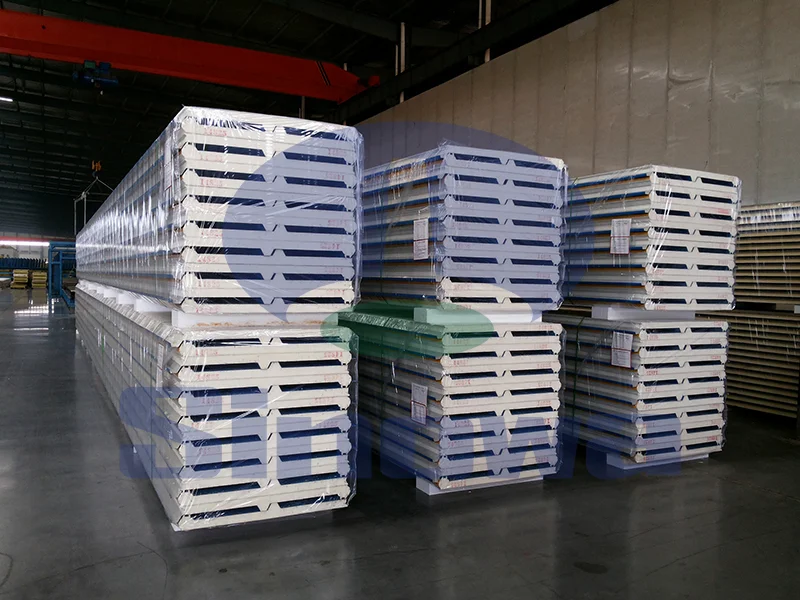
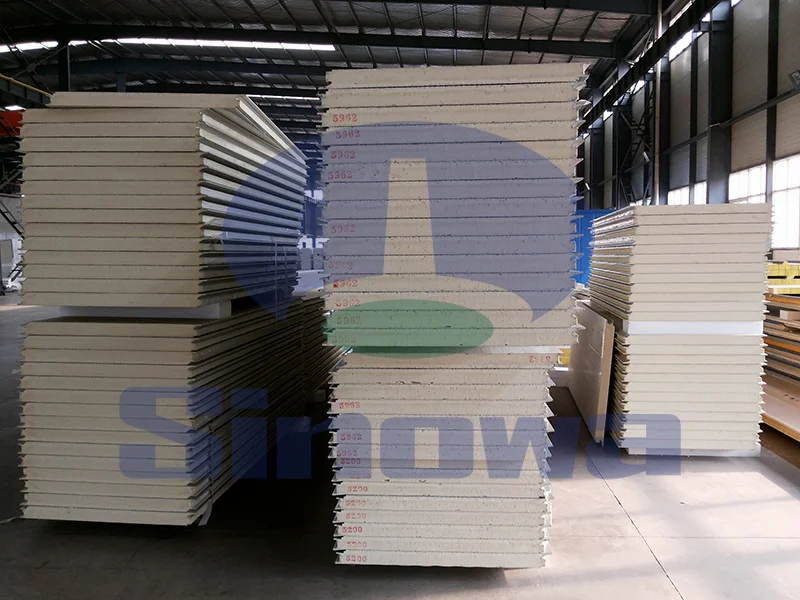
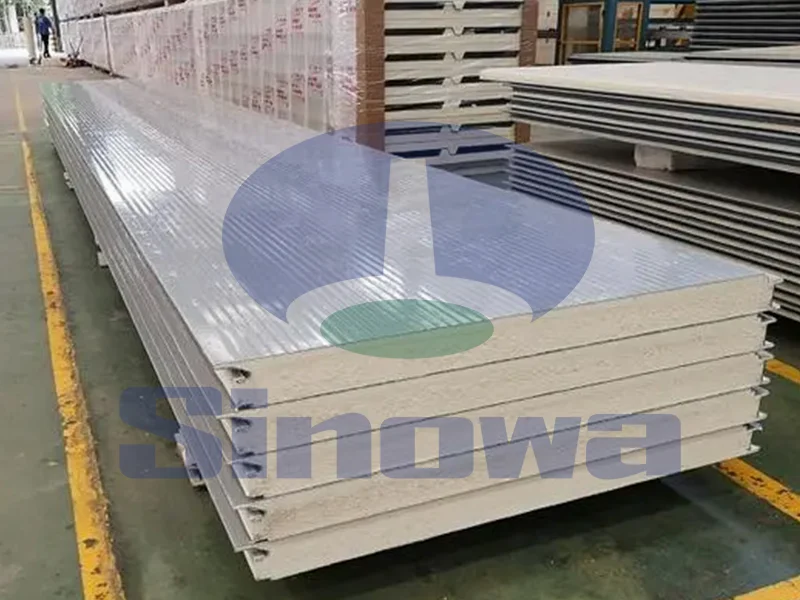
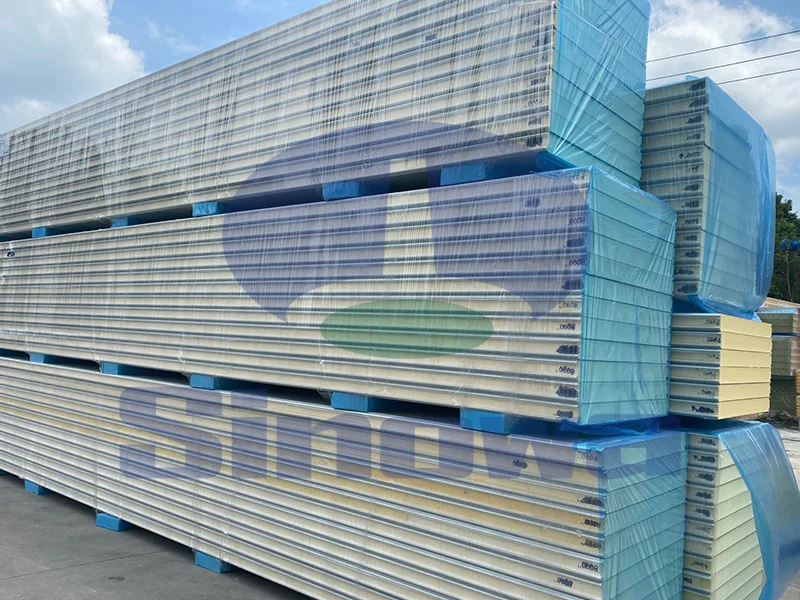
The metal insulated sandwich panel line is an automated system that integrates unwinding, forming, foaming, compounding, cutting, and stacking. It mainly produces sandwich panels with core materials such as rock wool and polyurethane (PU).
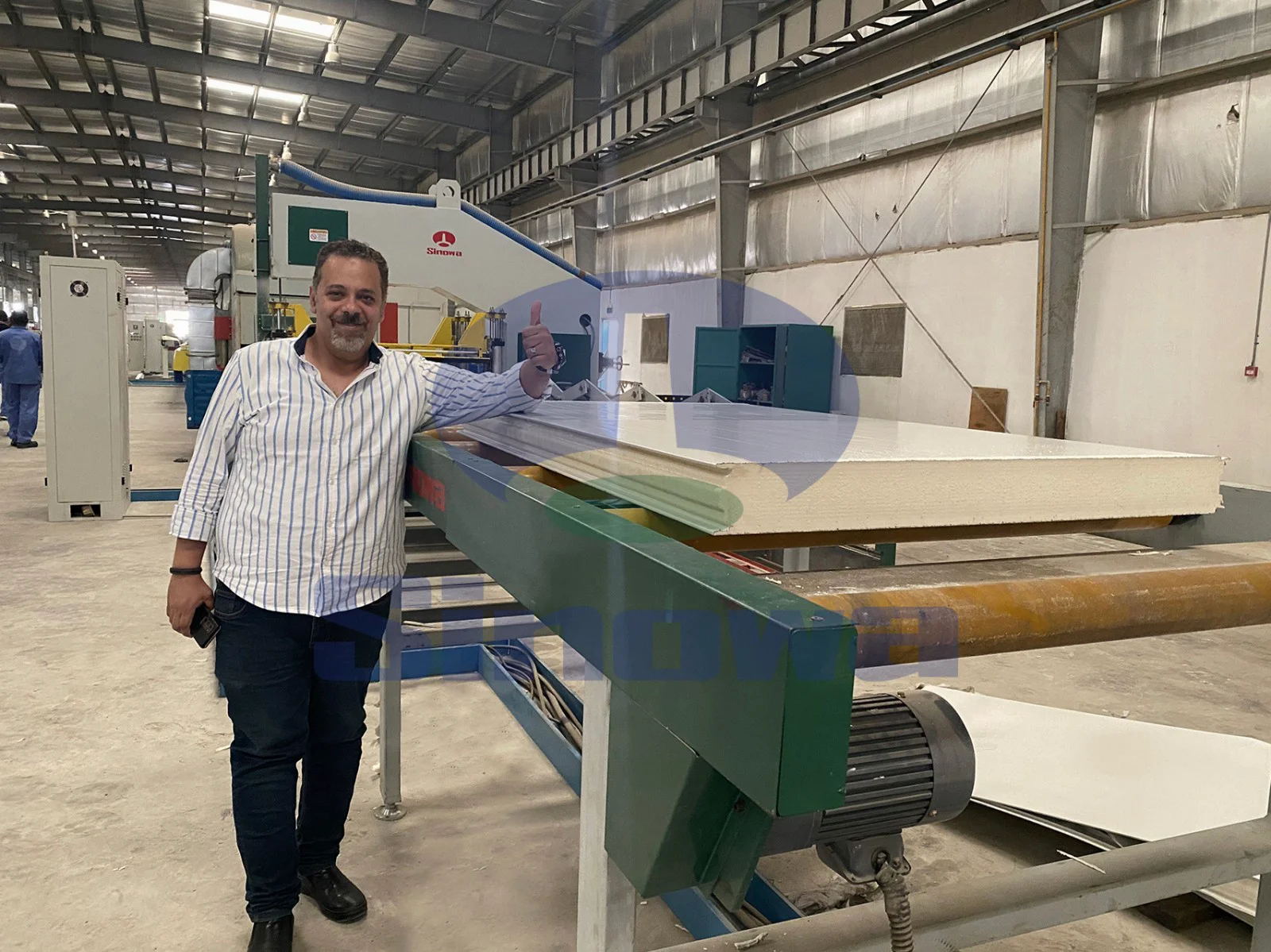
The metal insulated sandwich panel production line is the core equipment for modern building energy-saving material production, which can efficiently manufacture composite panels with both structural strength and insulation performance. This kind of insulated sandwich panel line combines metal panels (such as color steel plate, aluminum plate, etc.) with insulation core materials (such as polyurethane, rock wool, phenolic foam, etc.) through highly automated process flow, and is widely used in industrial plants, refrigerators, purification workshops, commercial buildings and other fields.
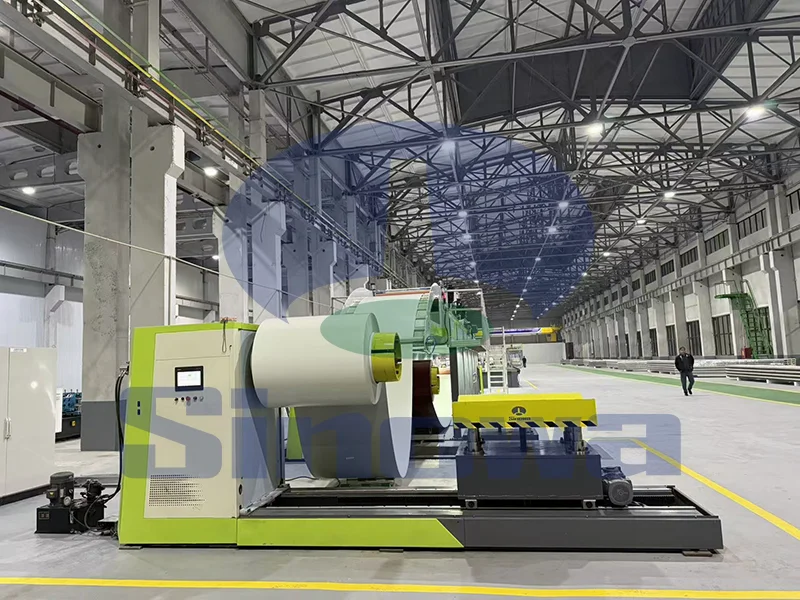
The metal insulated sandwich panel line is an integrated industrial system mainly composed of the following key modules:
Loading and pre-processing system
Metal coil unwinding device: usually equipped with a dual station hydraulic feeding platform, capable of carrying 3-5 tons of steel coils (thickness 0.3-0.6mm)
Leveling and cutting unit: eliminates coil stress and completes fixed length cutting through hydraulic shearing machine
Surface treatment module: Some high-end models integrate cleaning and passivation functions to enhance bonding strengthCore material processing section
For polyurethane/PIR core materials: a high-pressure foaming system (working pressure 120-150 bar) is used, and the ratio of polyols to isocyanates (commonly 1:1.5) is controlled by a precision metering pump, combined with pentane foaming agent to achieve continuous foaming
For rock wool/glass wool core materials: equipped with fiber orientation arrangement device and automatic glue spraying system to ensure vertical fiber structureComposite molding host
Double belt laminating machine: usually 45-100 meters in length, with modular design and adjustable pressure range of 0.3-0.8 MPa
Temperature control system: infrared heating tube combined with PID temperature control to maintain the process temperature at 40-60 ℃
Synchronous traction device: variable frequency speed regulation, production speed can reach 3-25 meters per minute (depending on the type of core material)Post processing unit
Automatic cutting system: servo controlled flying saw or milling cutter, cutting accuracy ± 1mm
Edge processing station: integrates functions such as edge banding and pressing, R-corner forming, etc
Stacking robot: capable of carrying up to 2 tons and supporting multiple stacking modes
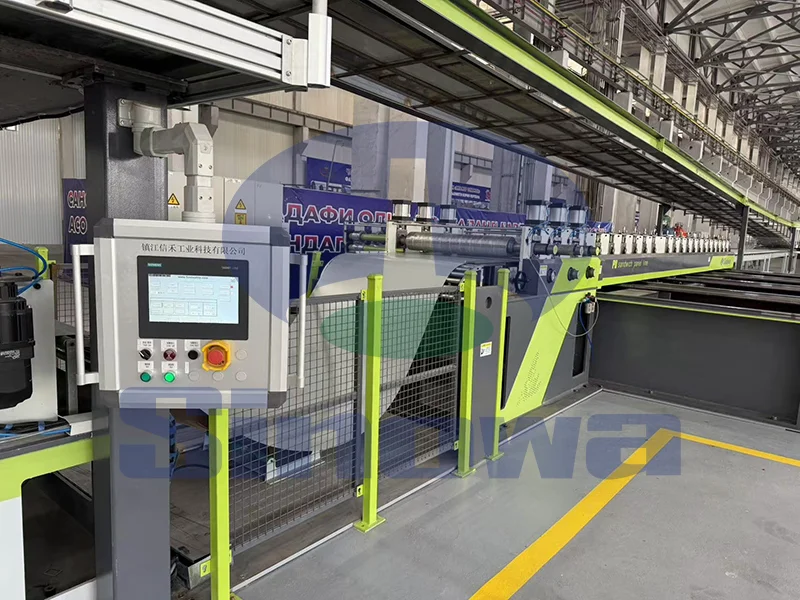
Working principle:
After the metal coil is uncoiled, the upper and lower layers enter the forming machine respectively, while the insulation core material is injected in the middle. During the continuous lamination process, the core material is permanently bonded to the metal panel by precise control of temperature, pressure, and speed. Taking polyurethane sandwich panels as an example, it only takes 15-30 minutes from raw material input to finished product output.
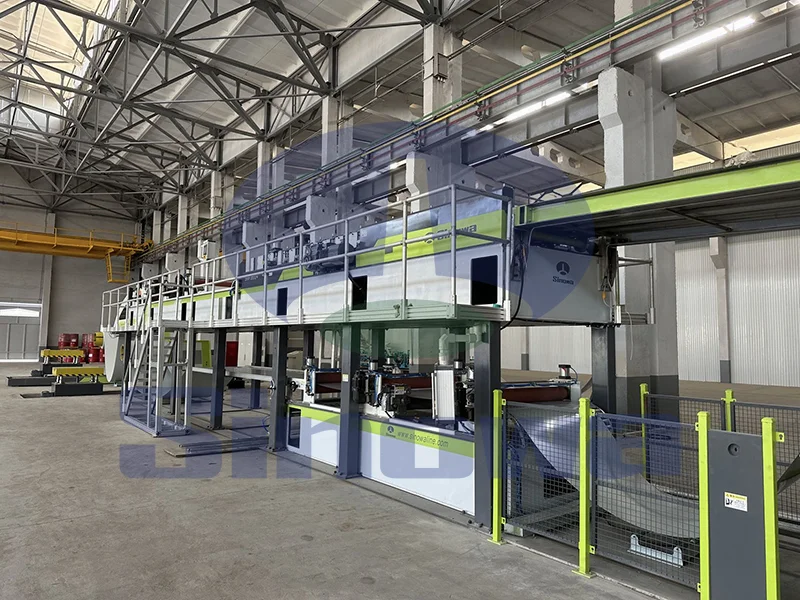
According to the differences in core materials and processing techniques, metal insulated sandwich panel machines can be divided into multiple sub types:
Polyurethane/PIR continuous sandwich panel production line
Adopting high-pressure foaming technology and equipped with a multi-component metering system (2-9 components optional)
Core advantages: High production efficiency (speed up to 25m/min), closed cell rate>95%
Rock wool/glass wool composite panel production line
Integrated fiber orientation arrangement and double-sided edge sealing process
Special design: equipped with negative pressure adsorption device to prevent fiber dispersion
Environmental characteristics: can consume industrial slag, VOCs emissions are close to zero
Phenolic foam sandwich panel production line
High temperature resistance: Long term use temperature up to 180 ℃
Multi functional composite board production line
Modular design: achieve multi variety production of H-shaped boards, corrugated boards, and other materials through rapid mold changes
With the improvement of global building energy efficiency standards and the popularization of prefabricated buildings, the production line of metal insulated sandwich panels is continuously evolving towards greater efficiency, environmental friendliness, and intelligence.
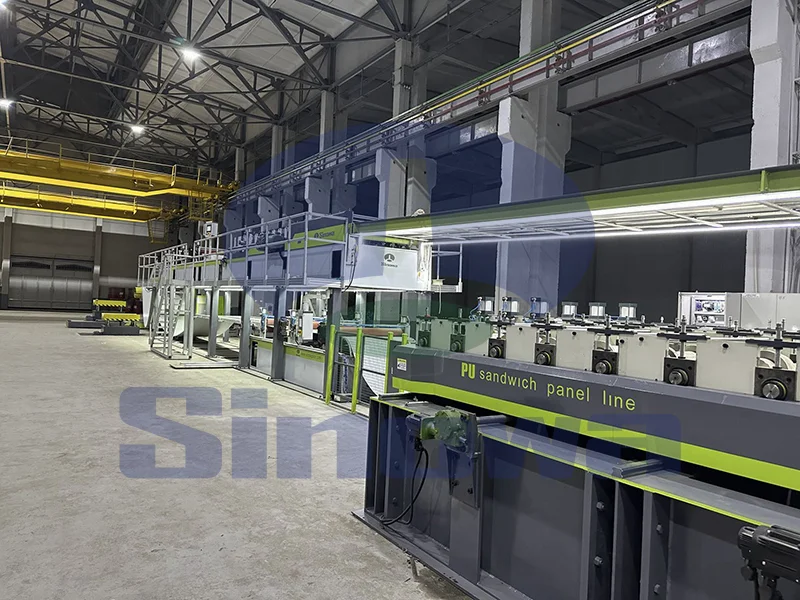
The metal insulated sandwich panel production line stands as a cornerstone of modern industrial manufacturing, bridging the gap between efficient material processing and high-performance building component production. Designed to transform raw metal sheets and insulating core materials into finished composite panels, this integrated production system combines mechanical engineering, automated control, and material processing technologies to deliver consistent, durable end products tailored to diverse industrial and construction needs. Unlike fragmented manual production processes, the full-scale production line operates as a unified workflow, where every component and station works in tandem to streamline manufacturing, reduce material waste, and uphold uniform product quality across every batch of panels produced. This level of integration has reshaped the landscape of composite building material manufacturing, offering a scalable, reliable solution for meeting the growing global demand for lightweight, insulating, and structurally resilient building panels.
At its core, the structural design of the metal insulated sandwich panel production line is built around modularity and continuous workflow, with each functional segment serving a distinct purpose in the panel manufacturing process while remaining fully compatible with adjacent stations. The line typically begins with the uncoiling and feeding system, which handles large rolls of metal sheet materials, commonly steel or aluminum, that form the outer facings of the sandwich panels. This system is equipped with precision deviation correction and flattening mechanisms to ensure that the metal sheets are delivered smoothly and evenly into the subsequent processing stages, eliminating wrinkles, misalignment, or surface damage that could compromise the final panel’s integrity. Following the uncoiling station, the sheet forming system takes over, using a series of precision rollers to shape the metal sheets into standardized profiles, whether flat, corrugated, or custom-contoured to match specific installation requirements. This forming process is calibrated to maintain consistent thickness and structural rigidity across the entire length of the metal sheets, laying a stable foundation for the core material bonding that follows.
Moving deeper into the production line, the core material processing and composite bonding station represents the most critical structural segment, as it merges the two outer metal facings with the insulating core to create the signature sandwich panel structure. For different core materials, this segment is engineered to adapt to unique processing needs, from precise cutting and positioning of rigid core boards to controlled foaming and curing for expandable insulating materials. The bonding process relies on uniform adhesive application and controlled pressure application to create a permanent, tight bond between the metal facings and the core layer, preventing delamination, air gaps, or moisture penetration over the panel’s service life. Positioned after the bonding station is the continuous curing and shaping system, which maintains stable temperature and pressure conditions to facilitate full curing of adhesives and structural stabilization of the composite panel. This stage ensures that the panel retains its shape, structural density, and dimensional accuracy as it moves along the line, avoiding warping or shrinkage that could affect later cutting and finishing. The final structural components include the precision cutting system and automated stacking and packaging station, which trim the continuous panel strip into custom lengths, smooth cut edges, and neatly stack finished panels for storage or direct shipment, closing the full manufacturing loop without manual handling gaps.
Complementing these mechanical components is the integrated central control system, a digital backbone that governs the entire production line’s operation. This centralized control platform synchronizes the speed, pressure, temperature, and positioning parameters of every station, enabling real-time monitoring and automatic adjustment to maintain production consistency. Operators can input custom specifications for panel thickness, length, profile, and core density through the control interface, and the system will calibrate all processing units accordingly, reducing human error and minimizing production downtime. The structural layout of the line is also designed for accessibility and routine maintenance, with easily reachable components, modular replacement parts, and built-in diagnostic features that simplify upkeep and extend the overall service life of the production equipment. This thoughtful structural design not only enhances operational efficiency but also allows for flexible upgrades or component replacements to adapt to evolving production needs or new material processing requirements without overhauling the entire line.
The operational performance of the metal insulated sandwich panel production line is defined by several key metrics that directly impact the quality of finished panels and the efficiency of the manufacturing process. Foremost among these is production stability, which refers to the line’s ability to maintain consistent output quality over extended running times, even under high-volume production demands. The synchronized mechanical operation and precise digital control minimize fluctuations in material positioning, bonding pressure, and curing conditions, ensuring that every panel produced meets uniform structural and physical standards. Another critical performance indicator is processing precision, which encompasses dimensional accuracy, consistent core thickness distribution, and tight bonding between layers. High precision in production eliminates the need for extensive post-processing trimming or refinishing, reducing material waste and speeding up the transition from production to field installation. The line also exhibits strong adaptability to varying environmental conditions, with built-in temperature and humidity regulation features that maintain stable processing parameters regardless of external workshop conditions, supporting uninterrupted year-round production.
Energy efficiency is a standout performance trait of modern sandwich panel production lines, with optimized motor systems, heat recovery mechanisms, and closed-loop processing designs that reduce overall power consumption compared to older, fragmented manufacturing setups. The automated workflow also boosts labor efficiency, as a single production line requires minimal manual intervention, with most handling, shaping, bonding, and cutting tasks completed automatically. This reduction in manual labor not only lowers operational costs but also creates a safer working environment by minimizing worker exposure to heavy machinery, sharp metal edges, and chemical adhesives. Durability and wear resistance are equally important performance aspects, as the line’s core components are constructed from high-strength, wear-resistant materials that withstand continuous friction, pressure, and repetitive motion without premature degradation. This long-term durability translates to consistent production output over years of use, with minimal need for component replacements or major repairs.
In terms of material compatibility performance, the production line demonstrates exceptional versatility, supporting the processing of a wide range of metal facing materials and insulating core materials without major structural modifications. Metal facings ranging from cold-rolled steel and galvanized steel to aluminum sheets can be processed seamlessly, with adjustable forming and bonding mechanisms accommodating different metal thicknesses and surface finishes. For core materials, the line adapts to both rigid board cores and expandable foam cores, each with unique physical properties that cater to specific end-use performance demands. This broad material compatibility allows manufacturers to produce multiple types of sandwich panels on a single production line, adjusting material combinations and processing parameters to match diverse market needs without investing in separate production equipment.
The classification of metal insulated sandwich panel production lines is primarily based on the type of core materials they process, the production speed, and the structural configuration of the line, with each category tailored to distinct production scales and application scenarios. The most common classification revolves around core material compatibility, with lines designed for foam core panels, mineral wool core panels, and composite core panels leading the market. Production lines optimized for foam core materials, including expanded polystyrene and polyurethane foam, are equipped with specialized foaming, injection, and rapid curing systems that support continuous, high-speed production of lightweight, highly insulating panels. These lines prioritize uniform foam density distribution and seamless bonding with metal facings, creating panels with exceptional thermal resistance and airtightness. Lines engineered for mineral wool core materials, by contrast, feature robust handling and positioning systems for rigid mineral wool boards, along with enhanced pressure control to protect the fragile core material during bonding while ensuring strong adhesion with metal facings. These lines focus on maintaining the structural integrity of the mineral wool core, which offers superior fire resistance and acoustic insulation compared to foam cores.
Production lines can also be categorized by production capacity and operational mode, divided into continuous fully automated lines and semi-continuous semi-automated lines. Fully automated continuous production lines are designed for large-scale, high-volume manufacturing, with uninterrupted material feeding, processing, and finished product output, ideal for large manufacturing facilities serving regional or global markets. These lines feature higher processing speeds, fully automated material handling, and advanced digital control systems, maximizing output efficiency and consistency. Semi-continuous lines, on the other hand, are more compact and flexible, suited for small to medium-scale production facilities with lower output demands or frequent product specification changes. These lines offer a balance of automation and manual adjustment, with simplified structural layouts that reduce initial investment costs while maintaining reliable product quality for niche market demands. Additionally, production lines can be classified by panel application, with specialized configurations for wall panels, roof panels, and custom special-shaped panels, each with tailored forming and shaping mechanisms to meet unique structural and installation requirements.
Beyond structural and operational classifications, lines are also differentiated by the level of processing integration, with standard single-function lines and multi-functional integrated lines. Single-function lines are dedicated to producing one specific type of sandwich panel, optimizing efficiency and precision for a narrow range of specifications; these are ideal for manufacturers with a focused product lineup. Multi-functional integrated lines, however, are designed with interchangeable components and adjustable processing parameters, allowing seamless switching between different core materials, panel profiles, and sizes. This versatility makes multi-functional lines a cost-effective choice for manufacturers seeking to diversify their product offerings and respond quickly to shifting market trends and customer requirements.
The wide-ranging applications of metal insulated sandwich panels, enabled by specialized production lines, span across construction, industrial storage, cold chain logistics, cleanroom engineering, and modular building sectors, driven by the panels’ unique combination of lightweight structure, thermal insulation, structural strength, and easy installation. In the general construction sector, these panels are extensively used for exterior wall cladding and roof systems of industrial workshops, warehouses, commercial malls, and public buildings. The panels’ lightweight nature reduces the overall load-bearing requirements of building structures, while their excellent thermal insulation properties help regulate indoor temperatures, lowering long-term energy consumption for heating and cooling. The quick-installation design of the panels also speeds up construction timelines significantly compared to traditional building materials, reducing on-site labor and construction cycle times for large-scale building projects.
One of the most prominent application areas is cold chain logistics and temperature-controlled storage, where metal insulated sandwich panels are the material of choice for cold storage warehouses, refrigerated transport compartments, and controlled-temperature processing facilities. The superior thermal insulation performance of the panels, especially those with foam cores, effectively blocks heat transfer between indoor and outdoor environments, maintaining stable low-temperature conditions and reducing the energy load on refrigeration equipment. The airtight, moisture-resistant structure of the panels also prevents condensation and moisture buildup inside storage spaces, protecting stored goods from damage and maintaining consistent environmental conditions critical for food, pharmaceutical, and chemical storage. The smooth, easy-to-clean surface of the metal facings further adds to the suitability of these panels for hygienic storage environments.
In cleanroom and sterile environment engineering, metal insulated sandwich panels are widely used for wall partitions, ceilings, and door systems in medical facilities, pharmaceutical production plants, food processing workshops, and electronic component manufacturing rooms. The seamless, gap-free panel structure prevents dust accumulation, bacterial growth, and air leakage, meeting strict hygiene and air cleanliness standards. The panels’ structural rigidity also supports the installation of auxiliary cleanroom equipment, such as air filtration systems and environmental monitoring devices, while maintaining the overall integrity of the sterile space. Additionally, the fire-resistant properties of mineral wool core panels make them a safe choice for these sensitive operating environments, enhancing overall facility safety without compromising insulation or hygiene performance.
Modular and prefabricated building systems also rely heavily on metal insulated sandwich panels, leveraging the panels’ lightweight, easy-assembly design to create portable offices, temporary housing, construction site dormitories, and modular public facilities. The panels can be quickly cut, assembled, and disassembled, offering exceptional flexibility for temporary or relocatable building projects. Their weather resistance and durability ensure long-term performance in outdoor environments, withstanding wind, rain, and temperature fluctuations without structural degradation. In agricultural construction, the panels are used for greenhouse walls and roofs, livestock barn insulation, and agricultural product storage facilities, providing stable temperature and humidity conditions for crop growth and livestock breeding while resisting corrosion from agricultural chemicals and moisture.
Specialized industrial applications extend to transportation equipment manufacturing, where lightweight, insulating sandwich panels are used for interior partitions and shell components of vehicles, trains, and marine vessels, reducing overall equipment weight while improving thermal and acoustic insulation for passenger and operational spaces. The panels are also employed in industrial sound insulation projects, creating noise barriers around manufacturing plants, construction sites, and transportation hubs, thanks to the core materials’ natural sound-absorbing properties that reduce noise transmission effectively. As sustainable and energy-efficient building practices gain global traction, the application scope of metal insulated sandwich panels continues to expand, driving ongoing advancements in production line technology to enhance product performance, processing efficiency, and material sustainability.
The evolution of the metal insulated sandwich panel production line remains tightly linked to the evolving demands of modern construction and industrial manufacturing, with ongoing advancements focused on greater automation, higher processing precision, wider material compatibility, and improved energy efficiency. As the demand for eco-friendly, high-performance building materials continues to rise, production lines are being refined to support the use of recycled metal facings and low-carbon insulating core materials, aligning manufacturing processes with global sustainability goals. The integration of digital monitoring and intelligent control systems further enhances production transparency and quality control, allowing for real-time tracking of production parameters and immediate adjustments to maintain optimal operational conditions.
Ultimately, the metal insulated sandwich panel production line represents a perfect synthesis of mechanical engineering innovation and practical industrial demand, delivering a reliable, scalable solution for producing high-performance composite panels. Its well-designed structural layout, stable operational performance, flexible classification options, and wide-ranging application adaptability make it an indispensable piece of equipment in the modern manufacturing landscape. By enabling efficient, consistent production of panels that combine insulation, strength, and versatility, these production lines continue to support progress in sustainable construction, cold chain infrastructure, sterile facility engineering, and modular building development, with ongoing improvements poised to expand their capabilities and market relevance for years to come. As material science and manufacturing technology continue to advance, the metal insulated sandwich panel production line will remain a key driver of innovation in the composite building material sector, meeting the evolving needs of global industries with reliable, high-quality output.