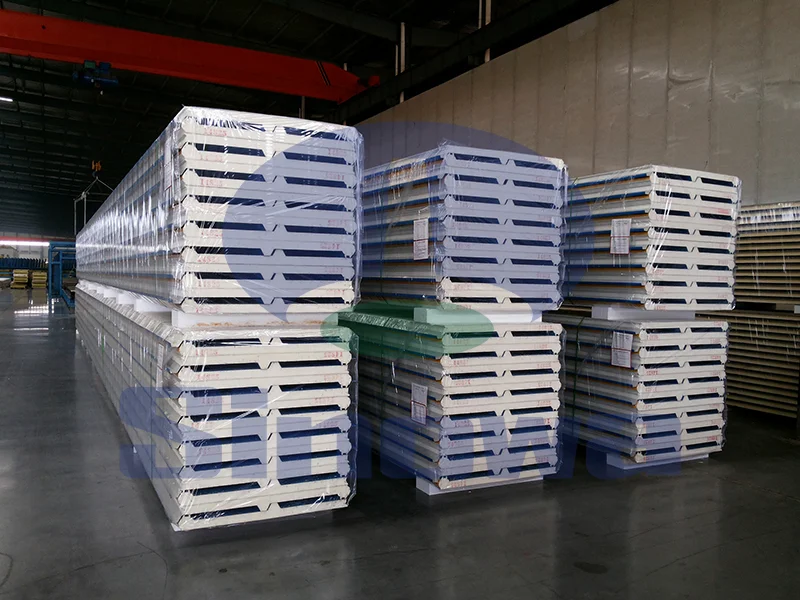
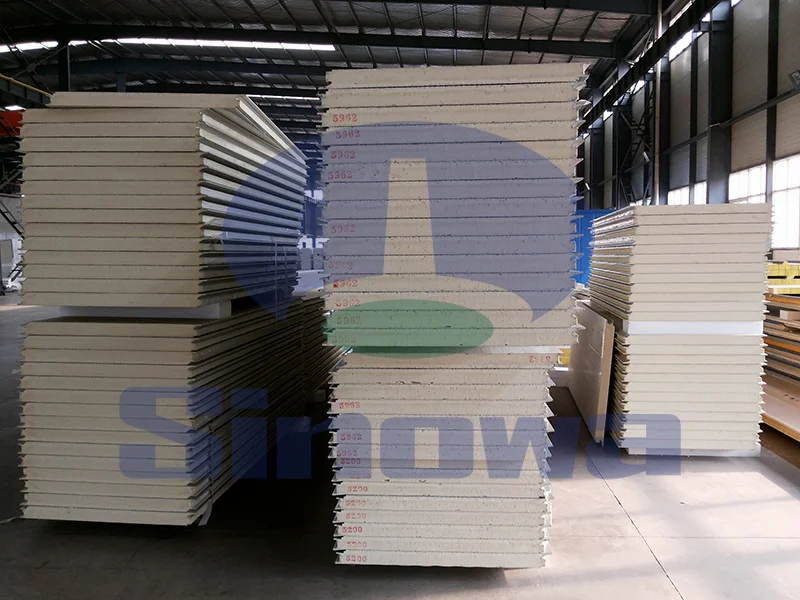
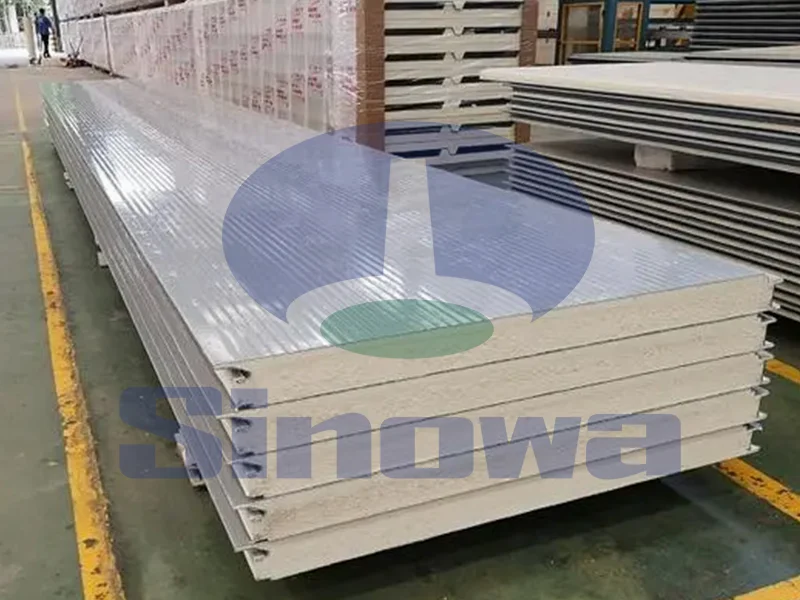
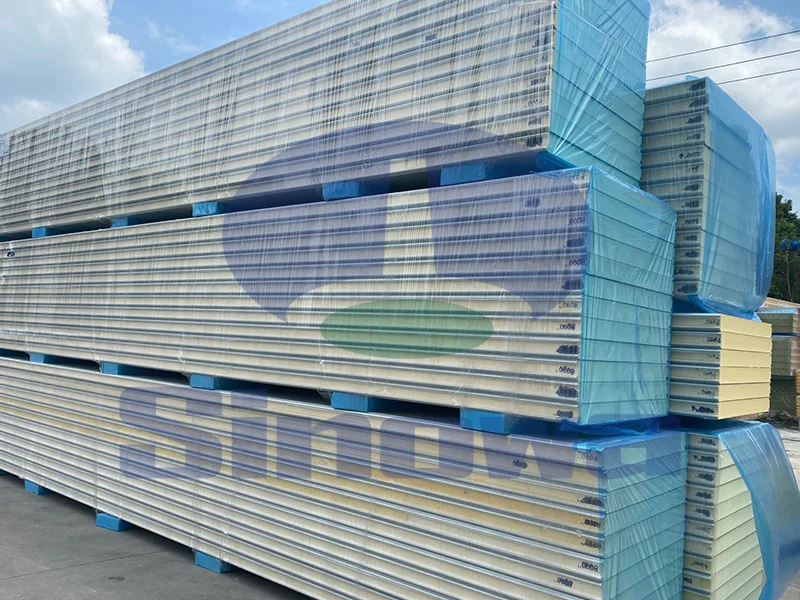
The isolation sandwich panel line is an automatic and intelligent composite panel production equipment, which is mainly used to produce sandwich panels with metal surface (color steel) and thermal insulation core materials (such as rock wool, polyurethane, phenolic foam, etc.).
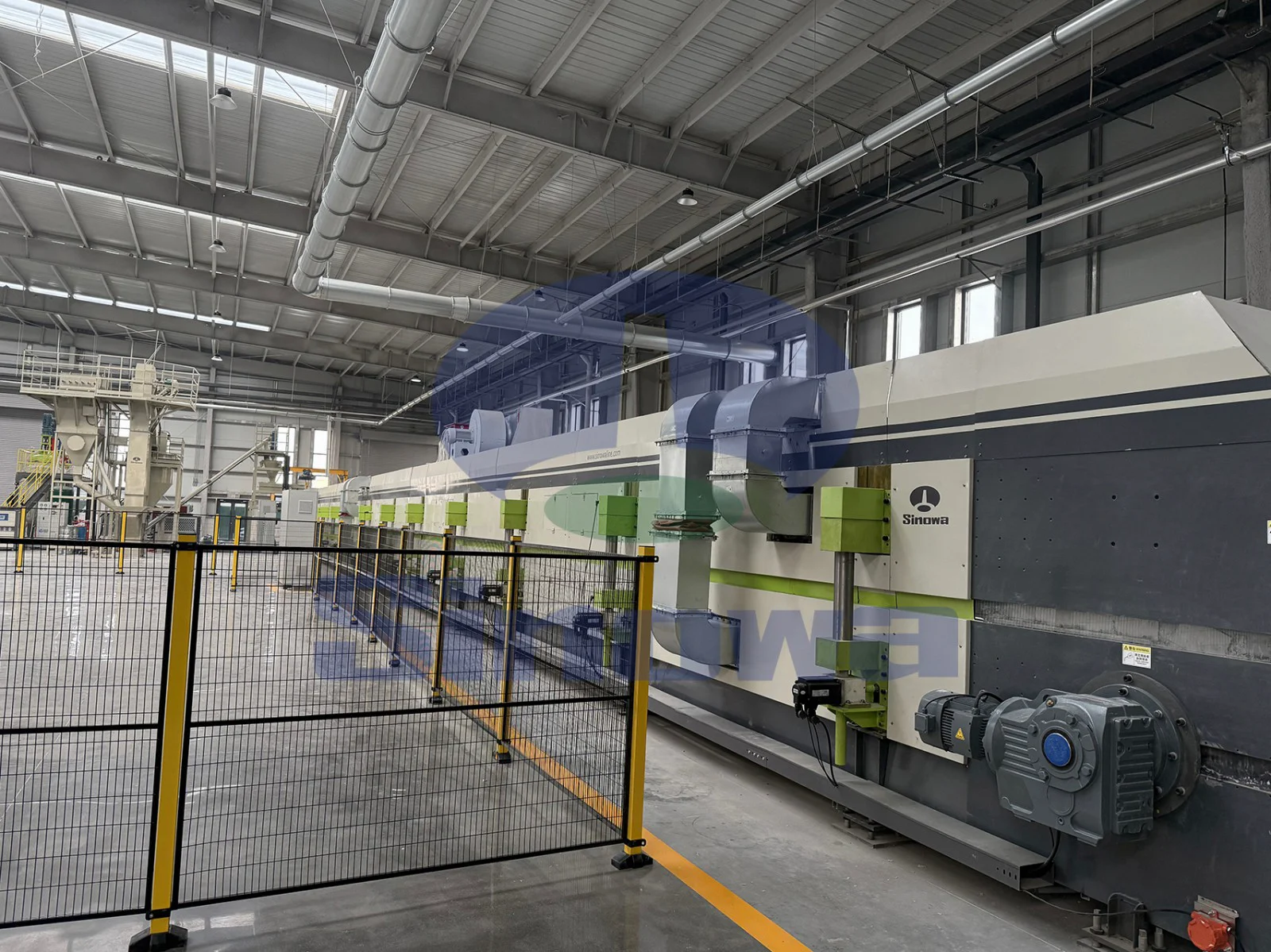
Modules of insulation sandwich panel production line
Uncoiling system: Automatically unfolds metal coils (such as galvanized steel plates and aluminum plates), equipped with correction devices to ensure material alignment.
Forming unit: The metal plate is pressed into the desired plate shape (such as corrugated or flat) through multiple rollers, and some equipment supports customized specifications.
Glue coating and composite system:
Core materials (rock wool, foam, etc.) are automatically transported, and environment-friendly polyurethane adhesive is sprayed on both sides.
High temperature pressure composite ensures bonding strength.Cutting and palletizing:
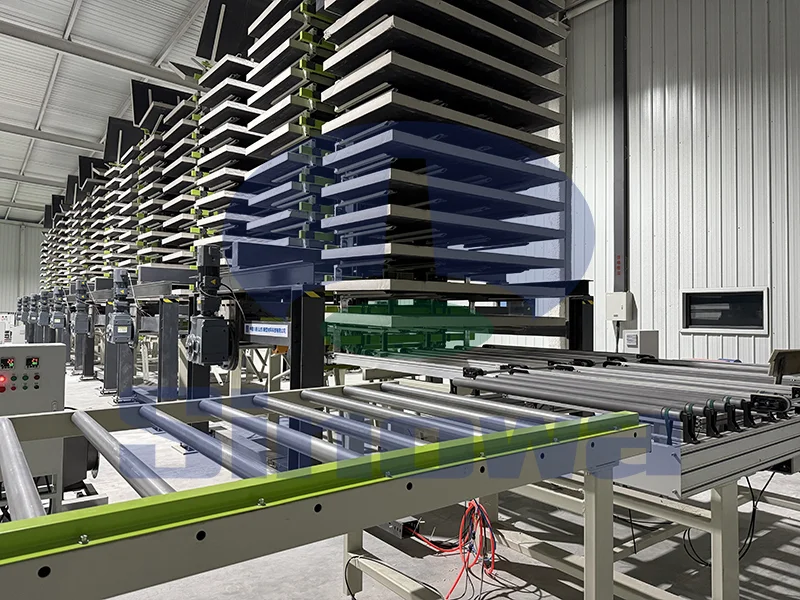
Hydraulic or servo driven cutting device, with an accuracy of ± 1mm, supporting fixed length cutting.
Automatic palletizing machine achieves finished product stacking and reduces manual intervention.
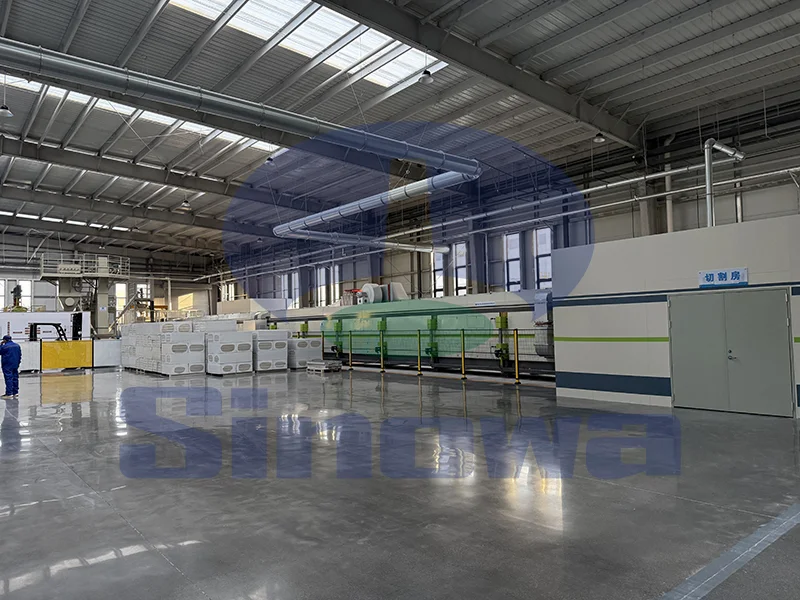
Technical Features of isolation sandwich panel line
Intelligent control:
Adopting PLC+touch screen control system to achieve stepless speed regulation and fault self diagnosis.
Some high-end models are equipped with visual positioning systems that automatically correct board alignment deviations.Multi functional adaptability:
One machine dual-use design, can switch to produce rock wool or foam sandwich board, and it only takes 30 minutes to change the mold.
Support customized board shapes (such as hidden buckle boards, carved decorative boards) to meet the aesthetic needs of architecture.Energy saving and environmental protection technologies:
Waste gas recovery device for treating VOCs emissions during the adhesive coating process.
Variable frequency motor drive reduces energy consumption by 15% -20% compared to traditional equipment.
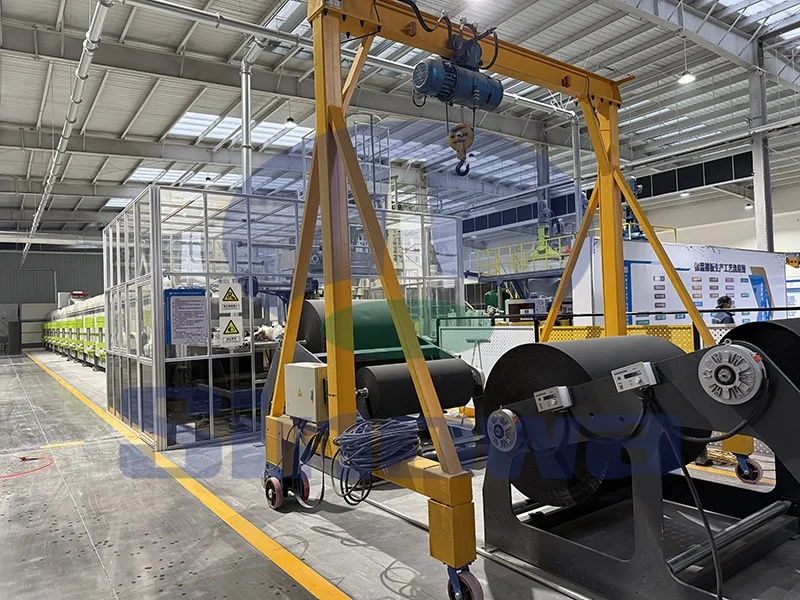
Application scenarios and selection suggestions of isolation sandwich panel machine
Industrial plants/warehouses: Priority should be given to using rock wool sandwich panel equipment (Class A fire-resistant).
Cold chain logistics: requires a polyurethane foam production line for better insulation performance.
Customized architecture: Consider modular design models that support surface texture and color customization.
Isolation sandwich panels have become indispensable components in modern construction and industrial fields, valued for their integrated advantages of thermal insulation, soundproofing, fire resistance, and structural strength. The isolation sandwich panel production line is a specialized automated system designed to manufacture these composite panels efficiently and consistently, integrating multiple processes from raw material feeding to finished product stacking into a cohesive workflow. As the demand for energy-saving and high-performance building materials grows under global environmental regulations, the production line’s design, performance, and adaptability have continuously evolved to meet diverse application needs across industries.
The structure of an isolation sandwich panel production line is a modular combination of functional units, each responsible for a specific stage of the manufacturing process, ensuring seamless coordination and stable operation. Typically, the production line starts with the uncoiling and feeding unit, which is usually composed of two decoilers—one for the upper facing and one for the lower facing—equipped with automatic coil loading and positioning systems to ensure smooth unwinding of raw materials such as metal sheets, non-woven fabrics, or cement-based cloths. These decoilers are designed to handle different coil widths and thicknesses, with tension control mechanisms to prevent material deformation during unwinding. Following the decoiling unit is the roll forming section, which uses a series of precision rollers to shape the upper and lower facings into desired profiles. For wall panels, this section often includes a micro-ribbing device to enhance structural stability, while roof panels require deeper ribs and specialized forming rolls to accommodate outdoor weather conditions. A cassette system is commonly adopted in this section to enable quick replacement of forming rolls, supporting flexible production of different panel types.
The core processing unit is the heart of the production line, responsible for bonding the facings with the insulating core material. This unit includes a preheating component, a foaming or core feeding system, and a lamination conveyor. The preheating unit heats the formed facings to an optimal temperature, promoting better adhesion between the facings and the core material and ensuring the final quality of the sandwich panel. For foam-based core materials such as polyurethane (PU) or polyisocyanurate (PIR), a high-pressure multi-component dosing unit—equipped with mass flow transducers—is used to mix reactive ingredients accurately. This dosing unit can also accommodate hydrocarbons as blowing agents if needed, adjusting the foam density to meet different insulation requirements. The foaming portal applies the reactive mixture onto the lower facing at the entrance of the double-belt conveyor, where the upper and lower facings are brought together. The double-belt conveyor consists of two aligned belts, one above the other, which exert uniform pressure to counteract the expansion force of the foam reaction and ensure the panel’s flatness. The distance between the two belts is adjustable, allowing the production of panels with thicknesses ranging from a few millimeters to 250 millimeters or more. For fiber-based core materials like rockwool or mineral wool, the core processing unit includes a material cutting and spreading system that cuts the core into strips, arranges them vertically to align with the panel width, and grinds them to match the profile of the formed facings before lamination.
After lamination, the panels move to the cutting unit, which uses either a disk saw or a bandsaw to cut the continuous panel into desired lengths with high precision. Some cutting units are equipped with overlap cutting disks to ensure clean cuts and avoid material waste. The cutting process is synchronized with the conveyor speed to maintain dimensional accuracy, with automated control systems to adjust cutting length based on production requirements. Following cutting, the stacking and tilting unit takes over, using an automatic stacker with vacuum cups to lift finished panels and arrange them into neat packs. A tilting mechanism may also be included to flip panels 180 degrees if needed, facilitating convenient packaging and storage. The final section of the production line is the packaging unit, which uses a wrapping ring guided by running rollers to cover the entire length of the panel pack with stretch film, protecting the panels from dust, moisture, and damage during transportation and storage. Throughout the entire production process, drive rollers, guide rollers, and tension control devices connect each unit, ensuring continuous and stable material flow.
The performance of an isolation sandwich panel production line is evaluated based on several key indicators, including production efficiency, processing precision, stability, flexibility, and energy efficiency, which directly determine the quality of the finished panels and the economic benefits of production. Production efficiency is measured by the line’s output capacity, with continuous production lines capable of achieving speeds up to 30 meters per minute or more, depending on the panel thickness and material type. High-efficiency production lines minimize downtime through automated material handling and real-time process monitoring, reducing labor requirements per unit output. Processing precision is critical for ensuring consistent panel dimensions and bonding quality—advanced production lines use PLC (Programmable Logic Controller) and HMI (Human-Machine Interface) systems to control parameters such as forming pressure, preheating temperature, foam mixing ratio, and cutting length with high accuracy, resulting in panels with uniform thickness, flat surfaces, and strong adhesion between layers. Dimensional errors are typically kept within a narrow range, ensuring compatibility during on-site installation.
Stability and reliability are essential for long-term industrial production, as frequent breakdowns can disrupt workflows and increase production costs. High-performance production lines adopt modular designs and precision-machined components, reducing the impact of wear and tear on operational stability. The electrical control, hydraulic, and automatic measurement systems are integrated to provide real-time monitoring of key process parameters, alerting operators to potential issues such as material jams or temperature deviations before they escalate. Flexibility is another important performance indicator, reflecting the line’s ability to produce different panel specifications and types. Production lines with interchangeable forming rolls, adjustable double-belt distances, and configurable core material feeding systems can switch between manufacturing PU, PIR, EPS (expanded polystyrene), or rockwool sandwich panels with minimal adjustments, catering to diverse market demands. Energy efficiency is increasingly valued in modern production, with advanced lines incorporating energy-saving technologies such as optimized heating systems, efficient motor drives, and waste heat recovery mechanisms to reduce power consumption without compromising production performance. This not only lowers operational costs but also aligns with global sustainability goals.
Isolation sandwich panel production lines are classified into different types based on their production mode, automation level, core material compatibility, and output capacity, each suited for specific manufacturing scales and application scenarios. The most common classification is based on production mode, dividing lines into continuous production lines, batch production lines, and semi-continuous production lines. Continuous production lines are designed for high-volume, uninterrupted manufacturing, with raw materials fed into the system seamlessly and panels produced, bonded, cut, and stacked automatically. These lines offer high output capacity—up to 1,500 meters per hour for some models—and uniform product quality, making them ideal for large-scale manufacturers serving industrial building suppliers or export markets. However, they require significant factory space and have higher initial investment, with less flexibility for custom panel sizes.
Batch production lines, by contrast, produce panels in discrete groups, allowing for adjustments in panel thickness, length, and facing material between batches. This flexibility makes them suitable for small to medium-sized manufacturers serving diverse customer needs, such as custom prefabricated buildings or specialized industrial facilities. Batch lines have lower initial investment requirements and can adapt to frequent product changes, though their output capacity is lower than continuous lines and labor requirements are relatively higher. Semi-continuous production lines combine elements of both continuous and batch production, with some processes (such as forming and lamination) operating continuously and others (such as cutting and stacking) operating in batches. These lines balance efficiency and flexibility, making them a popular choice for manufacturers with moderate production volumes and varied product portfolios.
Another key classification is based on automation level, including fully automated, semi-automated, and manual production lines. Fully automated lines integrate advanced control systems, robotic handling, and real-time monitoring to manage the entire production process from material feeding to packaging, minimizing manual intervention. These lines offer exceptional product consistency, reduced labor costs, and high output with minimal downtime, though they require specialized technical expertise for maintenance and have higher energy consumption. Semi-automated lines rely on manual operation for specific tasks such as material loading or quality inspection, while automating core processes like forming and foaming. They balance automation benefits with lower investment and maintenance costs, suitable for manufacturers with limited technical resources. Manual production lines are primarily used for small-scale, custom production, with most processes completed by hand, though they are increasingly being replaced by automated or semi-automated lines due to lower efficiency and inconsistent product quality.
Production lines are also categorized by the type of core material they process, with specialized lines for PU/PIR, EPS, rockwool, or phenolic resin sandwich panels. PU/PIR sandwich panel production lines are equipped with high-pressure foaming systems to handle reactive foam ingredients, producing panels with excellent thermal insulation and structural strength. EPS sandwich panel lines focus on processing lightweight foam cores, integrating automated foam cutting and spreading systems to ensure uniform core density. Rockwool sandwich panel production lines include specialized equipment for cutting and arranging mineral fiber cores, with high-temperature resistant lamination systems to maintain bonding strength. Phenolic resin sandwich panel lines are designed to handle fire-resistant core materials, with precise temperature control during curing to enhance the panel’s fire performance.
The applications of isolation sandwich panel production lines are closely linked to the uses of the finished panels, spanning construction, industrial, agricultural, and specialized fields, driven by the panels’ versatile performance. In the construction industry, these production lines play a crucial role in manufacturing panels for exterior walls, roofs, and interior partitions of industrial buildings, commercial complexes, residential buildings, and prefabricated structures. The thermal insulation and soundproofing properties of the panels help reduce building energy consumption for heating and cooling, complying with global energy-saving regulations. For prefabricated buildings, the fast production speed of the lines enables quick delivery of panels, accelerating on-site assembly and shortening construction cycles—an advantage particularly valuable in emergency housing projects or large-scale residential developments.
In industrial settings, isolation sandwich panels produced by these lines are widely used in cold storage facilities, clean rooms, and industrial workshops. Cold storage facilities rely on panels with excellent thermal insulation to maintain stable low temperatures, reducing energy consumption for refrigeration. Clean rooms, such as those in pharmaceutical, electronic, or food processing plants, require panels with smooth, non-porous surfaces that are easy to clean and resistant to contamination—production lines can be configured to produce such panels with specialized facings and core materials. Industrial workshops, especially those with high noise levels or temperature fluctuations, use the panels for sound insulation and thermal regulation, improving working conditions.
The agricultural sector also benefits from isolation sandwich panels, with production lines manufacturing panels for greenhouses, livestock barns, and storage sheds. Greenhouses use insulated panels to maintain stable internal temperatures, extending the growing season and improving crop yields. Livestock barns rely on the panels’ thermal insulation and moisture resistance to create a comfortable living environment for animals, reducing disease risks and improving productivity. Storage sheds use the panels for durable, weather-resistant construction, protecting agricultural equipment and crops from the elements.
Specialized applications include transportation, infrastructure, and emergency response. In transportation, lightweight isolation sandwich panels are used in the construction of railway carriages, shipping containers, and mobile homes, where weight reduction and thermal insulation are critical. Infrastructure projects, such as subway stations, tunnels, and highway sound barriers, use the panels for soundproofing and fire resistance, enhancing public safety and comfort. In emergency response scenarios, such as natural disasters, production lines can quickly produce panels for temporary shelters, providing rapid housing solutions for displaced populations.
As global attention to energy conservation and sustainability continues to grow, the demand for high-performance isolation sandwich panels will further increase, driving continuous innovation in production line technology. Future production lines are expected to become more intelligent, with the integration of IoT (Internet of Things) technology for real-time process monitoring and predictive maintenance, reducing downtime and improving operational efficiency. Advances in material science will also expand the range of core materials and facings, enabling production lines to manufacture panels with enhanced fire resistance, environmental friendliness, and durability. Additionally, the trend toward modular and flexible production lines will continue, allowing manufacturers to adapt quickly to changing market demands and produce customized panels for niche applications.
In conclusion, the isolation sandwich panel production line is a sophisticated and versatile manufacturing system that plays a vital role in supporting modern industrial and construction development. Its modular structure ensures efficient and stable production, while key performance indicators such as precision, flexibility, and energy efficiency determine its adaptability to diverse needs. The various types of production lines cater to different manufacturing scales and material requirements, enabling the mass production of high-quality isolation sandwich panels. From construction and industrial facilities to agriculture and emergency response, the applications of these production lines are extensive and far-reaching, contributing to energy conservation, environmental protection, and the improvement of living and working conditions. As technology advances, the production line will continue to evolve, offering greater efficiency, intelligence, and sustainability to meet the ever-growing global demand for high-performance composite materials.