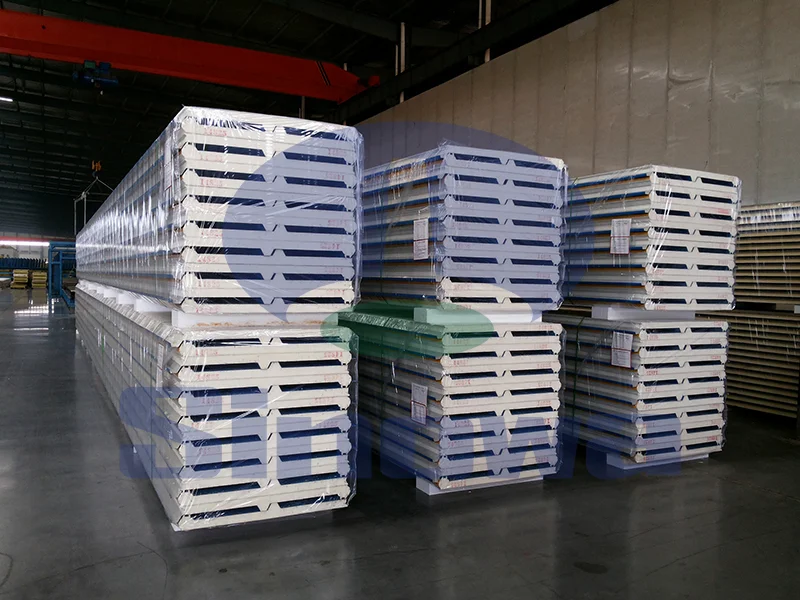
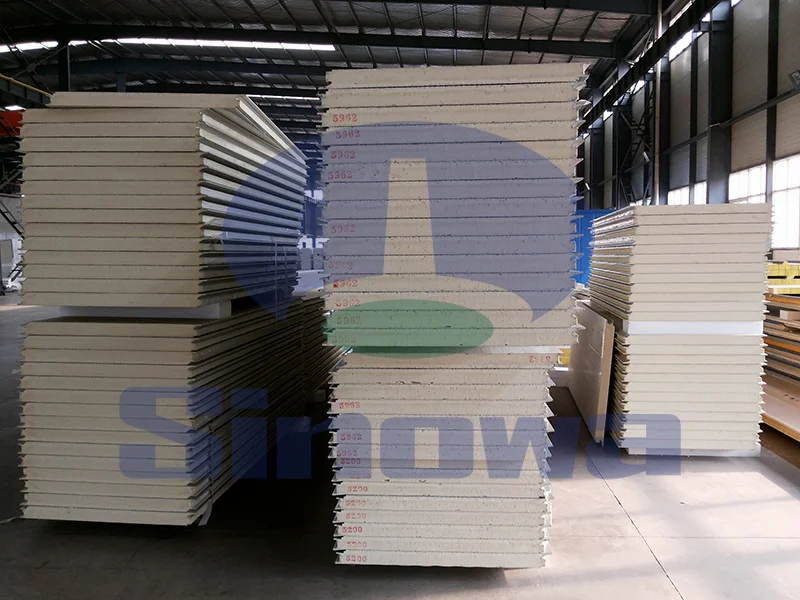
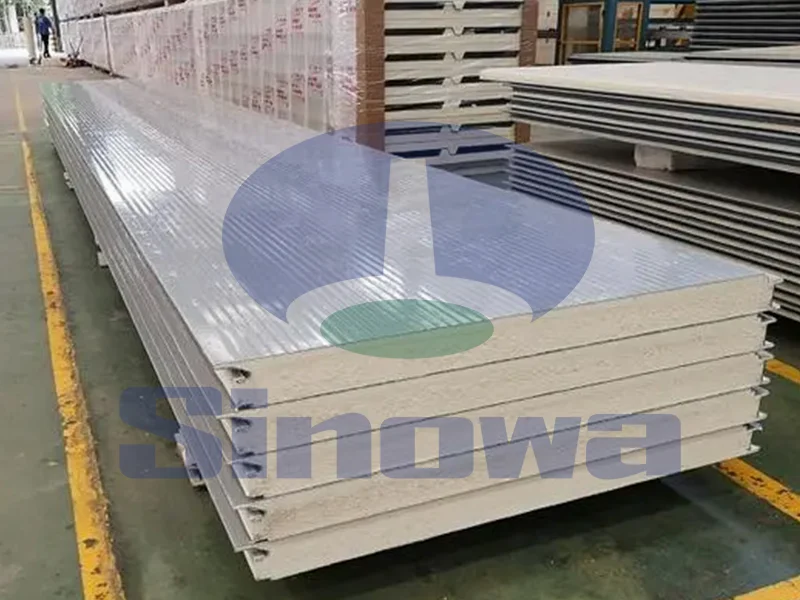
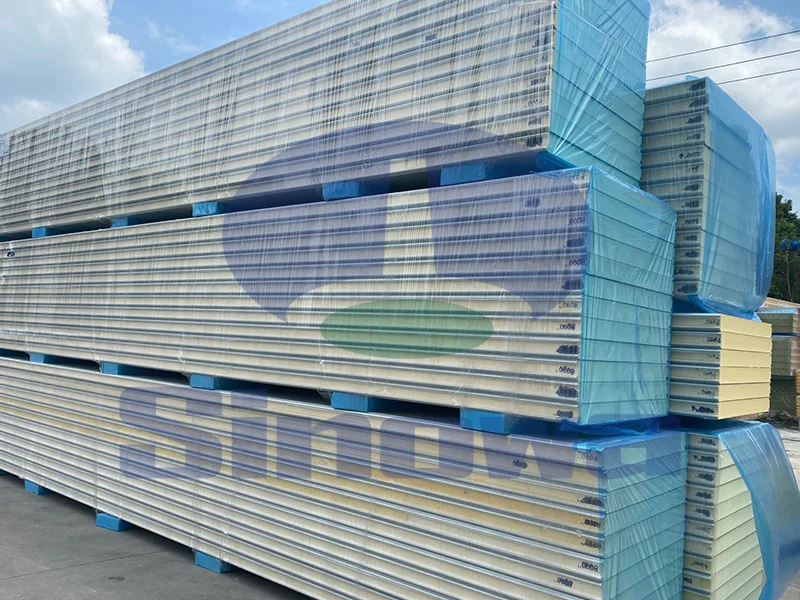
Cold storage sandwich panel is a building panel composed of double-sided metal panels (usually color steel plates, stainless steel plates, or aluminum magnesium manganese plates) and intermediate insulation core materials compounded by high-strength adhesives. This special structure gives it excellent thermal insulation performance, structural strength, and moisture-proof sealing, making it the preferred material for modern cold storage construction.
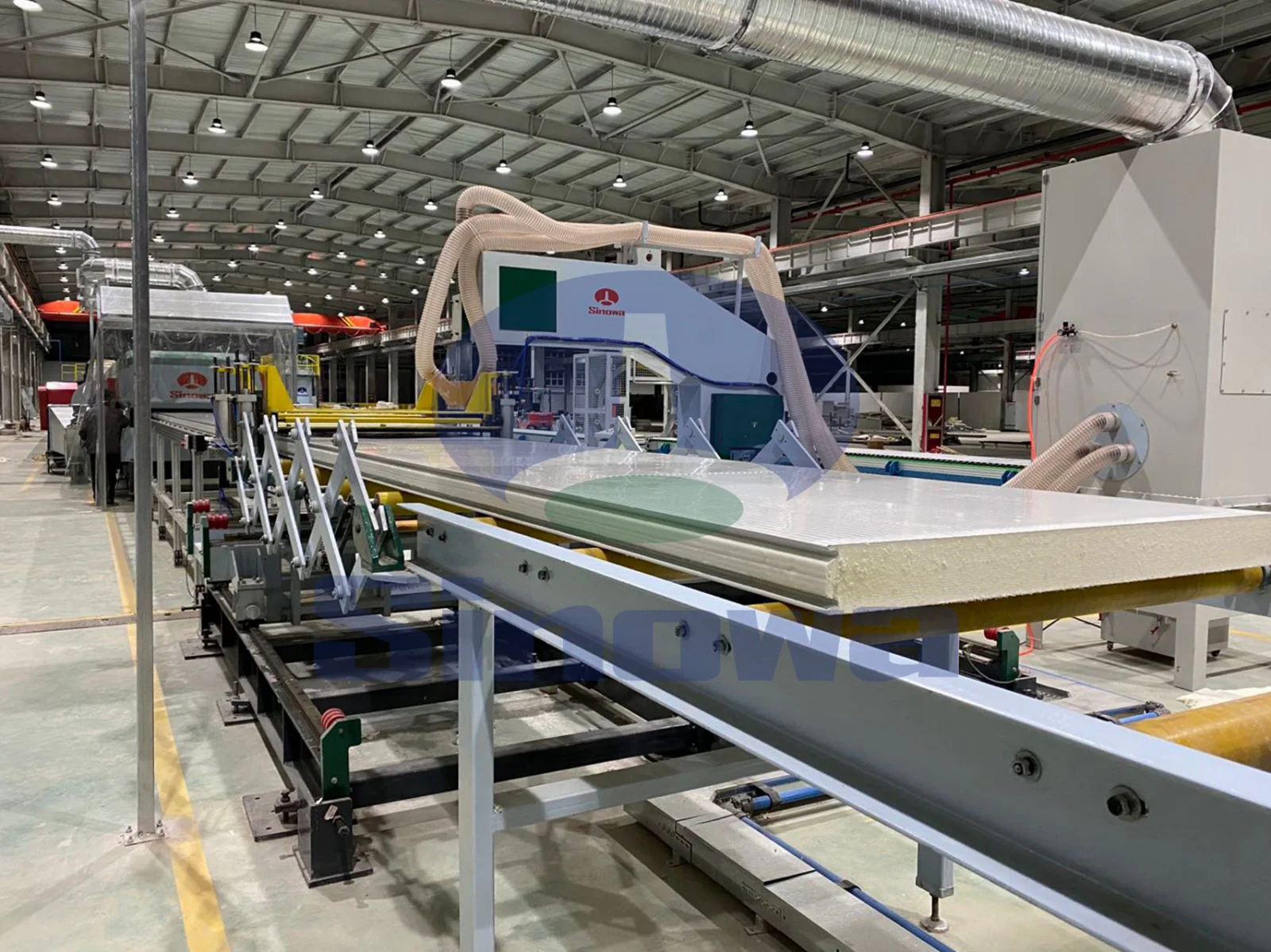
Compared with traditional building materials, modern cold storage sandwich panels have three significant advantages: firstly, the thermal conductivity coefficient is extremely low (polyurethane core material λ ≤ 0.022W/m · K), which can significantly reduce refrigeration energy consumption; Secondly, the installation is convenient, and the modular design shortens the construction period by more than 50%; Thirdly, it has a long service life, and high-quality products can last up to 20-30 years. These characteristics have continuously expanded its applications in fields such as food processing, pharmaceutical warehousing, and logistics cold chain.
Cold storage sandwich panels can be divided into polyurethane (PU/PIR) sandwich panels, rock wool sandwich panels, and phenolic (PF) sandwich panels according to the type of core material. Among them, polyurethane accounts for over 65% and has become the mainstream choice in the market due to its excellent insulation performance and relatively low cost. With the improvement of fire prevention standards, the application proportion of rock wool and phenolic sandwich panels in special places is increasing.
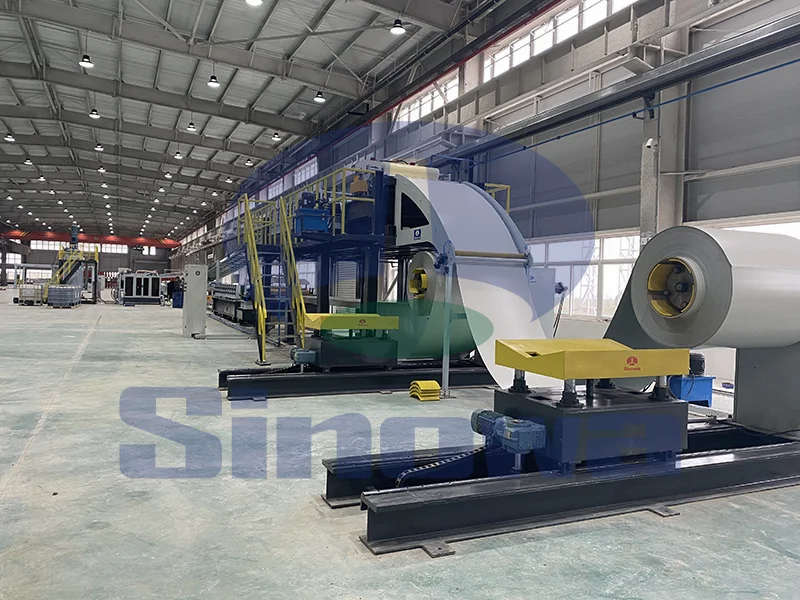
A complete cold storage sandwich panel production line is a highly integrated system of electromechanical integration, mainly composed of five modules, each of which carries key production functions.
The metal panel pretreatment system is the starting point of the production line, including equipment such as uncoiler, leveling machine, cleaning machine, and glue coating machine. The cold storage panel machine generally adopts laser ranging automatic correction technology to ensure that the conveying accuracy of the panels is controlled within ± 0.5mm. In terms of surface treatment technology, new nano coating technology has begun to be applied, making the panel have better corrosion resistance and self-cleaning function. The Sinowa cold storage sandwich panel line even integrates panel embossing technology, which can complete decorative pattern processing in one go.
The core material processing system has significant differences in configuration according to different materials. For polyurethane core materials, the core equipment is a high-pressure foaming machine. Modern models use multi-component (2-9 component) cyclopentane foaming technology, combined with a PLC control system to achieve foam density gradient control (adjustable from 30-45kg/m ³). Rock wool core materials require vertical and horizontal cutting machines and dust removal systems. The latest cold storage panel equipment has achieved CNC cutting with an accuracy of ± 0.3mm. The manufacturer's "flexible core material processing center" is compatible with automated processing of PU and rock wool materials.
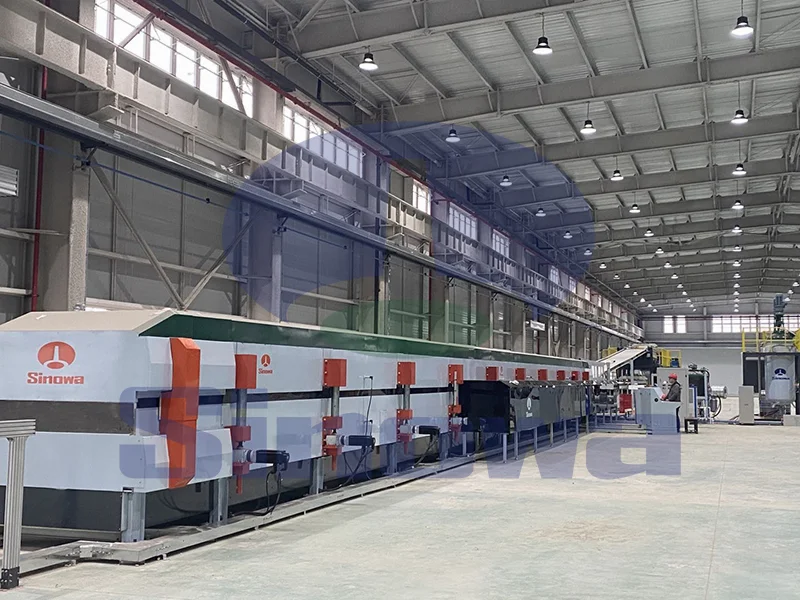
The composite molding system is the core of the production line, mainly composed of a laminating machine, a double belt press, and a hot air circulation system. Sinowa adopts a segmented process of "hot pressing cold forming" to increase the bonding strength of the board by 40%. The temperature control accuracy reaches ± 1 ℃, and the pressure adjustment range is 0.2-1.5MPa, which can meet the production needs of different thickness plates.
The automation level of cutting and palletizing systems directly affects production efficiency. At present, the high-end cold storage sandwich panel manufacturing line is equipped with a six axis robotic arm and a visual positioning system, with a cutting length error of ≤ 1mm and an angle error of ≤ 0.5 °.
The control system and auxiliary equipment constitute the "brain" of the cold storage sandwich panel machinery. Modern cold storage board production lines generally adopt the industrial Internet architecture, and realize remote monitoring and data analysis through the MES system. In terms of energy conservation, heat recovery devices can reuse 80% of waste heat, reducing overall energy consumption by 40% compared to traditional equipment. Equipped with combustible gas alarm and automatic fire extinguishing devices, especially specially designed for the explosion-proof requirements of pentane in polyurethane production.
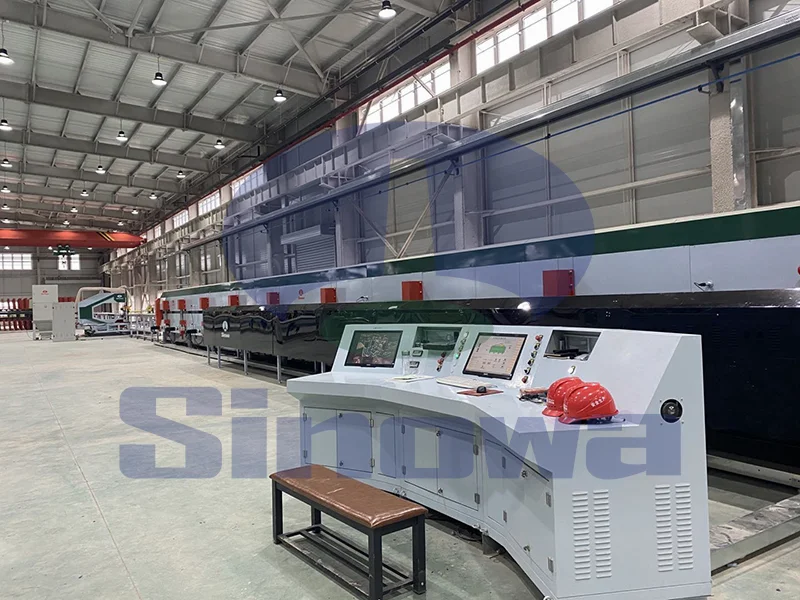
Polyurethane (PU/PIR) is the mainstream core material for cold storage sandwich panels, and its production line technology has developed the fastest, forming multiple industry core technologies.
High pressure foaming technology is the core of modern PU sandwich panel production lines. Better mixing effect and more uniform pore structure. The multi-component foaming system (supporting up to 9 components) allows the addition of modified materials such as flame retardants and reinforcing fibers to meet different fire rating requirements.
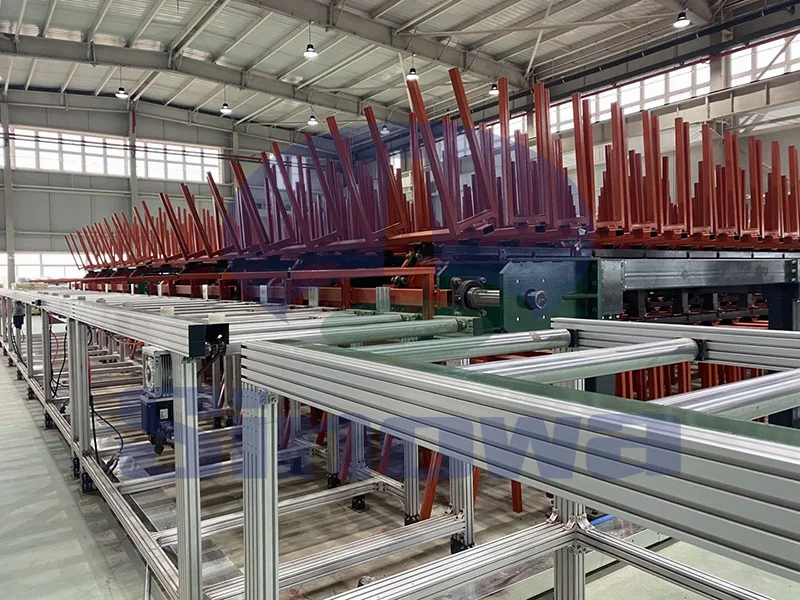
The continuous lamination process has achieved efficient production of high-quality sandwich panels. The advanced 'dual track laminating system' has a production speed of 6-15m/min, which is 3-5 times faster than intermittent production. Temperature zoning control technology (usually divided into preheating zone, curing zone, and cooling zone) ensures that polyurethane obtains optimal curing conditions at different stages. Sinowa's innovative "gradient temperature control" technology ensures that the curing rate of the core and surface layers of the board tends to be consistent, reducing deformation problems caused by internal stress.
Unlike polyurethane sandwich panels, rock wool and phenolic sandwich panel production lines have their unique features in terms of process and equipment configuration, mainly meeting the needs of higher fire resistance levels.
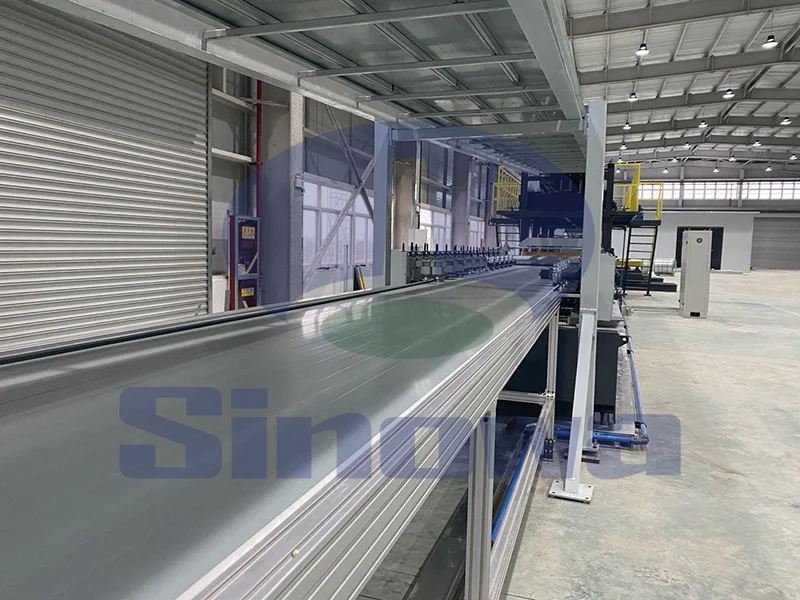
The core of the rock wool sandwich panel production line lies in dust control and precise adhesive application. The continuous sandwich panel production line adopts a fully enclosed design, equipped with a three-stage purification system of cyclone dust removal, bag dust removal, and activated carbon adsorption. The dust concentration in the working environment is controlled below 2mg/m ³. In the glue application process, the high-precision two-component polyurethane glue spraying system achieves a glue amount control accuracy of ± 3%, and the glue consumption is reduced to 2.8-3.2kg/㎡. The "Rock Wool Micro Tension Paving System" developed by Sinowa has solved the problem of traditional rock wool being prone to breakage, increasing production speed to 4-8m/min.
The particularity of the phenolic sandwich panel production line lies in the need to handle acidic curing environments. Phenolic equipment requires the use of corrosion-resistant materials such as 316L stainless steel to make key components. The latest low-pressure foaming technology makes the closed cell rate of phenolic foam increase to more than 85%, and the water absorption rate decrease to less than 5%.
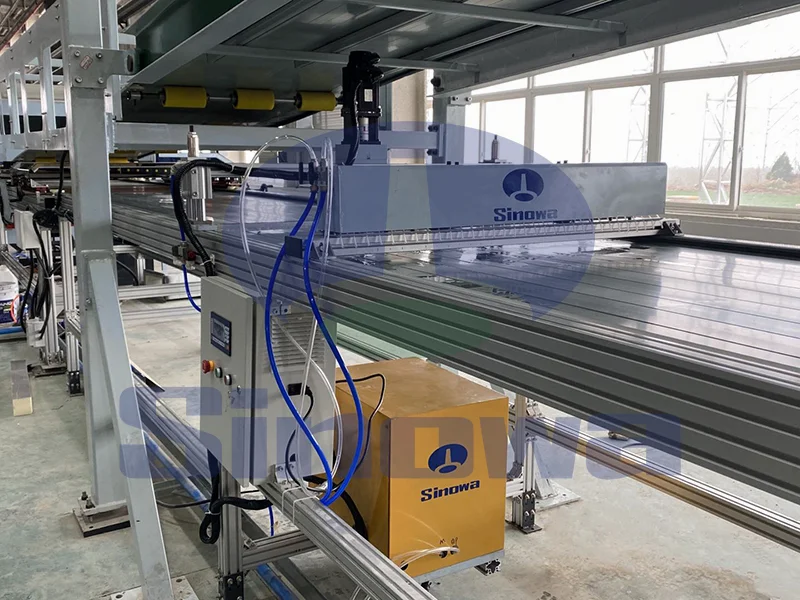
The Sinowa "Rock Wool - PU Composite Production Line" can simultaneously pour polyurethane edge sealing on both sides of the rock wool, ensuring fire resistance (Class A) and solving the problem of water leakage at the edges of the rock wool board.
Fire performance optimization is the core value of the cold storage sandwich panel plant. Through special flame retardant formula and structural design, modern rock wool/phenolic sandwich panels can achieve a fire resistance limit of 1-4 hours (depending on thickness), smoke density level ≤ 15, and combustion performance level A2.
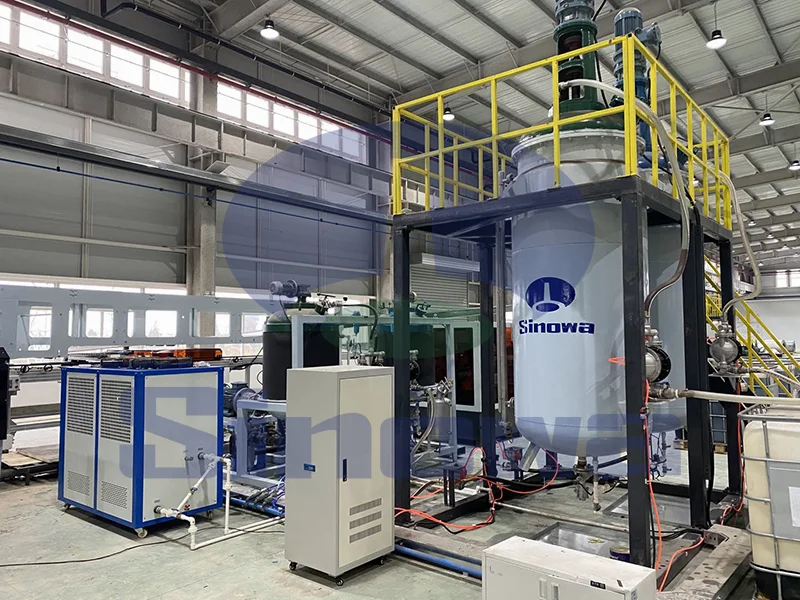
The cold storage sandwich panel production line is a highly automated integrated system designed to manufacture composite panels that play a critical role in maintaining stable low-temperature environments across various industries. These panels, composed of two outer facings and a core insulation layer, rely on the precision and efficiency of the production line to achieve consistent quality and performance, making the line an indispensable part of modern cold chain infrastructure and low-temperature storage facilities. Unlike traditional manual production methods, which are inefficient and prone to quality variations, the automated production line streamlines the entire manufacturing process from raw material feeding to final product stacking, ensuring that each panel meets the strict requirements of thermal insulation, structural strength, and durability needed for cold storage applications. As global demand for cold storage solutions grows—driven by the expansion of the food processing, pharmaceutical, and logistics industries—the importance of understanding the structure, performance, types, and applications of these production lines becomes increasingly significant.
The structure of a cold storage sandwich panel production line is a coordinated assembly of functional units, each responsible for a specific stage of the manufacturing process, working together to achieve continuous and efficient production. At the starting end of the line, uncoilers are installed to handle the outer facing materials, typically metal coils such as color-coated steel or aluminum. These uncoilers are usually of the mandrel type, operated hydraulically for automatic and stable feeding, and some advanced systems adopt a 2+2 configuration that allows for coil replacement without stopping production, thereby maintaining high throughput. The uncoiled metal sheets then move to the preprocessing section, where multiple treatments are performed to enhance the adhesion between the facings and the core material. This preprocessing typically includes corona treatment to increase surface energy, film coating to protect the outer surface from scratches and corrosion, and edge curling to improve the structural integrity of the final panel. A glue application system follows, which precisely applies adhesive to the inner surface of the metal facings; the uniformity of the adhesive layer is critical to ensuring strong bonding and preventing delamination during long-term use.
After preprocessing and glue application, the metal facings are fed into the lamination and core filling section, which is the core part of the production line. For different core materials, the filling methods vary: for foam cores such as polyurethane (PU) and polyisocyanurate (PIR), a foaming system injects the liquid foam mixture between the upper and lower facings, where it expands and cures to form a dense, closed-cell insulation layer. For rigid board cores such as expanded polystyrene (EPS) and mineral wool, a feeding system delivers pre-cut core boards into the gap between the facings, ensuring tight fit and uniform alignment. This section is often equipped with pressure rollers and heating units to promote adhesion and curing, with precise control over temperature and pressure to ensure the core material bonds firmly with the facings. Following lamination, the continuous panel is moved to the cutting section, where a high-precision cutting unit trims the panel to the required length and width. The cutting system is typically computer-controlled to ensure accuracy, even at high production speeds, and some lines include edge trimming functions to refine the panel edges and meet dimensional specifications. Finally, the finished panels are transferred to the automatic stacking and packaging section, where a stacking machine arranges the panels neatly, and a packaging system wraps them in plastic film to protect against moisture and damage during transportation and storage. The entire structure is connected by a conveyor system that ensures smooth material flow, with centralized control to coordinate the operation of all units and minimize production interruptions.
The performance of a cold storage sandwich panel production line is determined by its automation level, production efficiency, precision control, and adaptability, all of which directly affect the quality of the final panels and the overall productivity of the manufacturing process. Automation is a key performance indicator, as high automation reduces human intervention, minimizes errors, and improves production consistency. Advanced lines feature computerized control systems that integrate parameter adjustment, fault diagnosis, and production monitoring, allowing operators to set production parameters such as panel thickness, cutting length, and foaming density through a user-friendly interface. Some systems even support remote control and data monitoring, enabling real-time tracking of production progress and equipment status. Production efficiency is another critical factor, with modern lines capable of operating at speeds ranging from 5 to 12 meters per minute, depending on the panel type and thickness. This high throughput ensures that manufacturers can meet large-order requirements in a timely manner, which is essential for supporting the rapid expansion of the cold storage industry. The efficiency is further enhanced by modular design, which allows for easy expansion and modification of the line to accommodate increased production capacity or new product types.
Precision control is essential to ensuring the performance of the cold storage panels, as small deviations in dimensional accuracy or core material density can significantly impact the panel’s thermal insulation and structural performance. The production line’s control system regulates key parameters such as adhesive application amount, foaming temperature and time, lamination pressure, and cutting precision with high accuracy. For example, the foaming system must maintain consistent temperature and pressure to ensure the foam core has a uniform cell structure, which directly affects its thermal resistance; uneven foaming can lead to gaps or weak points in the insulation layer, reducing the panel’s ability to maintain low temperatures. Similarly, the cutting system must achieve precise dimensional control to ensure panels fit together tightly during installation, minimizing air leakage and heat transfer. Adaptability is another important performance characteristic, as the line must be able to produce panels with different specifications, core materials, and facing types to meet diverse application needs. Modular design enables this adaptability, as components can be replaced or reconfigured to switch between core materials (e.g., from PU to EPS) or adjust panel thickness (typically ranging from 50mm to 200mm) without major overhauls. Additionally, the line should be durable and easy to maintain, with robust components that can withstand long-term continuous operation and minimize downtime for repairs.
The types of cold storage sandwich panel production lines are primarily classified based on the core material of the panels they produce, as different core materials require distinct production processes and equipment configurations. The most common types include lines for PU, PIR, EPS, and mineral wool core panels, each tailored to the unique properties of the core material and the intended application of the panels. PU cold storage sandwich panel production lines are widely used due to the excellent thermal insulation and structural performance of PU foam. These lines are equipped with high-pressure foaming systems that inject PU foam between the metal facings, where it cures quickly to form a closed-cell structure with high thermal resistance (typically 6–7 per inch) and strong structural integrity. PU lines are suitable for producing panels used in general cold storage, frozen food warehouses, and logistics centers, as they can withstand temperatures as low as -40°C and offer space-saving benefits due to their ability to create thinner walls without compromising insulation performance.
PIR cold storage sandwich panel production lines are similar to PU lines but are modified to handle the more complex manufacturing process of PIR foam, which offers enhanced thermal stability and fire resistance compared to PU. PIR foam has the highest thermal resistance among foam cores (up to 7.5 per inch) and can maintain stable performance at cryogenic temperatures as low as -200°C, making it ideal for sensitive applications such as pharmaceutical cold storage, blood banks, and vaccine facilities. PIR lines feature specialized foaming systems that control the curing process more precisely to ensure the foam’s superior properties, and they often include additional quality control measures to meet the strict safety requirements of these high-end applications. EPS cold storage sandwich panel production lines are designed for cost-effective production, as EPS is a lightweight, widely available material with good moisture resistance. These lines use a feeding system to deliver pre-expanded EPS boards between the metal facings, which are then bonded together with adhesive. EPS lines are suitable for producing panels used in chilled storage facilities (temperatures between 2°C and 15°C) and general storage applications, where cost efficiency is a priority. They are also easier to operate and maintain compared to PU and PIR lines, making them a popular choice for small to medium-sized manufacturers.
Mineral wool cold storage sandwich panel production lines are specialized for producing panels with mineral wool cores, which offer excellent fire resistance and sound insulation properties. Mineral wool is an inorganic material that does not burn, making it suitable for cold storage facilities with strict fire safety requirements, such as those storing flammable materials or located in densely populated areas. These lines use a feeding system to distribute mineral wool evenly between the metal facings, and they often include compression units to ensure the mineral wool is tightly packed, maximizing its thermal insulation and soundproofing performance. Mineral wool lines are also used in industrial cold storage facilities where high durability and resistance to high temperatures are needed. In addition to these core-based types, some production lines are designed for continuous or batch production: continuous lines are ideal for large-scale production of standard panels, while batch lines are more flexible for small-batch, custom-sized panels.
The applications of cold storage sandwich panel production lines are closely linked to the use of the panels they manufacture, spanning a wide range of industries that require stable low-temperature storage or temperature-controlled environments. The food processing and logistics industry is the largest user of cold storage panels, and thus of the production lines that manufacture them. In this industry, the panels are used to construct cold storage warehouses, frozen food processing facilities, and refrigerated transportation containers. These facilities require panels that can maintain consistent temperatures—ranging from -50°C for frozen storage to 4°C for refrigerated storage—to preserve the quality and safety of food products, prevent spoilage, and extend shelf life. The high efficiency of the production lines ensures that manufacturers can supply large quantities of panels to meet the growing demand for cold chain infrastructure, driven by the global expansion of food trade and the increasing popularity of frozen and processed foods.
The pharmaceutical and healthcare industry is another critical application area, as many drugs, vaccines, and biological samples require strict temperature control to maintain their efficacy and safety. Cold storage panels produced by specialized lines (primarily PIR lines) are used to construct pharmaceutical cold storage facilities, blood banks, and laboratory refrigeration rooms, where temperatures must be maintained within narrow ranges (often between -20°C and 8°C). The superior thermal stability and fire resistance of PIR panels make them ideal for these applications, as they minimize the risk of temperature fluctuations and ensure compliance with industry safety standards. The production lines for these panels must meet high precision requirements to ensure the panels’ performance is consistent, as even minor deviations can compromise the integrity of sensitive medical products.
Industrial manufacturing is also a significant application area for cold storage sandwich panel production lines. Many industrial processes require temperature-controlled environments, such as the production of chemicals, electronics, and precision components. Cold storage panels are used to construct clean rooms, temperature-controlled workshops, and industrial cold storage facilities, where they provide thermal insulation and structural support while maintaining a stable indoor environment. For example, in the electronics industry, temperature-controlled facilities prevent moisture buildup and thermal expansion, which can damage sensitive electronic components. Mineral wool core panels, produced by specialized lines, are often used in industrial applications due to their fire resistance and durability. Additionally, the production lines are used to manufacture panels for temporary cold storage facilities, such as those used for disaster relief, seasonal storage, or construction site offices, where quick installation and portability are required.
In addition to these main industries, cold storage sandwich panel production lines also support applications in agriculture, hospitality, and retail. In agriculture, the panels are used to construct cold storage facilities for fruits, vegetables, and livestock products, extending their shelf life and reducing post-harvest losses. In the hospitality industry, they are used to build refrigerated storage areas in hotels, restaurants, and catering facilities. In retail, they are used to construct walk-in freezers and coolers in supermarkets and convenience stores. The versatility of the production lines—enabled by their modular design and adaptability to different core materials—allows them to meet the diverse needs of these industries, making them a flexible and essential manufacturing solution. As the global focus on energy efficiency and sustainability grows, the production lines are also evolving to produce more eco-friendly panels, such as those using recycled core materials or low-VOC adhesives, further expanding their application scope and supporting the development of green cold storage infrastructure.
Overall, the cold storage sandwich panel production line is a sophisticated manufacturing system that combines precision engineering, automation, and adaptability to produce high-performance panels for a wide range of low-temperature applications. Its structure, composed of coordinated functional units, ensures efficient and consistent production, while its performance characteristics—including high automation, precision control, and adaptability—guarantee the quality of the final product. The different types of production lines, tailored to specific core materials, enable manufacturers to meet the unique requirements of various industries, from food and pharmaceuticals to industrial manufacturing. As the demand for cold storage solutions continues to grow, the production lines will play an increasingly important role in supporting the expansion of the cold chain industry, improving energy efficiency, and ensuring the safe storage of temperature-sensitive products worldwide. Their ability to adapt to new materials and technologies will also drive innovation in cold storage design and construction, making them a key component of the global infrastructure for temperature-controlled storage and transportation.