The wall sandwich panel line is a core equipment in modern industrial construction production, used to manufacture composite wall materials with multiple functions such as insulation, sound insulation, and fire prevention. With the deepening of green building concepts and the popularization of prefabricated buildings, the application of such wall sandwich panel production lines in the construction industry is becoming increasingly widespread.
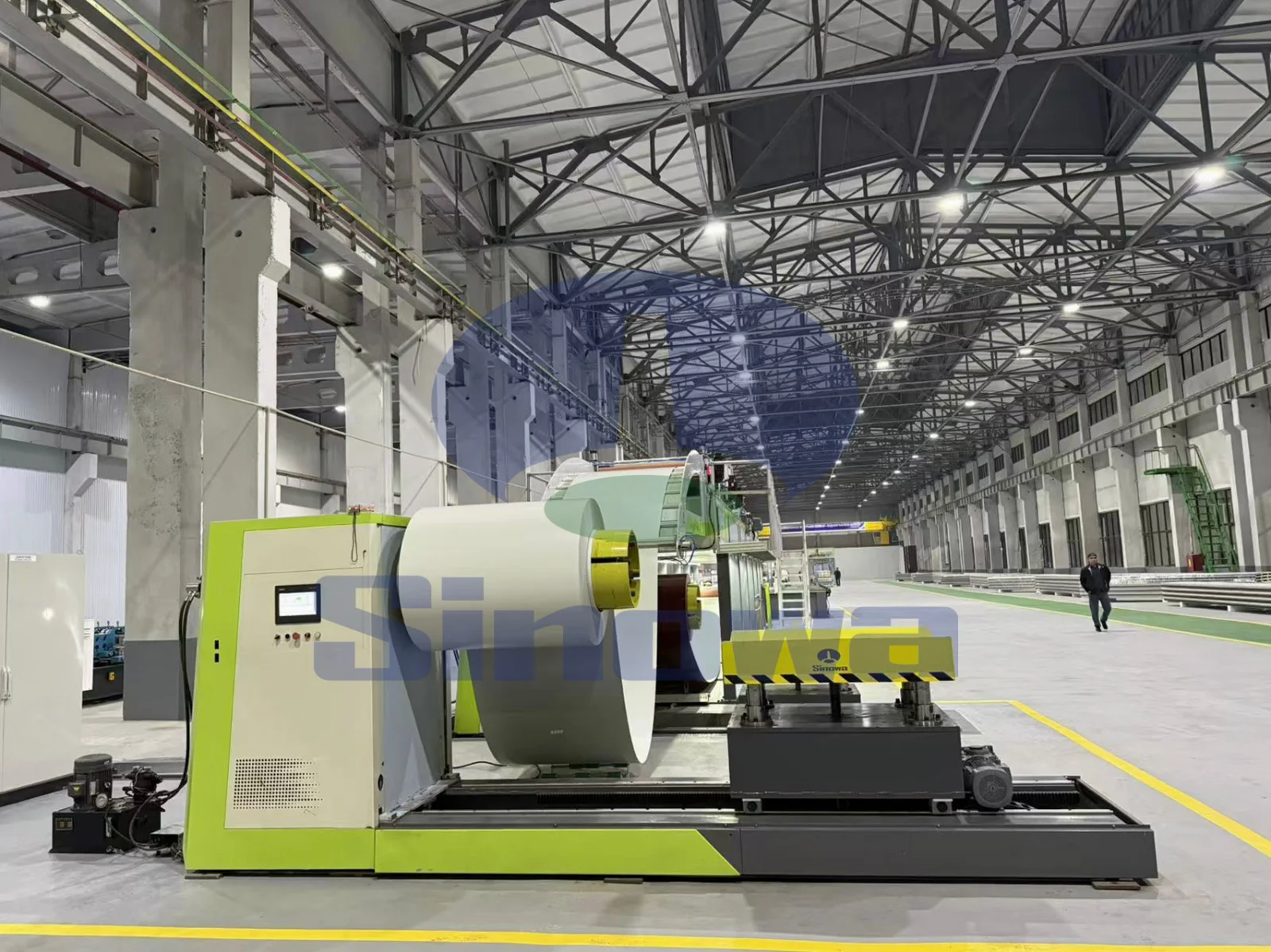
The production line of wall sandwich panels can be divided into multiple types based on the type of core material and product structure, each with its unique technical characteristics and applicable scenarios.
Polyurethane (PU)/polyisocyanurate (PIR) sandwich panel production line
Core technology: Using high-pressure foaming process, liquid polyurethane mixture is injected between two layers of metal panels or non-metal surface layers, and foamed and cured in a double track laminating machine
Process characteristics: Cyclopentane or 141B can be used as environmentally friendly foaming agents in the foaming process, and the foaming density is usually controlled between 38-45kg/m ³
Product advantages: Low thermal conductivity of 0.022-0.028W/m · K, excellent insulation performance; The fire protection level can reach B1 level; High bonding strength between panel and core material
Application areas: Widely used in cold chain logistics, industrial plants, cold storage and other places with high insulation performance requirements
Rock wool/glass wool sandwich panel production line
Core technology: Prefabricated rock wool strips are accurately positioned through an automatic slitting and conveying system, and the panels are coated with high-performance adhesive and then roller pressed and composite
Process innovation: PU edge sealing technology can form a sealing strip at the edge of rock wool, solving the problem of moisture absorption in traditional rock wool boards
Product advantages: A-grade non combustible material, with a fire resistance limit of over 2 hours; Excellent sound insulation performance (noise reduction coefficient NRC>0.75); Compressive strength>40kPa
Application areas: Especially suitable for industrial buildings, public facilities, and commercial buildings with high fire prevention requirements
Cement based composite sandwich panel production line
Core technology: Using vertical or flat mold technology, cement, fly ash and other cementitious materials are combined with lightweight aggregates (perlite, ceramic particles, etc.), with insulation materials sandwiched in between
Process characteristics: the production line integrates raw material proportioning, mixing, molding and pressing, curing and drying, cutting and packaging
Product advantages: 1/6 the weight of clay bricks, sound insulation up to 46 decibels (120mm board), A-level fire resistance for 4 hours, thermal conductivity of 0.2W/m · k
Application areas: Construction of interior and exterior walls, roofs, and perimeter walls in buildings, particularly suitable for prefabricated building projects
Phenolic formaldehyde (PF) sandwich panel production line
Core technology: Polymer modified mortar is used to continuously wrap phenolic insulation board, which is cured and formed by a laminating machine
Process features: Multiple products with non-woven fabric, kraft paper or aluminum foil surface can be produced
Product advantages: A1 level fire resistance (more than 3 hours of fire resistance), non-toxic and smoke-free combustion; The closed pore rate exceeds 95%; Strong weather resistance, with a service life of up to 30 years
Application areas: High rise buildings and places with special fire protection requirements
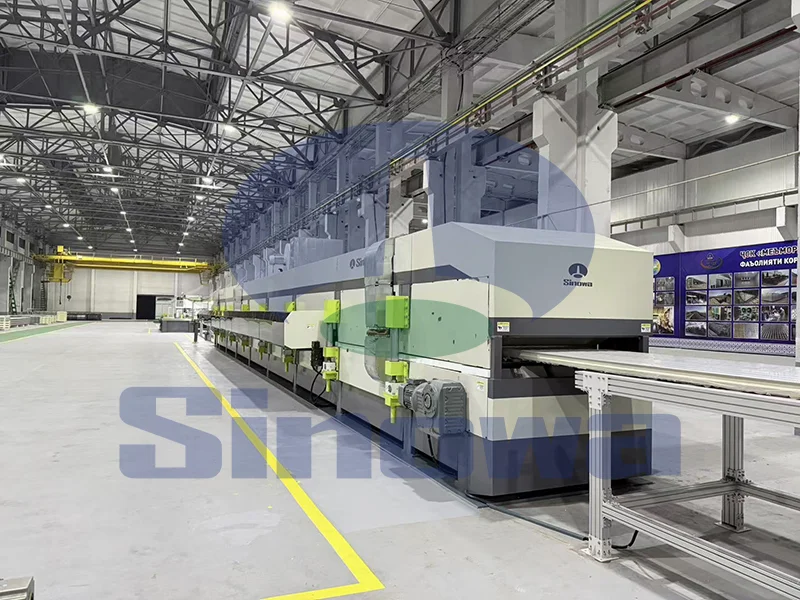
A complete wall board production line consists of multiple precision matched subsystems, each system undertaking different production functions:
Raw material processing system
Metal panel processing: including unwinding machine, leveling machine, shear welding device, to ensure that the metal panel enters the subsequent process smoothly and without defects
Non metallic panel treatment: For surface layers such as calcium silicate board and glass magnesium board, equipped with an automatic board loading system and surface treatment device
Core material pretreatment: rock wool/glass wool slitting machine, polyurethane raw material constant temperature system, precise foaming agent metering device, etc
Forming and Composite Systems
Panel Forming: Using 12-16 precision rolling molds to press the flat substrate into the desired board shape for the design
Composite process:
Wet composite: using high-pressure foaming or casting technology, such as the polyurethane sandwich panel production line equipped with a 24 meter double track laminating machine
Dry composite: bonding prefabricated core materials with surface layers through adhesives, such as rock wool sandwich panel production lines
Curing and maintenance system
Polyurethane production line: equipped with a hot air circulation device, with a maximum temperature of 70 ℃, to ensure that the foam is fully cured
Cement based production line: high-temperature and high-pressure steam curing room or natural curing area, accelerating cement hydration reaction
Phenolic production line: precise temperature controlled curing channel to ensure complete cross-linking of resin
Cutting and processing system
Fixed length cutting: servo controlled automatic tracking cutting device, cutting accuracy ± 1mm
Edge processing: milling, sealing or wrapping devices to improve product aesthetics and sealing performance
Irregular machining: CNC machining center, capable of secondary machining such as drilling and slotting
Automated control system
Central control: PLC+human-machine interface (HMI) centralized control, realizing full line automated production
Parameter monitoring: Real time monitoring and adjustment of key parameters such as temperature, pressure, and speed
Quality inspection: Integrated machine vision system, online detection of product size and surface defects
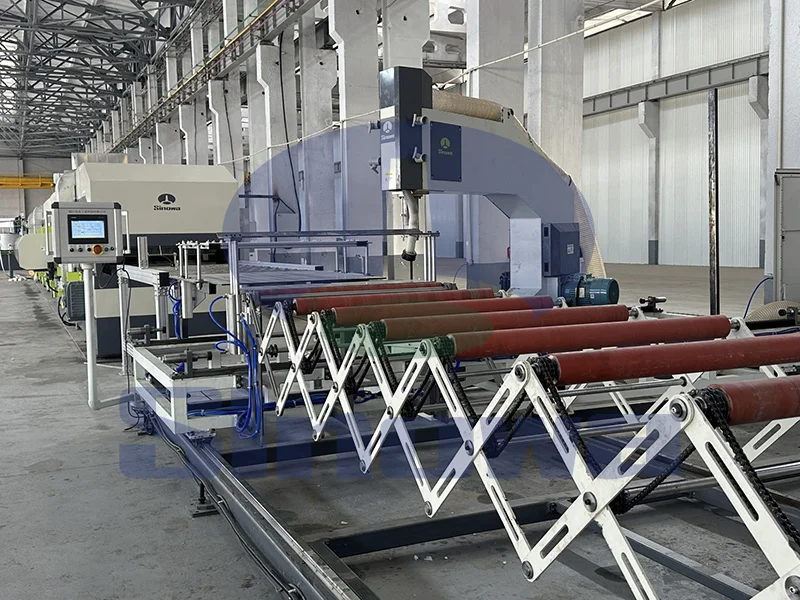
The technical capability of the wall sandwich panel production line is usually reflected through the following key parameters:
Production capacity parameters
Production speed: 3-25 meters per minute (depending on the type and thickness of the board)
Annual production capacity: 300000 to 600000 square meters (calculated based on standard board)
Product thickness range: 30-200mm (adjustable)
Product width: 600-1200mm (depending on equipment model)
Material adaptability
Metal panel thickness: 0.35-1.2mm
Non metallic panel thickness: 4-12mm
Core material types: polyurethane, rock wool, glass wool, phenolic resin, EPS, etc
Applicable coil specifications: inner diameter 450-530mm, outer diameter ≤ 1200mm
energy consumption indicator
Total installed power: 60-150kW (depending on the scale of the production line)
Energy consumption of polyurethane foaming: about 1.1kW · h/m ³
Energy saving compared to traditional equipment: up to 40%
precision control
Length error: ± 1mm
Width error: ± 0.5mm
Thickness error: ± 0.3mm
Diagonal difference: ≤ 2mm/m
degree of automation
Operator requirements: 2-3 people per shift
Fault self diagnosis rate:>90%
Change time: ≤ 30 minutes (modular design)
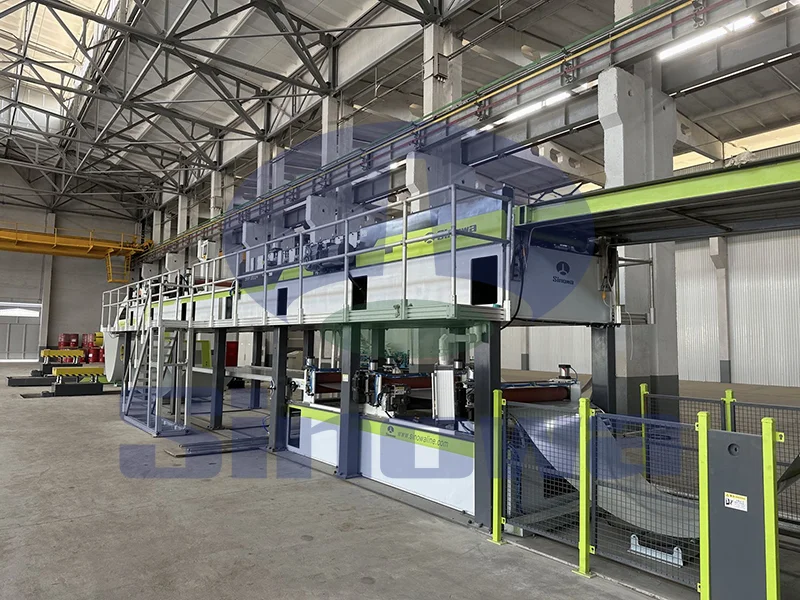
The production process of sandwich panels for different types of walls varies, but the basic process can be divided into the following stages:
Raw material preparation stage
Metal panel: uncoiling → leveling → surface treatment (cleaning, passivation or coating) → fixed length cutting
Non metallic panels: automatic loading → surface activation treatment → precise positioning
Preparation of 3-core materials:
Polyurethane: Pre mixed with polyols and isocyanates, temperature controlled at 20 ± 2 ℃
Rock wool: automatic slitting → dust removal → drying treatment
Cement based materials: cement, fly ash, and lightweight aggregate are automatically measured according to their proportions
Composite molding stage
Wet composite process (taking polyurethane as an example):
Preheat the lower panel to 35-40 ℃
High pressure mixing head mobile pouring (pressure up to 25MPa)
Upper panel overlay
Enter the double track laminating machine for foaming and curing (pressure 0.6 bar/cm ²)Dry composite process (taking rock wool as an example):
Apply polyurethane adhesive to the lower panel (coating amount 200-300g/m ²)
Automatic laying of rock wool strips (density error ≤ 3%)
Upper panel overlay
Roll pressing composite (pressure 0.3-0.5MPa)
Curing and curing stage
Polyurethane sandwich panel: cured in a 24 meter long double track laminating machine with track temperature of 40-60 ℃
Cement based sandwich panels:
Steam curing: temperature 60-80 ℃, humidity>90%, time 8-12 hours
Natural maintenance: Time ≥ 7 days, regularly sprinkle water to keep moistPhenolic sandwich panels: curing channel temperature gradient control, gradually increasing from 80 ℃ to 120 ℃
Post processing stage
Fixed length cutting: using disc saws or band saws for cutting, some production lines are equipped with multiple saw heads to achieve cutting at different angles
Two side processing:
Polyurethane board: automatic trimming+edge sealing
Rock wool board: PU edging or metal edgingSurface treatment: embossing, coating or laminating to enhance decorative effect
Packaging and warehousing
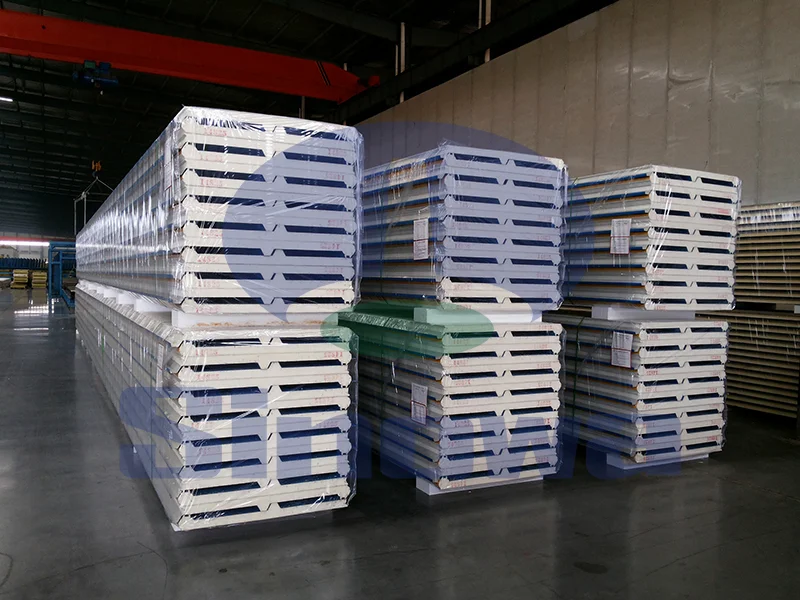
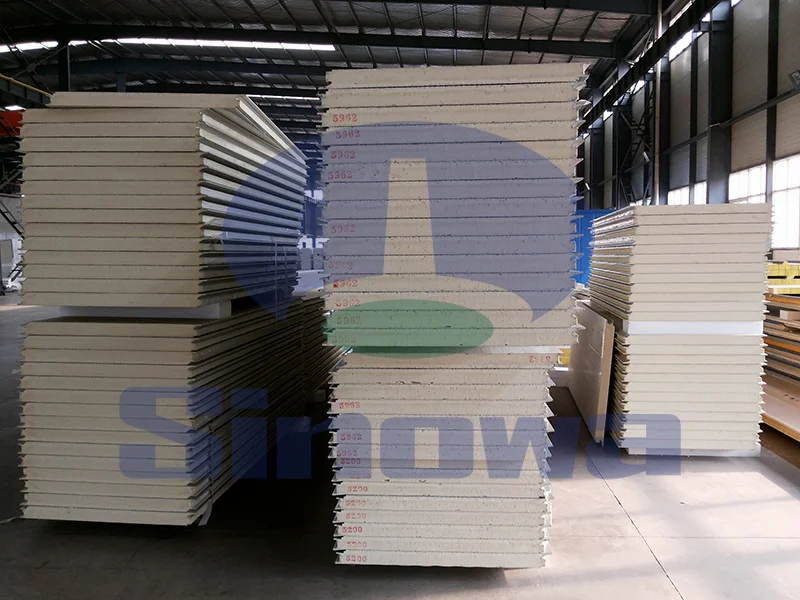
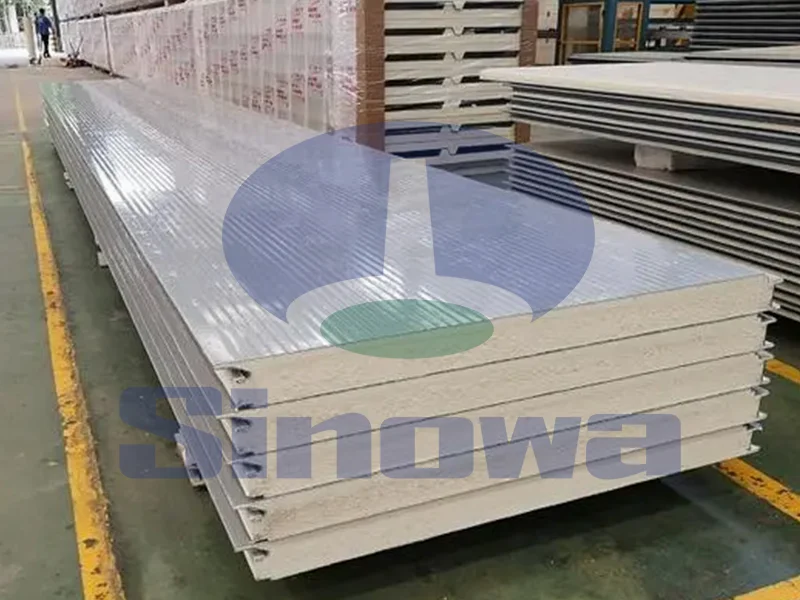
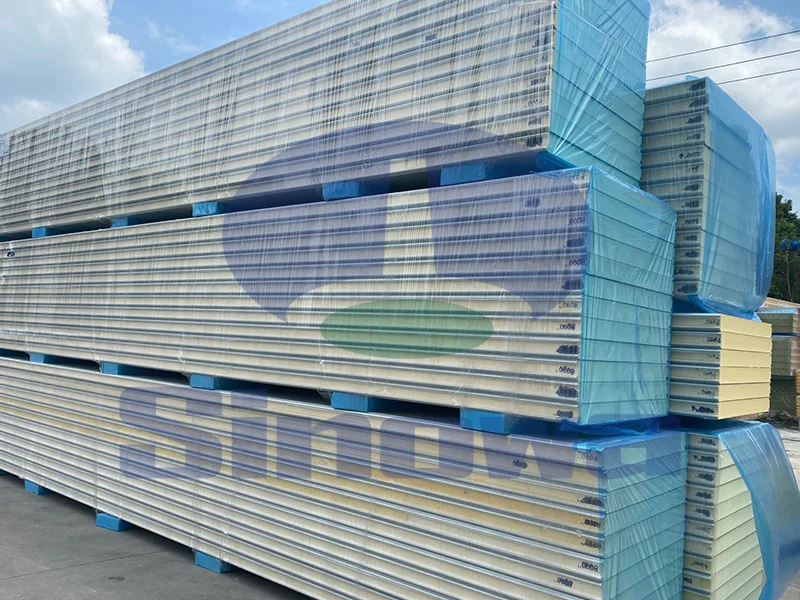
Automatic stacking: vacuum suction cup lifting and translation device, maximum stacking height of 2 meters
Packaging method: wrapped film packaging or customized wooden crate
Storage requirements: Moisture proof and deformation resistant storage, polyurethane board should be kept away from direct sunlight
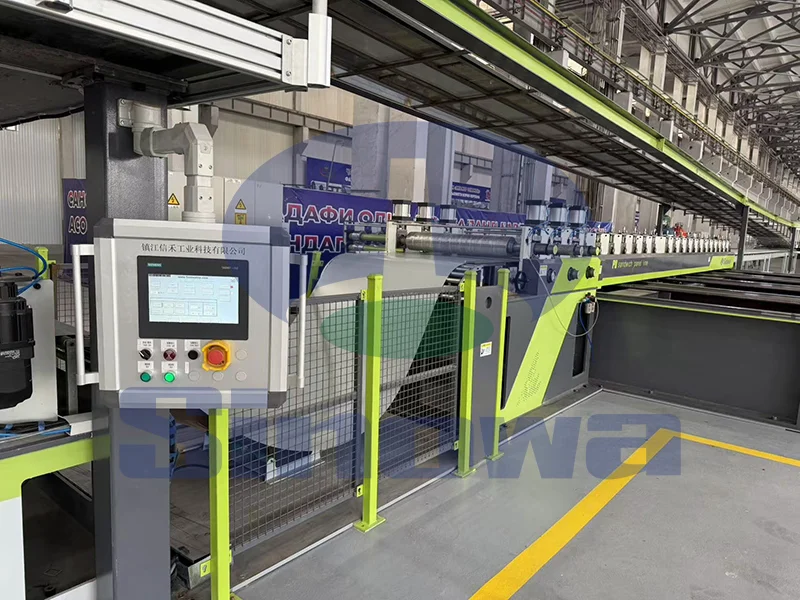
Wall sandwich panels are widely used in the construction industry and have broad market prospects
Industrial construction field
More than 60% of the total application volume is mainly used for wall systems in factories and warehouses
Lightweight sandwich panels (with a self weight of only 10-15kg/m ²) can significantly reduce the load on steel structures and save 15-20% of costs
Public building field
A-level fireproof sandwich panels are widely used in densely populated places such as subway stations, airports, and sports centers
Double standards of meeting fire safety regulations and energy-saving requirements
Residential construction field
The interior and exterior wall panels of prefabricated buildings are constructed 3-5 times faster than traditional methods
Integrated insulation and decoration functions, reducing on-site wet operations and lowering construction waste by 70%
Special application areas
Cold chain logistics: Polyurethane sandwich panels have become the preferred choice for cold storage construction due to their excellent insulation performance
Clean space: Antibacterial coated sandwich panels are used in places with high cleanliness requirements such as hospitals and electronic factories
Acoustic environment: sandwich panels with special structures are used in acoustic sensitive places such as recording studios and theaters
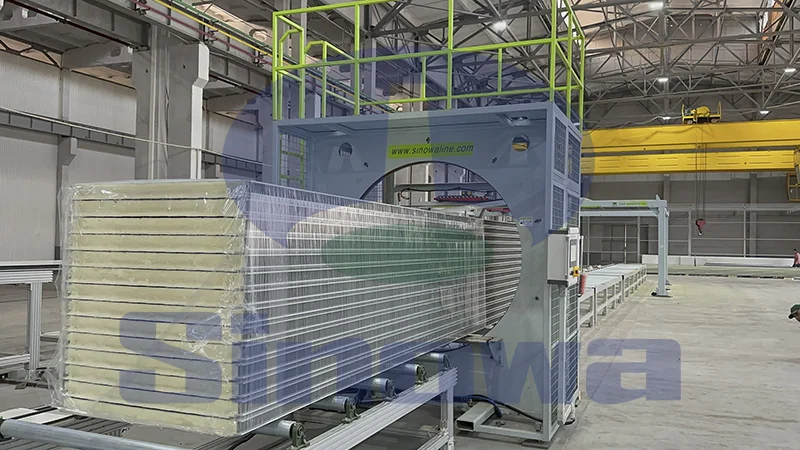
Sandwich panels for walls have become indispensable components in modern construction, valued for their integrated advantages of light weight, structural stability, thermal insulation, and rapid installation. The sandwich panel production line for wall is a highly automated manufacturing system that integrates multiple processes to produce high-quality composite panels on an industrial scale, ensuring consistent performance and meeting diverse application needs across various fields.
The structure of a sandwich panel production line for wall is designed to realize the continuous and precise manufacturing of composite panels, which typically consist of two outer facings and a middle core material bonded together. The production line’s structure can be divided into several core functional sections, each playing a vital role in ensuring the final product’s quality. The first section is the feeding system, which handles the raw materials for both the facings and the core. For metal facings, the feeding system usually includes uncoilers that unwind metal coils—such as galvanized steel, color-coated steel, or aluminum—with tension control devices to ensure stable feeding and avoid material deformation. For non-metallic facings like cement fiberboards or FRP (fiberglass-reinforced plastic) sheets, the feeding system is adapted to handle rigid or semi-rigid sheets without causing damage. The core material feeding system varies according to the core type: for foam cores like polyurethane (PU) or expanded polystyrene (EPS), it includes foam mixing and pouring equipment; for mineral wool or rockwool cores, it involves unwinding or cutting devices to ensure uniform core thickness.
Following the feeding section is the surface treatment and gluing process, which is critical for enhancing the bonding strength between the facings and the core. For metal facings, surface treatment typically involves degreasing and chemical passivation to remove oil, dust, and oxides, improving the adhesion of the adhesive. The gluing process uses precision roller coaters or spray systems to apply adhesive uniformly on the inner surface of the facings, with adjustable glue thickness to match different core materials and panel specifications. The adhesive used must be compatible with both the facing and core materials—for example, polyurethane-based adhesives are commonly used for foam cores, while epoxy adhesives are suitable for mineral fiber cores. After gluing, the facings and core are combined in the lamination section, where they are pressed together under controlled temperature and pressure. The lamination process may use continuous belt presses or roller presses, with temperature settings ranging from 80°C to 150°C depending on the adhesive type and core material, ensuring full curing of the adhesive and tight bonding between layers.
The final sections of the production line include curing, cutting, and stacking. For foam core panels, the curing section is a heated tunnel where the foam core expands and cures completely, forming a dense and stable structure. For mineral wool core panels, curing may involve drying to remove moisture and ensure dimensional stability. The cutting system uses precision circular saws or CNC cutting machines to trim the continuous panel into desired lengths and widths, with edge trimming devices to ensure smooth and neat edges. The stacking system, often automated with robotic arms or conveyor belts, stacks the finished panels in an orderly manner, reducing manual labor and minimizing damage during handling. Some advanced production lines also integrate quality inspection systems, such as thickness gauges and bonding strength testers, to detect defects like uneven thickness, poor bonding, or surface scratches, ensuring only qualified products leave the line.
The performance of sandwich panels produced by these lines is determined by both the production process and the selection of raw materials, with key performance indicators including structural strength, thermal insulation, fire resistance, sound insulation, and durability. Structural strength is a fundamental performance, as wall panels need to bear vertical and horizontal loads, resist wind pressure, and maintain dimensional stability. The sandwich structure’s design—where the facings bear bending loads like the flanges of an I-beam, and the core resists shear loads like the web—enables high stiffness and load-bearing capacity while keeping the panel lightweight. The specific strength varies with the facing and core materials: metal-faced panels with PU or rockwool cores typically have a compressive strength of 150 kPa to 300 kPa, suitable for both internal and external wall applications. For high-rise buildings or industrial structures requiring higher strength, thicker facings or reinforced cores can be used to enhance load-bearing capacity.
Thermal insulation performance is another critical attribute, especially in energy-efficient construction, as wall panels account for a significant portion of building heat loss. The core material is the primary contributor to thermal insulation: foam cores like PU, polyisocyanurate (PIR), and EPS have low thermal conductivity (0.022 W/m·K to 0.040 W/m·K), providing excellent heat retention. Mineral wool cores also offer good thermal insulation, with thermal conductivity ranging from 0.035 W/m·K to 0.050 W/m·K, while also providing fire resistance. The production line’s lamination precision ensures minimal gaps between layers, avoiding thermal bridges that would reduce insulation efficiency. Well-manufactured sandwich wall panels can reduce building energy consumption by 30% to 50% compared to traditional brick or concrete walls, contributing to environmental sustainability and lower operational costs.
Fire resistance is a vital safety performance, particularly for public buildings, industrial workshops, and residential structures. The fire resistance of sandwich panels depends mainly on the core material: mineral wool and rockwool cores are non-combustible, capable of withstanding temperatures above 1000°C, and can maintain structural integrity for extended periods during fires, preventing flame spread and toxic smoke emission. Foam cores like PU and EPS are combustible, but modified formulations (such as flame-retardant PU) can improve their fire performance, delaying ignition and reducing smoke generation. The production process also affects fire resistance—tight bonding between layers prevents flame penetration through gaps, and metal facings can act as a barrier to slow down core combustion.
Sound insulation performance is essential for improving indoor comfort, especially in noisy environments like urban areas or industrial zones. Sandwich panels achieve sound insulation through the combination of the core material’s sound absorption and the structural damping effect of the composite layers. Porous core materials like mineral wool and rockwool excel at absorbing air-borne sound, reducing noise transmission by 40 to 50 decibels, making them suitable for theaters, airports, and residential buildings. Foam cores also provide moderate sound insulation, with PU cores offering better sound damping due to their dense structure. The thickness of the panel and the facing material also influence sound insulation—thicker panels and denser facings (like steel) can further enhance sound insulation performance.
Durability ensures the long service life of sandwich wall panels, reducing maintenance costs over time. The durability is determined by the material’s resistance to weathering, corrosion, moisture, and UV radiation. Metal facings treated with galvanization or color coatings have excellent corrosion resistance, capable of withstanding harsh outdoor conditions for 15 to 25 years. Non-metallic facings like FRP are resistant to moisture and chemicals, suitable for humid environments like warehouses or swimming pools. The adhesive used in the production line must have good aging resistance, ensuring the bond between layers remains strong over time without delamination. Proper curing during production also enhances durability, preventing dimensional changes or material degradation due to temperature and humidity fluctuations.
Sandwich panel production lines for walls can produce various types of panels, classified mainly by the core material, facing material, and application purpose. By core material, the most common types include mineral wool/rockwool sandwich panels, PU sandwich panels, PIR sandwich panels, EPS sandwich panels, and phenolic (PF) sandwich panels. Mineral wool/rockwool panels are favored for their fire resistance and sound absorption, making them ideal for public buildings and industrial workshops. PU panels offer superior thermal insulation and lightweight properties, suitable for cold storage, clean rooms, and residential buildings. PIR panels are modified PU panels with better fire resistance and thermal stability, widely used in high-end construction. EPS panels are cost-effective and easy to process, commonly used in temporary buildings and low-rise residential walls. PF panels have excellent fire resistance and low smoke emission, suitable for fire-sensitive areas like hospitals and data centers.
By facing material, the panels can be divided into metal-faced and non-metal-faced types. Metal-faced panels, using steel, aluminum, or galvanized steel facings, are the most widely used due to their high strength and durability, suitable for both internal and external walls. Color-coated metal facings also offer aesthetic flexibility, with customizable colors and textures to match architectural designs. Non-metal-faced panels, such as cement fiberboard-faced or FRP-faced panels, are lightweight and corrosion-resistant, suitable for humid or chemical-rich environments. Some production lines can also produce custom panels with special facings, such as wood-veneer or stone-veneer, to meet decorative needs.
By application purpose, the panels include external wall panels, internal partition panels, fire-resistant partition panels, and thermal insulation wall panels. External wall panels need to have good weather resistance, thermal insulation, and wind pressure resistance, so they are usually made of metal-faced panels with PU, PIR, or rockwool cores. Internal partition panels prioritize sound insulation and lightweight properties, often using EPS or mineral wool cores with thin metal or non-metal facings. Fire-resistant partition panels are designed for fire compartmentation, using non-combustible mineral wool cores and fire-resistant facings, capable of meeting strict fire safety requirements. Thermal insulation wall panels are mainly used in cold regions or energy-saving buildings, with foam cores that provide excellent heat retention.
The applications of sandwich wall panels produced by these lines are widespread across the construction industry and beyond, driven by their versatile performance and efficient installation. In industrial construction, they are widely used for the external walls and internal partitions of factories, warehouses, and workshops. Industrial buildings often require rapid construction and good thermal insulation to maintain stable indoor temperatures for production processes—sandwich panels meet these needs, as they can be installed quickly without on-site wet work, reducing construction time by 50% compared to traditional materials. For example, constant temperature and humidity workshops use rockwool sandwich panels to maintain stable temperatures and reduce energy consumption, while large warehouses use lightweight EPS or PU panels to reduce the building’s overall weight and construction costs.
In public construction, sandwich panels are used in airports, stadiums, theaters, and exhibition halls. These large-space buildings require fire resistance, sound insulation, and aesthetic flexibility—mineral wool or PF sandwich panels with color-coated metal facings are ideal, as they can be customized into large-size panels to cover large areas, reducing joint gaps and improving the building’s appearance. Airports and stadiums also benefit from the panels’ lightweight properties, which reduce the load on the building’s structure, while theaters and exhibition halls rely on their sound insulation performance to create a comfortable indoor environment.
In commercial and residential construction, sandwich panels are used for office buildings, shopping malls, residential buildings, and temporary activity rooms. Office buildings and shopping malls prioritize energy efficiency and aesthetic appeal—PU or PIR sandwich panels with decorative facings meet these requirements, reducing energy consumption for heating and cooling while enhancing the building’s exterior appearance. Residential buildings use sandwich panels for internal partitions and external walls, as they are lightweight, sound-insulating, and easy to install, making them suitable for high-rise buildings. Temporary activity rooms, such as construction site dormitories or emergency shelters, use EPS sandwich panels due to their low cost and rapid installation, allowing for quick deployment.
Beyond traditional construction, sandwich wall panels have applications in special environments and other industries. Clean rooms in the pharmaceutical, electronics, and food processing industries require panels with good airtightness, corrosion resistance, and easy cleaning—PU or FRP-faced sandwich panels are suitable, as they have smooth surfaces and can prevent dust accumulation. Cold storage and refrigeration facilities rely on PU or PIR sandwich panels for their excellent thermal insulation, maintaining low temperatures with minimal energy consumption. In the transportation industry, sandwich panels are used for the internal walls of railway carriages and ships, as they are lightweight and offer thermal and sound insulation, improving passenger comfort. They are also used in furniture manufacturing and advertising, as lightweight panels can be easily processed into furniture partitions or advertising displays, combining strength and aesthetic appeal.
The development of sandwich panel production lines for walls is closely linked to the trends of green construction and prefabrication. As global attention to energy conservation and environmental protection increases, production lines are being upgraded to use more eco-friendly materials—such as recycled metal facings and low-VOC adhesives—and improve energy efficiency during production. Advanced production lines integrate automation and intelligent control systems, allowing for real-time adjustment of process parameters, reducing material waste, and improving production efficiency. The shift toward prefabricated construction has also driven the demand for sandwich panels, as they are prefabricated in factories with consistent quality, enabling modular installation and reducing on-site construction waste.
In conclusion, the sandwich panel production line for wall is a sophisticated manufacturing system that produces composite panels with integrated structural, thermal, fire, and sound insulation performance. The structure of the production line ensures precise and efficient manufacturing, while the variety of core and facing materials allows for the production of panels tailored to diverse applications. From industrial and public buildings to residential and special environments, sandwich wall panels have become a cornerstone of modern construction, offering advantages of rapid installation, energy efficiency, and durability. As construction technologies continue to advance, the production lines will further evolve, integrating more intelligent and eco-friendly features, and the application scope of sandwich wall panels will continue to expand, contributing to more sustainable and efficient building practices.