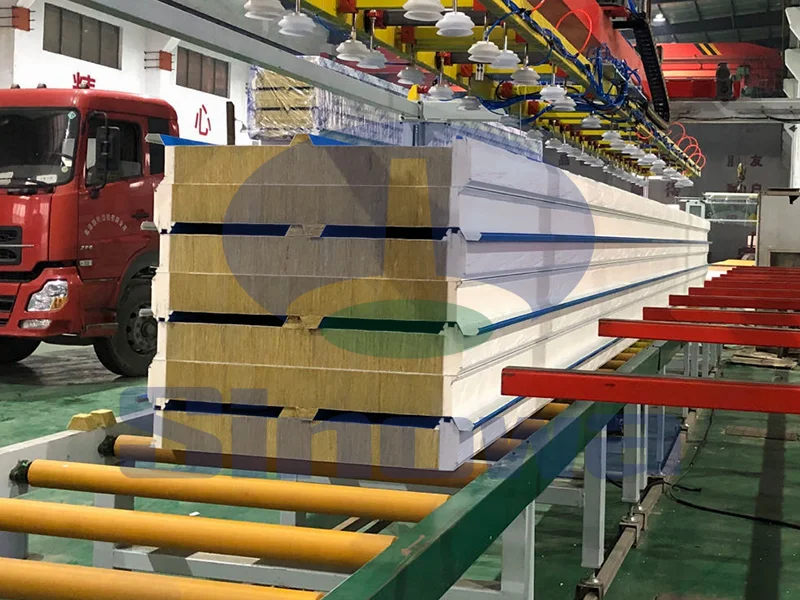
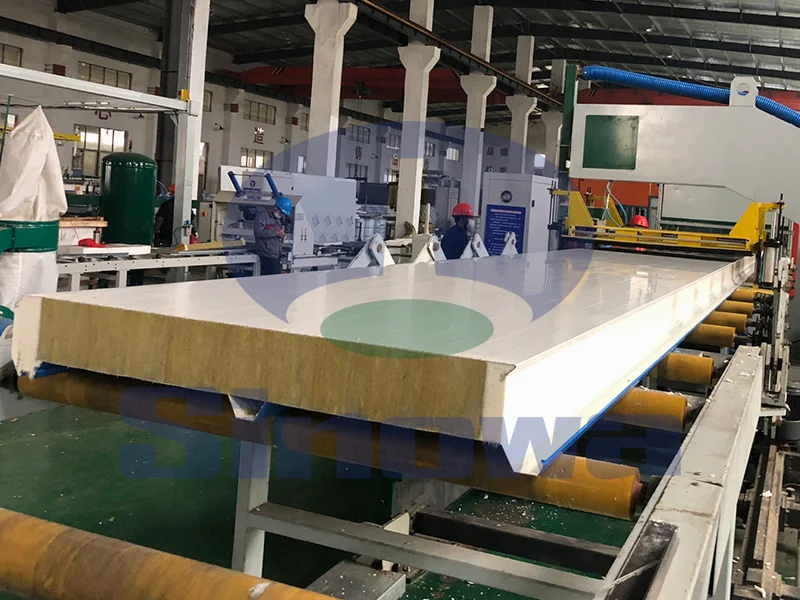
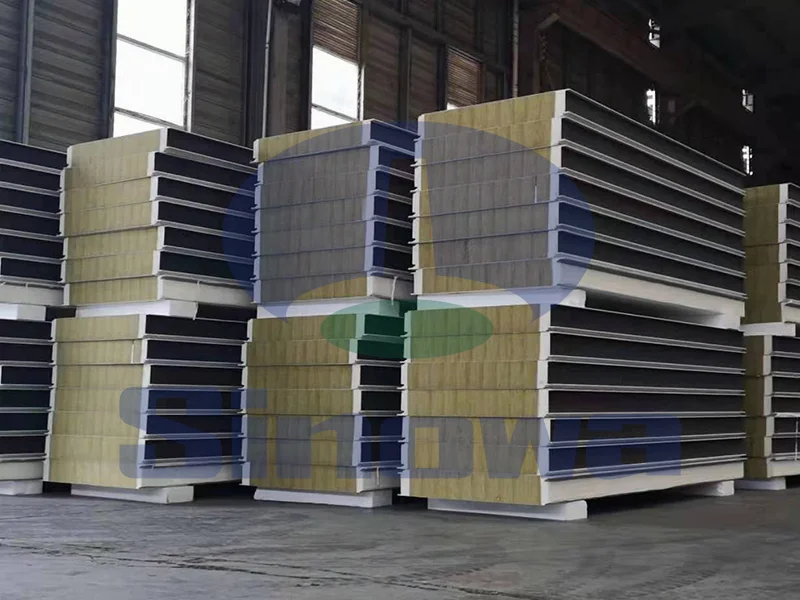
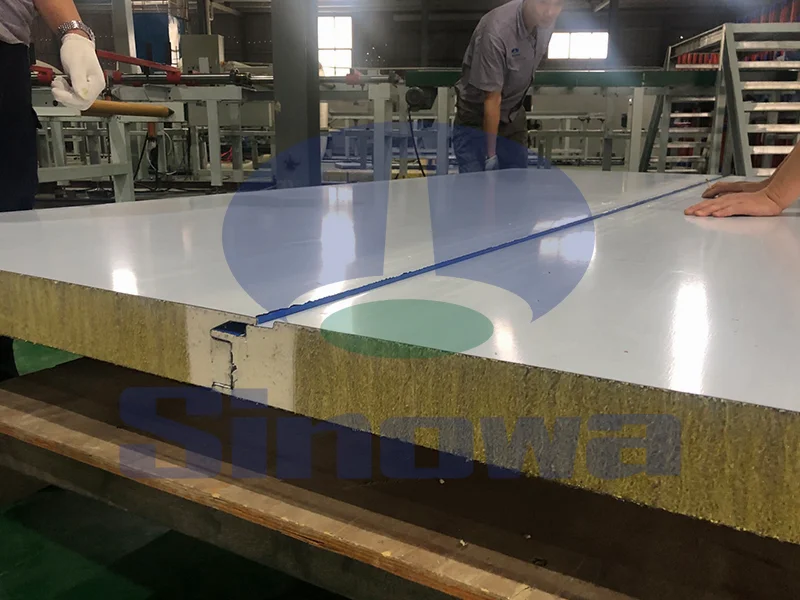
The rock wool sandwich panel line is a key equipment system used in the modern construction industry to produce efficient insulation and fire-resistant building materials. This production line combines metal panels with rock wool core materials through automated processes to form a "sandwich" structural board with excellent fire resistance, sound insulation, and thermal insulation properties.
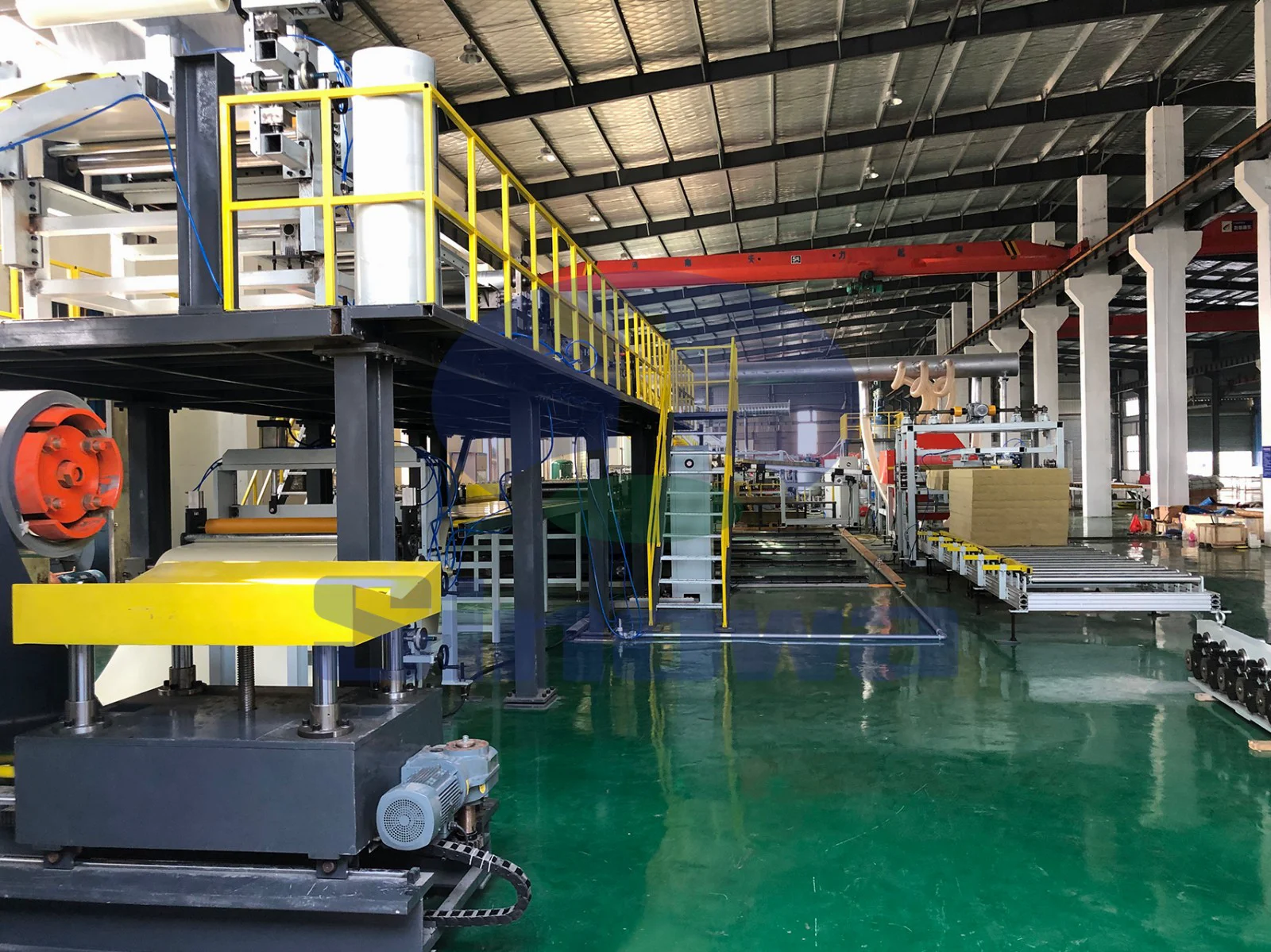
The production of rock wool sandwich panels is a highly automated continuous composite process, and its core process can be divided into the following key steps:
Raw material preparation and processing
Steel coil processing: The rockwool sandwich panel production line first places the raw material steel coil on the drum in the feeding area, and uses an unwinding machine for unwinding and preliminary shaping. This process is carried out simultaneously in both upper and lower layers to ensure synchronous supply of metal panels.
Rock wool processing: The entire rock wool enters the cutting machine through the feeding area and is evenly cut into the required specifications. The cut rock wool strips are converted into vertical conveying mode through a roller conveyor system to prepare for subsequent composite.
Adhesive Application and Composite
Gluing process: Before the steel and rock wool enter the press, the system will perform precise gluing operations on the upper and lower steel plates and rock wool, forming a sandwich structure of "steel plate glue rock wool glue steel plate". This step is crucial for the bonding strength of the final product.
Edge sealing treatment: Before composite, both sides of the rock wool core material need to be wrapped with cow belts for temporary edge sealing to prevent adhesive overflow and ensure neat edges.
Hot press curing molding
Double track pressing: After being coated with glue, the material enters the double track press, and the upper and lower high-strength steel tracks apply uniformly adjustable high pressure (usually 0.3-0.6MPa) to ensure that each layer of material is tightly adhered and air is discharged.
Heating curing: The track is equipped with a built-in heating system (hot oil, steam, or electric heating) that provides an appropriate temperature of 60-100 ℃ according to the type of adhesive, accelerating the chemical reaction of the adhesive and forming a high-strength bond. The board is passed through a press at a constant speed of 20-30 meters per minute, and the curing process is completed while moving.
Post processing and packaging
Cooling and shaping: The sheet metal coming out of the high-temperature and high-pressure press enters the cooling section and is cooled by a fan or natural cooling to reduce the temperature, achieve complete stability in bonding, and fix the shape.
Precise cutting: After cooling, the continuous sheet is precisely cut horizontally according to the preset length using a high-speed flying saw or synchronous tracking cutting saw, with an accuracy of up to ± 1mm.
Edge treatment: The edges of the cut board are usually treated in two ways: polyurethane (PU) foam edge sealing (most commonly, automatically injecting foam glue to fill the gaps) or metal edge sealing strips (used when special fire protection requirements are met).
Cleaning palletizing: After the surface of the board is cleaned by the roller conveyor, it enters the automatic palletizing machine for stacking, and finally is wrapped with plastic film by the plastic sealing machine to prevent wear and rain erosion during transportation.
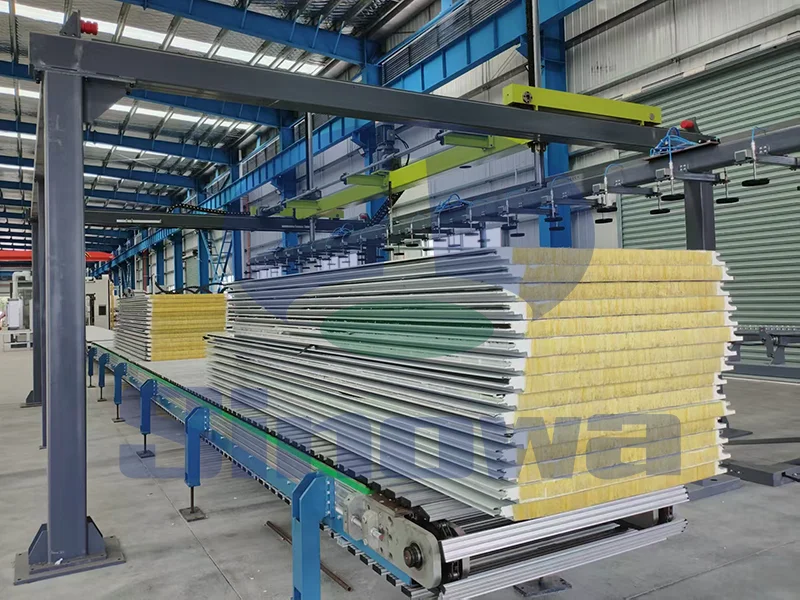
A complete rockwool sandwich panel line consists of multiple functional modules, which work together to achieve efficient and continuous production:
Loading and pre-processing system
Steel coil unwinding machine: used for unfolding metal coils, usually equipped with automatic centering device and tension control system
Flattening machine: eliminates plastic deformation of steel coils to ensure panel flatness
Rock wool cutting machine: Cut large rock wool into strips of the required width for the production line, using a multi disc design to ensure cutting accuracy
Forming and composite host
Roll forming machine: Press the metal panel into the desired waveform or plane, and quickly replace the roller mold according to product requirements
Gluing system: precisely control the amount of adhesive, and use spray, roller coating or scraper to apply glue
Cotton cloth device: Accurately lay the cut rock wool strips on the bottom panel to maintain uniform distribution
Double track laminating machine: a core composite equipment that provides the required pressure and temperature, typically 12-20 meters in length, with adjustable pressure
Post processing equipment
Tracking cutting saw: high-precision flying saw that moves synchronously with the production line to achieve dynamic cutting and reduce material waste
Edge banding machine: automatically injects polyurethane foam adhesive or installs metal edge banding strips to complete edge sealing
Cooling rack: Multi layer roller cooling area, equipped with forced air cooling system to accelerate cooling
Automated control system
PLC central control: monitoring and adjusting the parameters of the entire line equipment to achieve speed synchronization and process control
Human Machine Interface (HMI): Provides a visual operating interface for convenient parameter settings and fault diagnosis
Quality inspection system: integrating online detection functions such as thickness measurement and defect recognition
Auxiliary system
Waste recycling device: Collect cutting scraps and crush them into 3-5mm particles, which can be recycled for reuse
Exhaust gas treatment system: deals with the small amount of exhaust gas generated during the production process, usually using a combination of cyclone dust removal and activated carbon adsorption process
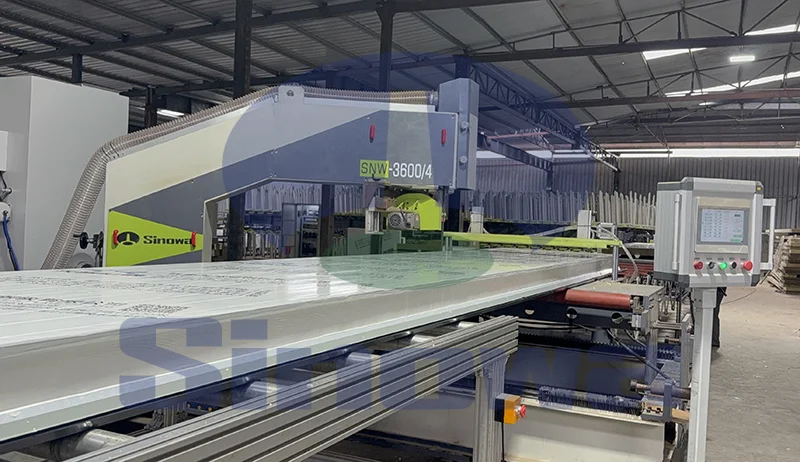
The automatic continuous rock wool sandwich panel production line integrates multiple advanced technologies to ensure high product quality and production efficiency:
Intelligent control system
Adopting a control scheme combining PLC and industrial computer to achieve full line automation operation
Integrating pressure sensors and visual monitoring devices to construct closed-loop control, with a melt weight detection error of ≤ 1.5%
The response time for adjusting the speed of the production line has been shortened to 30 seconds, solving the lag problem of traditional power detection methods
Energy saving and environmentally friendly design
Thermal energy recovery system: utilizing waste heat from the solidification furnace to preheat fresh air, reducing energy consumption by 15-20%
Waste recycling: The highest proportion of recycled materials after cutting and crushing can reach 12%, reducing raw material waste
Low emission design: Dust emission concentration is controlled below 15mg/m ³, in compliance with strict environmental standards
Advanced Composite Technology
Vertical silk cloth cotton process: By using a special cotton laying device, 30% -40% of rock wool fibers are arranged vertically, and the compressive strength of the product is increased by more than 50%
Gradient temperature control technology: The curing furnace adopts zone temperature control, which improves the uniformity of product density to 95%
Quick mold replacement system: can complete roll mold replacement within 1-2 hours, improving production line flexibility
Precision cutting technology
Adopting a dual mobile device and threaded rod transmission system to achieve precise movement of the cutting device
Configure a strong spring and bolt rod adjustment device to form an elastic cutting mechanism, which can complete continuous cutting of rock wool with a thickness of 20-300mm
The cutting accuracy reaches ± 0.5mm, and the incision is smooth without burrs
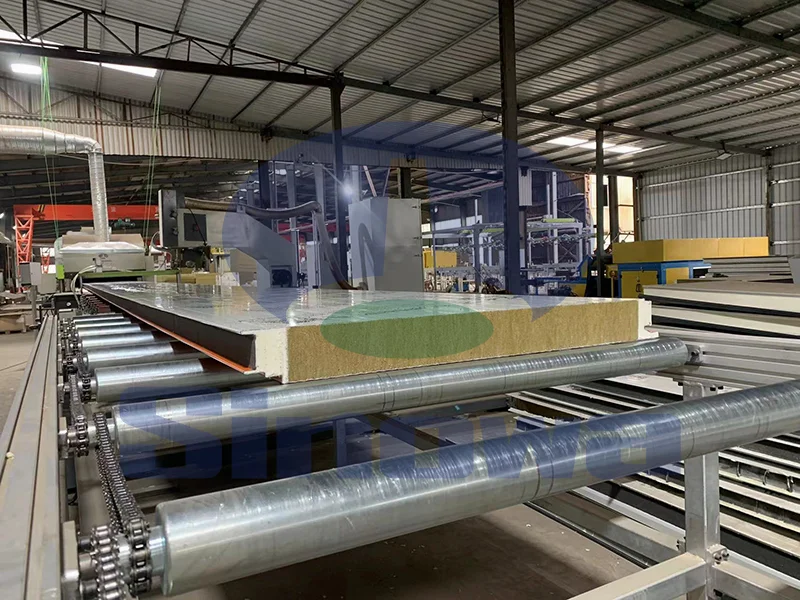
The products produced by the rock wool sandwich panel line have multiple excellent properties and are widely used in various building scenarios:
Core advantages of the product
Excellent fire resistance: The rock wool core material is an A-grade non combustible material, and the overall structure has passed fire testing, meeting strict building fire protection requirements
Excellent insulation and sound insulation: Rock wool fiber structure provides low thermal conductivity (usually 0.036-0.042W/(m · K)) and good sound absorption performance
High structural strength: The metal panel and rock wool are tightly bonded through strong adhesive and high pressure to form an overall load-bearing structure
Stable and reliable quality: Factory prefabricated production, avoiding on-site construction quality fluctuations, high dimensional accuracy (length error ± 1mm)
Easy and efficient installation: Standard modular design, construction speed 3-5 times faster than traditional building materials, significantly reducing the construction period
Main application areas
Industrial buildings: Roof and wall systems for large-span buildings such as factories, warehouses, workshops, etc
Logistics warehousing: cold chain warehouses, logistics distribution centers, and other facilities with special insulation requirements
Public facilities: large public buildings such as sports arenas, exhibition halls, airport terminals, etc
Special places: cleanrooms, explosion-proof workshops, laboratories, and other high demand environments
Temporary buildings: quick construction scenarios such as temporary buildings on construction sites, emergency command centers, etc
Customization capability
Can produce various types of panels, including roof panels, hidden corrugated wall panels, socket panels, etc
Flexible size range: width 200-1200mm, thickness 30-200mm, length can be customized according to requirements
Diversified surface treatment: providing a variety of metal panel options such as color coating, galvanizing, stainless steel, etc
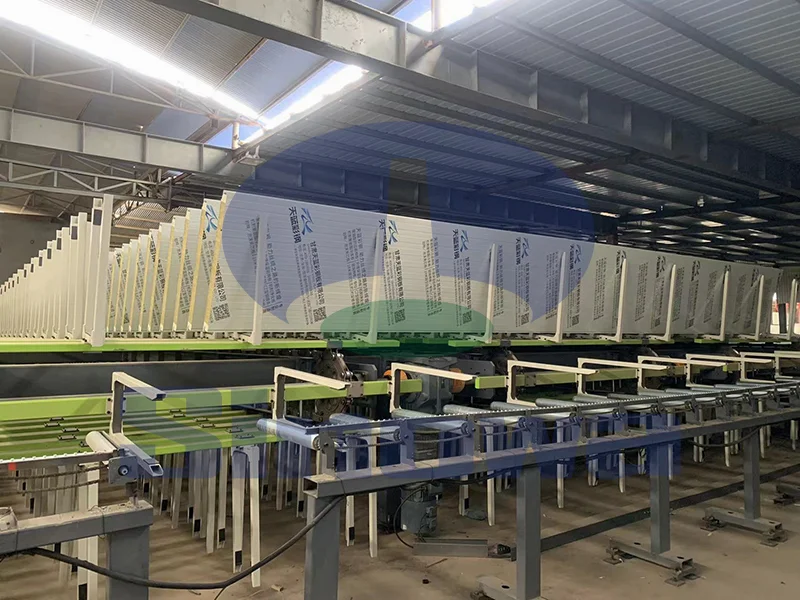
The rock wool sandwich panel production line represents a sophisticated integration of mechanical engineering, electrical control systems, material science, and process optimization, designed to manufacture high-performance composite panels widely used in construction and industrial applications. These panels, consisting of a rock wool core sandwiched between two outer facing materials, typically metal sheets, offer exceptional thermal insulation, sound absorption, fire resistance, and structural stability, making them indispensable in modern building projects ranging from industrial warehouses and commercial complexes to public facilities and residential structures. The production line’s ability to ensure consistent quality, efficient output, and adaptability to diverse specifications has made it a cornerstone of the composite panel manufacturing industry, driving advancements in building safety, energy efficiency, and construction productivity.
At the heart of the rock wool sandwich panel production process lies the careful selection and preparation of raw materials, as the quality of each component directly impacts the final panel’s performance. The core material, rock wool, is derived from natural volcanic rocks such as basalt and diabase, which possess inherently high melting points and excellent thermal stability. These raw materials are crushed into small particles and then melted at extremely high temperatures, typically exceeding 1000°C, in specialized melting furnaces. The molten rock is then spun into fine fibers using high-speed rotating devices, a process that creates a network of interlocking fibers with remarkable insulation properties. To enhance the fiber’s cohesion and structural integrity, a small amount of thermosetting resin is added during the spinning process, which binds the fibers together once cured. The resulting rock wool is processed into slabs or lamellas of varying thicknesses and densities, tailored to meet the specific insulation and structural requirements of the final panels. The density of the rock wool core typically ranges from 80 to 140 kg/m³, with a common standard density of 120 kg/m³ to balance insulation performance and structural strength.
The outer facing materials of rock wool sandwich panels are primarily metal sheets, chosen for their durability, weather resistance, and structural rigidity. Common options include galvanized steel, pre-painted steel, and aluminum sheets, each offering unique advantages depending on the application. Galvanized steel sheets, treated with a zinc coating, provide superior corrosion resistance, making them suitable for outdoor and humid environments. Pre-painted steel sheets add an aesthetic layer, available in a range of colors and finishes to meet architectural design needs, while aluminum sheets offer lightweight properties and excellent formability for complex shapes. The thickness of these facing sheets varies between 0.35 mm and 0.8 mm, with steel sheets typically ranging from 0.4 mm to 0.8 mm and aluminum sheets from 0.35 mm to 0.6 mm. Before entering the production line, these metal sheets undergo pre-treatment processes to ensure optimal adhesion with the rock wool core. This pre-treatment may include cleaning to remove oil, dust, and contaminants, as well as surface activation to enhance the bonding strength of the adhesive used in subsequent stages.
The production line itself is a continuous, automated system composed of multiple interconnected modules, each responsible for a specific stage of the manufacturing process. The first module in the line is the decoiling system, which feeds the metal facing sheets into the production process. Decoilers are designed to handle large rolls of metal sheets, with maximum weights ranging from 6T to 10T and maximum widths of up to 1250 mm. The decoiling process is equipped with tension control mechanisms to ensure the metal sheets are fed smoothly and evenly, preventing wrinkling or deformation. After decoiling, the metal sheets pass through a film-cutting and slitting device, which trims the sheets to the required width and applies a protective film to the surface to prevent scratches and damage during processing. This stage is critical for maintaining the aesthetic quality of the final panels, especially for pre-painted facing materials.
Following the decoiling and pre-processing of the facing sheets, the next stage involves the roll forming of the upper and lower metal layers. Roll forming systems use a series of precision rollers to shape the metal sheets into the desired profile, which may include corrugated, trapezoidal, or flat designs depending on the panel’s intended use. The roll forming process is highly adjustable, allowing for the production of panels with varying widths, typically between 600 mm and 1200 mm, and profiles tailored to enhance structural strength and water resistance. Advanced roll forming systems adopt double-sided separate sets of rolling shafts, with adjustable frames that can be modified within specified ranges to accommodate different panel specifications. This flexibility is essential for manufacturers looking to meet diverse customer requirements and adapt to changing market demands.
Once the metal facing sheets have been formed, they proceed to the pre-heating stage, where they are heated to a controlled temperature to optimize the bonding process with the rock wool core. Pre-heating ensures that the adhesive applied in subsequent stages cures evenly and forms a strong bond between the metal sheets and the rock wool core. The pre-heating device typically uses a hot air circulating system to maintain a consistent temperature across the entire surface of the metal sheets, preventing uneven bonding or structural weaknesses. The temperature and duration of pre-heating are carefully calibrated based on the type of metal facing, the thickness of the sheets, and the properties of the adhesive, ensuring optimal performance of the final composite panel.
Simultaneously with the processing of the metal facing sheets, the rock wool core is prepared and fed into the production line. The rock wool slabs or lamellas are cut to the required length and thickness using precision cutting equipment, ensuring that they fit perfectly between the upper and lower metal facing sheets. The thickness of the rock wool core can be adjusted to produce panels with overall thicknesses ranging from 30 mm to 250 mm, with common thicknesses including 50 mm, 75 mm, 100 mm, and 150 mm. These variations allow for customization based on the thermal insulation and sound absorption requirements of the application; for example, thicker cores are used in cold storage facilities or buildings located in extreme climate conditions, while thinner cores may be sufficient for internal partitions.
The bonding of the rock wool core to the metal facing sheets is a critical stage that determines the structural integrity and performance of the final panel. This process involves the application of adhesive to both the upper and lower surfaces of the rock wool core, as well as to the inner surfaces of the metal facing sheets. The adhesive used is typically a high-performance polyurethane (PU) resin or a similar thermosetting adhesive, chosen for its strong bonding strength, durability, and compatibility with both metal and rock wool materials. The adhesive application system uses precision spraying devices to ensure an even coating across the entire surface, with controlled thickness to prevent excess adhesive usage or insufficient bonding. In some production lines, a PU side seal foaming machine is also used to seal the edges of the panel, enhancing its water resistance and thermal insulation by preventing air leakage.
After the adhesive has been applied, the rock wool core is carefully positioned between the upper and lower metal facing sheets, and the entire assembly is fed into a double belt conveyor system. This system consists of two parallel belts that apply uniform pressure to the composite assembly, ensuring that the rock wool core is firmly bonded to the metal sheets and that the panel maintains a flat, consistent shape. The double belt system is equipped with heating elements that maintain a controlled temperature to facilitate the curing of the adhesive. The curing temperature and duration are critical parameters, as they directly affect the bond strength and the overall performance of the panel. The double belt conveyor typically has a valid length ranging from 16 meters to 40 meters, providing sufficient time for the adhesive to cure completely before the panel moves to the next stage.
Once the adhesive has cured and the composite panel is fully formed, the panel is cut to the required length using a high-precision cutting system. Advanced production lines use a band saw or a flying cut-off device that can cut the panels to length without stopping the production process, ensuring continuous operation and high efficiency. The cutting length can be adjusted between 2 meters and 18 meters, accommodating a wide range of application requirements, from small partition panels to large roof and wall panels for industrial buildings. After cutting, the panels pass through an air cooling system to reduce their temperature, preventing deformation and ensuring that they are ready for subsequent processing.
Quality control is an integral part of the entire production process, implemented at every stage to ensure that the final panels meet the required performance standards. During the raw material stage, the rock wool core is inspected for density, uniformity, and fiber structure, while the metal facing sheets are checked for thickness, surface quality, and corrosion resistance. Throughout the production process, sensors and monitoring devices continuously measure critical parameters such as temperature, pressure, adhesive thickness, and panel dimensions, making real-time adjustments to maintain consistency. After cutting and cooling, each panel undergoes a series of inspections, including checks for flatness, bond integrity, edge straightness, and surface quality. Additional performance tests may be conducted on random samples to verify thermal conductivity, sound absorption, fire resistance, and structural strength. Thermal conductivity of the rock wool core typically measures around 0.036 W/(m·K), ensuring excellent thermal insulation properties. For sound absorption, a 50 mm thick rock wool core can absorb over 30 dB of sound, making the panels effective for noise reduction in commercial and industrial environments.
Following quality control, the panels are transferred to the stacking and packaging module. The stacking system uses automated equipment to stack the panels neatly, with protective layers placed between each panel to prevent scratches and damage. The stacking process is designed to maximize space efficiency for storage and transportation, while ensuring that the panels remain stable and undamaged. Once stacked, the panels are packaged using waterproof and shock-resistant materials, such as plastic film and wooden pallets, to protect them during transit. Proper packaging is essential, as it prevents moisture absorption, surface damage, and structural deformation, ensuring that the panels arrive at the construction site in optimal condition.
The rockwool sandwich panel production line is characterized by its high level of automation, which significantly improves production efficiency, reduces labor costs, and enhances product consistency. Modern production lines integrate advanced control technologies, including digital servo systems, frequency conversion vector technology, and hydraulic control systems, to achieve fully automated operation. A single production line typically requires only 5 to 8 operators to monitor and control the entire process, from raw material feeding to final packaging. The production speed is adjustable, ranging from 3 to 8 meters per minute, depending on the panel specifications and the required quality standards. With an average operating speed of 5 meters per minute, a production line can achieve an annual output of up to 800,000 square meters, based on 250 working days per year and 10 working hours per day. This high efficiency makes the production line a cost-effective solution for large-scale manufacturing, enabling manufacturers to meet high-volume orders while maintaining consistent quality.
In addition to automation, modern production lines also emphasize environmental sustainability and energy efficiency. The melting process for rock wool production often incorporates recycled slag, reducing the reliance on virgin raw materials and minimizing waste. Energy recovery systems are used to capture and reuse heat generated during the melting and curing stages, reducing overall energy consumption. The adhesives and coatings used in the production process are increasingly formulated to be low in volatile organic compounds (VOCs), minimizing environmental impact and ensuring compliance with global environmental regulations. These sustainable practices not only reduce the carbon footprint of the production process but also enhance the environmental performance of the final panels, aligning with the growing demand for green building materials.
The versatility of the rock wool sandwich panel line allows for the manufacturing of panels tailored to a wide range of applications. These panels are commonly used in industrial buildings, such as factories and warehouses, where their fire resistance and thermal insulation properties are critical for protecting equipment and ensuring worker safety. They are also widely used in commercial buildings, including shopping malls, office complexes, and hotels, providing effective sound insulation and energy efficiency. In public facilities such as gymnasiums, art galleries, and swimming pools, the panels’ acoustic performance and durability make them an ideal choice. Additionally, rockwool sandwich panels are used in residential construction, particularly for prefabricated houses and partition walls, as well as in cold storage facilities, where their excellent thermal insulation properties help maintain stable temperatures. The panels’ resistance to corrosion, deformation, and breaking, combined with their long service life and aesthetic appeal, make them a versatile solution for diverse construction needs.
The performance characteristics of rock wool sandwich panels, directly influenced by the production line’s precision and technology, are what make them stand out in the market. Their fire resistance is one of their most notable properties; the rock wool core is non-combustible, achieving the highest fire classification, which prevents the spread of fire and provides valuable time for evacuation in case of emergencies. This makes the panels an essential component in buildings where fire safety is a top priority, such as hospitals, schools, and high-rise structures. The thermal insulation properties of the panels help reduce energy consumption in buildings by minimizing heat transfer between the interior and exterior, leading to lower heating and cooling costs. In addition, the rock wool core’s sound absorption capabilities effectively reduce noise pollution, creating a more comfortable and productive environment in commercial and industrial settings. The structural strength of the panels, derived from the combination of the rigid metal facing sheets and the resilient rock wool core, allows them to withstand mechanical stress and environmental factors, ensuring long-term performance and durability.
Maintenance and upkeep of the rockwool sandwich panel line are essential to ensure consistent performance, extend equipment lifespan, and minimize downtime. Regular maintenance activities include inspecting and lubricating moving parts, such as rollers and conveyor belts, to prevent wear and tear. The adhesive spraying systems must be cleaned regularly to prevent clogging and ensure uniform application. Sensors and monitoring devices should be calibrated periodically to maintain accuracy in measuring critical production parameters. Additionally, the melting furnaces and heating systems require regular inspection to ensure they are operating efficiently and safely, with proper insulation to minimize heat loss. Preventive maintenance schedules are typically implemented based on the manufacturer’s recommendations and the production volume, helping to identify potential issues before they escalate into costly breakdowns. Proper maintenance not only ensures consistent product quality but also maximizes the production line’s operational efficiency and return on investment.
The continuous advancement of technology in the rock wool sandwich panel manufacturing line sector is driven by the evolving needs of the construction industry, including demands for higher energy efficiency, improved fire safety, and greater sustainability. Innovations in control systems are leading to even higher levels of automation, with the integration of artificial intelligence and machine learning to optimize production processes in real time. These technologies can predict equipment failures, adjust production parameters based on raw material variations, and enhance overall process efficiency. Advancements in material science are also contributing to improved panel performance, with the development of new adhesives and coatings that offer stronger bonding, better weather resistance, and lower environmental impact. Additionally, production lines are becoming more flexible, allowing for faster changeovers between different panel specifications and the integration of new materials, such as recycled metal sheets and bio-based adhesives.
Another key trend in the industry is the focus on modular and prefabricated construction, which relies heavily on rock wool sandwich panels for their speed of installation and consistent quality. The production line’s ability to manufacture panels to precise specifications ensures that they fit seamlessly into prefabricated building systems, reducing on-site construction time and labor costs. This trend is particularly prevalent in regions with growing urbanization, where the demand for affordable and sustainable housing is high. Rock wool sandwich panels are also playing a crucial role in the renovation and retrofitting of existing buildings, helping to improve their energy efficiency and fire safety without significant structural modifications.
In conclusion, the rockwool sandwich panel manufacturing line is a sophisticated and essential component of the modern construction industry, enabling the manufacture of high-performance composite panels that meet the stringent requirements of safety, energy efficiency, and durability. From the careful selection and preparation of raw materials to the automated processing, quality control, and packaging, every stage of the production process is designed to ensure consistent quality and optimal performance. The integration of advanced technologies, sustainability practices, and flexible design has made these production lines highly efficient, cost-effective, and adaptable to changing market demands. As the construction industry continues to evolve towards greater sustainability and innovation, the rock wool sandwich panel machine will undoubtedly play an increasingly important role, driving the development of safer, more efficient, and more sustainable buildings worldwide. The ongoing advancements in technology and material science will further enhance the capabilities of these production lines, ensuring that rockwool sandwich panels remain a preferred choice for construction projects of all types and scales.