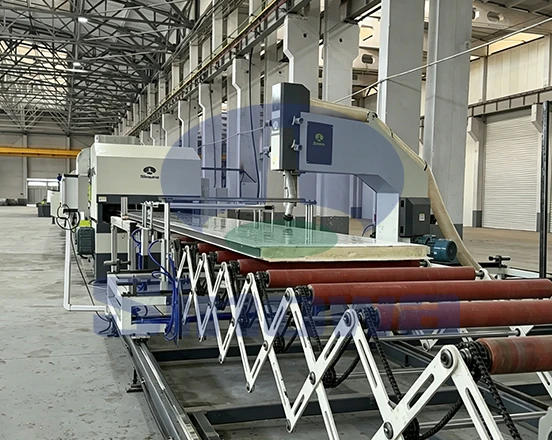
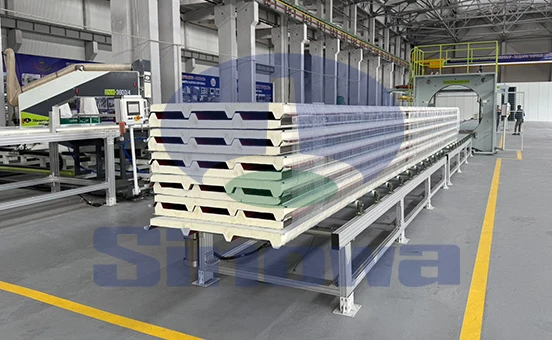
PU/PIR/Rockwool Sandwich Panel Production Equipment

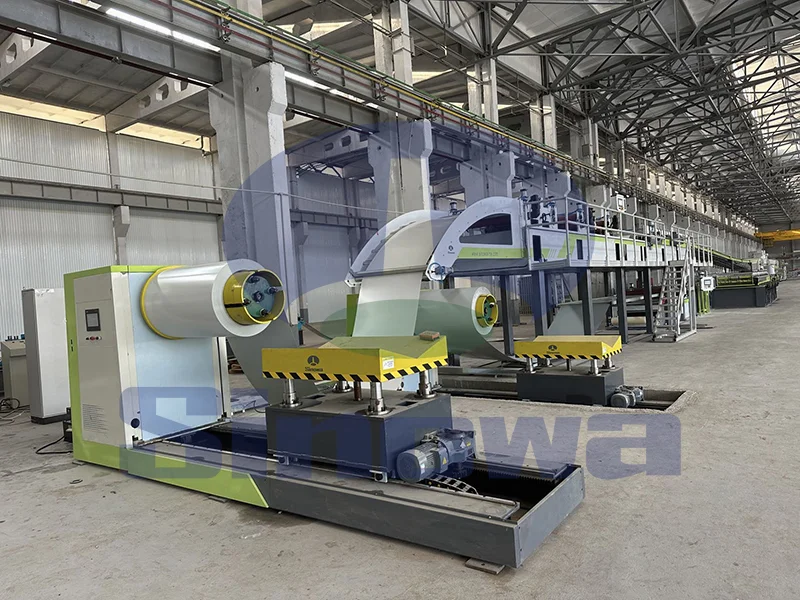
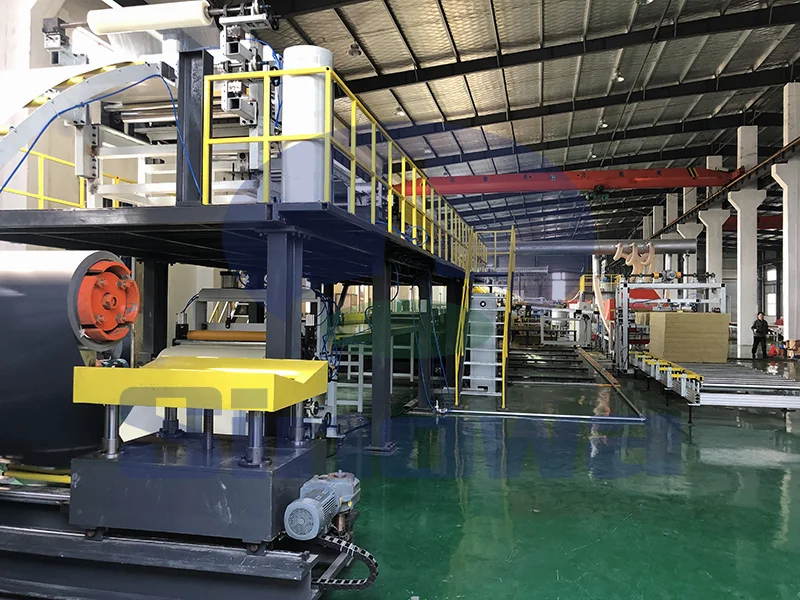
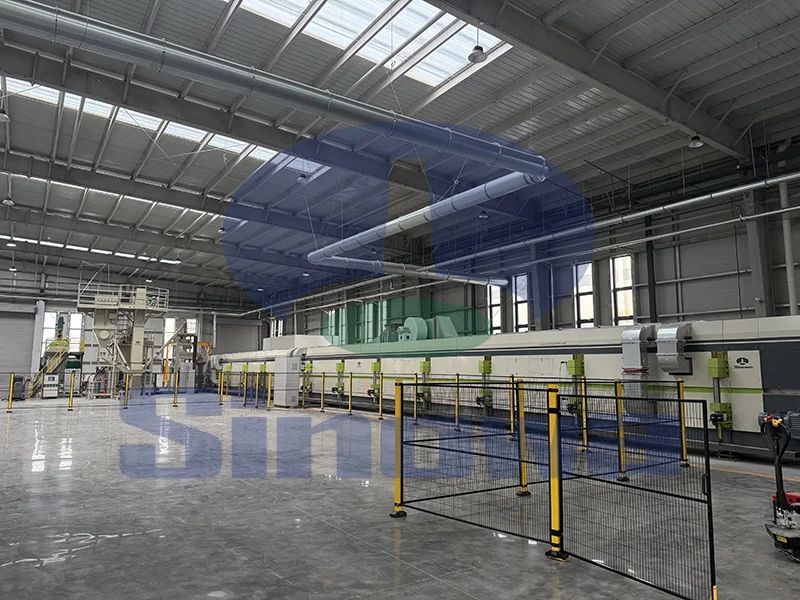
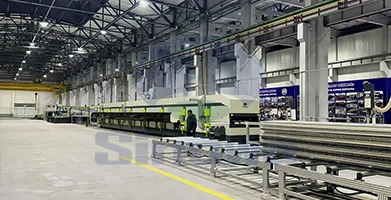
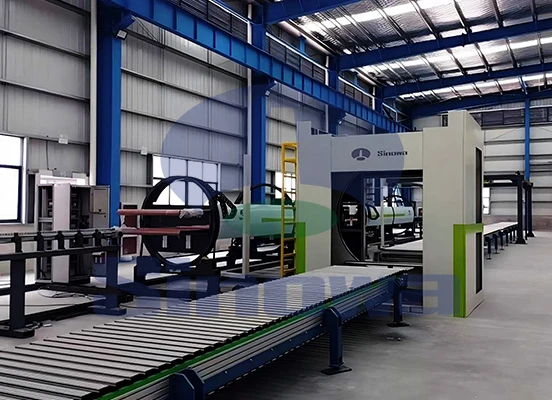
Sinowa is a manufacturer of high-end & high-efficiency pu/pir/rockwool sandwich panel production equipment in china, supplier is a insulation sandwich panel machinery factory, customized and design high-quality & high-precision pu/pir/rockwool sandwich panel production equipment with a reasonable price, the equipment is a high-tech automatic and continuous pu/pir/rockwool sandwich panel production equipment.

Sandwich panels have become indispensable materials in modern construction, industrial insulation, and specialized applications due to their exceptional combination of structural strength, thermal insulation, fire resistance, and lightweight properties. At the core of their mass production lies a range of specialized equipment designed to precision-engineer panels with distinct core materials, each tailored to meet specific performance requirements. Among the most widely used are PU (Polyurethane), PIR (Polyisocyanurate), and Rockwool sandwich panels, each produced by dedicated lines that optimize the unique characteristics of their core materials.

PU/PIR/Rockwool Sandwich Panel Production Equipment

The production of sandwich panels, regardless of core material, follows a fundamental framework: feeding and preparation of face sheets, core material mixing and application (or placement), lamination and bonding, cutting, and quality control. However, the distinct chemical and physical properties of PU, PIR, and Rockwool demand specialized modifications to each stage of the process, resulting in three distinct types of production equipment. PU and PIR, as foam-based cores, rely on chemical reaction processes to form their insulating structure, while Rockwool, a mineral fiber core, requires fiber processing and mechanical bonding—differences that shape the design, components, and operational parameters of their respective production lines.

Starting with PU Sandwich Panel Equipment, this specialized machinery is engineered to handle the rapid chemical reaction of polyurethane foam, which expands and cures to form a dense, closed-cell core between two face sheets. The key to PU panel production lies in precise control of the foam mixing ratio, temperature, and application rate, as even minor deviations can compromise the panel’s insulation performance, structural integrity, and dimensional stability. PU sandwich panel production lines typically consist of several interconnected modules, each serving a critical role in the manufacturing process.

The first module in a PU production line is the face sheet feeding system, which accommodates a variety of face materials, including steel sheets (galvanized or color-coated), aluminum sheets, or composite materials. The feeding system is equipped with unwinding units that hold large rolls of face sheets, ensuring consistent tension to prevent wrinkling or misalignment. Guide rollers and leveling mechanisms further refine the face sheets, removing any imperfections that could affect bonding with the PU core. Some advanced systems include pre-treatment units for metal face sheets, such as degreasing or chemical priming, to enhance adhesion—though these are optional and dependent on the specific application requirements of the final panel.

Following face sheet preparation, the core material mixing and application module takes center stage. PU foam is formed by the reaction of two main components: isocyanate and polyol, along with additives such as blowing agents, catalysts, flame retardants, and surfactants. The production equipment features high-pressure mixing heads that precisely meter and combine these components at a controlled ratio—typically 1:1 for many applications, though this can be adjusted based on the desired foam density and performance. The mixing heads ensure thorough homogenization of the components, as incomplete mixing can lead to uneven foam structure, voids, or reduced insulation efficiency.

PU Sandwich Panel Equipment,PIR Sandwich Panel Equipment,Rockwool Sandwich Panel Equipment

Blowing agents play a critical role in PU foam formation, and the production equipment is designed to accommodate either chemical or physical blowing agents. Chemical blowing agents react with the isocyanate-polyol mixture to release gas (usually carbon dioxide), while physical blowing agents (such as hydrofluorocarbons or hydrocarbons) vaporize due to the exothermic reaction of the foam components. The equipment’s temperature control system regulates the temperature of the mixing heads and the surrounding environment to optimize foam expansion—typically between 20°C and 30°C, as higher temperatures can accelerate curing and reduce foam expansion, while lower temperatures can slow the reaction and lead to incomplete curing.

Once mixed, the PU foam is extruded onto the lower face sheet via a precision application system, which ensures a uniform layer thickness. The upper face sheet is then fed over the foam layer, and the combined structure enters a lamination and compression module. This module consists of a series of heated rollers or conveyor belts that apply consistent pressure to the sandwich panel, ensuring proper bonding between the face sheets and the foam core. The heat from the rollers also accelerates the curing process of the PU foam—critical, as PU foam cures relatively quickly, typically reaching a tack-free state within minutes and full curing within 24 hours. The compression force is carefully controlled to avoid over-compacting the foam, which would reduce its insulation properties, or under-compacting, which could lead to delamination.

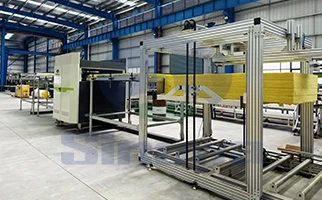
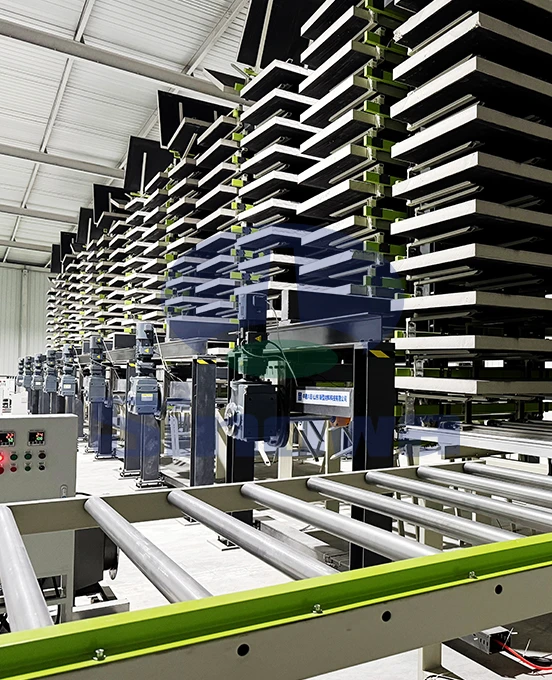
After lamination, the continuous panel enters a cutting module, which trims the panel to the desired length and width. The cutting equipment typically uses circular saws or CNC cutting tools, which ensure clean, precise cuts without damaging the foam core or face sheets. Some advanced lines include automatic size adjustment systems, allowing for quick changes between different panel dimensions to meet customer specifications. Following cutting, the panels undergo a quality control check, where sensors and visual inspection systems detect defects such as delamination, uneven foam density, surface imperfections, or dimensional inaccuracies. Defective panels are removed from the production line, while acceptable panels are stacked and prepared for packaging.

PU sandwich panel production equipment is highly customizable, with options for adjusting foam density (typically between 30 kg/m³ and 80 kg/m³), panel thickness (from 20 mm to 200 mm), and face sheet thickness (from 0.3 mm to 1.5 mm). This flexibility makes PU panels suitable for a wide range of applications, including cold storage facilities, commercial buildings, residential insulation, and transportation (such as truck bodies and shipping containers). The equipment’s production capacity varies, with small-scale lines producing up to 5 meters per minute and large-scale industrial lines capable of speeds exceeding 15 meters per minute, depending on panel thickness and foam density.

PU Sandwich Panel Equipment,PIR Sandwich Panel Equipment,Rockwool Sandwich Panel Equipment

Moving to PIR Sandwich Panel Equipment, this machinery shares similarities with PU lines due to the fact that PIR foam is a modified form of PU foam, but it incorporates additional catalysts to promote trimerization, resulting in a more rigid, fire-resistant core. As a result, PIR production equipment requires specialized adjustments to the mixing, curing, and lamination processes to accommodate the unique chemical properties of PIR foam, which has a higher crosslink density and slower curing time compared to PU.

The face sheet feeding and preparation module for PIR production lines is nearly identical to that of PU lines, as PIR panels use the same range of face materials (steel, aluminum, composite sheets) and require the same tension control and leveling to ensure proper bonding. However, some PIR lines may include additional pre-heating of the face sheets, as the slower curing of PIR foam benefits from slightly elevated face sheet temperatures (30°C to 35°C) to promote adhesion and accelerate the initial curing stage.

The key difference between PU and PIR production equipment lies in the mixing and application module. PIR foam is formed by the reaction of isocyanate, polyol, and a trimerization catalyst—usually an amine-based catalyst—that promotes the formation of isocyanurate rings in the foam structure. This trimerization reaction increases the foam’s thermal stability, fire resistance, and rigidity, but it also slows down the overall curing process compared to PU. As a result, the mixing heads in PIR production equipment are designed to precisely control the addition of the trimerization catalyst, along with other additives such as flame retardants, surfactants, and blowing agents.

The ratio of isocyanate to polyol in PIR foam is typically higher than in PU (often 1.5:1 to 2:1), as the excess isocyanate contributes to the trimerization reaction. The production equipment’s metering system must maintain this precise ratio to ensure consistent foam performance. Additionally, the temperature control system for PIR lines is often more sophisticated, as the trimerization reaction is exothermic but requires a longer curing time—typically, the lamination and curing module for PIR lines is longer than that for PU, with heated conveyor belts or ovens that maintain a constant temperature (35°C to 45°C) to facilitate full curing.

PU Sandwich Panel Equipment,PIR Sandwich Panel Equipment,Rockwool Sandwich Panel Equipment

The lamination and compression module for PIR panels operates at lower pressures than PU lines, as PIR foam is more rigid and less prone to compression. This prevents damage to the foam core while ensuring proper bonding between the face sheets and the core. The longer curing time for PIR foam means that the production line speed for PIR panels is generally slower than for PU—typically 3 to 10 meters per minute, depending on panel thickness and foam density. This slower speed allows for full curing of the foam before the panel is cut, reducing the risk of delamination or dimensional distortion.

The cutting module for PIR production equipment is similar to that of PU, using precision saws or CNC tools to trim the panels to size. However, due to the higher rigidity of PIR foam, the cutting tools may be equipped with specialized blades to ensure clean cuts without chipping or cracking the core. Quality control for PIR panels focuses on similar defects as PU, but with additional checks for fire resistance and thermal stability—though these tests are often performed on sample panels rather than every unit, as they are destructive.

PIR sandwich panel production equipment is optimized for applications that require enhanced fire resistance, such as commercial and industrial buildings, power plants, warehouses, and marine vessels. The equipment’s ability to produce panels with high fire resistance (often meeting Class A fire ratings) and excellent thermal insulation makes PIR panels a preferred choice for projects where safety and energy efficiency are paramount. Like PU lines, PIR production equipment is customizable, with options for adjusting foam density (40 kg/m³ to 100 kg/m³), panel thickness (25 mm to 250 mm), and face sheet specifications.

In contrast to PU and PIR foam-based cores, Rockwool sandwich panels feature a mineral fiber core made from molten rock (typically basalt or diabase) that is spun into fine fibers, bonded with a binder, and formed into a rigid board. Rockwool Sandwich Panel Production Equipment is designed to handle the mechanical processing of mineral fibers, rather than chemical reactions, making its design and operation fundamentally different from foam-based production lines. The key challenges in Rockwool panel production are ensuring uniform fiber distribution, proper bonding of the fiber core, and consistent lamination with the face sheets.

PU Sandwich Panel Equipment,PIR Sandwich Panel Equipment,Rockwool Sandwich Panel Equipment

The Rockwool production process begins with the fiber preparation module, which is unique to this type of equipment. The raw material—basalt or diabase—is melted in a high-temperature furnace at temperatures exceeding 1500°C, until it reaches a molten, viscous state. The molten rock is then fed into a fiber spinning machine, which uses centrifugal force to spin the rock into fine fibers (typically 3 to 7 micrometers in diameter). During spinning, a binder (usually a phenolic resin) is sprayed onto the fibers to help them bond together into a rigid structure. The binder application system must ensure uniform coverage, as uneven binder distribution can lead to weak spots in the core or reduced structural integrity.

After spinning and binder application, the fibers are collected on a conveyor belt to form a continuous mat. This mat is then fed into a curing oven, where the binder is activated at high temperatures (180°C to 220°C). The curing process causes the binder to harden, bonding the fibers together into a rigid Rockwool core. The curing oven’s temperature and conveyor speed are precisely controlled to ensure full curing of the binder—under-curing can result in a soft, weak core, while over-curing can cause the binder to degrade, reducing the core’s performance. The thickness of the Rockwool core is adjusted during this stage by controlling the speed of the conveyor and the amount of fiber deposited.

Once the Rockwool core is cured, it moves to the face sheet lamination module. Similar to PU and PIR lines, this module feeds and prepares the upper and lower face sheets (steel, aluminum, or composite materials) and bonds them to the Rockwool core. However, unlike foam-based cores, which bond to the face sheets through chemical adhesion during curing, Rockwool cores require an adhesive to bond with the face sheets. The production equipment features an adhesive application system that applies a uniform layer of adhesive (typically a polyurethane or epoxy-based adhesive) to the surface of the Rockwool core or the face sheets.

After adhesive application, the Rockwool core is sandwiched between the two face sheets, and the combined structure enters a compression and lamination module. This module uses a series of rollers or presses to apply consistent pressure to the panel, ensuring that the face sheets adhere firmly to the core. Unlike PU and PIR lines, the lamination module for Rockwool panels does not require heating (or uses minimal heating) to accelerate bonding, as the adhesive cures at room temperature or with moderate heat. The compression force is controlled to avoid compressing the Rockwool core excessively, which would reduce its thermal insulation and sound absorption properties.

PU Sandwich Panel Equipment,PIR Sandwich Panel Equipment,Rockwool Sandwich Panel Equipment

Following lamination, the continuous Rockwool panel enters a cutting module, which trims the panel to the desired length and width. The cutting equipment for Rockwool panels must be designed to handle the abrasive nature of mineral fibers—typically using diamond-tipped saws or abrasive cutting tools that can make clean cuts without fraying the fiber core. Some lines include edge trimming systems to smooth the panel edges and remove any excess adhesive or fiber.

Quality control for Rockwool sandwich panels focuses on fiber density, core thickness, adhesive bonding, face sheet alignment, and surface quality. Sensors detect variations in core density or thickness, while visual inspection checks for delamination, adhesive overflow, or surface imperfections. Rockwool cores are also tested for thermal conductivity, sound absorption, and fire resistance—key performance metrics for mineral fiber panels. The production capacity of Rockwool sandwich panel equipment varies, with small-scale lines producing 2 to 5 meters per minute and large-scale lines capable of 8 to 12 meters per minute, depending on core thickness and fiber processing speed.

Rockwool sandwich panels are valued for their exceptional fire resistance (Class A1, non-combustible), sound absorption, and thermal insulation, making them ideal for applications such as high-rise buildings, hospitals, schools, industrial facilities, and acoustic enclosures. The production equipment’s ability to process mineral fibers into rigid, consistent cores ensures that Rockwool panels meet the strict performance requirements for these critical applications.

While PU, PIR, and Rockwool sandwich panel equipment differ significantly in their design and operation, they share several common considerations that are critical to producing high-quality panels. One such consideration is automation, which has become increasingly prevalent in modern production lines. Automated systems reduce human error, improve consistency, and increase production efficiency. For example, automated face sheet feeding systems ensure consistent tension and alignment, while automated mixing and application systems maintain precise component ratios. Many lines also feature automated quality control systems, such as machine vision cameras and sensors, that detect defects in real time and trigger adjustments to the production process or remove defective panels.

PU Sandwich Panel Equipment,PIR Sandwich Panel Equipment,Rockwool Sandwich Panel Equipment

Another common consideration is energy efficiency. Production equipment for sandwich panels—particularly Rockwool lines, which require high-temperature furnaces—can consume significant amounts of energy. Manufacturers are increasingly integrating energy-saving technologies into their equipment, such as heat recovery systems that capture waste heat from curing ovens or furnaces and reuse it for pre-heating face sheets or raw materials. Additionally, variable frequency drives (VFDs) are used to adjust the speed of motors and conveyors based on production demand, reducing energy consumption during low-output periods.

Environmental sustainability is also a growing focus in the design of sandwich panel production equipment. For PU and PIR lines, this includes the use of low-VOC (volatile organic compound) additives and blowing agents that have a lower environmental impact, such as hydrofluoroolefins (HFOs), which have a low global warming potential (GWP). Rockwool production equipment is being optimized to reduce emissions from the furnace, such as particulate matter and sulfur dioxide, through the use of advanced filtration systems. Additionally, many manufacturers are designing equipment that uses recycled materials, such as recycled steel for face sheets or recycled rock for Rockwool cores, further reducing the environmental footprint of the production process.

Maintenance is another critical factor for all three types of production equipment, as downtime can significantly impact productivity. PU and PIR lines require regular cleaning of mixing heads and application systems to prevent buildup of foam components, which can clog the equipment and affect performance. The high-pressure pumps used in these lines also require regular inspection and maintenance to ensure proper operation. Rockwool lines require maintenance of the fiber spinning machines and curing ovens, including cleaning of the spinning nozzles and replacement of worn parts (such as conveyor belts and cutting blades). Many modern lines feature predictive maintenance systems that use sensors to monitor equipment performance and alert operators to potential issues before they cause downtime.

PU Sandwich Panel Equipment,PIR Sandwich Panel Equipment,Rockwool Sandwich Panel Equipment

The choice between PU, PIR, and Rockwool sandwich panel production equipment depends on several factors, including the target application, performance requirements, production volume, and budget. PU lines are ideal for high-volume production of panels with excellent thermal insulation and lightweight properties, suitable for cold storage and residential applications. PIR lines are preferred for projects requiring enhanced fire resistance and rigidity, such as commercial and industrial buildings. Rockwool lines are the best choice for applications where non-combustible materials are required, such as high-rise buildings and hospitals. Additionally, manufacturers may opt for hybrid lines that can produce multiple types of panels, though these lines are typically more complex and expensive.

Looking ahead, the sandwich panel production equipment industry is expected to grow, driven by increasing demand for energy-efficient and fire-resistant building materials. Technological advancements will continue to improve the efficiency, automation, and sustainability of these lines. For example, the integration of artificial intelligence (AI) and machine learning (ML) into quality control systems will enable real-time adjustments to the production process, further improving panel consistency. Additionally, the development of new materials—such as bio-based polyols for PU and PIR foam, or improved binders for Rockwool—will require modifications to production equipment, creating new opportunities for manufacturers.

In conclusion, PU, PIR, and Rockwool sandwich panel production equipment are specialized systems designed to optimize the unique properties of their respective core materials. Each type of equipment features distinct components and processes, tailored to meet the performance requirements of different applications. PU lines excel in high-volume production of lightweight, high-insulation panels; PIR lines prioritize fire resistance and rigidity; and Rockwool lines produce non-combustible panels with excellent sound absorption. As the construction industry continues to prioritize energy efficiency, safety, and sustainability, the demand for advanced sandwich panel production equipment will remain strong, driving innovation and growth in the sector. Manufacturers and stakeholders must stay informed about technological advancements and industry trends to select the right equipment for their needs and remain competitive in the global market.

Insulation Sandwich Panels

  •  sandwich panels
  •  sandwich panels
  •  sandwich panels
  •  sandwich panels

Are you interested in our continuous sandwich panel line?

Get In Touch