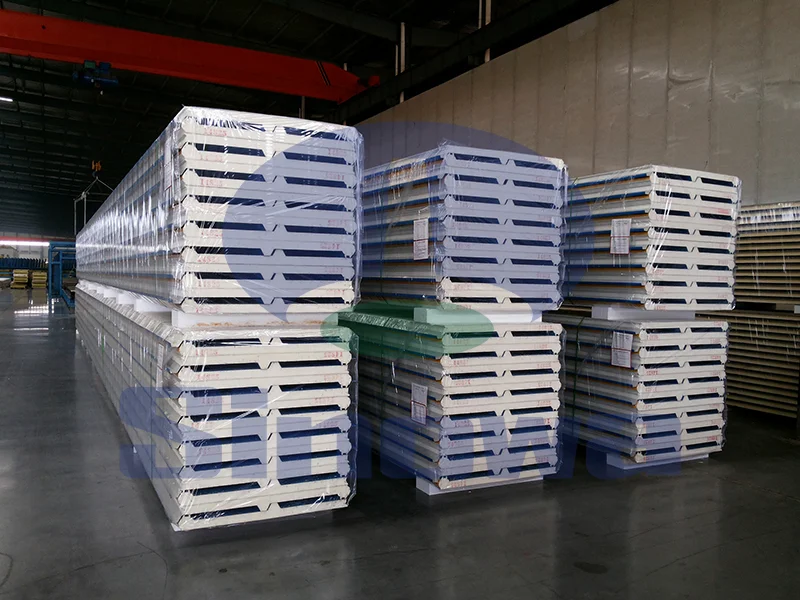
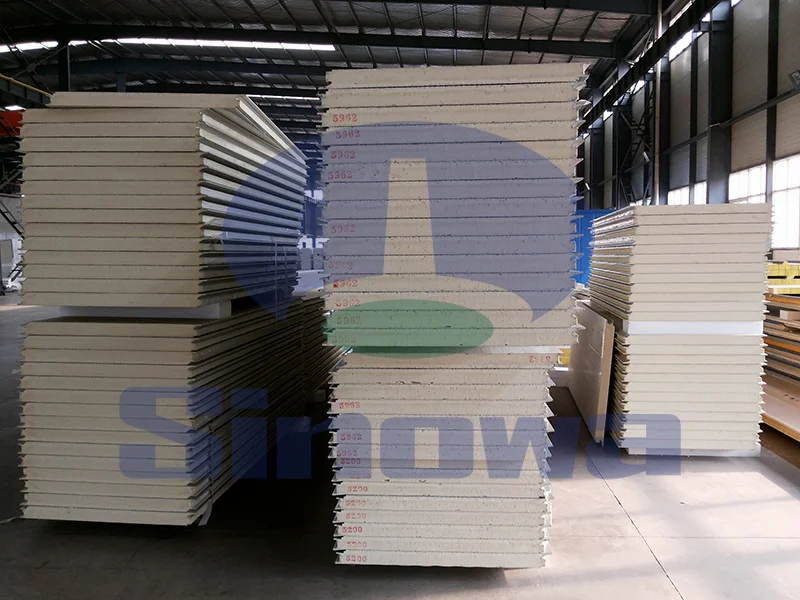
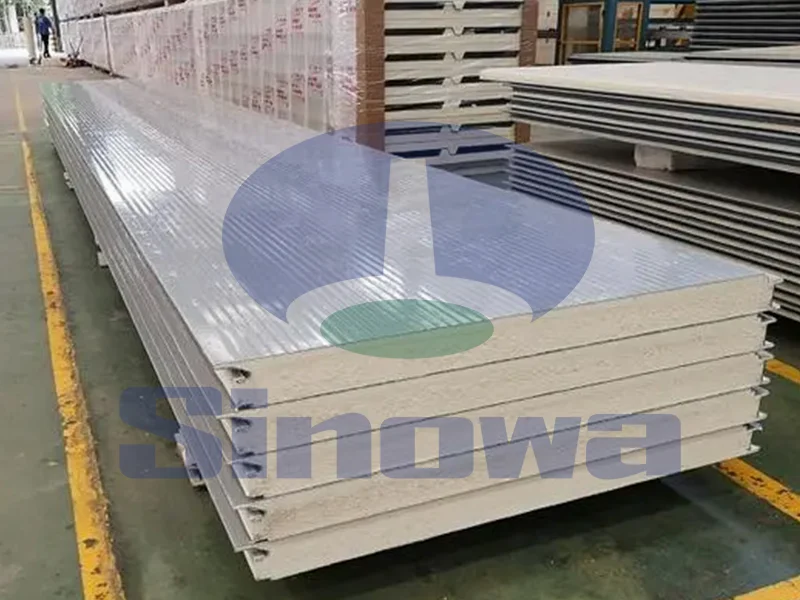
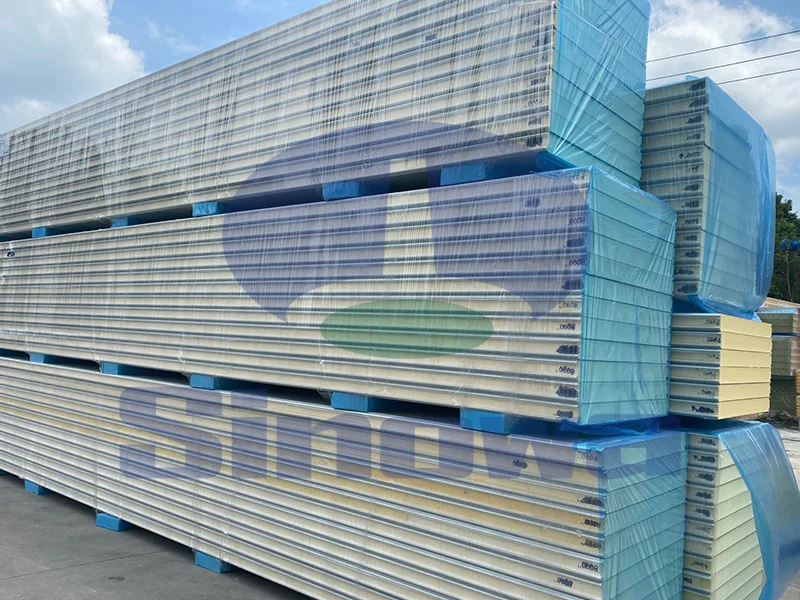
The puf sandwich panel line is a high-end equipment that integrates automation control, material composite, and precision machining, puf sandwich panel machine can achieve multi use of roof panels, wall panels, and cold storage panels in one machine.
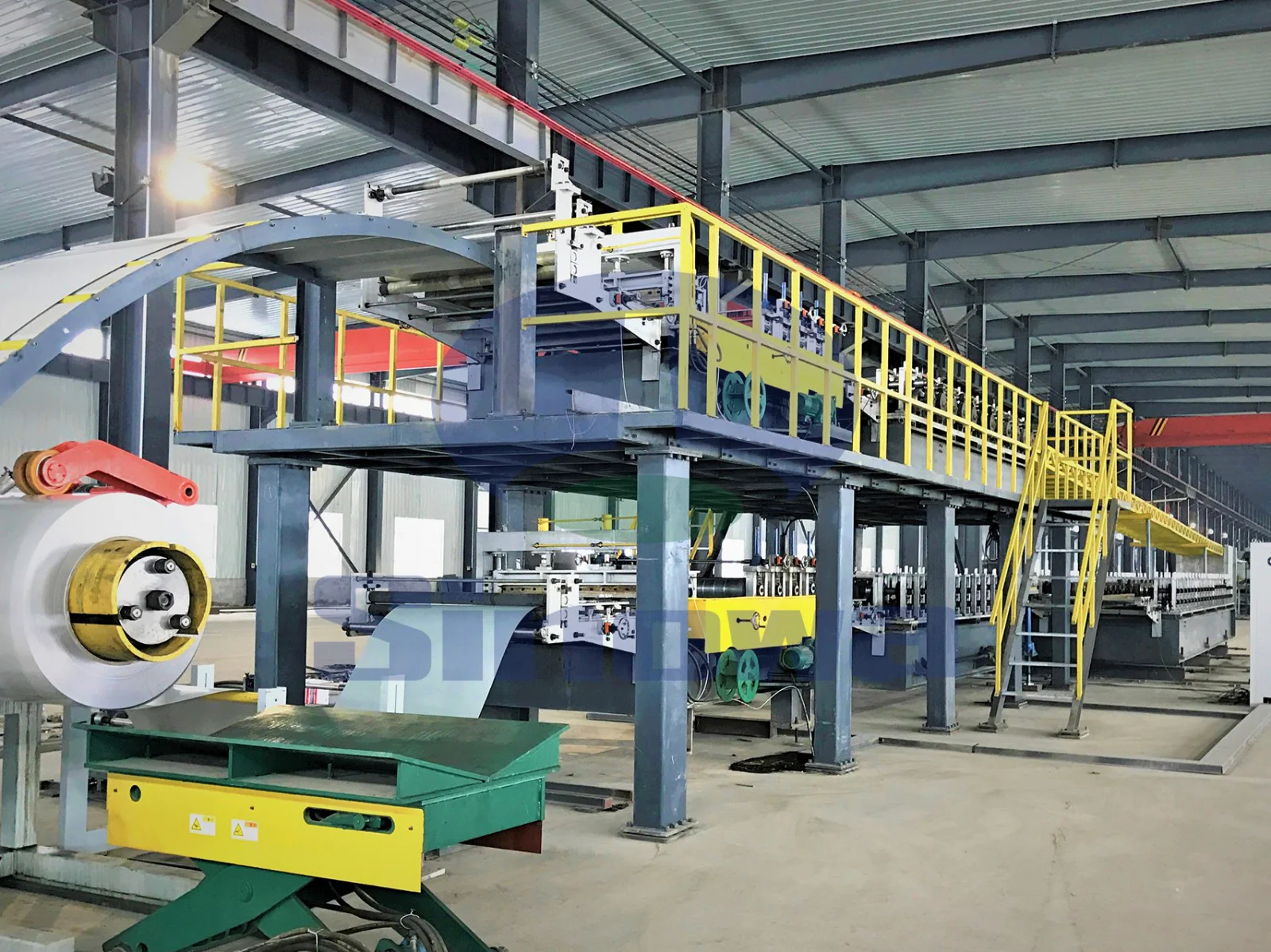
The core module of the puf sandwich panel production line:
Raw material pretreatment system
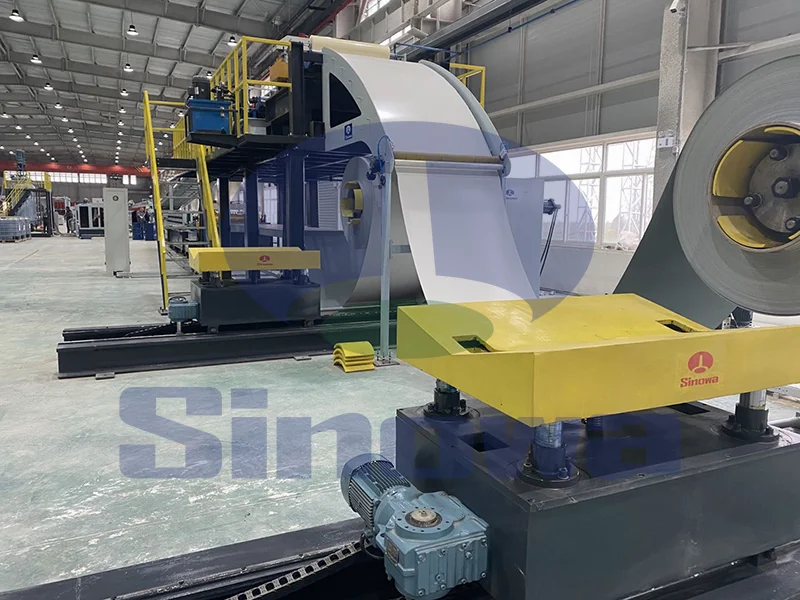
Uncoiler: pneumatic brake is used to control the tension to ensure that the metal coil (color steel plate, aluminum foil, etc.) is discharged smoothly, and manual centering adjustment is supported.
Preheating device: Use electric heating or hot air circulation to raise the temperature of the substrate to 50-70 ℃, optimizing the bonding performance of polyurethane foam.
Foaming and Forming Unit
High pressure foaming machine: equipped with A/B material tanks (capacity 1100L/80L) and metering pumps, with a mixing head speed of 4500r/min, achieving precise proportioning and high-speed mixing of polyurethane raw materials.
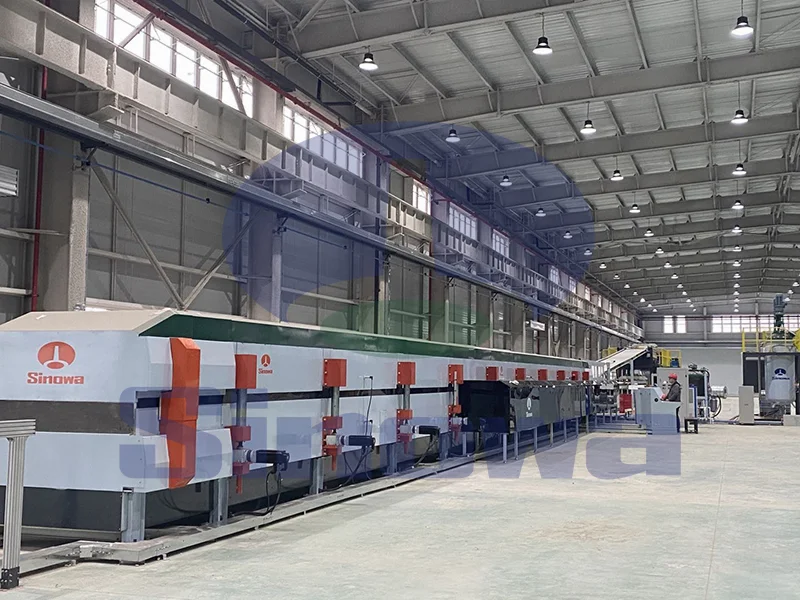
Double track machine: the core forming equipment, with a length of 24-25 meters, uses servo hydraulic lifting to adjust the thickness of the plate (20-200mm), and the chain plate unit is CNC machined to ensure flatness. The heating temperature can be stable at 60 ℃± 2 ℃.
Post processing system
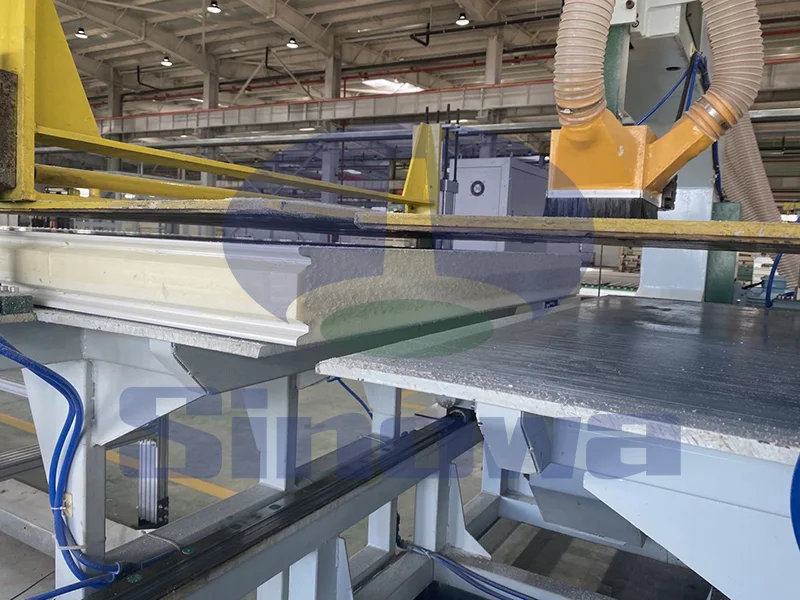
Fixed length sawing machine: automatically tracks cutting through PLC control, with an accuracy error of ≤ 1mm, and supports processing of up to 20 meters of sheet metal.
Stacking and packaging unit: Optional robotic arm for automatic stacking, improving production efficiency by over 30%.
Technical parameters and performance advantages of puf sandwich panel line
Production specifications: Width 400-1200mm (customizable), density 45-65kg/m ³, daily production capacity up to 200m ³ (based on 50mm thick plate).
Energy saving design: Adopting dual-mode heating of electric heating tube and fuel furnace, the energy consumption is only 40% of similar equipment, and the process temperature can be reached within 1 hour at room temperature above 5 ℃.
Intelligent control: Weilun touch screen+PLC centralized control, realizing fault self diagnosis and remote monitoring, with a total power of about 120kW (including 50kW heating platform).
Innovative Technology Highlights
Modular design
The host supports quick changeover, and PU/PIR/rock wool sandwich panels can be produced by changing the mold, with a switching time of less than 2 hours.No hydraulic lifting system
Adopting precision servo mechanism instead of traditional hydraulic device to avoid the risk of oil leakage, the thickness adjustment accuracy reaches ± 0.1mm.Environmental adaptability
The insulation unit is filled with fiberglass wool and designed with a closed internal circulation system.
Typical application scenarios
Construction field: Steel structure factory exterior wall insulation board (fire rating B1), clean workshop partition wall.
Cold chain logistics: Polyurethane sandwich panels for cold storage (-40 ℃ low temperature stability).
Special requirements: anti-static sandwich panels (for electronic factories), metal carved decorative panels (for commercial buildings).
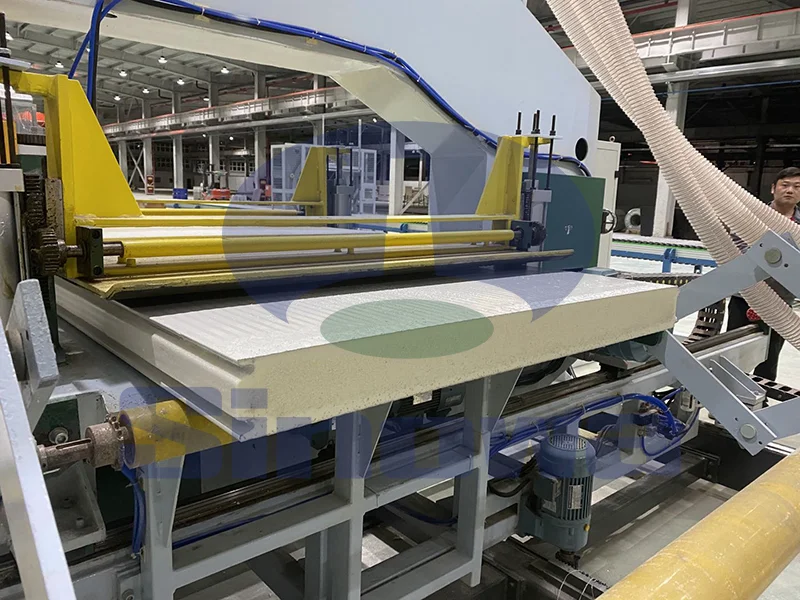
Polyurethane Foam (PUF) sandwich panels have become indispensable in modern construction and industrial applications, thanks to their exceptional thermal insulation, structural rigidity, lightweight properties, and resistance to harsh environmental conditions. These panels consist of a core of polyurethane foam bonded between two outer facings, typically made of metal sheets such as steel or aluminum, though other materials can be used depending on specific requirements. The production of high-quality PUF sandwich panels relies on advanced, automated production lines that ensure precision, consistency, and efficiency throughout the manufacturing process. From raw material handling to the final cutting and stacking of finished panels, every stage of the production line is engineered to optimize performance, minimize waste, and meet the diverse needs of end-users across various industries.
The foundation of any PUF sandwich panel production line lies in its ability to handle raw materials with care and precision, as the quality of the inputs directly impacts the performance of the final product. The primary raw materials include metal coils for the facings, polyurethane foam precursors, and auxiliary materials such as adhesives, protective films, and edge sealants. Metal coils, which serve as the outer layers of the sandwich panel, are available in a range of thicknesses, widths, and surface finishes. These coils must be stored in a controlled environment to prevent corrosion, moisture absorption, or surface damage before being fed into the production line. The polyurethane foam core is derived from two main chemical components: isocyanate and polyol, along with additives such as blowing agents, catalysts, and flame retardants. These chemicals must be stored in sealed containers at specific temperatures to maintain their reactivity and ensure consistent foam formation. The careful management of raw material storage and handling is critical to avoiding production delays, material waste, and defects in the final panels.
The production process begins with the uncoiling and feeding of the metal facings, a stage that sets the foundation for the structural integrity and surface quality of the panels. Each metal coil is loaded onto a decoiler, a machine designed to unwind the coil smoothly and feed the metal sheet into the subsequent stages of the line. Decoilers are equipped with tension control systems to ensure the metal sheet is fed at a consistent speed without stretching or wrinkling, which could compromise the flatness of the final panel. For applications requiring decorative or textured surfaces, the metal sheets may pass through an embossing machine after uncoiling. Embossing machines use patterned rollers to create textures such as brick, woodgrain, or custom designs on the surface of the metal, enhancing the aesthetic appeal of the panels while maintaining their structural strength. After embossing (if required), the metal sheets are guided through a leveler to correct any minor distortions and ensure a flat, uniform surface before entering the roll forming section.
Roll forming is a critical process that shapes the metal facings into the desired profile, which varies depending on whether the panels are intended for walls, roofs, or other applications. The roll forming section consists of a series of tandem rolling stands, each equipped with precision-engineered rollers that gradually bend the metal sheet into the required shape. The rollers are arranged in a sequence, with each stand making a small adjustment to the profile until the final shape is achieved. This gradual forming process ensures that the metal retains its structural integrity and does not develop cracks or weaknesses. For double-layer panels, separate roll forming systems are used for the upper and lower facings, allowing for different profiles to be created for each layer if needed. The roll forming section is also equipped with width adjustment mechanisms, enabling the production line to accommodate different panel widths without extensive reconfiguration. This flexibility is essential for meeting the diverse requirements of construction projects, which may call for panels of varying dimensions.
Once the metal facings have been formed into the desired profile, they are fed into the foaming station, where the polyurethane core is injected and bonded between the two layers. The foaming station is the heart of the production line, as it determines the insulation properties, density, and adhesion of the sandwich panel. The polyurethane foam is produced by mixing isocyanate and polyol in precise ratios, along with additives that control the foaming process. High-pressure foaming machines are used to meter, mix, and inject the chemicals onto the lower metal facing. These machines ensure that the mixture is thoroughly blended, as improper mixing can result in uneven foam density, poor adhesion, or reduced insulation performance. The blowing agent in the mixture causes the foam to expand, filling the gap between the upper and lower metal facings. The expansion process is carefully controlled to ensure that the foam fills the space uniformly without creating air pockets or excessive pressure, which could distort the metal profiles.
To ensure optimal foam curing and bonding, the panels pass through a double belt conveyor system after foaming. This system consists of two parallel, continuous belts that apply uniform pressure and temperature to the panels as they move through the curing zone. The belts are made of durable materials that can withstand the heat and pressure required for foam curing, and they are independently heated to maintain a consistent temperature throughout the process. The controlled pressure applied by the belts ensures that the foam core adheres firmly to both metal facings, creating a strong bond that enhances the structural integrity of the panel. The curing time varies depending on the type of polyurethane foam used, the thickness of the panel, and the ambient temperature, but typically ranges from several minutes to over an hour. During curing, the foam transitions from a liquid mixture to a solid, closed-cell structure that provides the panel’s signature insulation properties. The closed-cell structure of the foam minimizes convective heat transfer, making PUF panels highly efficient insulators compared to traditional materials.
After the foam has fully cured, the panels move to the cutting section, where they are trimmed to the required length with precision. Flying saw cutting machines are commonly used for this purpose, as they can cut the panels while they are still in motion, ensuring continuous production and high efficiency. These machines are equipped with sharp, durable blades (either band saws or disk blades) and a 180-degree rotating mechanism, allowing them to make clean cuts in both directions even at high line speeds. The cutting length is controlled by a computerized system that adjusts the saw’s movement to match the production line speed, ensuring that each panel meets the exact length specifications. The cutting tolerance is typically very tight, minimizing waste and ensuring that the panels can be easily installed without additional trimming on-site. After cutting, the panels may pass through an edge sealing station, where a sealant is applied to the cut edges to enhance water resistance and prevent moisture from penetrating the foam core.
Once the panels are cut and sealed, they proceed to the cooling and handling section, where they are prepared for stacking and packaging. Cooling stations use forced air or water cooling to bring the panels to ambient temperature, ensuring that the foam core is fully stabilized and the metal facings do not retain excess heat. This step is important for preventing warping or deformation of the panels after they leave the production line. After cooling, the panels are guided through a turning station, which flips the panels if necessary to ensure consistent orientation for stacking. Stacking systems use automated arms or conveyors to stack the panels neatly, with protective sheets placed between each layer to prevent surface scratches or damage during storage and transportation. The stacked panels are then wrapped in protective film or packaging material to shield them from moisture, dust, and physical damage during transit to the construction site or storage facility.
The entire production process is controlled by a centralized computerized system, typically based on programmable logic controllers (PLCs), which monitors and adjusts every stage of the line to ensure consistency and efficiency. The PLC system integrates data from sensors placed throughout the production line, including temperature sensors in the curing zone, pressure sensors in the foaming station, and speed sensors in the conveyor systems. This real-time data allows the system to make automatic adjustments to parameters such as foam mixing ratios, curing temperature, line speed, and cutting length, ensuring that any deviations from the desired specifications are corrected immediately. The control system also provides operators with a user-friendly interface to monitor production progress, view performance metrics, and troubleshoot any issues that may arise. This level of automation reduces the need for manual intervention, minimizes human error, and increases overall production efficiency.
Efficiency and sustainability are key considerations in the design and operation of modern PUF sandwich panel manufacturing lines. Manufacturers are constantly seeking ways to optimize material usage, reduce energy consumption, and minimize waste. One area of focus is the optimization of foam density, as adjusting the density to match the specific requirements of each application can reduce material usage without compromising performance. For example, panels used for cold storage may require a higher foam density for enhanced insulation, while panels used for non-insulated industrial walls can use a lower density to reduce costs and weight. Another sustainability measure is the use of blowing agents that have a low environmental impact, replacing traditional agents that contribute to greenhouse gas emissions. Additionally, production lines are designed to recover and reuse excess foam or trimmings, reducing material waste and lowering the overall carbon footprint of the manufacturing process.
The versatility of PUF sandwich panel making lines allows for the manufacturing of panels tailored to a wide range of applications. One of the most common uses is in cold storage facilities, where the exceptional thermal insulation properties of PUF panels help maintain stable temperatures, reducing energy consumption for refrigeration. In these applications, panels with thicker foam cores and specialized edge seals are produced to minimize temperature fluctuations and prevent moisture infiltration. PUF panels are also widely used in industrial buildings and warehouses, where their lightweight nature and structural strength make them ideal for rapid construction. The quick installation of these panels reduces construction time and labor costs, making them a cost-effective solution for large-scale industrial projects. Additionally, PUF panels are used in prefabricated houses and modular structures, as they can be easily transported and assembled on-site, enabling faster project completion.
Another important application area is in the food processing and pharmaceutical industries, where clean, hygienic, and temperature-controlled environments are essential. PUF panels with smooth, easy-to-clean surfaces are produced for these applications, ensuring compliance with strict hygiene standards. The panels’ resistance to moisture and corrosion also makes them suitable for use in coastal areas or other environments with high humidity. In the renewable energy sector, PUF panels are used in solar farms and wind energy facilities, where they provide insulation for equipment enclosures and help protect sensitive components from extreme temperatures. The adaptability of production lines to different panel specifications means that manufacturers can cater to these diverse applications without significant retooling or downtime.
Proper operation and maintenance of PUF sandwich panel lines are essential to ensure consistent performance, prolong equipment lifespan, and minimize production downtime. Regular maintenance routines include checking the tightness of bolts and fasteners, inspecting conveyor belts for wear and tear, and cleaning the mixing heads and nozzles of the foaming machine to prevent clogs. The PLC system should be regularly calibrated to ensure accurate parameter control, and sensors should be tested to verify their functionality. Operators should be trained to identify and respond to abnormal conditions, such as unusual vibrations, noise, or variations in panel quality, and to shut down the line if necessary to prevent further damage. Additionally, a comprehensive cleaning plan should be implemented to remove debris, dust, and excess foam from the equipment, as buildup can affect performance and lead to defects in the final product.
Advancements in technology are continuously improving the performance and capabilities of PUF sandwich panel production machines. One notable trend is the integration of artificial intelligence (AI) and machine learning algorithms into the control system, allowing for predictive maintenance and real-time optimization of production parameters. AI systems can analyze data from the production line to identify patterns that indicate potential equipment failures, enabling maintenance to be performed proactively before downtime occurs. Another advancement is the development of multi-functional production lines that can switch between different core materials, such as polyurethane, polyisocyanurate (PIR), or mineral wool, with minimal reconfiguration. This flexibility allows manufacturers to expand their product offerings and cater to a broader range of customer needs without investing in separate production lines.
The use of advanced materials is also driving innovation in PUF sandwich panel production. For example, the development of high-strength, lightweight metal alloys for the facings has improved the structural performance of the panels while reducing their overall weight. Additionally, the introduction of bio-based polyurethane foams, made from renewable resources such as vegetable oils, is making the production process more sustainable and reducing reliance on fossil fuels. These bio-based foams maintain the same insulation and structural properties as traditional polyurethane foams but have a lower carbon footprint, aligning with the growing demand for eco-friendly construction materials.
Quality control is an integral part of the production process, ensuring that every panel meets the required performance standards. Quality control measures begin with the inspection of raw materials, including testing the chemical composition of polyurethane precursors, checking the thickness and surface quality of metal coils, and verifying the performance of additives. During production, in-line inspections are conducted to monitor foam density, panel thickness, and adhesion between the foam core and metal facings. Random samples of finished panels are tested for thermal conductivity, mechanical strength, fire resistance, and water resistance to ensure they meet the specified requirements. These tests help identify any issues in the production process and allow for adjustments to be made before large quantities of defective panels are produced.
The global demand for PUF sandwich panels is expected to continue growing, driven by the increasing focus on energy efficiency in construction, the expansion of the cold chain logistics industry, and the rise in prefabricated and modular construction. This growth is fueling investment in advanced production lines that can meet the rising demand while maintaining high quality and sustainability. Manufacturers are also focusing on customization, offering panels in a wide range of sizes, thicknesses, profiles, and surface finishes to meet the unique needs of each project. The ability to produce customized panels efficiently is a key competitive advantage, as it allows manufacturers to cater to niche markets and differentiate their products from competitors.
In conclusion, PUF sandwich panel production plants are complex, automated systems that combine precision engineering, advanced materials, and intelligent control to produce high-quality panels for a diverse range of applications. From raw material handling to final packaging, every stage of the production process is designed to optimize efficiency, ensure consistency, and minimize environmental impact. As technology continues to advance, production lines will become more flexible, sustainable, and efficient, enabling manufacturers to meet the evolving needs of the construction and industrial sectors. The role of PUF sandwich panels in promoting energy efficiency and sustainable construction will only grow in importance, making advanced production lines a critical component of the modern manufacturing landscape. Whether used in cold storage, industrial buildings, or prefabricated homes, PUF sandwich panels produced by state-of-the-art lines offer a combination of performance, durability, and sustainability that is unmatched by traditional construction materials.