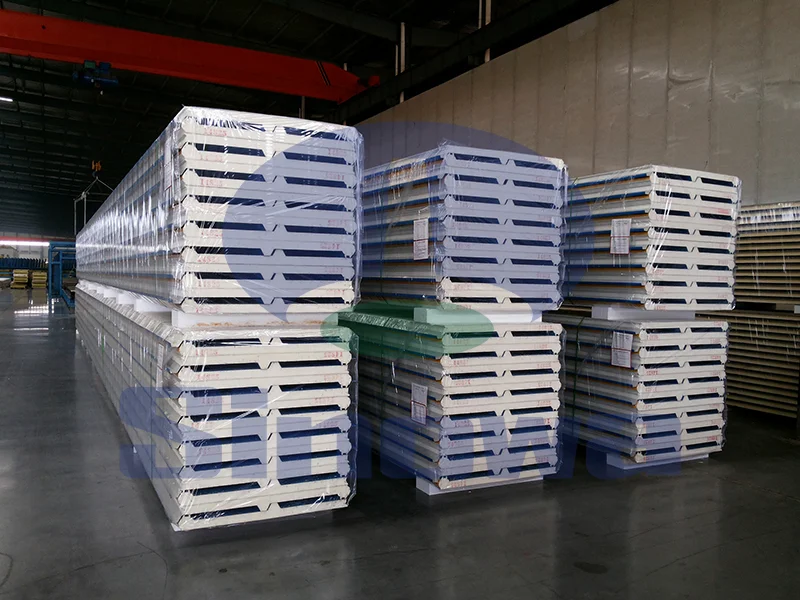
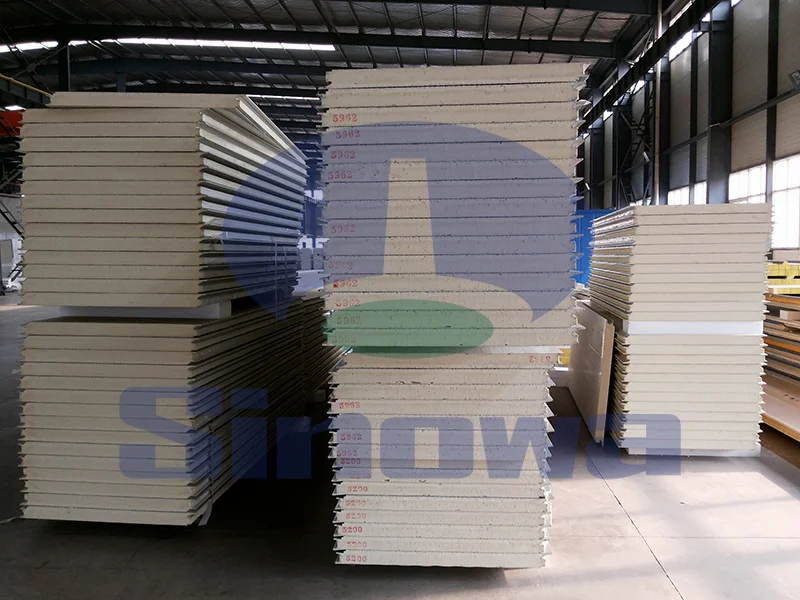
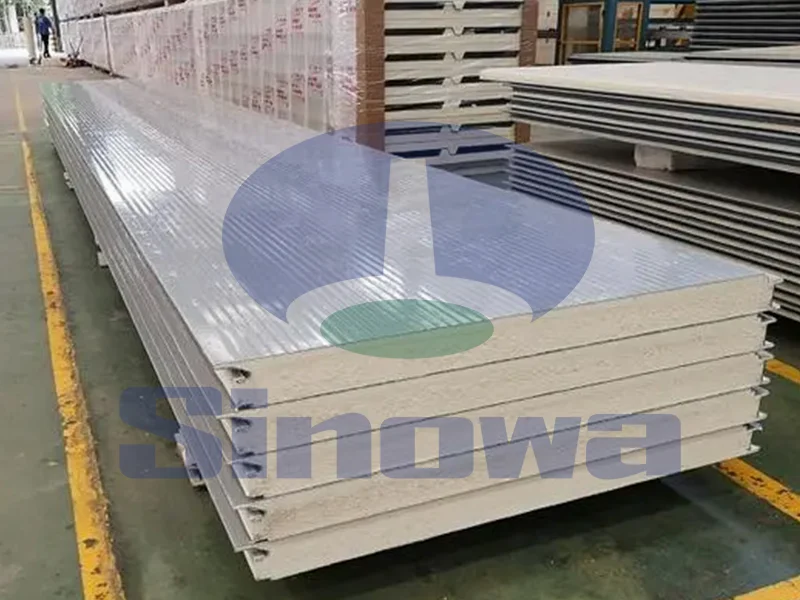
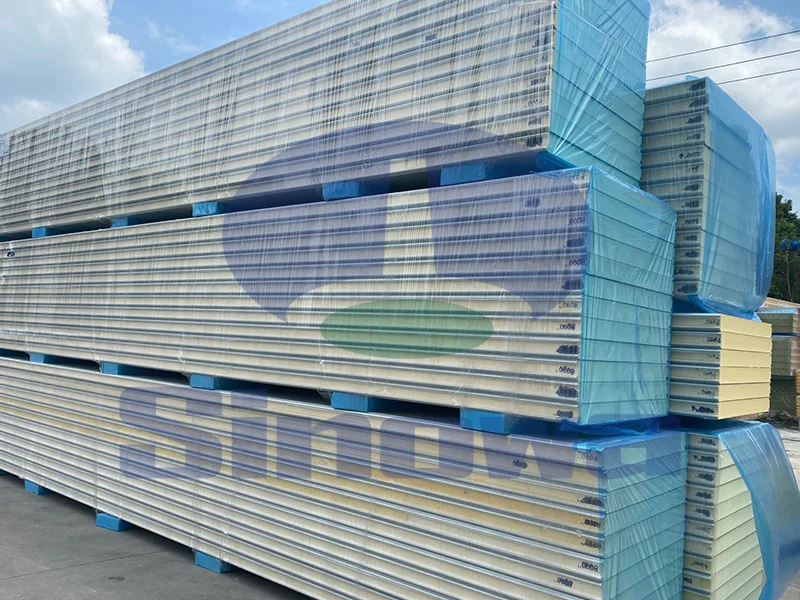
The roof sandwich panel line is a professional equipment system used in the modern construction industry to produce building panels with thermal insulation properties. This type of production line can composite metal panels with various insulation core materials to produce sandwich panels with both structural strength and insulation performance, which are widely used in the roof and wall construction of industrial plants, warehouses, cold storage and other buildings.
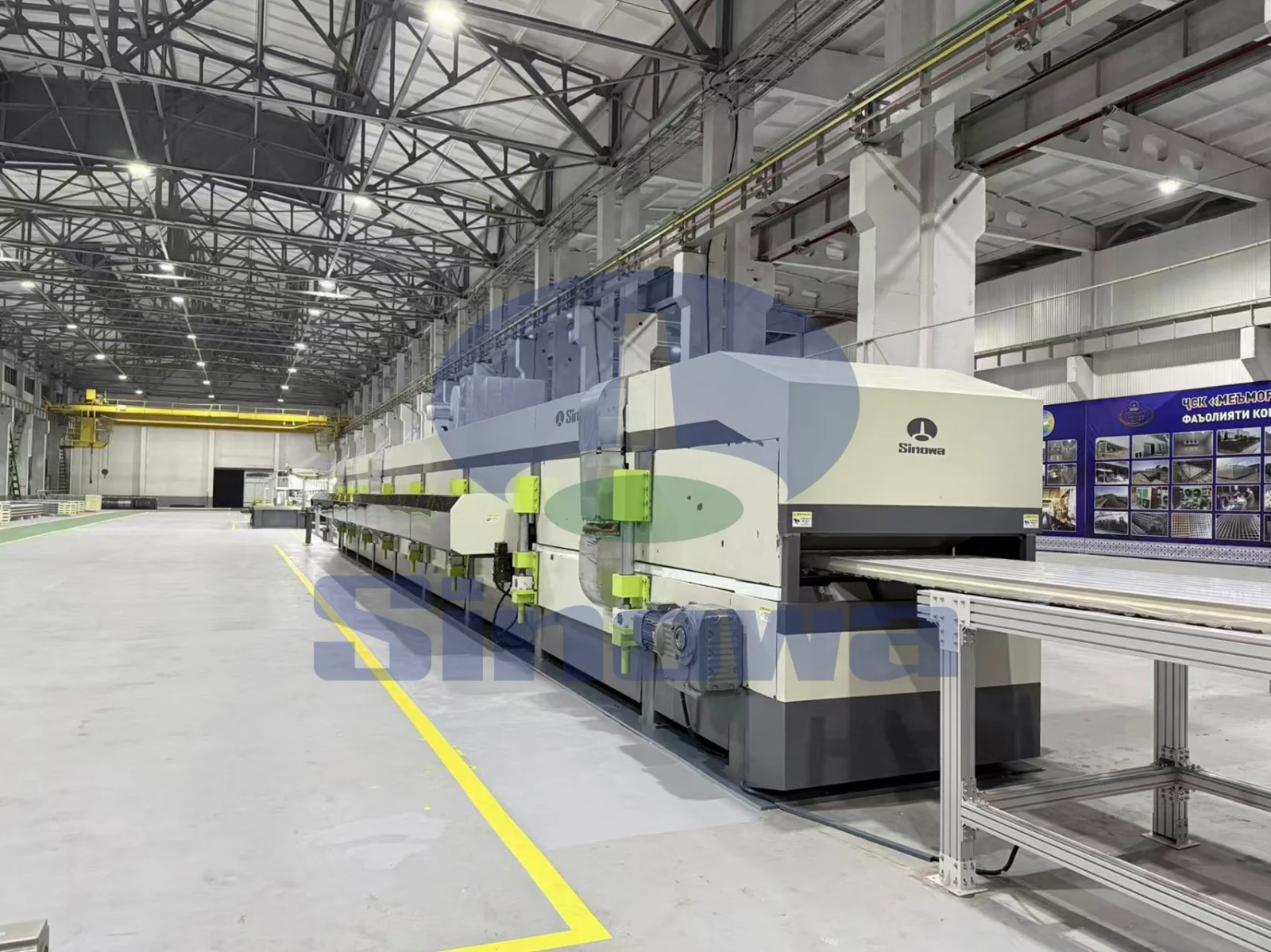
A complete production line of roof sandwich panels usually consists of multiple precision matched subsystems, each system undertaking different production functions:
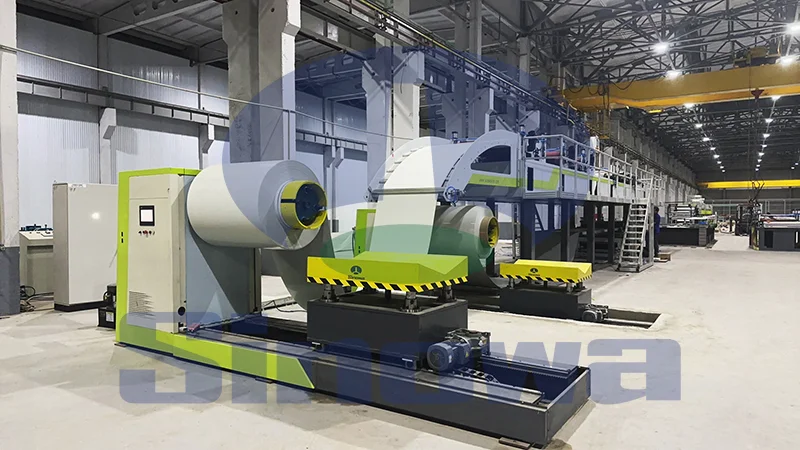
Uncoiling and pre-processing system: This is the starting point of the production line, responsible for the unfolding and preliminary processing of metal coils (usually color steel plates or aluminum coils). The system includes an uncoiler, a leveling machine, and a shear welding device to ensure that the metal panel enters the subsequent process smoothly and without defects. Some high-end equipment is also equipped with a corona treatment system, which increases the surface energy of the metal through high-voltage discharge and enhances the bonding strength with the core material.
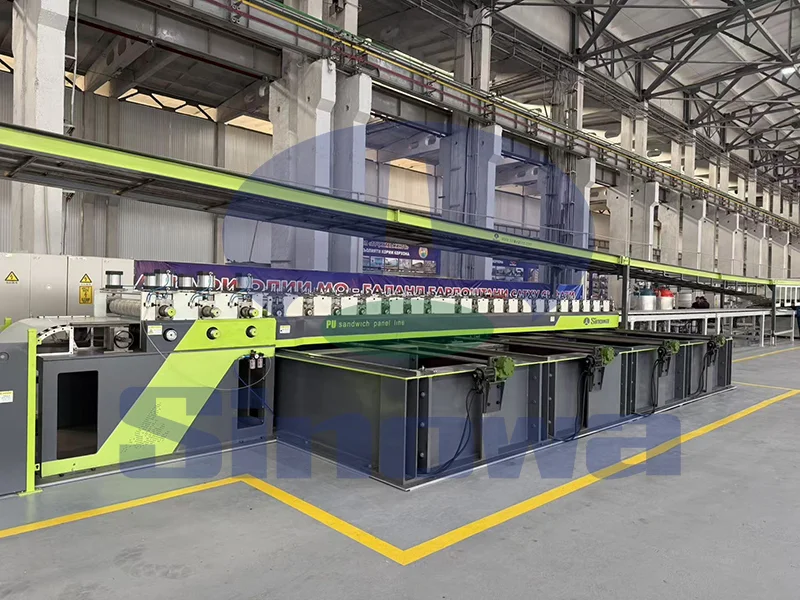
Forming system: This system gradually presses flat metal plates into the desired waveform or plate shape through a series of precision rolling molds. The molding process is usually 12-16 passes, and each roll press brings the sheet closer to the final shape. The 840 type roof tile production line is a typical representative, which can produce roof panels with specific ripples to enhance drainage performance and structural strength.
Core material processing system: There are significant differences according to different types of core materials (polyurethane, rock wool, glass wool, etc.). For polyurethane core materials, the system includes a high-pressure foaming machine, a temperature control system, and a mixing head; For prefabricated core materials such as rock wool, it includes automatic slitting machines, conveyor belts, and positioning devices. The PU edge sealing rock wool sandwich panel production line is particularly prominent in this link, which can inject polyurethane into the rock wool edge to form a sealed edge.
Composite system: This is the core part of the production line, which uses a double track press to firmly bond the upper and lower metal panels with the core material under controlled temperature and pressure. The pressure of high-end equipment can reach over 300 tons, ensuring a perfect combination of core materials and panels. The system is usually equipped with a 25 meter long conveying pressure section, providing sufficient foaming and curing time for polyurethane.
Cutting system: Equipped with a servo controlled automatic tracking cutting device, it can accurately cut continuously produced composite plates into a set length with an error controlled within ± 1mm. Cutting methods include disc saws, band saws, etc. Some production lines are equipped with multiple saw heads to achieve cutting at different angles.
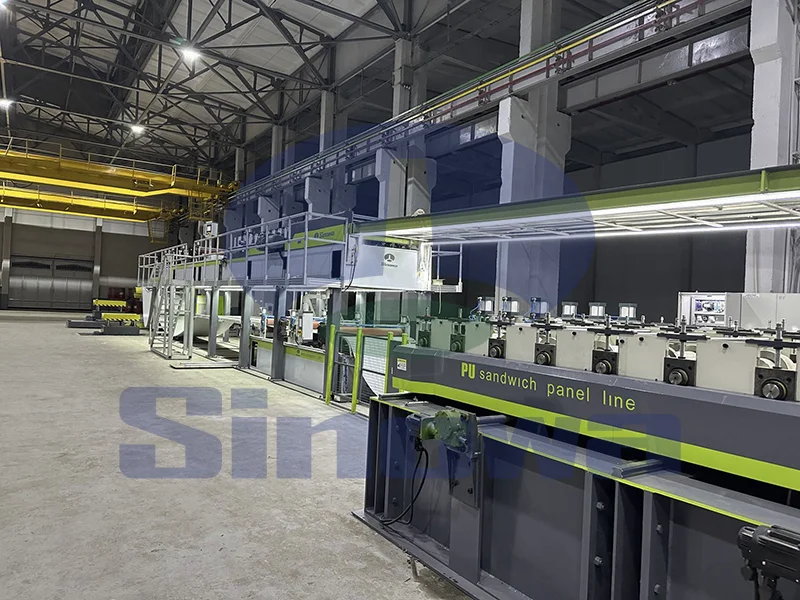
Automation control system: Modern production lines commonly use PLC (Programmable Logic Controller) for centralized control, integrating production management, parameter setting, fault diagnosis and other functions. Advanced ERP systems can achieve full lifecycle management of products through RFID technology, with full traceability from orders to installation and maintenance.
The roof sandwich panel production line can produce various types of composite panels, each with its unique process characteristics and applicable scenarios:
Polyurethane (PU)/polyisocyanurate (PIR) sandwich panel
Production process: Using continuous injection foaming technology, liquid polyurethane mixture is injected between two layers of metal panels and foamed and cured in a double track machine. The foaming process can use cyclopentane or 141B as foaming agents, and the foaming density is usually 38-45kg/m ³.
Product features: Low thermal conductivity (0.022-0.028W/m · K), excellent insulation performance; The fire protection level can reach B1 level; The bonding strength between the panel and the core material is high, and the overall mechanical properties are good. Widely used in cold chain logistics, industrial plants and other fields.
Process innovation: High pressure foaming technology combined with precise temperature control system makes the cell structure uniform and fine; Part of the production lines use PIR formula to improve the fire resistance of the products to a flame-retardant level.
Rock wool/glass wool sandwich panel
Production process: Prefabricated rock wool strips are precisely positioned through an automatic slitting and conveying system, and the panels are coated with high-performance adhesive and then roller pressed and compounded. The PU edge sealing process can form a sealing strip on the edge of rock wool, solving the problem of moisture absorption in traditional rock wool boards.
Product features: A-grade non combustible material, with a fire resistance limit of over 2 hours; Excellent sound insulation performance (noise reduction coefficient NRC>0.75); The compressive strength is greater than 40kPa. Especially suitable for industrial buildings and public facilities with high fire prevention requirements.
Technical difficulty: solve the bonding problem between rock wool and panel to prevent the phenomenon of "peeling"; Control the composite pressure to avoid excessive compression of rock wool affecting the insulation performance.
Phenolic formaldehyde (PF) sandwich panel
Production process: Polymer modified mortar is used to continuously wrap phenolic insulation board, which is cured and formed by a laminating machine. We can produce various products with non-woven fabric, kraft paper, or aluminum foil on the surface.
Product features: A1 level fire resistance (more than 3 hours of fire resistance), non-toxic and smokeless combustion; Thermal conductivity below 0.06W/m · K; The closed pore rate exceeds 95%; Strong weather resistance, with a service life of up to 30 years. Suitable for high-rise buildings and places with special fire prevention requirements.
Multi functional composite board
Innovative technology: Some advanced production lines can achieve the combination production of multiple core materials, such as "rock wool+polyurethane" double-layer composite, which balances fire prevention and insulation; Alternatively, steel wire mesh can be added to enhance the bending performance (bending strength>0.5MPa).
Application extension: By changing the panel type and core material combination, specialized panels for special environments such as clean rooms and radiation protection rooms can be produced to meet diverse building needs.
The technical capability of the roof sandwich panel line is usually reflected through the following key parameters:
Production capacity:
Production speed: 3-25 meters per minute (depending on the type and thickness of the board)
Annual production capacity: 300000 to 600000 square meters (calculated based on standard board)
Product thickness range: 10-200mm (adjustable)
Product width: 600-1200mm (depending on equipment model)
Material adaptability:
Metal panel thickness: 0.35-1.2mm
Core material types: polyurethane, rock wool, glass wool, phenolic resin, etc
Applicable coil inner diameter: 450-530mm, outer diameter ≤ 1200mm
Energy consumption index:
Total installed power: 60-150kW (depending on the scale of the production line)
Energy consumption of polyurethane foaming: about 1.1kW · h/m ³
Energy saving up to 40% compared to traditional equipment
Precision control:
Length error: ± 1mm
Width error: ± 0.5mm
Thickness error: ± 0.3mm
Diagonal difference: ≤ 2mm/m
Automation level:
Operator requirements: 2-3 people per shift
Automation control system: PLC+human-machine interface (HMI)
Fault self diagnosis rate:>90%
The composite panels produced by the roof sandwich panel machine are widely used in the construction industry and have broad market prospects
Industrial buildings: mainly used for roof and wall systems in factories and warehouses. The lightweight sandwich panel (with a self weight of only 10-15kg/m ²) can significantly reduce the load on steel structures and save 15-20% of costs.
Cold chain logistics: Polyurethane sandwich panels have become the preferred material for cold storage construction due to their excellent insulation performance (K value ≤ 0.024W/m ² · K). The annual demand for large-scale cold chain projects can reach over 1 million square meters.
Public buildings: Fireproof sandwich panels are widely used in densely populated places such as subway stations, airports, and sports centers, meeting the dual standards of fire safety regulations and energy conservation requirements.
Prefabricated building: highly compatible with prefabricated steel structures, construction speed 3-5 times faster than traditional methods, reducing on-site workload by 70%, in line with the development direction of building industrialization.
As an important equipment for building industrialization, the roof sandwich panel manufacturing line directly promotes the development of energy-saving and green buildings through technological progress. With the advancement of the "dual carbon" goal and the transformation and upgrading of the construction industry, high-performance, intelligent, and flexible sandwich panel production lines will become the mainstream in the market, providing higher quality building materials production solutions for the modern construction industry.
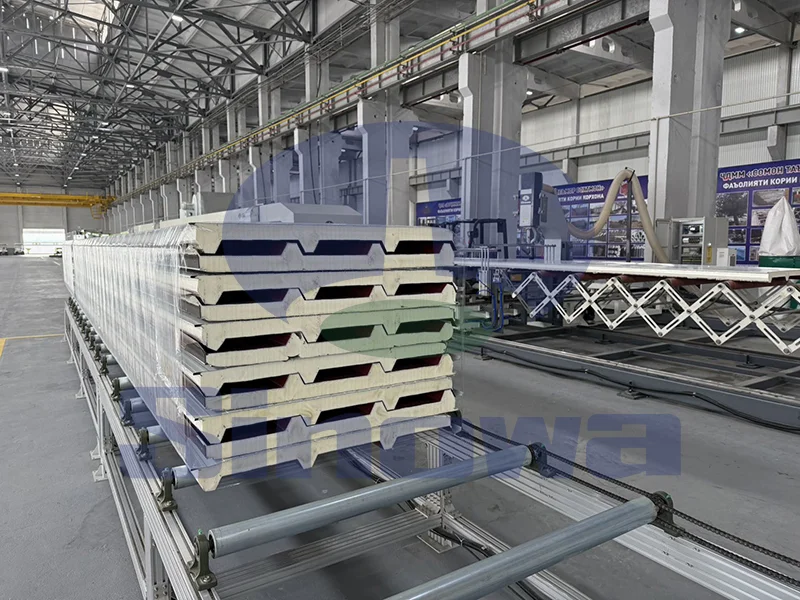
Sandwich panels for roofing have become indispensable components in modern construction, valued for their integrated advantages of thermal insulation, structural stability, and quick installation. The production of these specialized panels relies on advanced sandwich panel production lines, which are engineered to ensure consistent quality, efficient manufacturing, and adaptability to diverse material combinations and application requirements. Unlike general construction material production equipment, roof sandwich panel production lines are tailored to handle the unique demands of roofing applications—including resistance to weather extremes, load-bearing capacity, and long-term durability—through precise structural design and optimized performance parameters.
The structure of a roof sandwich panel production line is a sophisticated integration of multiple functional units, each responsible for a specific stage of the manufacturing process, from raw material feeding to the final finished panel. The entire system operates in a continuous or semi-continuous manner, minimizing manual intervention and ensuring uniform product quality. At the starting end of the production line, the uncoiling system serves as the foundation for feeding surface materials, typically consisting of two decoilers—one for the upper surface and one for the lower surface—to handle metal coils such as galvanized steel, galvalume, or aluminum. These decoilers are equipped with automatic positioning and tension control mechanisms to prevent material wrinkling or deviation, ensuring the surface materials enter the subsequent processing stages smoothly. The tension control system adjusts the feeding speed and pressure in real time, adapting to different thicknesses and hardness levels of surface materials, which is crucial for maintaining the flatness of the final panel’s surface.
Following the uncoiling stage, the roll forming unit shapes the surface materials into the desired profile for roofing applications. Roof panels require specific profiles—such as trapezoidal, corrugated, or standing seam—to enhance their load-bearing capacity and water resistance, so the roll forming unit is equipped with customized forming rolls that can be quickly replaced via a cassette system to accommodate different profile designs. For roof panels, deeper ribs are often required to withstand wind loads and prevent water accumulation, so the roll forming unit for roof sandwich production lines is engineered with enhanced pressure adjustment capabilities to ensure the formed profiles have consistent dimensions and structural rigidity. After forming, the surface materials pass through a preheating unit, which raises their temperature to an optimal level for bonding with the core material. This preheating process improves the adhesion between the surface and core materials, preventing delamination and enhancing the overall structural integrity of the sandwich panel.
The core material processing unit is the key component that determines the insulation and fire performance of the roof sandwich panel. This unit varies depending on the type of core material used, but typically includes material feeding, mixing, foaming (for foam cores), or cutting (for mineral wool cores) mechanisms. For foam core materials such as polyurethane (PU) or polyisocyanurate (PIR), the production line is equipped with a high-pressure mixing system that precisely blends polyol and isocyanate, along with blowing agents and catalysts, to form a uniform foam mixture. The mixing system uses mass flow transducers to control the ratio of components, ensuring consistent foam density and insulation performance. The foam is then evenly applied to the lower surface material via a foaming portal as it enters the double belt conveyor system. For mineral wool or rock wool cores, the processing unit includes a cutting mechanism that trims the core material to the required thickness and width, with dust collection systems to maintain a clean production environment and ensure worker safety.
The lamination and curing unit is responsible for bonding the upper surface material, core material, and lower surface material into a single integrated panel. The double belt conveyor system, consisting of two parallel belts (one upper and one lower), applies uniform pressure to the three layers as they move through the unit, ensuring tight bonding. The spacing between the two belts is adjustable, allowing the production of panels with different thicknesses—ranging from a few centimeters to over 250 millimeters—to meet diverse insulation and load-bearing requirements. The curing process varies by core material: foam cores cure through chemical reactions, with the conveyor system maintaining a stable temperature and pressure to facilitate complete foaming and curing; mineral wool cores rely on adhesive bonding, with the lamination unit ensuring the adhesive is evenly distributed and the layers are firmly bonded. After lamination and curing, the continuous panel enters the cutting unit, which uses disk or band saws to cut the panel to the desired length with high precision. The cutting unit is equipped with position sensors to ensure accurate cutting, minimizing material waste and ensuring consistent panel dimensions.
The final stages of the production line include stacking, tilting, and packaging units. The stacking unit uses vacuum cups or mechanical arms to automatically stack the cut panels, adjusting the stacking height and arrangement to prevent damage during storage and transportation. Some production lines are equipped with a tilting mechanism that rotates the panels 180 degrees to facilitate stacking or meet specific packaging requirements. The packaging unit wraps the stacked panels with stretch film to protect them from moisture, dust, and scratches during transportation. Additionally, the entire production line is controlled by a centralized PLC system, which integrates parameter setting, real-time monitoring, and fault diagnosis functions. Operators can adjust production parameters such as panel thickness, cutting length, and foaming ratio through a human-machine interface (HMI), ensuring flexible production and quick response to different order requirements. The PLC system also records production data, facilitating quality traceability and production optimization.
The performance of a roof sandwich panel production line directly determines the quality and usability of the finished panels, with key performance indicators including production efficiency, precision, stability, and adaptability. Production efficiency is a critical metric, especially for large-scale construction projects that require bulk panel supply. Modern continuous production lines can achieve high output rates, with the ability to produce panels continuously for 24 hours, significantly reducing production cycles compared to traditional manual or semi-automatic methods. The efficiency is further enhanced by modular design, which allows quick switching between different panel types and dimensions without lengthy equipment adjustments. Precision is another essential performance characteristic, as roof panels require strict dimensional accuracy to ensure proper installation and structural integrity. Advanced production lines achieve high precision through servo control systems, which regulate the speed and position of each functional unit with minimal error. This ensures consistent panel thickness, profile dimensions, and cutting length, reducing installation issues and improving the overall quality of the roofing system.
Stability is crucial for long-term production, as equipment breakdowns can lead to production delays and increased costs. High-quality production lines are built with durable components and equipped with fault self-diagnosis systems that monitor the operation of each unit in real time. The fault diagnosis system can quickly identify issues such as material jams, pressure deviations, or temperature fluctuations, alerting operators and providing diagnostic information to facilitate timely maintenance. This reduces unplanned downtime and ensures stable production. Adaptability is also a key performance feature, as roof sandwich panels are used in diverse construction scenarios with varying requirements for material, thickness, and profile. Modern production lines are designed to handle a wide range of surface materials (including different types of metal sheets) and core materials (such as PU, PIR, EPS, and rock wool), allowing manufacturers to produce panels tailored to specific application needs. The modular design of components—such as forming rolls and mixing systems—enables quick replacement and customization, enhancing the flexibility of the production line.
Environmental performance is an increasingly important consideration in modern manufacturing, and roof sandwich panel production lines are engineered to minimize environmental impact. For foam core production, the use of environmentally friendly blowing agents (such as hydrocarbons) reduces the emission of harmful substances, complying with global energy-saving and environmental protection regulations. Dust collection systems in mineral wool processing units prevent dust pollution, protecting worker health and the surrounding environment. Additionally, the production line is designed to minimize material waste, with precise cutting and mixing systems reducing scrap rates. Energy-saving technologies—such as heat recovery systems in preheating units—further reduce energy consumption, making the production process more sustainable.
Roof sandwich panel production lines can be classified into different types based on various criteria, including core material type, production method, and automation level. The most common classification is based on the core material, as the core material directly influences the production process and the performance of the finished panels. One major type is the PU/PIR roof sandwich panel production line, which is specialized in producing panels with polyurethane or polyisocyanurate foam cores. These lines are equipped with high-pressure mixing systems to ensure uniform foam formation and curing, and they are widely used in applications requiring excellent thermal insulation, such as cold storage facilities, logistics centers, and commercial buildings. PU and PIR cores offer superior thermal insulation properties, lightweight characteristics, and good weather resistance, making them ideal for roofing applications in diverse climates.
Another common type is the rock wool (mineral wool) roof sandwich panel production line, which processes mineral wool as the core material. These lines include specialized cutting and lamination systems to handle the rigid, fibrous nature of mineral wool, ensuring even thickness and firm bonding with surface materials. Rock wool cores provide excellent fire resistance and sound insulation, making the finished panels suitable for applications with strict fire safety requirements, such as power plants, industrial facilities, and public buildings like hospitals and schools. The production line for rock wool panels also features advanced dust control systems to address the dust generated during mineral wool processing.
EPS (expanded polystyrene) roof sandwich panel production lines are another important type, focusing on panels with EPS foam cores. EPS cores are cost-effective and offer good thermal insulation, making them suitable for residential buildings, agricultural facilities, and low-cost industrial sheds. These production lines integrate roll forming and laminating systems, which can be operated separately for flexibility. The EPS processing unit includes preheating and bonding mechanisms to ensure the foam core adheres firmly to the surface materials. In addition to these core-based types, roof sandwich panel production lines can be classified by production method into continuous and semi-continuous lines. Continuous lines are designed for large-scale, high-volume production, with uninterrupted processing from raw material feeding to finished product packaging, making them ideal for mass production of standard panels. Semi-continuous lines, on the other hand, are more suitable for small-batch or customized production, allowing for greater flexibility in panel dimensions and specifications.
Automation level is another classification criterion, with production lines ranging from semi-automatic to fully automatic. Semi-automatic lines require some manual intervention, such as material loading or packaging, and are suitable for small to medium-scale manufacturers with limited production volume. Fully automatic lines, by contrast, integrate advanced control systems and robotic technology to handle all production stages, from material feeding to packaging, with minimal manual intervention. These lines offer higher production efficiency, better quality consistency, and reduced labor costs, making them ideal for large-scale manufacturers serving high-demand construction markets. Some fully automatic lines also feature remote monitoring and control capabilities, allowing operators to manage production from a distance and optimize performance in real time.
The applications of roof sandwich panel production lines are closely linked to the use of the finished roof panels, spanning industrial, commercial, agricultural, and residential construction sectors, as well as specialized fields. In industrial construction, roof sandwich panels produced by these lines are widely used in factories, warehouses, logistics centers, and power plants. Industrial buildings often require roofing materials that are durable, easy to install, and capable of withstanding heavy loads and harsh environments—requirements that roof sandwich panels meet effectively. For example, warehouses and logistics centers benefit from the quick installation of sandwich panels, which reduces construction time and allows earlier occupancy. Power plants and high-temperature industrial facilities rely on rock wool core panels for their excellent fire resistance and heat insulation, ensuring operational safety.
In commercial construction, roof sandwich panels are used in shopping centers, office buildings, hotels, and exhibition halls. These applications often require a balance of thermal insulation, aesthetics, and energy efficiency. PU/PIR core panels are commonly used here due to their superior thermal insulation, which helps reduce energy consumption for heating and cooling, lowering operational costs. The customizable profiles and surface finishes of the panels also allow architects to create modern, aesthetically pleasing roofing designs that enhance the overall appearance of commercial buildings. Additionally, the quick installation of sandwich panels minimizes disruption to surrounding businesses during construction, which is a key advantage in urban commercial areas.
Agricultural construction is another important application area for roof sandwich panels produced by these lines. Farms, greenhouses, livestock facilities, and agricultural storage buildings require roofing materials that are cost-effective, durable, and capable of providing thermal insulation to protect crops and livestock. EPS core panels are often used in agricultural applications due to their affordability and good insulation properties, helping to maintain stable internal temperatures in greenhouses and livestock shelters. The lightweight nature of sandwich panels also reduces the load on the building’s frame, lowering construction costs for agricultural structures.
Residential construction has seen increasing adoption of roof sandwich panels, especially in modular housing, residential extensions, and low-rise residential buildings. Sandwich panels offer quick installation, which accelerates the construction process of residential projects, and their thermal insulation properties improve the energy efficiency of homes, reducing heating and cooling costs for homeowners. Corrugated or standing seam roof panels produced by these lines also provide good water resistance, preventing leaks and ensuring the longevity of the roof. In addition to traditional construction, roof sandwich panels are used in specialized fields such as cold storage facilities, clean rooms, and aircraft hangars. Cold storage facilities require panels with exceptional thermal insulation to maintain low temperatures, making PU/PIR core panels the ideal choice. Clean rooms—used in pharmaceutical, food processing, and electronics manufacturing—rely on sandwich panels with smooth, easy-to-clean surfaces and good airtightness, which are produced by specialized production lines with strict quality control. Aircraft hangars and sports arenas often use curved roof panels, which can be produced by specialized production lines equipped with dedicated presses and foaming plants for curved panel manufacturing.
The widespread adoption of roof sandwich panel production lines is driven by the growing demand for energy-efficient, durable, and cost-effective roofing solutions in modern construction. As global energy conservation and environmental protection regulations become increasingly strict, the demand for high-performance roof sandwich panels is expected to rise, further promoting the development of advanced production lines. Future trends in roof sandwich panel production lines include higher automation, improved energy efficiency, and greater customization capabilities, allowing manufacturers to meet the evolving needs of the construction industry. Additionally, the integration of smart technology—such as IoT sensors for real-time production monitoring and data analytics for process optimization—will further enhance the performance and efficiency of these production lines, making them an even more integral part of modern construction manufacturing. Whether for large-scale industrial projects or small residential developments, roof sandwich panel production lines play a vital role in delivering high-quality, reliable roofing solutions that meet the diverse needs of today’s construction market.