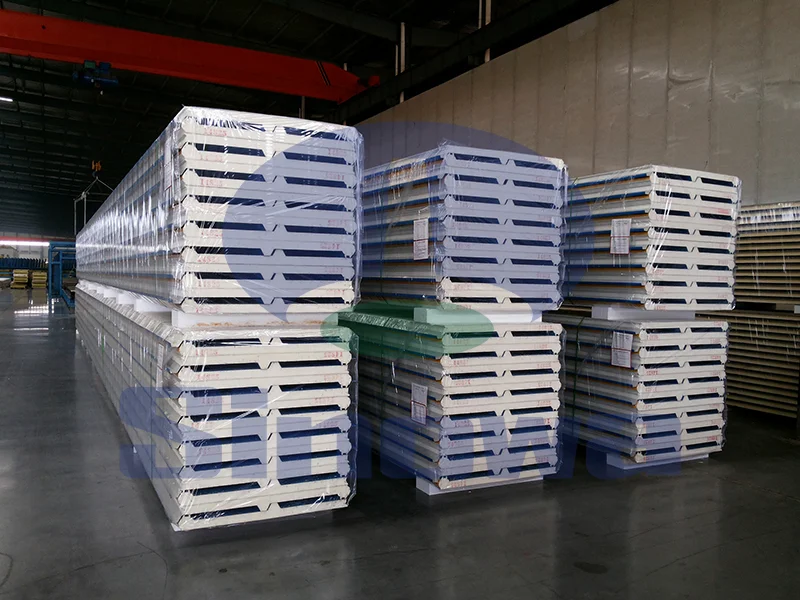
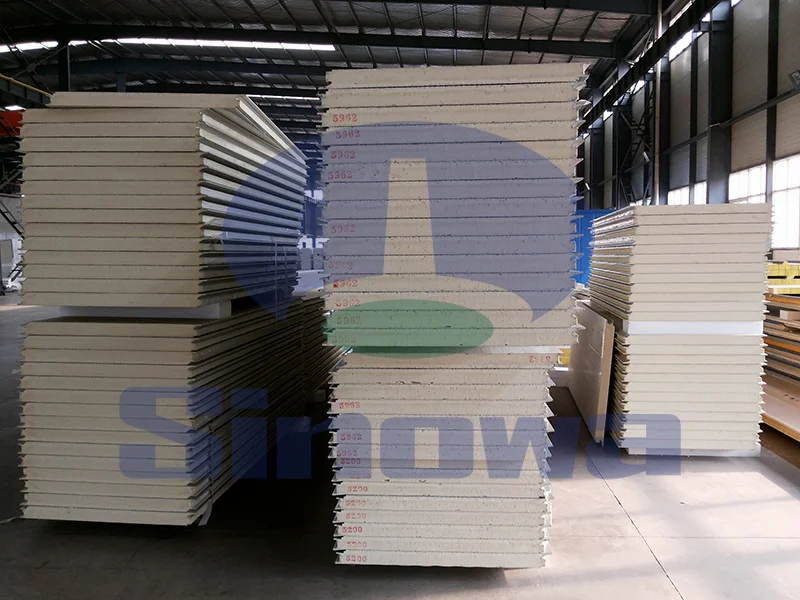
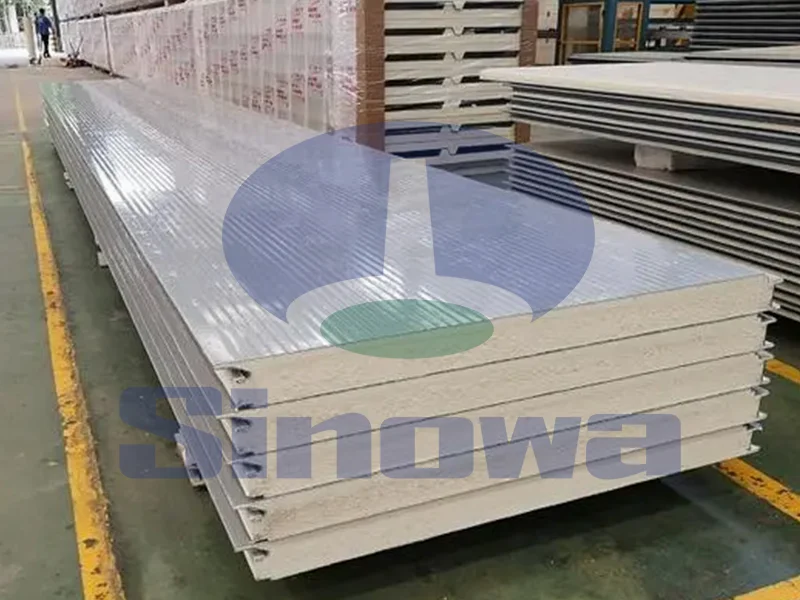
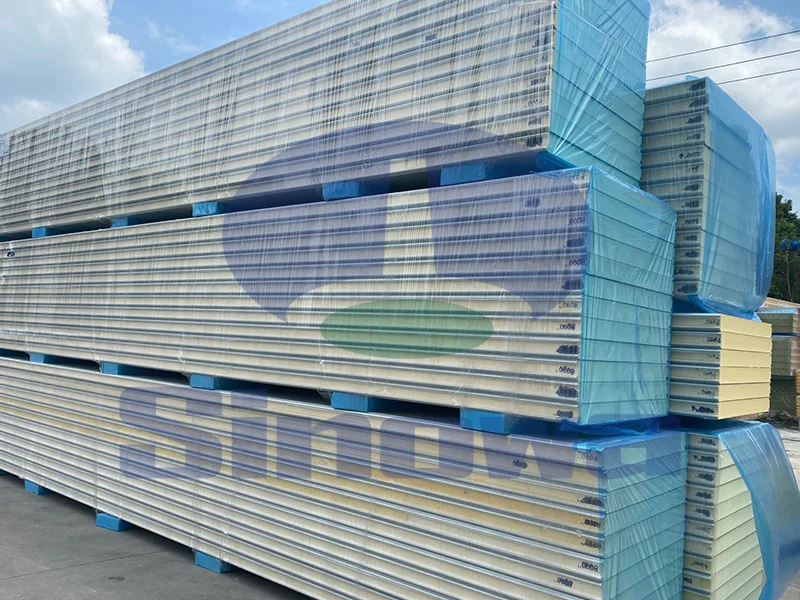
The PIR sandwich panel line is mainly used to produce sandwich panels with polyurethane modified polyisocyanurate (PIR) as the core material, which has the characteristics of high efficiency, energy saving, and excellent fire resistance.
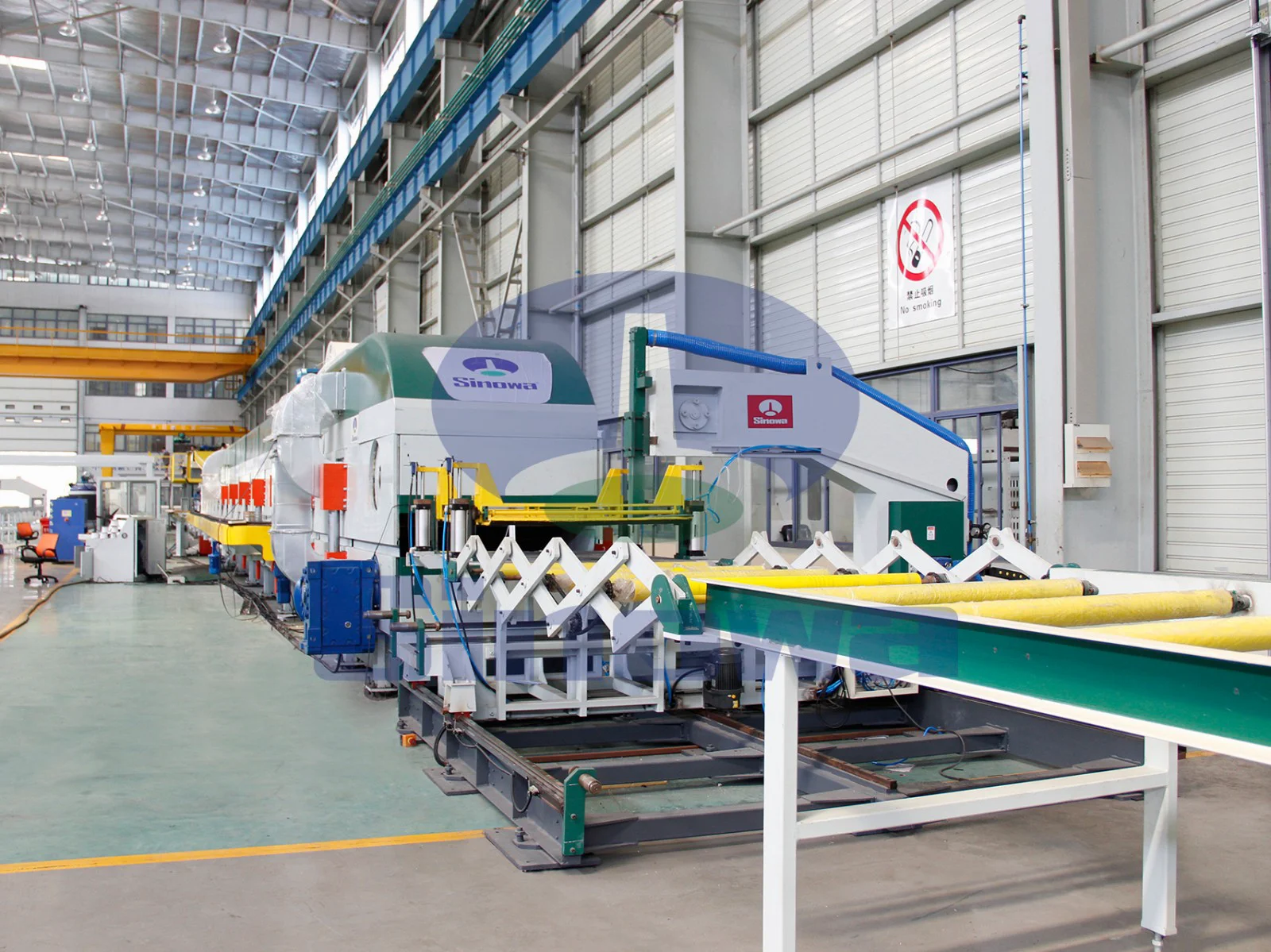
Characteristics of PIR sandwich panel line
Efficient automation: adopting modular design, supporting rapid switching and production of different specifications of boards, the automation control system realizes the linkage of the entire pir board production line parameters and fault self diagnosis, reducing labor costs.
Environmental protection and energy conservation: Equipped with energy-saving laminated conveyor, using fluorine free foaming technology (such as cyclopentane foaming), the energy consumption is only 40% -50% of similar equipment.
Characteristics of PIR sandwich panel
The fire rating can reach B1 level (adjusted by formula), and the thermal conductivity is as low as 0.019W/(m · K)
The density range of the core material is 45-120kg/m ³, and the thickness supports customization of 50-200mm
Support installation methods such as concealed connection and self tapping screw fixation
Applicable scenarios of PIR sandwich panels
Suitable for building enclosure systems with high fire prevention and insulation requirements, such as steel structure factories, cold chain logistics, medical purification, etc.
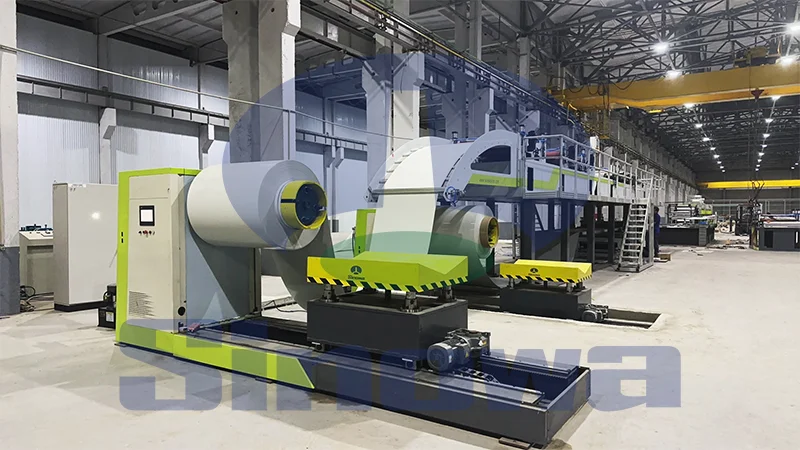
The PIR sandwich panel production line is a highly integrated and automated industrial manufacturing system specifically designed for producing composite sandwich panels with polyisocyanurate as the core material. This type of pir sandwich panel manufacturing line represents the advanced technological level in the field of building insulation material manufacturing today, and its design concept integrates multidisciplinary knowledge such as mechanical engineering, materials science, and automation control.
From the perspective of production process, the PIR sandwich panel machine has achieved a fully integrated operation from raw material input to finished product output. A typical pir sandwich panel assembly line typically consists of multiple functional modules, including a metal panel pretreatment system, PIR foam forming system, composite laminating system, cutting and sawing system, and finished product stacking system. These modules are interconnected through precision conveyors and intelligent control systems to form a continuous production line, capable of achieving a production speed of 3-25 meters per minute, depending on product specifications and production line configuration.
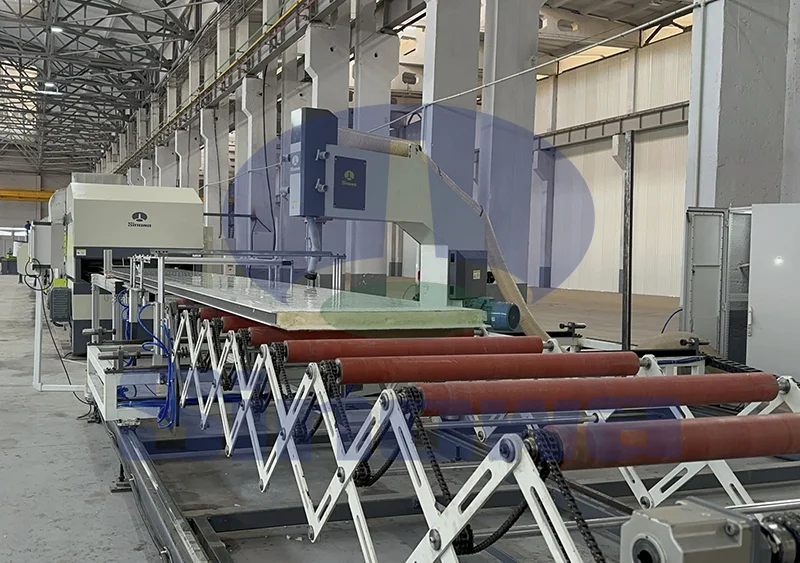
In terms of production line length, the length of PIR sandwich panel production line usually varies between 45 meters and 100 meters depending on different production capacity requirements and product types. Longer production lines generally have more process segments, which can produce more complex product types or achieve higher levels of automation. The production line adopts a modular design concept, with each functional unit relatively independent and closely coordinated. This design is not only easy to maintain and upgrade, but also gives the production line good flexibility to quickly adjust to meet the production needs of different specifications of products.
The advanced PIR sandwich panel line on the current market has achieved high automation and intelligence. Taking Sinowa's production line as an example, it adopts a centralized control system, integrating all control points into the main control center to achieve parameter linkage and fault self diagnosis function of the entire line. The intelligent control system equipped on the production line can monitor key parameters in real time during the production process, such as foaming temperature, pressure, sheet thickness, etc., and automatically adjust process parameters through a closed-loop feedback system to ensure the stability of product quality.
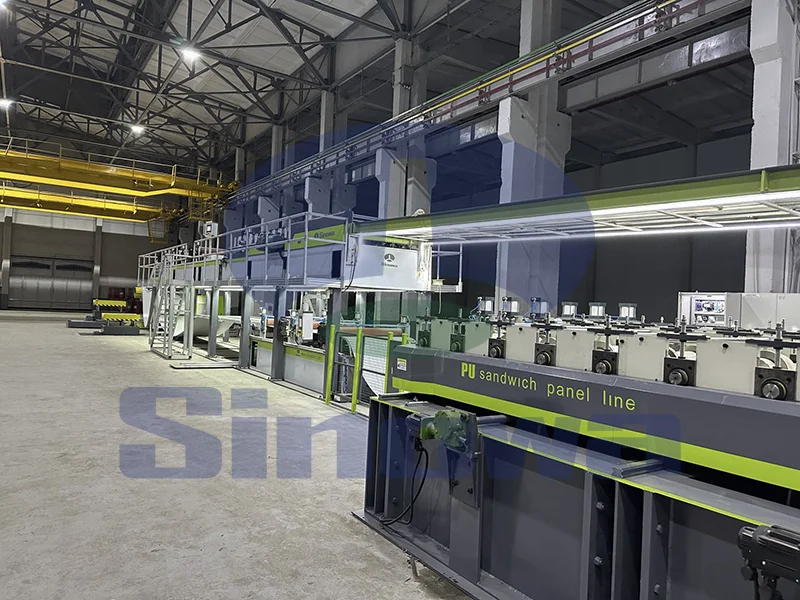
From a technical perspective, modern PIR sandwich panel lines can produce a wide range of panel thicknesses, typically between 10mm and 200mm, to meet the insulation needs of different climatic regions and building parts. The pir sandwich panel machinery can handle various surface materials, including color steel plates, aluminum foil, non-woven fabrics, kraft paper, etc., making the final product suitable for different application scenarios such as industrial plants, cold storage, and purification workshops. It is worth mentioning that advanced production lines also have a fast switching function, which can complete the conversion of product types in a short period of time, greatly improving production efficiency and equipment utilization.
The modular design concept constitutes the core feature of modern PIR sandwich panel production lines. This design concept runs through every aspect of the entire production system, enabling each functional unit to operate independently and seamlessly integrate. The modular structure of the pir sandwich panel equipment is reflected in several aspects: the modularization of the mechanical structure enables rapid disassembly and replacement of various components; The modularization of the control system facilitates functional expansion and troubleshooting; The modularization of the process section allows for flexible adjustment of production line configuration according to different product requirements. Taking Sinowa's production line as an example, it uses fully CNC machine tools to process important components, and ensures compatibility and interchangeability between modules through strict standardization production. The direct benefits of this design are easy maintenance, short downtime, and space reserved for future technological upgrades. Modular design also supports "building block" assembly, which not only shortens the installation cycle of the production line, but also makes the global transportation and on-site assembly of equipment more efficient.
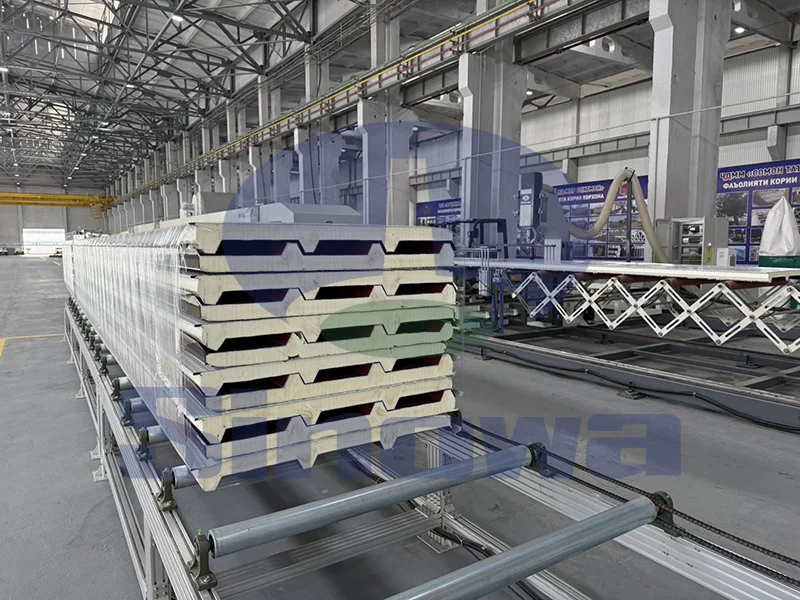
Polyisocyanurate (PIR) sandwich panels have emerged as a pivotal material in modern construction and industrial applications, valued for their exceptional thermal insulation, fire resistance, structural integrity, and durability. These panels consist of a rigid PIR foam core sandwiched between two outer facings, typically metal sheets such as galvanized steel or aluminum, creating a composite material that balances insulation performance with mechanical strength. The production of high-quality PIR sandwich panels relies on advanced, continuous production lines that integrate multiple technological processes—from raw material preparation and metal sheet forming to foam injection, curing, cutting, and final handling. These production lines are engineered to ensure consistency, efficiency, and precision, meeting the diverse requirements of applications ranging from cold storage facilities and industrial warehouses to commercial buildings and clean rooms.
The foundation of any PIR sandwich panel production line is its modular design, which allows for flexibility in adapting to different panel specifications, raw material types, and production volumes. Unlike discontinuous or batch production methods, modern lines operate continuously, enabling high throughput and uniform product quality. A typical production line spans a significant length, often exceeding 80 meters, to accommodate the sequential processes required to transform raw materials into finished panels. The line is divided into several interconnected sections, each dedicated to a specific stage of production—raw material handling, metal sheet processing, foam core formation, lamination, curing, cutting, cooling, and packaging. Each section is equipped with specialized machinery and control systems that work in tandem to ensure seamless integration, minimizing downtime and material waste. The modular nature of these lines also facilitates maintenance, upgrades, and customization, allowing operators to adjust production parameters for different panel thicknesses, widths, and facing profiles without extensive reconfiguration.
Raw material handling is the initial and critical stage of the production process, as the quality of incoming materials directly impacts the performance of the final panels. The primary raw materials include metal coils for the outer facings, PIR foam precursors, and auxiliary materials such as adhesives, protective films, and fire retardant additives. Metal coils, which serve as the structural and protective outer layers of the panels, are typically made of color-coated galvanized steel or aluminum, chosen for their corrosion resistance, strength-to-weight ratio, and aesthetic versatility. These coils vary in thickness, usually ranging from 0.3 to 0.8 millimeters, and width, with maximum widths often up to 1250 millimeters to accommodate standard panel sizes. Before entering the production line, metal coils are inspected for surface defects, thickness uniformity, and coating integrity to ensure they meet production requirements. Any defective coils are rejected to prevent issues in subsequent forming and lamination processes.
The PIR foam core, the heart of the sandwich panel’s insulation performance, is formulated from a blend of chemical precursors, including polyisocyanurate, polyols, blowing agents, catalysts, surfactants, and fire retardants. The chemical composition of the foam is carefully balanced to achieve specific properties, such as high closed-cell content, low thermal conductivity, and enhanced fire resistance. PIR foam differs from polyurethane (PU) foam in its higher isocyanate index, typically ranging from 150 to 500, which promotes the formation of isocyanurate rings in the polymer structure. These rings contribute to superior thermal stability and fire retardancy, making PIR foam ideal for applications where fire safety is a priority. Blowing agents play a crucial role in determining the foam’s density and insulation efficiency; modern production lines often use environmentally friendly blowing agents such as pentane, replacing older, ozone-depleting substances. Catalysts control the rate of foam expansion and curing, ensuring the foam adheres properly to the metal facings and achieves the desired structural integrity. Surfactants help stabilize the foam structure during expansion, preventing cell collapse and ensuring uniform density throughout the core.
Once raw materials are cleared for production, the metal coils proceed to the uncoiling and leveling section of the line. This section is equipped with uncoilers, which safely unwind the metal coils and feed the flat sheets into the line at a consistent speed. Uncoilers are designed to handle coils of varying weights and diameters, with tension control systems to prevent stretching or wrinkling of the metal sheets. After uncoiling, the metal sheets pass through levelers, which use a series of precision rollers to flatten the sheets and remove any residual curvature from the coiling process. Flatness is critical for ensuring uniform forming, proper foam adhesion, and consistent panel thickness. Some production lines also include corona treatment units at this stage, which modify the surface of the metal sheets to improve the adhesion of the foam core and any protective films or coatings. Corona treatment increases the surface energy of the metal, promoting better wetting by the foam precursors and enhancing the bond strength between the facings and the core.
Following leveling and surface treatment, the metal sheets move to the roll forming section, where they are shaped into the desired profile for the panel’s outer facings. Roll forming is a continuous process that uses a series of sequential rollers, each with a specific contour, to gradually bend the flat metal sheets into the target shape. The profiles can vary widely depending on the application—corrugated or trapezoidal profiles for roof panels, flat or slightly ribbed profiles for wall panels, and specialized profiles for cold storage panels that enhance airtightness. The roll forming section is equipped with micro-ribbing stations and edging roll formers to create precise joints and edges, ensuring the panels can be easily installed and sealed on-site. The speed of the roll forming process is synchronized with the rest of the production line to maintain consistency, with adjustments possible to accommodate different profile designs and metal thicknesses. In some lines, additional processes such as punching or embossing can be integrated into the roll forming section to create holes for fasteners or decorative patterns, depending on customer requirements.
After forming, one of the metal sheets (typically the lower facing) proceeds to the foam application section, while the other (upper facing) is guided to a separate path to be brought together with the foam core later. The foam application section is centered around a high-pressure foaming machine, a critical component that mixes and dispenses the PIR foam precursors onto the lower metal facing. High-pressure foaming machines are preferred over low-pressure systems for PIR production due to their ability to achieve precise dosing, thorough mixing, and consistent foam quality. These machines consist of several key parts, including material tanks, metering pumps, mix heads, and heating/cooling systems. The metering pumps deliver the polyisocyanurate, polyols, and additives to the mix head at a controlled ratio and pressure, typically between 150 and 200 bar, ensuring accurate and repeatable formulation. The mix head uses high-pressure impingement mixing to combine the chemicals, creating a homogeneous mixture that initiates the foaming reaction as it is dispensed onto the metal sheet.
The foaming machine is also equipped with systems to control the temperature of the precursors, as temperature stability is critical for consistent foam expansion and curing. Heated or cooled jackets around the material tanks and delivery lines maintain the chemicals at the optimal temperature, preventing premature or delayed reaction. Some advanced lines include pentane metering units and high-pressure air nucleators to further refine the foam structure, creating smaller, more uniform cells that enhance insulation performance. The foam is dispensed onto the lower metal facing in a continuous, uniform layer, with the width and thickness of the foam bead adjusted to match the panel specifications. The thickness of the foam core can typically be varied from 20 to 300 millimeters, depending on the required insulation performance, with stepless adjustment possible to accommodate different panel designs.
Once the foam is applied to the lower facing, the upper metal facing is brought into contact with the foam core, forming a sandwich structure. This assembly then enters the double belt press section, which is responsible for controlling the foam expansion, ensuring proper bonding between the foam and the metal facings, and maintaining the panel’s flatness and thickness. The double belt press consists of two parallel, continuous conveyor belts—one upper and one lower—made from durable materials such as steel or reinforced rubber. These belts apply uniform pressure to the sandwich structure as it moves through the press, restricting the foam expansion to the desired thickness and ensuring the foam fills the entire space between the facings. The belts are independently heated and insulated, maintaining a controlled temperature environment that promotes optimal foam curing. The temperature within the press is carefully regulated to accelerate the chemical reaction without causing thermal degradation of the foam or metal facings, typically ranging from 40 to 60 degrees Celsius.
The length of the double belt press is designed to provide sufficient residence time for the foam to cure and solidify before exiting the press. The speed of the belts is synchronized with the rest of the production line, with typical line speeds ranging from 3 to 16 meters per minute, depending on the foam formulation, panel thickness, and curing requirements. Thicker panels or slower-curing foam formulations require slower line speeds to ensure complete curing, while thinner panels can be produced at higher speeds. The double belt press also incorporates systems to monitor and adjust the pressure and temperature throughout the process, ensuring consistent panel quality. Sensors detect any variations in thickness or flatness, triggering automatic adjustments to the belt pressure or temperature to correct deviations.
After exiting the double belt press, the partially cured sandwich panel moves to the cutting section, where it is cut to the desired length. The cutting process must be precise and efficient, as inaccurate cuts can lead to material waste and compromised panel performance. Most production lines use flying saw cutting machines, which move synchronously with the panel to make clean, straight cuts without stopping the production process. These cutting machines are equipped with band saws or disk blades, chosen based on the panel thickness and the type of metal facings. For added flexibility, some flying saws feature a 180-degree rotating mechanism, allowing cuts to be made in both directions and enabling the production of shorter panel lengths even at high line speeds. The cutting section is also equipped with dust collection systems to remove metal shavings and foam dust, maintaining a clean production environment and preventing contamination of the panels.
Following cutting, the finished panels proceed to the cooling and handling section. The cooling station allows the PIR foam core to complete its curing process and cool down to ambient temperature, ensuring the panel retains its shape and structural integrity. Cooling is typically achieved through forced air circulation, with some lines incorporating water-cooled conveyor belts for faster cooling times. The cooling process is critical for preventing post-production warping or shrinkage of the panels, especially for thicker panels with larger foam cores. Once cooled, the panels move to a turning station, which flips the panels to inspect both sides for defects such as surface blemishes, uneven foam distribution, or poor bonding between the facings and the core. Any defective panels are removed from the line for rework or disposal, ensuring only high-quality products proceed to packaging.
The final stage of the production line is packaging and stacking. The stacking system uses automated conveyors and robotic arms to neatly stack the panels, with protective materials such as plastic films or cardboard inserted between each panel to prevent scratches or damage during storage and transportation. The stacking system is designed to handle panels of varying sizes and weights, ensuring stable stacks that can be safely moved with forklifts or pallet jacks. Some production lines include automatic wrapping machines that encase the stacked panels in stretch film, providing additional protection against moisture, dust, and physical damage. The packaged panels are then moved to a storage area, ready for shipment to customers. Throughout the entire production process, the line is equipped with safety features such as emergency stop buttons, safety guards, and interlock systems to protect operators from hazards associated with moving machinery, high-pressure systems, and chemical handling.
Quality control is an integral part of every stage of the PIR sandwich panel production process, ensuring that the finished panels meet the required performance specifications and consistency standards. Raw material inspection is the first line of defense, with rigorous testing of metal coils for thickness, surface finish, and coating adhesion, as well as chemical analysis of foam precursors to verify their composition and purity. In-process quality checks are conducted at key points along the line, including measurements of metal sheet flatness after leveling, profile accuracy after roll forming, foam density and thickness during application, and panel thickness and flatness after the double belt press. These checks are often automated using sensors and computerized systems, which continuously monitor production parameters and alert operators to any deviations from the set standards.
Final product testing is conducted on random samples of finished panels to verify thermal insulation performance, fire resistance, bond strength, and structural integrity. Thermal conductivity tests measure the foam core’s ability to resist heat transfer, ensuring it meets the required insulation values. Bond strength tests evaluate the adhesion between the metal facings and the foam core, ensuring the panels can withstand handling, installation, and long-term use without delamination. Fire resistance tests assess the panel’s ability to resist combustion and prevent the spread of fire, a critical requirement for many construction applications. These tests are performed using standardized procedures, and the results are documented to ensure traceability and compliance with customer requirements. Additionally, visual inspections are conducted to check for surface defects, edge straightness, and overall aesthetic quality.
The control system of a PIR sandwich panel manufacturing line is the central nervous system that coordinates all processes, ensuring synchronization, precision, and efficiency. Modern lines use computerized control systems based on programmable logic controllers (PLCs), which integrate with sensors, actuators, and human-machine interfaces (HMIs) to monitor and adjust production parameters in real-time. The HMI provides operators with a user-friendly interface to set production parameters, monitor line status, and troubleshoot issues. Operators can adjust line speed, foam thickness, press temperature and pressure, and cutting lengths with precision, with the PLC ensuring these adjustments are implemented across all interconnected sections of the line. Advanced control systems also include data logging and reporting features, which record production data such as throughput, material usage, and quality test results. This data can be used for process optimization, maintenance scheduling, and quality assurance, helping to improve overall production efficiency and reduce costs.
Environmental considerations are increasingly important in the design and operation of PIR sandwich panel lines. Manufacturers are adopting measures to reduce energy consumption, minimize waste, and use environmentally friendly materials. Energy-efficient components such as variable frequency drives (VFDs) for motors, insulated heating systems, and heat recovery units help reduce the line’s energy footprint. Waste reduction strategies include precise material dosing to minimize foam and metal waste, as well as recycling systems for metal scrap and foam trimmings. The use of low-VOC (volatile organic compound) foam formulations and environmentally friendly blowing agents reduces the environmental impact of the production process, aligning with global efforts to reduce greenhouse gas emissions and ozone depletion. Additionally, production lines are designed with dust collection and air filtration systems to maintain air quality in the production facility, protecting both operators and the environment.
The versatility of PIR sandwich panel making lines allows for the manufacture of panels tailored to a wide range of applications. Cold storage facilities and refrigerated trucks rely on PIR panels for their exceptional thermal insulation, which helps maintain stable low temperatures while reducing energy consumption. Industrial warehouses and factories use PIR panels for wall and roof cladding, benefiting from their combination of insulation, fire resistance, and structural strength. Commercial buildings such as shopping malls, office complexes, and sports facilities use PIR panels to improve energy efficiency and meet fire safety regulations. Clean rooms in the pharmaceutical, food processing, and electronics industries use PIR panels due to their smooth surface finish, easy cleaning, and ability to maintain controlled environments. The production line’s ability to customize panel thickness, facing material, and profile design makes it adaptable to these diverse applications, ensuring the panels meet the specific requirements of each project.
Maintenance of a PIR sandwich panel machine is essential to ensure consistent performance, minimize downtime, and extend the lifespan of the equipment. Regular preventive maintenance includes inspecting and lubricating moving parts such as rollers, conveyors, and cutting blades; checking and calibrating sensors and control systems; and cleaning foam application equipment to prevent clogs and ensure accurate dosing. The high-pressure foaming machine requires special attention, with regular inspection of mix heads, metering pumps, and material lines to prevent leaks and maintain mixing efficiency. Metal processing equipment such as uncoilers and roll formers should be inspected for wear, with replacement of worn rollers or guides to ensure proper sheet forming. Maintenance schedules are typically based on production hours, with critical components requiring more frequent checks. Many modern lines include predictive maintenance features, which use sensor data to detect potential equipment failures before they occur, allowing for proactive repairs and minimizing unplanned downtime.
Advancements in technology continue to drive improvements in PIR sandwich panel equipments, with a focus on automation, efficiency, and product performance. Increased automation, including robotic handling systems and AI-powered quality control, reduces human error and labor requirements while improving production consistency. Developments in foam chemistry are leading to PIR foams with even better thermal insulation, fire resistance, and environmental performance, expanding the range of applications for the panels. Integration of digital technologies such as the Industrial Internet of Things (IIoT) allows for remote monitoring and control of production lines, enabling operators to manage processes from anywhere and access real-time data for optimization. These technological advancements are making PIR sandwich panel production more efficient, sustainable, and cost-effective, reinforcing the material’s position as a leading choice for modern construction and industrial applications.
In conclusion, a PIR sandwich panel manufacturing plant is a complex, integrated system that combines mechanical engineering, chemical processing, and computerized control to manufacture high-quality composite panels. From raw material handling to final packaging, each stage of the production process is carefully designed to ensure consistency, efficiency, and product performance. The modular design of these lines allows for flexibility and customization, adapting to diverse customer requirements and application needs. Rigorous quality control measures throughout the process ensure that the finished panels meet the highest standards for thermal insulation, fire resistance, and structural integrity. As technology advances and environmental regulations become more stringent, production lines continue to evolve, incorporating more efficient, sustainable, and automated features. The result is a reliable, scalable manufacturing process that produces PIR sandwich panels capable of meeting the demands of modern construction, industrial, and cold storage applications, contributing to energy efficiency, fire safety, and long-term durability.