Can A PU Sandwich Panel Machine Produce High-density Industrial Insulation Panels?
Publication Date: Nov 24, 2026
Yes. With proper formula, mixing, pressing & curing settings, sandwich panel machine produces sturdy, load-bearing PU insulation panels for industrial thermal insulation uses.
Yes, a PU sandwich panel machine is capable of manufacturing high-density industrial insulation panels, as long as the equipment is configured with matching feeding, mixing, pressing and curing systems to adapt to higher foam formulation requirements and production parameters. The core of this production lies in adjusting the raw material formula and machine operating settings instead of replacing the whole main frame of the sandwich panel production line.
The Working Principle Behind High-Density PU Insulation Panel Production
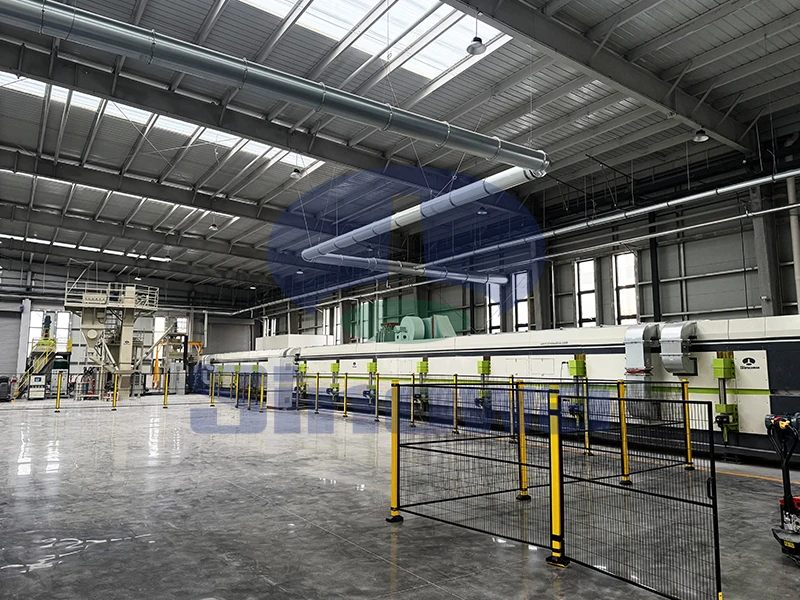
PU sandwich panel machines rely on the on-site foaming reaction of polyurethane raw materials between two surface layers. For ordinary low-density panels, the formula contains more foaming agents to form light, porous foam. When switching to high-density industrial insulation panels, the proportion of polyol and isocyanate is rebalanced, and the dosage of foaming components is reduced. The machine's high-pressure mixing head plays a key role here, which can fully stir the modified PU materials to ensure uniform cell structure inside the foam core. After mixing, the composite material is continuously poured onto the bottom metal or non-metal facing sheet, then covered with the upper facing sheet and sent into the double-belt pressing section. Controlled pressure and stable curing temperature inside the pressing tunnel prevent excessive expansion of the foam, locking in the target density for industrial use.
Key Machine Configuration Requirements for High-Density Panel Output
Not all basic PU sandwich panel setups are naturally suitable for high-density product runs. Several functional modules need to support the changed production conditions. First, the raw material feeding system needs precise flow adjustment, because small deviations in material ratio will cause uneven density or unstable physical performance of the finished core. Second, the double-belt conveyor must maintain steady and adjustable clamping pressure. Higher-density foam has less expansion force, so the pressing gap needs accurate calibration to control panel thickness. Third, the curing section requires reliable temperature control. High-density PU foam reacts differently during curing; inconsistent heat distribution may lead to hard spots, internal cracks or poor bonding between the foam core and surface facings. Auxiliary cutting devices also need enough power to slice the denser finished panels without edge chipping or deformation.
Performance Characteristics of High-Density Industrial Insulation Panels Made by This Machine
Compared with conventional PU sandwich panels, the high-density versions produced on the same machine show obvious differences in practical performance. They have greater compressive strength and structural rigidity, so they can bear heavier loads in industrial application scenarios. Their closed-cell structure remains intact after density adjustment, retaining reliable thermal insulation performance. Meanwhile, the finished panels show better resistance to deformation under long-term static pressure and temperature fluctuation. The bonding strength between the foam core and surface layers stays stable if the pouring speed, mixing effect and curing cycle are properly tuned. These features make them fit for heavy-duty industrial insulation needs beyond common building envelope panels.
Practical Notes for Production Switching
Shifting the machine from regular panels to high-density industrial insulation panels requires a complete trial run before formal mass production. Operators need to reset material flow rates, line running speed, pressing clearance and curing time step by step. It is necessary to clean the mixing head and material pipelines thoroughly to avoid residual low-density formula materials mixing with new raw materials, which would create defective products. Continuous sampling during trial production helps check core density, foam cell uniformity and interface adhesion. Once the parameters are stabilized, the line can carry out continuous, long-time production of high-density insulation panels. When production needs to switch back to standard panels later, the formula and machine settings can be readjusted accordingly, reflecting the good versatility of this type of continuous PU sandwich panel equipment.
Application Scenarios for Such High-Density Insulation Panels
High-density industrial insulation panels produced by PU sandwich panel machines are widely used in scenarios that combine insulation requirements and mechanical load demands. They can be used for the insulation structure of industrial refrigeration facilities, thermal equipment enclosures, special storage compartments and factory auxiliary structural partitions. In these environments, panels need to withstand extrusion, impact and long-term temperature changes, and the high-density PU core provides both heat preservation and supporting performance. The flexible production capacity of the sandwich panel machine allows manufacturers to respond to diverse industrial insulation demands with one set of production equipment.
Tags: pu sandwich panel machine, pu sandwich panel machine manufacturer, pu sandwich panel machine supplier, china pu sandwich panel machine, pu sandwich panel machine for sale
Sinowa Sandwich Panel Lines
Sandwich Panel Machine For Sale
- PUR Sandwich Panel Production Line
- PIR Sandwich Panel Production Line
- PUF Sandwich Panel Production Line
- Rock Wool Sandwich Panel Production Line
- Glass Wool Sandwich Panel Production Line
- Mineral Wool Sandwich Panel Production Line
- Color Steel Sandwich Panel Production Line
- Thermal Insulation Sandwich Panel Production Line
- Cold Storage Sandwich Panel Production Line
- PU/PIR/Rockwool Insulation Sandwich Panel Machines
- PU/PIR/Rockwool Sandwich Panel Production Equipment
- PU/PIR/Rockwool Sandwich Panel Making Machinery