How To Troubleshoot PLC Control System Faults Of Sandwich Panel Production Machines?
Publication Date: Nov 23, 2026
Troubleshoot PLC control faults for sandwich panel production machines: safely isolate circuits, check I/O indicators, sensors, actuators and communication links, monitor PLC program logic, test after repair.
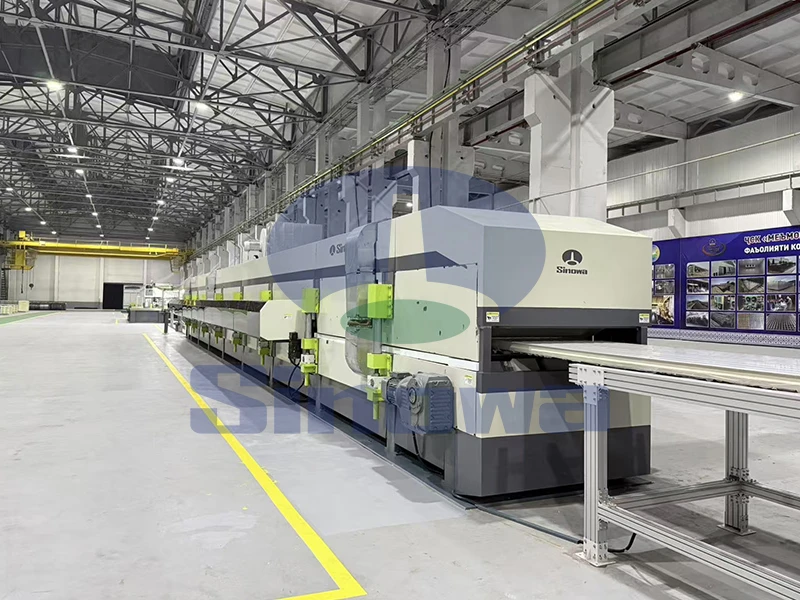
The troubleshooting of PLC control system faults for sandwich panel production machines starts with confirming the specific fault phenomenon first, isolating the power and signal loops safely, checking the PLC input and output status indicators, verifying sensor and actuator signal feedback, inspecting communication links between the PLC and peripheral modules, reviewing the running program for abnormal logic triggers, and conducting segmented tests to locate the faulty component or program segment before carrying out targeted replacement, adjustment or program modification, and finally running a no-load test to confirm the whole system returns to stable operation.
1. Preparatory Work Before Fault Inspection
Before any inspection operation, cut off the power supply of mechanical driving parts to avoid accidental movement of roller groups, cutting mechanisms and feeding structures of the sandwich panel machine. Record the fault performance in detail, including whether the equipment stops suddenly, whether a single action cannot be executed, whether repeated action misalignment occurs, or whether intermittent fault alarms appear randomly. Observe the working state of the PLC power module first, judge whether the power input voltage is stable, and check whether the terminal wiring has loose, oxidized or short-circuited conditions. Do not modify the internal program arbitrarily in the early stage of troubleshooting, and back up the existing PLC program if conditions permit to prevent data loss.
2. Checking PLC Input Signal Loop
Most action failures of sandwich panel production equipment are caused by abnormal input signals. Manually trigger proximity switches, photoelectric sensors, pressure detection elements and position limit parts one by one, and observe the on-off change of corresponding input indicator lights on the PLC module. If the indicator light does not respond when the sensor is triggered, check the wiring continuity of the signal line and the working state of the detection element itself. For floating signals that lead to intermittent faults, focus on checking whether the signal cable is squeezed, worn or interfered by nearby high-power motor lines. After confirming that the sensor output is normal but the PLC terminal still cannot receive the signal, the fault point may be the input channel of the PLC module.
3. Checking PLC Output Signal And Actuator Circuit
When the PLC output indicator light lights up but the corresponding actuator does not act, separate the fault into two parts: PLC output channel and rear drive circuit. First confirm whether the output terminal has voltage output according to the type of output module. If there is no voltage at the terminal when the indicator is on, the PLC output point is damaged. If the output voltage is normal, continue to check contactors, solenoid valves, frequency converters and other execution components and their wiring. The sandwich panel production line involves frequent actions such as material feeding, pressing and cutting, and the contact points of contactors are easy to burn out after long-time operation, which will cause the failure of mechanical actions even if the PLC gives the action instruction.
4. Communication Fault Diagnosis Between PLC And Auxiliary Modules
The PLC control system of sandwich panel machines usually connects with touch screens, remote IO modules and drive units through communication buses. When communication faults occur, the touch screen may fail to display data, fail to send operation commands, or some stations on the bus are offline. Check whether the communication terminal resistance is set correctly, whether the communication cable connector is loose, and whether the communication address and baud rate parameters of each node match. Intermittent communication disconnection is often related to poor contact of connectors or electromagnetic interference. It can be tried to adjust the wiring layout and separate the communication cable from the power cable. After the communication is restored, observe whether the data interaction is smooth and whether the parameter reading is consistent with the actual state of the equipment.
5. PLC Program Logic Abnormality Troubleshooting
Hardware circuits are normal, but the equipment still has disordered actions or false triggering, which needs to check the PLC control program. Use the online monitoring function to track the real-time state of internal relays, timers, counters and comparison instructions. Common program faults include wrong interlock logic, unreasonable setting of timing parameters, and signal capture failure caused by too short scanning cycle. For faults that only appear under specific working conditions, simulate the production state online and track the change process of each variable. When modifying the logic, only adjust the related segments aiming at the fault, and avoid changing the interlock protection logic related to equipment safety.
6. Post-maintenance Test And Daily Optimization Suggestion
After replacing faulty parts or adjusting program parameters, perform a no-load test run first to verify each single action of feeding, laminating, cutting and discharging. Then carry out low-load trial production and continuously observe the PLC signal state and equipment action coordination for a period of time to confirm that the fault will not recur. In daily maintenance, regularly clean the PLC cabinet to reduce the influence of dust and moisture on electronic components, regularly fasten the wiring terminals of sensors and actuators, and classify and record the fault types and solutions accumulated in the production process, so as to shorten the fault handling time in the later period and improve the continuous operation stability of the sandwich panel production line.
Tags: sandwich panel production machine, sandwich panel production machine manufacturer, sandwich panel production machine supplier, china sandwich panel production machine, sandwich panel production machine for sale
Sinowa Sandwich Panel Lines
Sandwich Panel Machine For Sale
- PUR Sandwich Panel Production Line
- PIR Sandwich Panel Production Line
- PUF Sandwich Panel Production Line
- Rock Wool Sandwich Panel Production Line
- Glass Wool Sandwich Panel Production Line
- Mineral Wool Sandwich Panel Production Line
- Color Steel Sandwich Panel Production Line
- Thermal Insulation Sandwich Panel Production Line
- Cold Storage Sandwich Panel Production Line
- PU/PIR/Rockwool Insulation Sandwich Panel Machines
- PU/PIR/Rockwool Sandwich Panel Production Equipment
- PU/PIR/Rockwool Sandwich Panel Making Machinery