What Panel Thickness Can A Standard PU Sandwich Panel Machine Manufacture?
Publication Date: Oct 7, 2026
Standard PU sandwich panel machines support a versatile thickness range from 30mm to 200mm for regular wall and roof panels, with extended capabilities up to 250mm for specialized cold storage panels, delivering adjustable, consistent thickness to fit diverse construction and insulation project needs.
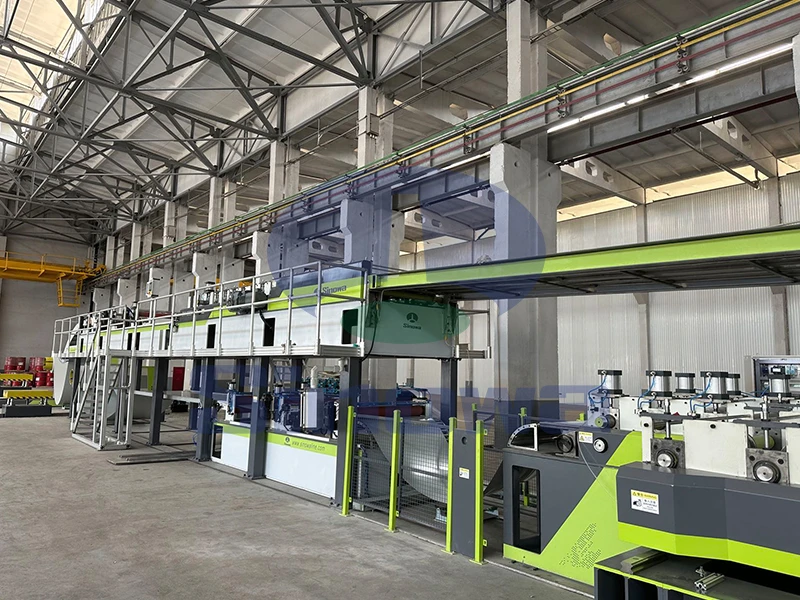
A standard polyurethane (PU) sandwich panel manufacturing machine is engineered with flexible structural and operational settings to produce panels of varying thicknesses, catering to mainstream architectural and industrial application demands. The baseline thickness range for conventional standard machines typically starts at 30 millimeters, which serves as the thinnest viable specification for stable panel formation. Panels at this minimal thickness feature a lightweight structure with basic thermal insulation and soundproofing properties, making them ideal for simple partition walls, temporary enclosures, and low-load interior building applications. The machine’s core roller and pressing system is precisely calibrated to maintain uniform foam density and flat surface molding even at the thinnest production setting, avoiding common defects like uneven thickness, foam voids, or surface warping that often occur with improperly adjusted manufacturing equipment. This entry-level thickness setting balances production efficiency and product usability for light-duty construction scenarios.
Moving beyond the minimum threshold, standard PU sandwich panel machines excel at producing mid-range thickness panels spanning 40mm to 150mm, which represent the most widely used specifications in the construction industry. Thickness options including 40mm, 50mm, 75mm, 100mm, and 120mm are fully compatible with standard machine configurations, covering the majority of permanent building envelope needs. Panels in this range deliver enhanced thermal insulation, structural rigidity, and weather resistance compared to thinner alternatives, suitable for exterior wall cladding, pitched roof systems, commercial building facades, and factory enclosure structures. The machine’s adjustable height blocking and continuous pressing mechanism seamlessly adapts to each mid-range thickness, ensuring consistent bonding between the PU foam core and metal facing layers throughout high-volume production runs. This adaptability allows manufacturers to switch between popular thickness specifications quickly without extensive equipment reconfiguration.
For heavy-duty insulation and low-temperature environment applications, standard PU sandwich panel machines can produce thick panels ranging from 150mm to 200mm, the upper limit for general standard production models. Panels within this thickness bracket offer superior heat preservation and cold resistance, effectively minimizing temperature transfer and energy consumption in building spaces. They are primarily applied in large industrial warehouses, logistics facilities, and temperature-controlled working areas that require stable internal temperature regulation. The machine’s reinforced frame and upgraded pressure distribution system are designed to handle thicker foam core expansion and molding, ensuring the foam core achieves full, uniform filling without compression gaps or density inconsistencies. Even with increased panel thickness, the standard production line maintains stable running speed and precise cutting accuracy, guaranteeing finished panel quality meets routine usage standards.
Beyond the conventional 30mm to 200mm range, most standard PU sandwich panel machines support extended thickness production up to 250mm specifically for cold storage and refrigeration construction scenarios. This extended thickness specification is not a universal daily production option but a functional expansion of standard equipment, tailored for professional low-temperature insulation projects. Ultra-thick 250mm PU sandwich panels provide extreme thermal insulation performance, effectively isolating external high temperatures and preventing internal cold air loss, which is critical for maintaining the ultra-low temperature environment required by cold storage warehouses, food freezing workshops, and pharmaceutical storage facilities. To produce these ultra-thick panels, the standard machine only requires simple parameter adjustments and height calibration of the sealing and pressing components, eliminating the need for large-scale equipment modification or replacement.
The adjustable thickness capability of standard PU sandwich panel machines is fundamentally determined by the equipment’s mechanical structure and modular design. The core adjustable components include upper and lower belt spacing, side sealing block height, foam injection volume control system, and pressing roller gap. Each key component is equipped with precise numerical adjustment functions, allowing operators to set target panel thickness accurately through the control system. When switching between different thickness specifications, the machine’s automated calibration system fine-tunes the matching parameters of foam injection rate, curing time, and pressing pressure in real time. This integrated adjustment mechanism ensures that whether producing thin partition panels or thick insulation panels, the PU foam core can complete uniform foaming, curing, and composite molding within the standard production cycle, avoiding quality fluctuations caused by parameter mismatches.
Different panel application types correspond to targeted thickness production ranges on standard PU sandwich panel machines, forming a mature and categorized production system. For conventional roof panels used in industrial and civil buildings, the common producible thickness ranges from 30mm to 100mm, matching the lightweight and wind-resistant requirements of roof structures while providing basic rainproof and heat insulation functions. For wall panels that prioritize structural stability and comprehensive insulation performance, the machine stably produces thicknesses from 50mm to 150mm, balancing load-bearing capacity and energy-saving effects. For professional cold storage panels focused on extreme thermal insulation, the equipment supports 150mm to 250mm thickness production, fully meeting the stringent temperature control needs of low-temperature storage spaces. This categorized production flexibility enables a single standard machine to cover multiple market product demands.
Production stability varies slightly across different thickness ranges on standard PU sandwich panel machines, with optimized operational parameters for each specification. Thin panels below 50mm require precise control of foam injection volume and pressing pressure to prevent excessive compression of the lightweight foam core and ensure uniform surface flatness. Mid-thickness panels between 50mm and 150mm are the most stable production specifications for standard machines, featuring high molding efficiency, low defect rates, and consistent product uniformity, making them the core production range for most panel manufacturers. Thick panels above 150mm demand extended foam curing time and balanced upper and lower pressing force to ensure thorough foaming of the deep core layer and reliable bonding with the surface metal layers. The standard machine’s preset parameter programs simplify the adjustment process for different thicknesses, reducing manual operation errors.
It is important to distinguish between standard machine production ranges and customized equipment upgrades, as basic standard models have fixed thickness limits without personalized modifications. Ordinary standard PU sandwich panel machines cannot stably produce panels thinner than 30mm or thicker than 250mm, as ultra-thin panels are prone to structural fragility and molding defects, while ultra-thick panels exceed the equipment’s original mechanical design load and foam curing capacity. Any thickness specifications beyond the 30mm to 250mm full range require targeted equipment customization, including structural reinforcement, component height adjustment, and system parameter optimization. This fixed standard range ensures the equipment operates within safe, efficient, and high-quality production limits for long-term service life.
The thickness manufacturing range of standard PU sandwich panel machines directly correlates with product application diversity and market adaptability. The 30mm to 250mm adjustable thickness spectrum covers almost all mainstream civilian, industrial, and special insulation construction scenarios, eliminating the need for manufacturers to invest in multiple specialized production lines for different panel specifications. The standardized thickness adjustment design also simplifies production scheduling and inventory management, enabling manufacturers to quickly respond to different project requirements, from simple interior decoration partitions to professional cold storage insulation engineering. This comprehensive thickness coverage is one of the core advantages of standard PU sandwich panel production equipment in the building materials manufacturing industry.
In practical industrial production, operators always match panel thickness settings with raw material parameters and production process conditions to ensure optimal finished product quality. When producing different thickness PU panels, adjusting the foam density proportionally according to thickness specifications can further enhance the structural stability and insulation performance of finished panels. Meanwhile, coordinating the production line running speed with foam curing time avoids incomplete foaming or over-curing defects in thick panels and ensures flatness and bonding strength in thin panels. The mature matching process of standard machines makes thickness adjustment flexible and reliable, supporting continuous, large-scale, and high-quality production of diversified PU sandwich panel products for various construction needs.
Tags: pu sandwich panel machine, pu sandwich panel machine manufacturer, pu sandwich panel machine supplier, china pu sandwich panel machine, pu sandwich panel machine for sale