How To Debug A New PU Sandwich Panel Machine Before Formal Production?
Publication Date: Nov 20, 2026
Learn how to debug a new PU sandwich panel machine before production: safety check, no-load test, parameter calibration, sample trial & stability test for qualified foam panels.
The debugging of a new PU sandwich panel machine before formal production focuses on sequential inspection of mechanical assembly, electrical control system, raw material feeding unit, PU foaming mixing structure, forming and curing section, and finished product cutting mechanism, followed by no-load test, trial run with raw materials, parameter fine-tuning and continuous small-batch verification, to eliminate hidden risks of unstable operation, uneven foaming, poor panel bonding and dimensional deviation, and ensure the equipment can run stably to produce qualified sandwich panels.
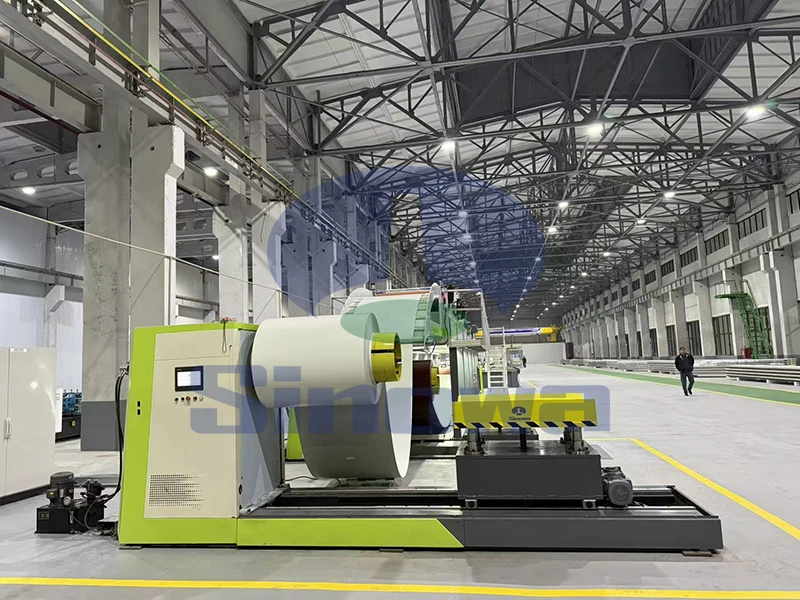
1. Pre-Inspection Before Power-On
Before connecting the power supply, carry out a comprehensive static check on the whole PU sandwich panel machine. Check all mechanical connection parts to confirm that bolts, bearings, transmission chains and guide rails are fastened without loosening, and that moving parts have no friction, jamming or abnormal collision. Check the pipelines for PU raw materials, circulating oil and cooling water to rule out bending, blockage and leakage risks. Clean the sundries left inside the equipment during assembly, and confirm that protective covers and safety baffles are installed in place. Verify the wiring layout of the electrical cabinet, check whether the wiring terminals are firmly crimped, and confirm that sensors, limit switches and emergency stop buttons are installed at the correct positions.
2. No-Load Power-On Debugging
After passing the static inspection, conduct no-load power-on debugging. Start the control system first, check whether the touch screen, indicator lights and alarm modules respond normally, and confirm that each action command on the control panel can be accurately transmitted. Start each independent transmission module separately, including the upper and lower steel sheet unwinding system, traction roller set, conveying track and cutting device. Observe the running speed, running direction and synchronization of each part, adjust the tightness of chains and belts to avoid slipping or excessive tension. Test all limit sensors and emergency stop functions repeatedly to ensure the equipment can stop immediately once an abnormal signal is triggered. During no-load operation, listen for abnormal noise and check whether the temperature of motors and reducers rises abnormally.
3. Raw Material Feeding and Mixing System Debugging
The PU mixing unit is the core part affecting panel quality. Connect the raw material feeding tanks and delivery pipelines, and discharge the air inside the pipelines to avoid air mixing into the foaming system. Start the feeding pump and test the delivery stability of two components of PU raw materials. Adjust the pump speed to control the feeding ratio, and check whether the flow rate is stable without sudden fluctuation. Test the high-speed mixing head, observe the mixing state of raw materials, and adjust the mixing rotating speed and mixing clearance. Check whether the raw material output is continuous and uniform, and eliminate the problems of intermittent discharging and material accumulation at the mixing outlet. In this stage, adjust the temperature of raw material circulation system to keep the material viscosity within a suitable range for foaming reaction.
4. Forming, Foaming and Curing Section Debugging
Send the surface metal sheets into the conveying track, adjust the gap between the upper and lower forming templates according to the designed thickness of sandwich panels, and calibrate the parallelism of the templates to prevent inconsistent panel thickness on both sides. Adjust the guiding side rollers to keep the metal sheets running along the central line without deviation or wrinkling. When the PU mixture is evenly poured between the upper and lower sheets, track the foaming expansion process inside the mold cavity. Fine-tune the feeding amount and reaction speed to avoid insufficient foaming, internal voids or excessive foaming that causes surface bulging. Check the temperature distribution of the curing channel, adjust the circulating heating system to maintain stable curing conditions, so that the PU material can complete cross-linking reaction fully and form a compact core layer.
5. Cutting and Finished Product Inspection Debugging
After the cured continuous sandwich panel enters the cutting station, debug the tracking and cutting system. Calibrate the length measuring sensor to guarantee the cutting length error is controlled within the acceptable range. Adjust the cutting knife’s falling speed and pressure, to ensure neat cutting edges without burrs, sheet deformation or core layer cracking. After cutting out trial panels, check the bonding condition between PU core and metal surface sheets, observe whether the core structure is uniform and dense, and measure the actual thickness, flatness and straightness of the panel. If defects appear, trace back to adjust the parameters of feeding ratio, mixing speed, template gap or curing temperature.
6. Continuous Small-Batch Trial Run and Final Confirmation
After single-piece trial samples meet the quality requirements, launch continuous small-batch trial production. Keep the equipment running continuously for a period of time, monitor the fluctuation of motor current, raw material flow, system temperature and transmission synchronization in real time. Record all stable parameter values for formal production reference. Check the consistency of multiple finished panels, observe whether repeated defects appear with continuous operation. Clean the mixing head and material pipelines regularly during the trial run to prevent material solidification and blockage. When no recurring faults and quality defects occur in the small-batch test, the debugging work is completed, and the machine can be switched to formal production.
7. Record and Sort Out Debugging Documents
Record all adjustment parameters, abnormal phenomena and corresponding solutions in the whole debugging process. Sort out the stable operation parameter list, daily inspection points and common abnormal handling methods. These records can provide reference for later daily operation, routine maintenance and fault troubleshooting of the equipment, helping operators quickly locate problems when the PU sandwich panel machine runs in formal production.
Tags: pu sandwich panel machine, pu sandwich panel machine manufacturer, pu sandwich panel machine supplier, china pu sandwich panel machine, pu sandwich panel machine for sale
Sinowa Sandwich Panel Lines
Sandwich Panel Machine For Sale
- PUR Sandwich Panel Production Line
- PIR Sandwich Panel Production Line
- PUF Sandwich Panel Production Line
- Rock Wool Sandwich Panel Production Line
- Glass Wool Sandwich Panel Production Line
- Mineral Wool Sandwich Panel Production Line
- Color Steel Sandwich Panel Production Line
- Thermal Insulation Sandwich Panel Production Line
- Cold Storage Sandwich Panel Production Line
- PU/PIR/Rockwool Insulation Sandwich Panel Machines
- PU/PIR/Rockwool Sandwich Panel Production Equipment
- PU/PIR/Rockwool Sandwich Panel Making Machinery