What Raw Materials Are Required For Operating A PU Sandwich Panel Production Machine?
Publication Date: Oct 27, 2026
Discover the key raw materials for PU sandwich panel production machines, including polyol, isocyanate, blowing agents, catalysts, surfactants, facings, release agents & processing aids for continuous panel manufacturing.
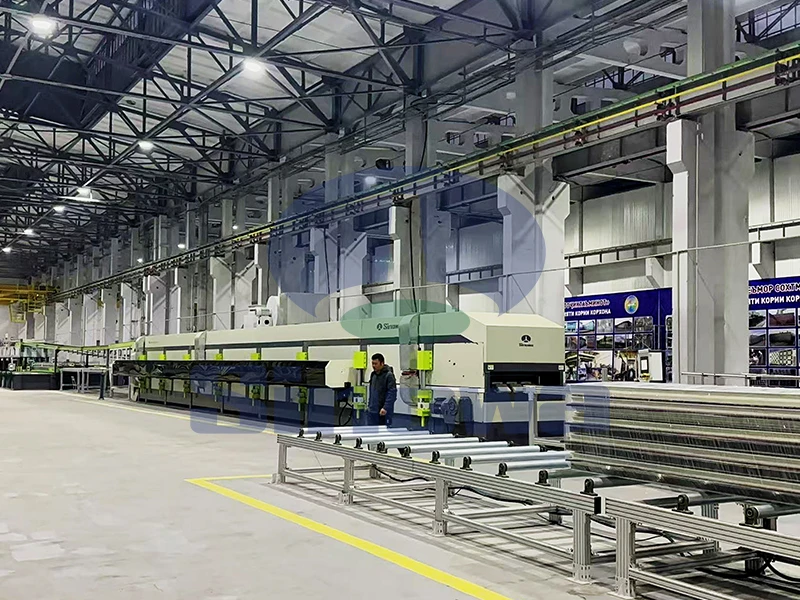
Operating a polyurethane sandwich panel production line is, at its core, a chemistry-driven enterprise rather than a purely mechanical one. The machine itself—with its double belts, mixing heads, heated platens, and precise metering pumps—is only the shell through which a carefully engineered liquid recipe passes, and it is this recipe, converted within seconds into a rigid foam core, that determines the panel's insulation value, structural integrity, dimensional stability, and long-term durability. The raw materials feeding such a machine therefore fall into two distinct families: those that participate in the exothermic polyurethane reaction and create the cellular core, and those that protect, release, or bond the core to its facing sheets. A production operator who understands these materials at the level of their function, their interactions, and their failure modes will run the line far more reliably than one who merely follows a mixing ratio printed on a drum.
At the heart of the system stand the two principal liquid components whose encounter sparks the entire process: the polyol blend and the isocyanate. The polyol, typically a polyether polyol chosen for its molecular weight and hydroxyl number, supplies the long flexible or semi-flexible chains that become the polymer backbone, while the isocyanate—most commonly a polymeric MDI (methylene diphenyl diisocyanate) for rigid panels, though TDI appears in certain softer formulations—provides the highly reactive isocyanate groups. When these two meet in the mixing head, they undergo a polyaddition reaction that builds urethane linkages and releases substantial heat. Getting this pairing right is not a matter of simple proportion; the ratio between the two, expressed as the isocyanate index, must be tuned so that no significant excess of either component remains trapped in the finished foam, as a surplus of one reactant can degrade the product through unwanted secondary reactions or leave brittle, undercured regions.
Equally indispensable are the auxiliary chemicals that steer and shape the reaction, and among them the catalyst system deserves particular attention. Catalysts, usually tertiary amines and organotin compounds, do not merely accelerate the process—they decide which of several competing reactions wins. One catalyst type favors the gelling reaction that builds the polymer network, while another favors the blowing reaction that generates gas and forms the cells. A panel producer therefore almost never relies on a single catalyst; instead, a balanced package is blended so that gelation and gas evolution proceed in harmony. If the blowing reaction races ahead of the developing polymer strength, the foam collapses or produces coarse, interconnected cells that leak heat and weaken the structure; if gelation outpaces the gas, the foam locks up too early, leaving thick cell walls and excessive density. The art lies in this delicate temporal balance, and it is why the catalyst package is one of the most frequently adjusted variables on the line.
The physical structure of the foam—its cells, its density, its closed-cell content—is governed largely by the blowing system and the surfactants that manage it. A chemical blowing agent, most often water, reacts with isocyanate to produce carbon dioxide gas, while physical blowing agents, historically chlorofluorocarbons and later lower-impact hydrocarbons or hydrofluoroolefins, vaporize under the reaction heat to inflate the cells. The choice of blowing agent is decisive for the panel's thermal conductivity, because the gas trapped inside the closed cells is itself the primary insulator, and a low-conductivity blowing agent produces a dramatically better insulating panel than an ordinary air-filled one. Yet the gas must be retained, which is where the silicone surfactants enter the picture: these surface-active molecules lower the surface tension of the liquid foam, stabilize the thin films that separate adjacent bubbles, and prevent the nascent cells from merging into large, weak voids. Without the surfactant, the most perfectly balanced chemistry would still produce a lumpy, collapsed slab rather than a uniform, strong board.
The operational demands of the machine impose their own material requirements that have nothing to do with the reaction chemistry itself. Foremost among these is the release agent, because the rising foam, before it has fully cured, adheres tenaciously to any steel surface it touches, and the continuous belts or platens of the production line must be kept free of buildup. Release agents—often wax emulsions, silicone-based coatings, or soap solutions—are applied continuously to the belt surface so that the cured board lifts away cleanly, preserving both the surface finish of the panel and the operational life of the machine. Their importance is easy to underestimate during planning but becomes painfully obvious in practice: an improperly released belt can stall the line, tear the skin of every board, and require labor-intensive cleaning that interrupts production for hours. This category also includes the internal mold-release and anti-skinning additives that can be dosed into the polyol to improve demolding behavior in discontinuous processes.
No modern PU sandwich panel is complete without its facing materials, and these, too, must be treated as raw materials feeding the same production operation. The most common faces are metal coils—galvanized steel or aluminum—which arrive at the line in coil form and are uncoiled, optionally profiled into embossed or corrugated patterns, cleaned, and primed before the liquid foam is poured between them. The adhesion between the foam core and the metal faces is not incidental; it is engineered through the use of primer coats and, in some systems, an adhesive layer that chemically bonds the polyurethane to the metallic surface. This bond is what gives the sandwich its structural stiffness, allowing the finished panel to act as a load-bearing element rather than merely an insulated box. Where metal faces are not used, alternative facings such as fiber-reinforced sheets, plywood, or gypsum board appear, each demanding its own surface preparation and bonding chemistry. The operator must therefore treat the facing material not as an inert wrapper but as an active partner whose surface energy and cleanliness determine the strength of the final bond.
Water and moisture deserve a separate warning in the operator's material discipline, because they enter the process through more routes than the deliberate blowing reaction. The isocyanate component is highly reactive toward water, and any moisture introduced inadvertently—through humid air in the mixing zone, through damp polyol, or through condensation on cold lines—consumes isocyanate that should have built polymer structure, generating extra carbon dioxide and wastefully inflating the foam while leaving it undercured. This is why polyol drums are kept sealed and dry, why the isocyanate storage is protected from humid atmosphere, and why the metering and mixing equipment is purged and maintained according to a strict schedule. Experienced line supervisors often remark that a stable product is more a triumph of moisture control than of chemistry, and the remark contains a great deal of truth: the same recipe that produces flawless boards on a dry day can yield spongy, structurally weak panels on a humid one.
Finally, the operator must think beyond the primary ingredients to the consumables and process aids that keep the machine running hour after hour. These include the solvents used to flush the mixing head between shots, the filters and strainers that protect the delicate metering pumps from particulates, the hoses and seals that must tolerate both the solvent power and the temperature of the reacting mixture, and the spare nozzles and mixing elements that are replaced as they wear. Equally important is the inventory logic that surrounds the raw materials: because the polyol and isocyanate each have finite shelf lives and can degrade through moisture uptake or phase separation, a producer must rotate stock on a first-in, first-out basis and store the two reactive components strictly separately, never allowing them to share a pump, a line, or a moment of carelessness. When all of these materials—the two principal reactants, the catalyst and surfactant packages, the blowing agent, the release and facing systems, and the supporting consumables—are selected, stored, dosed, and controlled in harmony, the sandwich panel machine transforms a set of ordinary industrial chemicals into an engineered product with predictable insulation, strength, and service life. When any one of them is neglected, no amount of machine precision can compensate. It is this interdependence, more than the machinery itself, that defines the true craft of PU sandwich panel production.
Tags: pu sandwich panel production machine, pu sandwich panel production machine manufacturer, pu sandwich panel production machine supplier, china pu sandwich panel production machine, pu sandwich panel production machine for sale