What Noise Level Does A Working Fully Automatic PU Sandwich Panel Line Produce?
Publication Date: Oct 22, 2026
Wondering about noise from a fully automatic PU sandwich panel production line? Learn typical sound sources, key influencing factors and real working acoustic conditions for this continuous insulation panel manufacturing equipment.
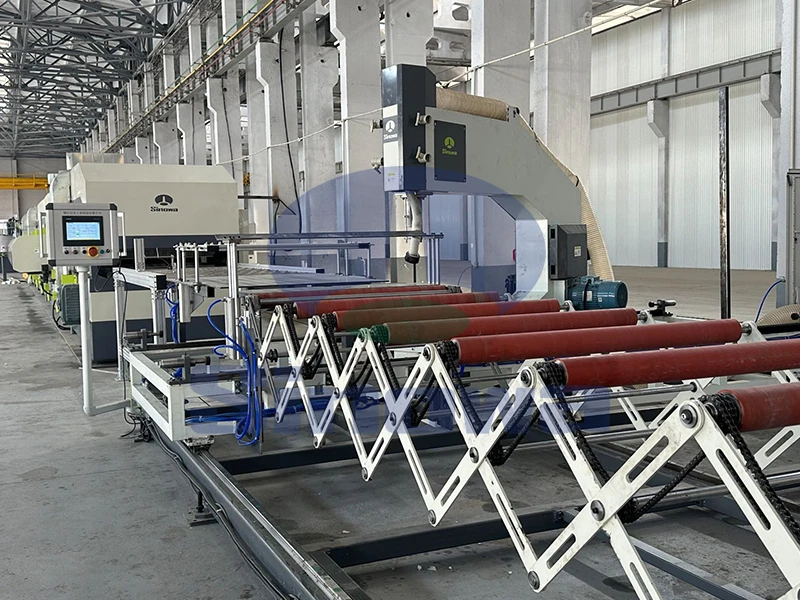
A fully automatic polyurethane sandwich panel production line is, in many ways, a study in contradictions. On the one hand, it represents the triumph of industrial automation: continuous double-belt laminators, precise metering and mixing heads, automated cutting stations, and robotic stacking systems that turn raw steel coils and liquid chemical components into finished insulated panels with minimal human intervention. On the other hand, this same machinery is a dense, continuous source of acoustic energy that radiates into every corner of the factory hall. The question of what noise level such a line produces is not a single number but a layered answer that depends on which machine is running, how fast the line is moving, how the factory has been designed, and even what time of day the measurement is taken. To understand the true acoustic footprint of a fully automatic panel line, one must first appreciate that the noise is not incidental — it is an intrinsic by-product of the physics and chemistry happening along every meter of the production floor.
The most obvious and persistent source of acoustic output is the mechanical handling of materials. Uncoiling steel strip produces a characteristic low-frequency rumble as heavy coils rotate on mandrels, while the strip snakes through levelers and roll-formers that shape it into the familiar corrugated or trapezoidal profile. Each roll-forming station is a series of hardened dies that progressively bend the steel; every bend is accompanied by impact and sliding friction, generating a sharp, metallic chatter that carries well across open floors. The double-belt laminator itself, which presses the polyurethane foam core between two moving steel belts inside a heated press, contributes a steady hydraulic hum from its pumps, presses, and drive motors. When the machine runs in continuous mode, these sounds merge into a broad, rolling background that is rarely quiet, even in moments when no single event dominates. The conveyor systems that carry panels between stations add their own contribution — chains, rollers, sprockets, and drive belts all generate friction and vibration that translate into airborne sound.
Beyond mechanical noise, the panel line introduces a class of sound that is often overlooked because it is intermittent rather than continuous: the impact and percussive events scattered throughout the process. Guillotine shears and flying cutters that trim panels to length strike the steel with a loud, sudden report that can startle and momentarily dominate the acoustic environment. Stacking robots that place finished panels onto pallets release them with audible thuds, and automatic bundling and strapping stations fire tensioning tools that snap against the material. Even the ejection and re-stacking of cut pieces onto downstream conveyors produces clatter as heavy sections drop onto steel surfaces. These discrete, high-amplitude bursts are significant because they punctuate the steady hum with spikes that are far more noticeable to the human ear than the constant level itself. A worker standing near a cutting station experiences a very different acoustic reality than a colleague in the control room, and the difference is not only in volume but in the character of the sound.
Perhaps the most distinctive and least appreciated source is the polyurethane processing equipment itself. The metering and mixing heads, which combine isocyanate and polyol components under high pressure before injecting them into the laminator, operate with powerful hydraulic pumps and high-pressure delivery systems that generate a pronounced, low-frequency hum and a periodic pulsing rhythm. Because polyurethane components are highly reactive, the entire chemical delivery system — from storage tanks through heated hoses to the mixing head — must maintain precise pressure and temperature, and the pumps that sustain this can produce a drone that is felt as much as heard, vibrating through floors and building structure. Additionally, the foam expansion process inside the laminator, combined with venting and exhaust systems that remove fumes and maintain internal pressure, adds fan noise from ventilation units. In a fully automatic line, many of these fans run at high volume to manage both process temperatures and air quality, and their cumulative airflow noise forms a substantial portion of the overall soundscape, particularly in the areas near the press and chemical dosing systems.
The acoustic environment of the panel line is not static; it varies substantially with operating conditions. Line speed is the single most influential variable. At higher throughput, motors spin faster, rollers turn more rapidly, and the frequency and intensity of impacts increase, pushing the overall sound upward. Conversely, during changeovers, when the line slows to swap profiles or colors, the noise drops perceptibly — though start-up and shut-down sequences bring their own transients, including the sudden surge of hydraulic systems and the whine of variable-frequency drives ramping up. Ambient factors also matter: the temperature and viscosity of the polyurethane components affect pump loading, and the condition of tooling matters enormously. Worn roll-forming dies, loose belts, or misaligned guides amplify mechanical noise considerably, which is why well-maintained lines tend to be noticeably quieter than neglected ones. The age of the equipment, the quality of lubrication, and the tightness of structural mountings all feed into the final acoustic result. This means that two nominally identical panel lines can produce meaningfully different noise levels depending on how they are operated and maintained.
Equally important is the spatial distribution of sound within the factory. A panel line does not produce a uniform noise field; rather, it creates a patchwork of acoustic zones that vary with distance, direction, and obstructions. Close to the double-belt press and the mixing heads, the noise is dominated by hydraulic and process sounds, and the level here is typically at its highest. Near the coil uncoilers and roll-formers, metallic chatter prevails. At the cutting and stacking end, percussive events dominate. Moving away from the machinery toward the warehouse or the control room, the level falls, though the open-plan nature of most panel factories means that sound reflects off floors, ceilings, and walls, so it does not decay as quickly as it would in an outdoor environment. The height of the building, the presence of acoustic baffles, the use of insulated wall panels (which the factory itself produces, an irony that is not lost on operators), and the placement of equipment all shape how far the noise travels and how it is perceived. Consequently, a single measurement taken at one point tells only a small part of the story; a full picture requires a survey across the line, at multiple heights and distances, under steady operating conditions.
The human dimension adds another layer of complexity. For a worker stationed for an entire shift at a particular machine, the relevant question is not the average level across the whole hall but the cumulative exposure over hours of continuous operation, punctuated by the percussive bursts from shears and stackers. For a supervisor walking the floor, the experience is different — a series of brief encounters with each noisy zone. For an engineer troubleshooting a fault, the challenge is that diagnostic work must be done in an environment where persistent sound makes it difficult to hear subtle changes in bearing condition or belt tension by ear, forcing reliance on vibration analysis and other indirect methods. The noise also carries an ergonomic and psychological cost: it can interfere with verbal communication, increase the effort needed to concentrate on tasks that demand attention to detail, and contribute to fatigue over a long shift. Even when hearing damage is not a concern, the constant acoustic load shapes the daily experience of everyone on the floor, influencing everything from the pace of work to the ability to hear warning signals and alarms — which, perversely, are sometimes masked by the very machinery they are meant to accompany.
The most effective response to this acoustic reality is not to chase a single target number but to approach noise as an engineering problem to be solved at the source. In a well-designed modern line, this begins with machine selection: low-noise motors, dynamically balanced rotating components, and vibration-isolating mounts that prevent mechanical energy from being transmitted into the building structure where it would otherwise be re-radiated as sound. It continues with maintenance discipline, because a line that is kept properly lubricated, aligned, and adjusted produces measurably less acoustic output than one that has been allowed to run down. It extends to the factory architecture — acoustic panels, baffles, and partial enclosures around the noisiest stations, which absorb and block sound before it propagates across the hall. And it culminates in operational practice: scheduling noisy maintenance for off-peak times, rotating workers through quieter assignments, and designing control rooms with adequate acoustic separation so that monitoring and coordination can happen in relative quiet. None of these measures eliminates the noise entirely — a working fully automatic polyurethane sandwich panel line will always be an acoustically active place — but together they transform it from a diffuse, unavoidable burden into a managed, understood characteristic of the process.
In the end, the honest answer to the question is that a fully automatic PU sandwich panel line produces a noise environment that is substantial, complex, and variable, shaped by continuous mechanical and hydraulic sources overlaid with sharp percussive events, and modulated by line speed, maintenance condition, and factory layout. It is louder near the press, the mixing heads, and the cutting stations; quieter in control rooms and peripheral areas; and always present, always working, always pressing against the ears of those who operate it. The level is not fixed but rises and falls with every change in production rate and every aging component. Understanding it requires looking beyond any single reading to the interplay of machinery, chemistry, building design, and human presence. For engineers, operators, and managers alike, the task is not to ask what the noise level is once, but to listen continuously — to treat acoustic measurement as a living diagnostic of the line's health, and to keep the conversation between man and machine as clear as the panels the line produces are straight and true.
Tags: fully automatic pu sandwich panel line, fully automatic pu sandwich panel line manufacturer, fully automatic pu sandwich panel line supplier, china fully automatic pu sandwich panel line, fully automatic pu sandwich panel line for sale