What Is The Installation Cycle Of A Complete Polyurethane Sandwich Panel Production Line?
Publication Date: Oct 12, 2026
The full installation cycle of a complete polyurethane sandwich panel production line covers site preparation, equipment delivery and inspection, modular assembly, electrical and pneumatic wiring, system debugging, trial production, and final acceptance, typically spanning 6 to 10 weeks based on line scale and site conditions, with standardized phased progress to ensure stable long-term equipment operation.
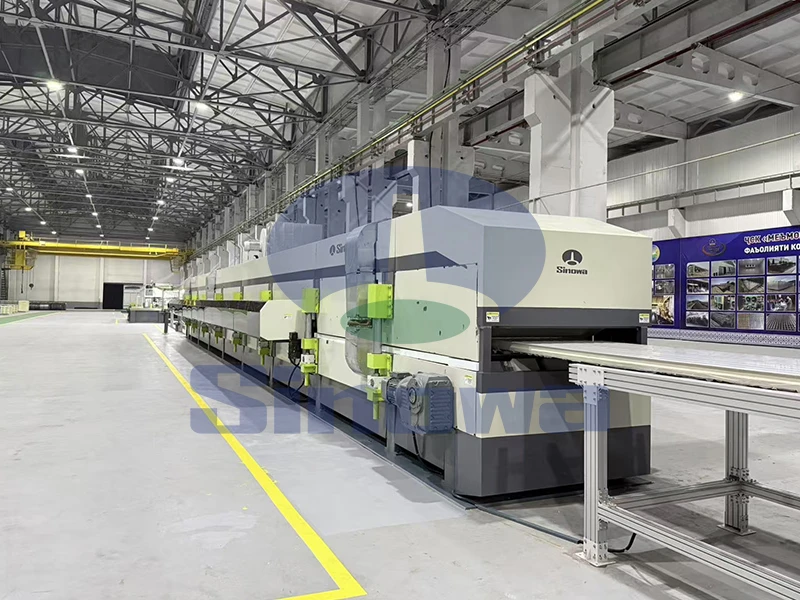
The first phase of the installation cycle focuses on on-site preparation and layout confirmation, which usually takes one to two weeks to complete and lays the foundation for subsequent efficient installation. Before equipment arrival, the installation team conducts a comprehensive survey of the production workshop, verifying ground flatness, load-bearing capacity, and space dimensions to match the overall layout of the polyurethane sandwich panel production line. This stage also includes confirming reserved positions for power supply, ventilation, and drainage systems, as well as clearing the workshop area to eliminate obstacles that may hinder equipment placement. Professional personnel will optimize the equipment layout path according to production logic, ensuring smooth material feeding, processing, and finished product output workflows, while reserving sufficient space for later equipment maintenance and daily operation. Thorough site preparation effectively avoids installation delays caused by site mismatch and lays a solid foundation for accurate equipment assembly.
Equipment delivery, sorting and visual inspection constitute the second core stage, generally requiring one week to finish after site preparation is completed. All modular components of the production line, including uncoiling units, roll forming systems, PU foaming devices, laminating presses, cutting mechanisms, and stacking equipment, are delivered in batches according to a standardized shipping list. On-site staff conduct detailed sorting and appearance inspection of each component, checking for transportation damage, missing parts, or dimensional deviations. Electrical control cabinets, precision sensors, and foaming core components are inspected with extra care to ensure no functional defects. All qualified parts are classified and stored in designated workshop areas, with clear labeling of component types and corresponding installation positions. This systematic sorting process prevents confusion during assembly and ensures all parts are readily available for subsequent installation procedures.
The third stage is mechanical positioning and host equipment assembly, the most time-consuming link that takes two to three weeks for full completion. The installation team starts with fixing and calibrating the main frame of core equipment, beginning with the uncoiling and roll forming unit, which is leveled and anchored to ensure stable operation during high-speed sheet processing. Next, the intermediate core functional modules including the PU foaming system and continuous laminating press are installed, with precise adjustment of equipment horizontal and vertical accuracy to guarantee consistent panel forming thickness and bonding uniformity. Conveyor systems connecting each processing unit are then assembled and debugged for alignment, ensuring seamless material transmission between different working sections. Large-scale structural components are fixed with professional fastening processes, and overall mechanical stability is tested repeatedly to eliminate structural shaking or displacement risks during long-term operation.
Electrical system wiring and pneumatic pipeline installation follow mechanical assembly, typically taking one week to complete with strict precision standards. Professional electricians lay and connect all power circuits, control circuits, and signal lines for the polyurethane sandwich panel line, implementing standardized wiring specifications to avoid circuit confusion and ensure safe and stable power supply for each equipment module. Meanwhile, air pressure pipelines for foaming power and mechanical transmission are laid, with tightness testing conducted for all pipeline interfaces to prevent air leakage that may affect foaming accuracy and equipment operation sensitivity. After wiring and pipeline laying, all electrical components, sensors, and control switches are calibrated one by one to ensure accurate signal transmission and sensitive response. The entire electrical and pneumatic system is fully checked to eliminate potential hidden dangers, providing reliable power and power support for subsequent equipment debugging and production.
Initial system debugging and parameter setting form the fifth installation stage, requiring about one week to complete and serving as a key transition from installation to trial production. Technical personnel activate the entire production line’s control system, conducting no-load operation debugging of each single equipment module independently to verify the normal operation of mechanical transmission, electrical control, and pneumatic execution components. Abnormal noises, operational jitter, and signal delay problems during no-load operation are adjusted and eliminated in a timely manner. After single-module debugging is qualified, linkage debugging of the whole line is carried out to test the coordination and operation rhythm between upstream and downstream equipment. In addition, basic process parameters for PU foaming, sheet forming, and composite pressing are preset according to conventional production requirements, laying a parameter foundation for subsequent sample trial production and precision adjustment.
Foaming process calibration and sample trial production testing occupy the sixth stage, lasting one week to optimize core product quality performance. Based on the preset basic parameters, the team conducts small-batch trial production of polyurethane sandwich panels, focusing on testing key foaming indicators including foam cream time, gel time, core material density, and compression resistance. Multiple groups of sample panels are produced and inspected for surface flatness, core material uniformity, and bonding tightness between metal sheet and PU core layer. According to the test results, technical staff fine-tune foaming ratio, pressing temperature, operating speed, and other core parameters to eliminate common problems such as uneven foaming, insufficient bonding, and panel surface wrinkles. Repeated trial production and parameter iteration ensure the produced panels meet consistent quality standards and adapt to formal continuous production requirements.
Full-load continuous operation testing is the seventh stage of the installation cycle, taking three to five working days to verify the line’s stable production capacity. After qualified sample testing, the production line is operated at standard production speed for continuous full-load operation simulation, covering complete production processes from sheet uncoiling, roll forming, PU foaming, composite pressing, fixed-length cutting to finished product stacking. The whole-line operation status is monitored in real time, focusing on checking equipment operation stability, production rhythm continuity, and finished product yield. Minor operational friction, parameter deviation, and program logic defects found during full-load operation are optimized and repaired in a targeted manner. This long-term continuous test effectively verifies the line’s durability and operational stability under formal production conditions, eliminating intermittent faults that may occur in mass production.
Equipment safety inspection and functional optimization are completed in the eighth stage, requiring three to four working days to perfect overall equipment performance. The professional team conducts a comprehensive safety inspection of the polyurethane sandwich panel line, checking the effectiveness of safety protection devices, emergency stop systems, and fault alarm functions to ensure the equipment meets safe production operation standards. Daily operation and maintenance gaps formed during installation and debugging are optimized, including adjusting equipment running clearance, optimizing control program logic, and sorting out wiring and pipeline layout to improve overall equipment neatness and maintainability. Meanwhile, hidden danger investigation is carried out for vulnerable parts and key load-bearing components, and preventive adjustment is done to extend the service life of the production line. This stage eliminates potential safety and stability hazards for long-term operation.
On-site operation training and system handover constitute the ninth stage, lasting two to three working days to realize smooth equipment delivery. Professional technical trainers provide systematic operation and maintenance training for on-site operators and maintenance personnel, covering standard start-stop procedures, parameter adjustment methods, daily operation specifications, common fault judgment and troubleshooting skills, and daily maintenance and upkeep methods. The training combines theoretical explanation and on-site practical operation to ensure staff can independently complete daily production operation and simple equipment maintenance. After the training assessment is qualified, the installation team sorts out complete equipment operation manuals, maintenance guidelines, and parameter configuration documents, completing the systematic handover of all equipment related materials to lay a manpower foundation for formal production.
The final stage is overall acceptance and formal commissioning, taking two working days to complete the entire installation cycle. Both parties conduct comprehensive acceptance of the polyurethane sandwich panel production line, covering equipment installation accuracy, whole-line linkage operation stability, finished product quality consistency, safety system completeness, and document integrity. All acceptance indicators are verified item by item, and all remaining minor problems are finalized and optimized. After passing overall acceptance, the production line is officially put into formal continuous production operation. The entire phased installation process ensures every link of equipment assembly, debugging and optimization is standardized and rigorous, realizing stable, efficient and long-term reliable operation of the complete production line.
Tags: polyurethane sandwich panel production line, polyurethane sandwich panel production line manufacturer, polyurethane sandwich panel production line supplier, china polyurethane sandwich panel production line, polyurethane sandwich panel production line for sale