What Is The Standard Service Life Of A Full-set Continuous PU Sandwich Panel Line?
Publication Date: Oct 9, 2026
A full-set continuous PU sandwich panel production line features a defined standard service life ranging from 8 to 12 years under regular operational conditions and systematic maintenance, with lifespan fluctuations mainly driven by operating intensity, component wear, daily maintenance quality, and working environment, while scientific usage and timely part replacement can effectively extend its stable service cycle.
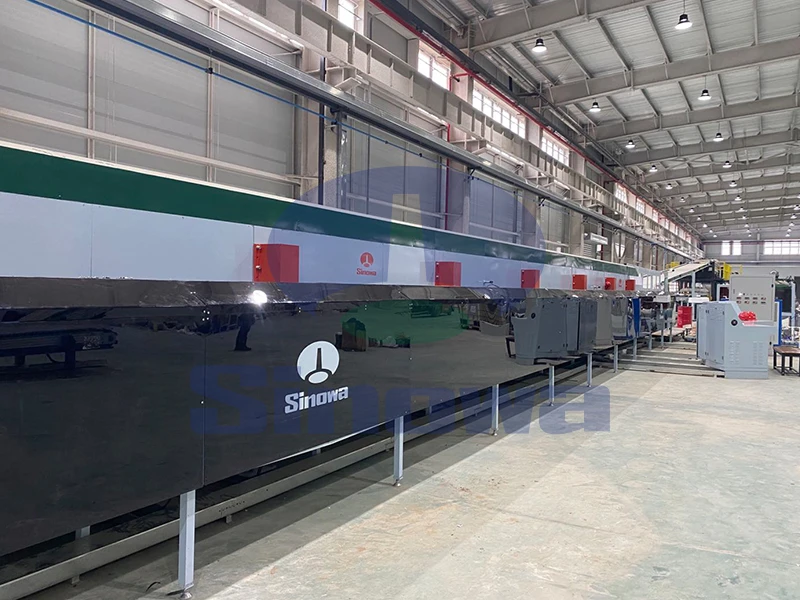
The standard service life of a full-set continuous PU sandwich panel line refers to the effective operational period during which the equipment maintains stable production efficiency, consistent product quality, and normal mechanical performance without major functional failures. This core lifecycle benchmark is summarized from long-term industrial operational practice, covering the complete set of equipment including feeding systems, PU foaming units, pressing and forming structures, cutting systems, and automatic control modules. Unlike simple equipment warranty periods that only cover defect-free usage in the early stage, the standard service life focuses on the overall stable working cycle of the entire production line, reflecting the comprehensive durability of mechanical structures, electrical systems, and transmission components under conventional industrial production loads. Even with minor wear of vulnerable parts, the whole line can still maintain qualified production capacity within the standard service life range.
Normal operational load is one of the core factors that determine whether the PU sandwich panel line can reach its standard service life. Continuous PU sandwich panel production lines are designed for long-duration continuous industrial production, and their preset service cycle is based on moderate daily operating hours and stable production rhythm. When the equipment runs within the rated load range, all transmission parts, motors, and foaming equipment operate under reasonable stress levels, avoiding excessive mechanical fatigue and thermal loss. In contrast, long-term overloaded operation, such as extending daily working hours far beyond conventional standards or pursuing ultra-high production speed beyond equipment design parameters, will accelerate the aging of key structures. Long-term overload will cause irreversible wear on drive gears, conveyor rollers, and hydraulic systems, greatly shortening the overall service life and leading to frequent minor faults in the later operational stage.
Scientific and standardized daily maintenance is the most critical guarantee for the full-set PU sandwich panel line to achieve its standard service life. Complete production lines contain dozens of vulnerable and precision components, and regular maintenance can effectively delay component aging and eliminate potential equipment faults in advance. Conventional maintenance work includes regular lubrication of transmission bearings and guide rails, cleaning of residual PU materials on foaming and forming molds, inspection and tightening of connecting parts, and calibration of automatic control systems. Reasonable maintenance can reduce friction loss of mechanical parts, prevent residual material corrosion on equipment surfaces, and ensure the accuracy of automated operation parameters. Production lines with strict daily maintenance records can basically reach the upper limit of the standard service life, while equipment lacking regular maintenance often suffers from premature aging of core components and fails to maintain stable production performance after 5 to 6 years of use.
The working environment exerts a subtle and lasting impact on the standard service life of continuous PU sandwich panel production lines. This type of production equipment has certain environmental adaptability, but long-term operation in harsh environments will accelerate equipment aging and reduce the effective service cycle. High-humidity production workshops will easily cause oxidation and rust of metal structural parts and circuit aging of electrical control components, while dusty environments will block precision parts such as foaming nozzles and sensor probes, affecting equipment operation accuracy. In addition, long-term exposure to volatile chemical residues generated during PU production will cause slight corrosion on equipment surfaces and internal sealing parts. Production lines operating in dry, clean, and well-ventilated standardized workshops can maintain stable performance for a longer time and fully meet the standard service life requirements.
Regular replacement of vulnerable parts is an essential link to maintain the standard service life of the full-set PU sandwich panel line. During long-term operation, some consumable and easily worn components will inevitably age and fail, even with good maintenance conditions. Typical vulnerable parts include transmission belts, sealing gaskets, foaming filter elements, and hydraulic oil accessories, which usually need periodic replacement every 2 to 3 years according to usage conditions. Timely replacement of aging vulnerable parts can avoid local component failure affecting the overall operation of the production line, prevent secondary damage to core equipment caused by part aging, and ensure the continuous and stable operation of the whole line. Blindly delaying the replacement of worn parts will lead to increased equipment failure rates, reduced production efficiency, and ultimately shorten the overall effective service life of the production line.
The operating proficiency and standardized operation habits of operators also affect the actual service life of the PU sandwich panel production line. Professional and trained operators can strictly follow equipment operation specifications to complete startup, parameter adjustment, production operation, and shutdown procedures, avoiding irregular operations that damage equipment. For example, standardized parameter setting during foaming and forming can prevent equipment overload operation caused by improper parameter matching; standardized startup and shutdown steps can reduce instantaneous impact loss of current and mechanical structures. Unskilled operation, random adjustment of equipment parameters, and irregular startup and shutdown behaviors will cause frequent impact losses to mechanical and electrical systems, accelerate component wear, and make it difficult for the production line to reach the preset standard service life.
The structural design and manufacturing quality of the production line itself lay the foundation for its standard service life. High-quality full-set continuous PU sandwich panel lines adopt thickened welded steel frame structures, which have high overall rigidity and are not easy to deform during long-term continuous operation. Key moving parts such as forming rollers are processed through quenching and chrome-plating treatments, with excellent wear resistance and pressure resistance. The overall structural stability and component processing accuracy determine the basic durability of the equipment. Production lines with rigorous structural design and high-precision component manufacturing have stable mechanical performance, low failure rates in the early and middle service stages, and can fully achieve the standard service life. In contrast, equipment with simple structural design and rough component processing is prone to structural deformation and precision attenuation in a short time, resulting in a significantly shortened effective service life.
Equipment aging attenuation rules define the performance changes of the PU sandwich panel line within the standard service life. In the first 3 to 5 years of use, the production line is in the optimal operating period, with stable performance, low failure rate, and highest production efficiency. From the 6th to the 8th year, partial vulnerable parts and secondary core components begin to age gradually, requiring more frequent maintenance and part replacement, but the overall production capacity and product quality still meet production requirements. After exceeding the standard service life range, the aging speed of core structures and electrical systems will accelerate obviously, equipment failure rates will rise sharply, production precision will decrease, and the maintenance cost will increase exponentially. This staged performance attenuation feature is the core basis for defining the standard service life of the production line.
Reasonable equipment overhaul and technical debugging can effectively extend the effective service life on the basis of the standard service life. After the production line runs for 6 to 7 years, targeted comprehensive overhaul can be carried out for aging core components, including detection and maintenance of hydraulic systems, calibration of automatic control programs, repair and reinforcement of deformed structural parts, and overall cleaning and maintenance of the whole equipment. Professional overhaul can eliminate potential aging faults, restore equipment operation accuracy and mechanical stability, and enable the production line to maintain stable production capacity for an additional 2 to 3 years beyond the standard service life. Regular technical debugging can also optimize equipment operating parameters, reduce unnecessary wear and energy consumption, and delay the overall aging progress of the production line.
In practical industrial applications, the actual service life of most full-set continuous PU sandwich panel lines is concentrated in the standard range of 8 to 12 years, with obvious individual differences caused by usage conditions. Production lines with standardized operation, perfect maintenance, and good working environment can steadily reach and even slightly exceed the upper limit of the standard service life, maintaining long-term high-efficiency production. On the contrary, equipment with long-term overload operation, inadequate maintenance, and harsh working environment often exits stable production state in advance. Understanding the standard service life and its influencing factors helps production enterprises formulate scientific equipment usage and maintenance plans, maximize equipment utilization value, and reduce production and replacement costs in the long run.
Tags: continuous pu sandwich panel line, continuous pu sandwich panel line manufacturer, continuous pu sandwich panel line supplier, china continuous pu sandwich panel line, continuous pu sandwich panel line for sale