What Core Materials Can A Continuous PU Sandwich Panel Production Line Process?
Publication Date: Oct 8, 2026
Continuous PU sandwich panel production lines feature versatile material compatibility, capable of processing a wide range of organic foam and inorganic insulation core materials to manufacture high-performance composite panels for diverse construction and industrial applications. These automated production systems adapt flexibly to different core material densities, textures, and functional properties, ensuring consistent lamination, curing, and panel forming while delivering tailored thermal insulation, fire resistance, and structural stability for various usage scenarios.
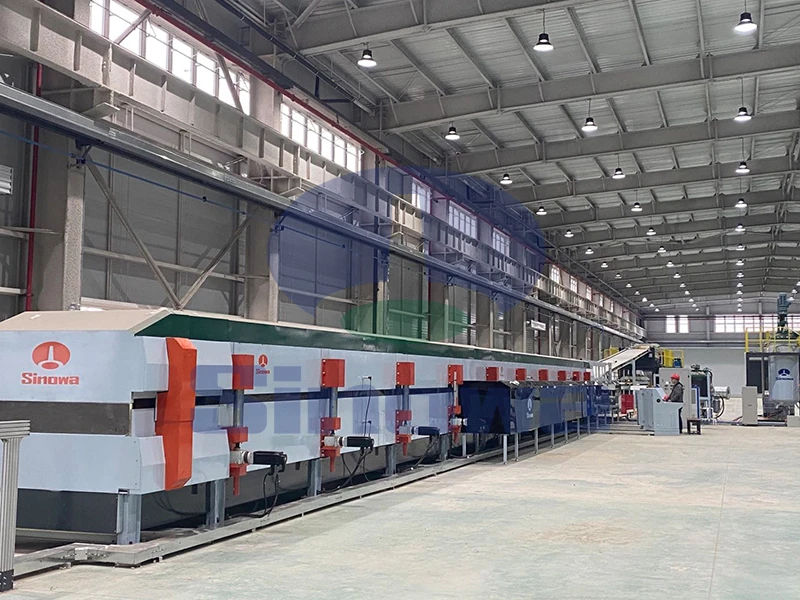
Polyurethane (PU) foam stands as the most fundamental and widely processed core material on continuous PU sandwich panel production lines, serving as the baseline material for standard insulation panel manufacturing. This flexible reactive foam material is processed through precise on-line high-pressure metering, mixing, and foaming procedures, where raw chemical components are blended in accurate proportions to form uniform, closed-cell foam structures. During continuous operation, the line automatically distributes the mixed PU foam between two surface facings, with adjustable foaming density and curing speed to fit different panel thickness specifications. PU foam cores processed by these lines exhibit ultra-low thermal conductivity, excellent thermal insulation performance, and lightweight characteristics, making the finished panels ideal for general thermal insulation enclosures, building wall and roof cladding, and low-temperature storage environments. The continuous production process eliminates manual foaming inconsistencies, ensuring every panel features uniform core density, no internal voids, and stable overall structural performance.
Polyisocyanurate (PIR) foam, an upgraded derivative of PU foam, is another mainstream core material fully compatible with continuous PU sandwich panel production lines, requiring only minor parameter adjustments during processing. Compared with conventional PU foam, PIR foam features optimized molecular structures and enhanced flame-retardant properties, and the continuous production line can adapt its temperature control and catalytic proportion systems to complete efficient PIR foaming and curing. The automated mixing system accurately configures specialized additives and catalysts for PIR materials to form compact, heat-resistant closed-cell structures. Panels with PIR foam cores maintain superior thermal insulation capabilities while achieving better high-temperature resistance and anti-combustion performance. The continuous processing mode ensures the PIR foam core bonds tightly with surface panels, avoiding delamination or deformation under temperature fluctuations, which extends the service life of panels used in high-temperature industrial facilities and fire-sensitive building spaces.
Rock wool, a classic inorganic fireproof core material, can be efficiently processed on modified continuous PU sandwich panel production lines, expanding the functional range of traditional PU panel equipment. Unlike foam materials that rely on chemical foaming, rock wool is supplied as pre-formed fiber cotton layers, and the production line adjusts its feeding, pressing, and lamination units to adapt to the fibrous and porous characteristics of rock wool cores. The automated feeding system evenly lays rock wool layers with consistent thickness, while the adjustable pressing mechanism controls compaction density to avoid excessive extrusion that damages internal fiber structures. During the continuous composite molding process, the line uses specialized adhesive coating procedures to strengthen the bonding between rock wool cores and metal facings. Processed rock wool core panels deliver outstanding fire resistance, sound absorption, and high-temperature stability, perfectly suited for building partitions, industrial fireproof walls, and noise reduction facilities, fully meeting the functional demands of fireproof and acoustic insulation projects.
Glass wool, another high-performance inorganic fiber core material, is highly adaptable to continuous PU sandwich panel production lines and shares similar processing logic with rock wool while featuring unique lightweight advantages. Glass wool cores are composed of fine glass fiber structures with lighter weight and softer texture than rock wool, requiring the production line to fine-tune feeding tension and pressing pressure parameters during operation. The continuous line’s automatic leveling system flattens glass wool raw materials to eliminate uneven bulges or folds, ensuring a flat and consistent core layer before lamination. In the continuous curing and composite stage, the equipment maintains stable pressure and temperature to facilitate full adhesion between glass wool and surface plates without crushing the delicate fiber gaps. Finished panels with glass wool cores excel in sound insulation, heat preservation, and weight reduction, making them ideal for lightweight building envelopes, interior decoration partitions, and ventilation system insulation structures.
Expanded Polystyrene (EPS) foam is a cost-effective organic core material that continuous PU sandwich panel production lines can stably process, catering to low-to-medium standard insulation panel production needs. EPS foam exists as pre-expanded rigid foam boards with uniform closed-cell structures, and the production line simplifies the foaming process while retaining precise lamination and molding procedures. The automated positioning and pressing system of the continuous line fixes EPS foam cores accurately, ensuring consistent panel thickness during high-speed continuous production. The equipment’s adjustable adhesive spreading system matches the surface characteristics of EPS materials to form firm composite structures, preventing core layer displacement or peeling during long-term use. EPS core panels processed by continuous lines feature lightweight, low water absorption, and stable thermal insulation performance, suitable for ordinary civil building insulation, temporary facility construction, and packaging insulation protection scenarios.
Extruded Polystyrene (XPS) foam, with its high-density and high-strength closed-cell structure, is a premium foam core material compatible with upgraded continuous PU sandwich panel production lines. XPS foam has higher compressive strength and better moisture resistance than EPS foam, requiring the production line to adjust pressing and curing parameters to adapt to its denser texture. The continuous production line’s precision sizing unit cuts XPS core materials to standardized specifications, while the high-adhesion composite process ensures tight integration between XPS cores and surface layers even under external pressure. During continuous operation, the equipment maintains stable production speed without causing core layer compression deformation or structural damage. Panels with XPS foam cores processed by these lines boast excellent pressure resistance, waterproof insulation, and frost resistance, widely applied in building roof insulation, ground moisture-proof insulation, and outdoor enclosure structures with high environmental adaptability requirements.
Phenolic foam, a high-efficiency fireproof and heat-insulating core material, can be professionally processed on optimized continuous PU sandwich panel production lines for high-standard fireproof insulation projects. Phenolic foam features excellent flame retardancy, low smoke generation, and high-temperature resistance, and its chemical properties differ from PU and PIR foam, requiring the production line to adjust raw material metering ratios and curing temperature curves. The continuous line’s customized mixing and foaming system completes uniform phenolic foam foaming, forming fine and dense cell structures. The automated lamination process ensures phenolic foam cores form a stable composite whole with surface panels, overcoming the brittleness defect of phenolic materials in traditional intermittent production. Continuous processed phenolic core panels integrate thermal insulation, fire resistance, and corrosion resistance, making them applicable for high-rise building insulation, chemical plant fireproof enclosures, and clean environment construction.
Paper honeycomb core material, a lightweight and environmentally friendly structural core, is processable on multi-functional continuous PU sandwich panel production lines, focusing on structural support and lightweight applications. Paper honeycomb cores feature a regular hollow grid structure, requiring the production line to adopt segmented pressing and uniform gluing processes to avoid grid collapse. The continuous feeding system arranges honeycomb core materials neatly and continuously, while the intelligent pressure control system applies even pressure during composite molding to ensure each honeycomb unit is fully bonded with the upper and lower surface layers. The high-speed continuous production mode improves the molding efficiency of honeycomb core panels while ensuring consistent structural flatness and compressive uniformity. Finished paper honeycomb core panels are ultra-light, high-strength, and environmentally recyclable, suitable for clean room partitions, logistics equipment enclosure panels, and lightweight building decorative panels.
Magnesium glass board core material, a rigid inorganic flame-retardant core, can be adapted and processed on continuous PU sandwich panel production lines for high-rigidity and fireproof panel production. As a rigid plate core with high hardness and strong fire resistance, magnesium glass boards require the production line to adjust feeding and leveling units to adapt to rigid plate raw materials, replacing flexible foam feeding procedures. The continuous line’s precise alignment system ensures accurate docking of upper and lower surface layers with magnesium glass cores, and the high-temperature curing and pressing process strengthens composite tightness. During continuous production, the equipment maintains stable operating parameters to avoid plate cracking or surface unevenness. Magnesium glass core panels processed by continuous lines feature high structural strength, excellent fireproof performance, and anti-aging stability, widely used in building fireproof partitions, clean engineering wall panels, and industrial anti-collision enclosure structures.
The strong material adaptability of continuous PU sandwich panel production lines stems from their adjustable modular processing systems, which can switch processing parameters freely according to the physical and chemical characteristics of different core materials. Whether flexible organic foam materials or rigid inorganic fiber and plate materials, the production line can realize standardized, high-efficiency continuous molding through adjusting foaming ratio, pressing pressure, curing temperature, and gluing process. This multi-material compatibility enables a single production line to manufacture multiple types of sandwich panels with different insulation, fireproof, and structural properties, greatly improving production flexibility and meeting the diverse and personalized material needs of modern construction and industrial manufacturing fields without frequent equipment replacement.
Tags: continuous pu sandwich panel production line, continuous pu sandwich panel production line manufacturer, continuous pu sandwich panel production line supplier, china continuous pu sandwich panel production line, continuous pu sandwich panel production line for sale