What Spare Parts Are Most Commonly Replaced For A PU Sandwich Panel Production Line?
Publication Date: Oct 22, 2026
Looking for the most frequently replaced spare parts for PU sandwich panel production lines? Check common consumables: mixing nozzles, pump seals, bearings, rollers, cutting blades, sensors, belts, gaskets, pneumatic & hydraulic components for better uptime.
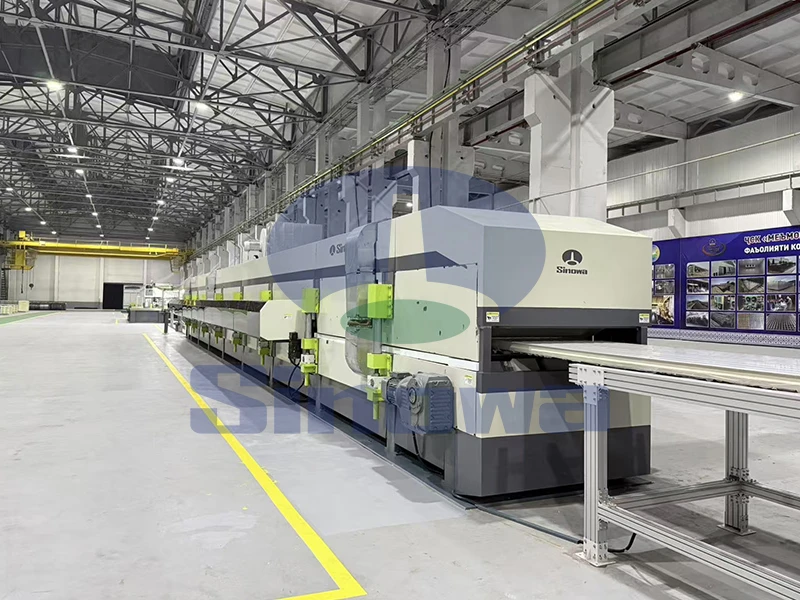
A polyurethane (PU) sandwich panel production line is one of the most demanding continuous manufacturing systems in the building materials industry. It combines chemical mixing, precise metering, metal coil handling, continuous foaming, high-temperature curing, and synchronized cutting into a single, tightly coupled process. Because every station is interdependent, the wear and failure of even a small component can halt the entire line in minutes, making spare parts management not a matter of convenience but of survival. Understanding which parts fail most often, why they fail, and how to prepare for those failures is essential for any plant operator who wants to maximize uptime and protect both output quality and worker safety.
At the very front of the line, the uncoiler and entry section handle heavy steel or aluminum coils, and here the most frequently replaced items are mechanical wear components that work under constant stress. The hydraulic braking systems of the uncoilers rely on brake linings and sealing rings that wear with every coil change, while the feed rollers and their surface coatings lose dimensional accuracy over time as they are compressed against metal surfaces. Sensors that detect coil position, edge alignment, and loop depth are also surprisingly high on the replacement list, because they sit in dusty, vibration-heavy environments and become inaccurate or completely fail after relatively short service intervals. In many plants, the entry pinch rollers are among the first parts to show wear, since they must grip the moving metal sheet firmly enough to maintain tension but are constantly abraded by the sharp edges of the coil. The tracking rollers that keep the metal centered also lose their bearings frequently, and operators quickly learn to keep a generous stock of quality bearings and seals for this entire entry zone, as downtime here blocks every downstream station.
The heart of any PU panel line is the mixing and foaming station, and it is here that operators find some of the most frequent and most expensive replacement needs. The high-pressure metering pumps that deliver isocyanate and polyol components are precision devices, and their pump seals, check valves, and plunger packings wear out rapidly because they are in continuous contact with abrasive and chemically reactive liquids. Nozzle components, which atomize and mix the two chemicals under high pressure, are notoriously consumable; the mixing chamber, needle, and seat erode with every cycle and must be rebuilt or replaced on a regular schedule. Even the static mixers used in some lower-pressure designs clog and degrade, and the filters protecting the pump heads clog constantly, demanding frequent cleaning or replacement. This station also generates a great deal of heat, so the thermal fluid circulation system, including heating elements, thermocouples, and temperature sensors, is a constant source of replacement parts. Because chemical dosing accuracy is the single largest factor determining panel density and insulation performance, operators cannot afford to run these components to failure; most well-run plants replace metering seals and nozzles on a fixed preventive schedule rather than waiting for a breakdown.
Downstream of the mixer, the continuous double-belt conveyor or laminator carries the foam between the top and bottom metal facings as it cures. This entire section is a hot, high-friction environment, and it consumes a steady stream of spare parts. The most common replacements here are the wear strips and slide plates that support the moving belts, because they are in constant contact with abrasive surfaces under high temperature. The belts themselves, whether chain-driven or steel, eventually stretch, crack, or develop tracking problems and must be replaced, though this is a major event rather than a routine item. Drive chains, sprockets, and the idler rollers that guide the belts are replaced far more often, along with the pneumatic or hydraulic cylinders that control belt tension and tracking. The heated platens and their heating elements also require periodic renewal, as thermal cycling causes electrical heaters to fail and thermocouples to drift. Around the laminator, operators also replace a constant flow of gaskets and seals, because the combination of heat, pressure, and chemical vapors rapidly degrades rubber and elastomer components.
The curing and cooling zones, while simpler mechanically, still generate a significant share of replacement parts. The curing tunnel relies on circulating fans and their motors, which operate continuously in a hot environment and fail more often than comparable equipment in cooler locations. V-belts and couplings between motors and fans are routine consumables, and the heat-resistant seals around the tunnel openings deteriorate and must be renewed. The cooling section, whether it uses water-cooled platens or air cooling, adds its own demands: water pumps, circulation pipes, valves, and the seals around them are all subject to wear and leakage. Because temperature control directly affects whether the foam reaches its correct final density and whether the panel surfaces bond properly, thermostats, control valves, and temperature sensors in this zone are replaced frequently, and their calibration matters as much as their physical condition. Operators find that the cooling section, though often overlooked in the initial design, quietly becomes one of the most reliable sources of recurring replacement expense.
The cutting and stacking station, where the continuous panel is cut to length and stacked, is the source of some of the highest-frequency mechanical replacements on the entire line. The circular saw blades or reciprocating knives used to cut the sandwich panel wear quickly because they cut through both the hard metal facing and the abrasive foam core; blade replacement is a near-daily or weekly ritual in many plants, and blade sharpening services are a constant line item. The guides and bearings on the moving saw carriage wear with every cut, and the pneumatic cylinders that drive the carriage and clamp the panel are replaced regularly. The anti-scratch rollers that support the cut panels, the suction cups or vacuum pads on the handling system, and the conveyor belts of the outfeed section all wear out on a predictable cycle. At the end of the line, the panel stacking and packaging equipment adds another set of consumables, including drive belts, gripper pads, and the foam or rubber cushioning that protects panel edges. For many operators, the cutting station is the single largest consumer of replacement parts per unit of production time, simply because of the extreme forces and sharp materials involved.
Beyond these process-specific components, the entire line depends on a shared pool of general industrial spare parts that are replaced constantly across every station. Bearings are arguably the single most common category, appearing in rollers, conveyors, fans, saw carriages, and drives throughout the plant, and they fail regularly under the combination of heat, dust, and continuous operation. Seals, gaskets, and O-rings of every size are equally pervasive, and they fail not only from wear but from chemical attack by the isocyanates and other process chemicals. Pneumatic components, including cylinders, valves, solenoid coils, and the filters, regulators, and lubricators of the air preparation units, are replaced very frequently, especially in dusty environments where lubrication and filtration are hard to maintain. Hydraulic components, such as pumps, hoses, and seals, follow the same pattern, and hydraulic hoses in particular have a limited life and must be replaced preventively. Electrical components add a further layer: proximity switches, limit switches, photo eyes, encoders, and PLC input and output modules fail in vibration-heavy industrial settings, and their replacement is often driven as much by reliability concerns as by actual failure.
Effective spare parts management for a PU sandwich panel line therefore depends less on buying the most expensive equipment and more on disciplined forecasting and stockkeeping. The first principle is to distinguish between routine consumables and catastrophic spares. Routine items, such as seals, nozzles, blades, bearings, belts, and sensors, should be stocked according to their measured failure frequency, with minimum quantities set high enough to survive normal supplier lead times. Critical spares, such as a spare metering pump, a spare drive motor, or a complete belt assembly, may sit unused for years but can be the difference between a one-day outage and a three-week one, and their absence is often the hidden cause of extended downtime. The second principle is to track failures systematically rather than relying on memory, so that replacement intervals can be refined with real data. The third is to build relationships with multiple suppliers for every critical part, because the worst time to discover that a key component is only available from a single source is after it has already failed. With a well-managed spare parts program, an operator can turn what is often the biggest source of unplanned downtime into a predictable, budgetable element of the operation.
In conclusion, the spare parts that need the most frequent replacement on a PU sandwich panel production line are concentrated in the areas of greatest mechanical stress, heat, and chemical exposure: the entry and metering systems, the foaming nozzles and seals, the belt and drive components of the laminator, the heating and cooling elements, the blades and handling parts of the cutting station, and the ubiquitous bearings, seals, and pneumatic and electrical components that support every station. None of these failures can be eliminated entirely, because they are inherent to the process, but all of them can be anticipated and managed. The line that treats spare parts as a strategic resource, stocked and maintained on the basis of real failure data, will consistently outperform the line that reacts to breakdowns as they occur. In an industry where a single hour of downtime can erase the profit of an entire shift, the humble spare part is anything but trivial; it is one of the most powerful levers an operator has for protecting reliability, quality, and long-term profitability.
Tags: pu sandwich panel production line, pu sandwich panel production line manufacturer, pu sandwich panel production line supplier, china pu sandwich panel production line, pu sandwich panel production line for sale