What Safety Protection Devices Are Equipped On A Standard PU Sandwich Panel Line?
Publication Date: Oct 20, 2026
Discover safety protection devices on standard PU sandwich panel production lines, including mechanical guards, safety interlocks, emergency stop buttons, light curtains, pressure relief valves, fire detectors & lockout systems for operator protection.
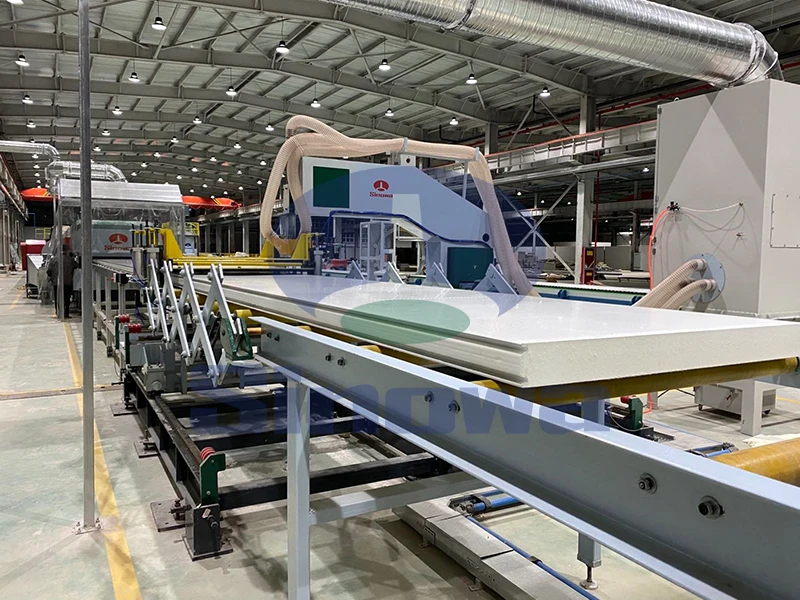
A standard polyurethane sandwich panel production line is a remarkable feat of industrial engineering, converting raw steel coils, liquid chemicals, and high-pressure injection systems into the insulated composite panels that sheath modern cold-storage warehouses, cleanrooms, and building envelopes. Yet the very features that make this line productive also make it one of the more hazardous environments in modern manufacturing. The process unites heavy metal handling equipment, high-temperature curing zones, pressurized chemical delivery systems, continuous conveying machinery, and a rotating array of cutting and stacking devices, all running in near-total synchrony. Because the line rarely stops, the potential for injury is continuous, and the protection of human operators depends on a layered architecture of mechanical, electrical, pneumatic, and procedural safeguards. Understanding these protection devices is essential not merely for compliance, but for the simple reason that a single unguarded moment on such a line can result in crushed limbs, severe burns, chemical exposure, or worse. This article examines the principal safety protection devices that are routinely equipped on a standard polyurethane sandwich panel line, organized around the core hazards they are designed to control.
The first and most visible family of protection devices addresses the fundamental danger of moving machinery: mechanical guarding and physical barriers. Throughout the line, rotating rollers, chain drives, gearboxes, and conveyor belts are enclosed within fixed guards made of steel sheet, perforated mesh, or transparent polycarbonate. These fixed guards are designed so that they cannot be removed without the use of tools, and their openings are sized so that fingers, hands, and even loose clothing cannot reach the danger zones behind them. Where an operator must access a section for adjustment or cleaning, hinged or sliding guards are fitted with safety interlocks. These interlocks are mechanical or electromechanical switches that immediately cut power to the drive motors the moment a guard is opened, before a hand can physically enter the hazardous area. In many modern installations the interlocks are reinforced with position-monitoring devices that distinguish between a guard that is merely closed and one that is genuinely latched, thereby preventing the machine from restarting while a guard sits loosely in place. Along the long double-belt conveyor, where the upper and lower belts press the panel between heated platens, protective rails and trip wires run the full length of the machine. A light pull on a trip wire or a small lateral displacement of a rail halts the entire conveyor instantly, providing a continuous line of defense that no single fixed guard could ever cover.
Around the high-speed cutting, trimming, and stacking stations, the protection strategy shifts from physical guarding to sophisticated sensing and detection devices. Panel saws and circular trimming blades, which operate at extremely high rotational speeds, are surrounded by enclosures that automatically lock during the cutting cycle. The entry and exit openings of these enclosures are monitored by light curtains—arrays of infrared beams that project across the opening. When any beam is broken by an operator's hand, arm, or torso, the safety relay instantly commands the blade to stop or to retract to a safe rest position. These light curtains are classified as active optoelectronic protective devices, and their resolution is chosen to match the smallest body part that could realistically enter the danger zone, with finer resolution for openings that might admit a finger and coarser resolution for areas reachable only by a whole arm. Complementing the light curtains are safety laser scanners, which sweep a two-dimensional protective field across a floor-level area, such as the region around a robotic panel stacker. When the scanner detects an intruding object within its field, it not only stops the robot but can also reduce the robot's speed before full stop, allowing the machine to decelerate gracefully rather than jerk to a halt in a way that could topple a partially stacked panel. The use of redundant sensing—for example, two independent channels of signal processing that must agree before a safety output is released—ensures that a single electronic failure cannot silently disable the protection.
Equally critical, and often overlooked, is the family of emergency control devices that put stopping authority directly into the hands of the operator. Emergency stop buttons, identified by their distinctive mushroom-shaped red actuators on yellow housings, are distributed at regular intervals along the entire length of the line, at every operator workstation, at the control panel, and at each loading and unloading point. These buttons are wired into a hard-wired emergency stop circuit that is independent of the programmable logic controller, meaning that even if the control software fails, the emergency stop still functions. The circuit is designed to be fail-safe: a broken wire, a loose connection, or a malfunctioning relay in the circuit causes the machine to stop rather than to continue running dangerously. When an emergency stop is activated, the effect is not a gentle ramp-down but an immediate removal of power to all hazardous motion, including the conveyor drives, the cutting blades, the presses, and the pneumatic actuators. It is worth noting that the emergency stop does not simply disconnect power to everything; it is carefully engineered so that certain devices, such as locks holding a mold closed, are released to a safe position while others, like a blade, are braked. Beyond the emergency stop, the line is equipped with a full stop-and-restart protocol requiring a deliberate reset action at the control panel, a visual and audible warning before any restart, and a scanning of the entire line by the operator to confirm that no one is in a hazardous position. This procedural layer, though not a physical device, is inseparable from the effectiveness of the emergency controls.
The polyurethane chemistry itself introduces hazards that mechanical guards cannot address, and these are managed by a distinct set of protection devices centered on temperature, pressure, and chemical containment. The liquid raw materials—polyols, isocyanates, and blowing agents—are stored in temperature-controlled tanks and pumped through heated lines to the high-pressure mixing head, where they are combined at pressures that can reach extremely high values. This mixing head is the heart of the process and one of its most dangerous components. Every high-pressure pump and the mixing head are protected by pressure relief valves and burst discs that open to vent excess pressure safely into a containment system rather than allowing a line to rupture catastrophically. Thermal protection devices monitor the temperature of the heaters that keep the chemicals fluid; a runaway temperature condition triggers both an audible alarm and an automatic shutdown of the heating elements before the chemicals can decompose, foam uncontrollably, or generate hazardous fumes. Ventilation is itself a protection device: the mixing area, the curing zone, and the area around the panel exit are equipped with exhaust hoods and continuous air monitoring sensors that detect airborne isocyanate concentrations and trigger alarms when levels approach unsafe thresholds. In the event of a chemical spill, the line is surrounded by containment curbs and the floor drains into a neutralization sump, preventing hazardous liquids from spreading to drains or to other parts of the facility. The protection here is thus not a single device but a coordinated system of pressure control, thermal control, air monitoring, and containment that recognizes the chemical process as a hazard source in its own right.
Fire and explosion protection constitute another essential layer, because polyurethane chemistry, the blowing agents used, and the heat of the curing process combine to create a real fire risk. Fire detection devices, including heat detectors and smoke detectors, are installed throughout the line, with particular density in the curing oven and the foam-mixing areas where combustible materials and ignition sources coexist. These detectors are linked to an automatic suppression system, typically a network of sprinklers or specialized extinguishing nozzles positioned to flood the affected zone. Because water can react dangerously with some chemicals, the suppression medium is selected to be compatible with the materials present, and flame detectors may be used in areas where a fire could develop faster than heat or smoke detection could catch it. Isolation dampers and fire doors are fitted at intervals along the line and in the wall openings through which panels pass, so that a fire in one section can be contained and prevented from spreading to the rest of the plant. The line is also electrically engineered for safety in these zones: all electrical equipment in areas where flammable vapors may accumulate is designed to prevent arcing, and static electricity—a significant ignition hazard with foaming materials—is controlled through grounding straps on the conveying equipment and anti-static measures on the rollers. In a properly configured line, a fire event triggers a cascade that begins with detection, proceeds to suppression, and simultaneously activates alarms and the orderly shutdown of ventilation fans that would otherwise feed the fire with oxygen.
Electrical safety protection devices form a quieter but no less vital layer of the overall system. Every motor, heater, and control circuit is protected by circuit breakers and residual current devices that trip when an electrical fault occurs, preventing electrical fires and protecting operators from electric shock. The entire line is grounded through a comprehensive earthing system, and exposed conductive parts that an operator might touch are bonded to earth so that a fault cannot raise them to a dangerous potential. Motor overload protection devices monitor the current drawn by each drive and stop the motor if it is mechanically overloaded, protecting both the equipment and the operator from the consequences of a jammed conveyor or a blocked roller. The control system itself is protected by safety relays and safety-rated programmable logic controllers that are designed to the principle of redundancy and self-checking: these devices continuously verify that their own safety functions work, and if a fault is detected in the safety circuitry, they force the machine into a safe state rather than allowing it to continue with a degraded safety function. This self-monitoring capability is a crucial distinction from ordinary control logic, because it means the protection does not silently fail. Periodic testing of the emergency stop circuits and the sensing devices is itself mandated by the safe operating procedure, and the results are recorded, so that the protection devices remain effective over the long service life of the line.
The protection story is completed by the devices and practices that safeguard people during maintenance, a time when machines are partially dismantled and normal guards are necessarily removed. Here the central protection device is the lockout and tagout system: each energy-isolating device—the main electrical disconnect, the pneumatic supply valves, the hydraulic isolation points—is fitted with a hasp that can be secured with multiple padlocks. Before any maintenance begins, the responsible person shuts down the energy sources, applies personal locks, and attaches a written tag stating who is working and why. The physical lock is the real protection, because it makes it impossible for another person to restore energy while the maintenance worker is inside the machine. In addition, pneumatic systems are equipped with residual pressure release valves and stored energy bleed points, so that an operator can vent compressed air before disconnecting lines; hydraulic accumulators are similarly discharged or isolated. Interlocked access doors into the guarding enclosures prevent entry while the machine retains energy, and two-hand control devices—which require the simultaneous pressing of two widely separated buttons—are used on machines where an operator must be in proximity to a press, guaranteeing that both hands are committed to the controls and cannot be inside the danger zone. This combination of physical locks, energy isolation, and interlocking ensures that the most dangerous phase of a machine's life, the maintenance phase, is conducted with the same rigor as its operation.
Finally, it must be emphasized that no protection device is effective in isolation, and the true safety architecture of a polyurethane sandwich panel line rests on the integration of these devices with human behavior. Every guard, interlock, light curtain, and lockout point is only as strong as the training of the people who operate and maintain the line. Operators must be trained not merely to know where the emergency stop buttons are, but to understand why the interlocks exist and why bypassing a guard, even temporarily and for good reason, is one of the most dangerous acts possible on the line. The devices themselves are designed to be difficult to defeat, but a determined or careless operator can still override them, and so administrative controls—clear operating procedures, scheduled safety inspections, documented testing of the protective devices, and a culture in which stopping the line to resolve a hazard is always encouraged—complete the protection system. In practice, the most effective lines are those where the physical protection devices are complemented by an equally disciplined approach to their maintenance and use. A light curtain that is not cleaned, a guard that is removed and not replaced, an emergency stop that is never tested, or a lockout that is hurriedly skipped all represent silent failures that no amount of hardware can prevent. The standard polyurethane sandwich panel line, therefore, is protected not by any single device but by the thoughtful, redundant, and human-supported combination of mechanical guarding, sensing systems, emergency controls, chemical and fire protection, electrical safeguards, and maintenance isolation, working together to make an inherently hazardous process as safe as humanly possible.
Tags: pu sandwich panel line, pu sandwich panel line manufacturer, pu sandwich panel line supplier, china pu sandwich panel line, pu sandwich panel line for sale