What Is The Price Range Of A Complete PU Sandwich Panel Machine?
Publication Date: Oct 12, 2026
The price range of a complete PU sandwich panel machine varies significantly based on automation level, production capacity, functional configuration, equipment customization, and core component quality, with segmented pricing for entry-level semi-automatic, mid-range standard automatic, and high-end fully intelligent production lines to suit different small, medium, and large-scale manufacturing demands.
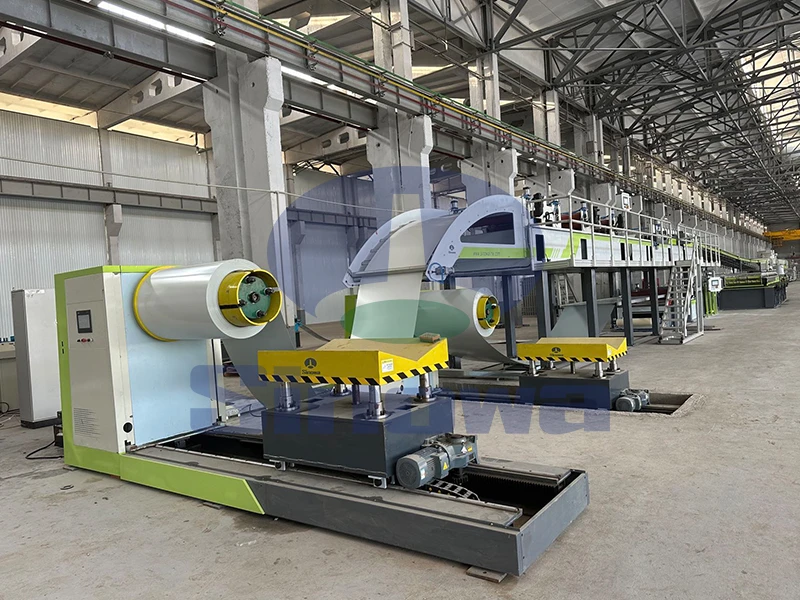
Automation degree stands as the core factor that shapes the overall price tier of complete PU sandwich panel machine sets. Semi-automatic machine configurations, which require partial manual intervention for material feeding, foam pouring, and panel cutting processes, occupy the lower end of the market spectrum. These simplified production lines retain essential molding and compounding functions but omit intelligent control systems and automatic correction modules, making them ideal for small-scale processing factories with low daily output requirements. In contrast, fully automatic production lines integrate continuous feeding, precise PU foam injection, constant-temperature pressing, automatic trimming, and finished product stacking into one streamlined workflow, eliminating most manual operations. The higher the automation level, the more sophisticated the embedded control systems and servo drive components, which directly elevates the overall equipment cost and places such units in the mid-to-high price bracket of the market.
Production capacity is another decisive factor influencing the price positioning of complete PU sandwich panel machines. Equipment designed for low-volume production features smaller molding widths, slower line speeds, and simplified structural frameworks, reducing manufacturing costs and market pricing. Such machines are suitable for startup enterprises or regional small-batch customization businesses that do not require high daily output. Medium-capacity models optimize line running speed and molding efficiency, balancing stable operation and moderate output to meet the mainstream production needs of most mid-sized manufacturers, forming the most cost-effective mid-price segment in the market. High-capacity industrial-grade production lines adopt enhanced structural designs, high-power drive systems, and continuous cyclic production modes, supporting long-hour uninterrupted operation and large-batch panel manufacturing. The upgraded mechanical structures and power configurations of high-output equipment greatly increase production costs, corresponding to the top-tier price range of complete machine sets.
Functional configuration diversity creates distinct price gradients for PU sandwich panel machine packages. Basic complete machine sets only support the production of conventional single-specification PU sandwich panels with fixed thickness and width parameters, lacking adjustable structural parts and multi-functional modules. These minimally configured units focus on core production functions with no redundant auxiliary designs, keeping overall costs relatively low. Mid-tier equipment adds adjustable thickness molding modules, multi-angle cutting components, and improved foam mixing systems, enabling the production of diversified panel specifications for wall and roof applications. The addition of these practical functional parts moderately raises the total equipment cost. High-end customized machine sets integrate multi-material compatibility functions, supporting the compounding of different surface materials and special PU foam formulas, along with intelligent defect detection and automatic parameter adjustment functions. The rich extended functions and customized modules of premium equipment push its overall cost to the highest market tier.
Core component quality and brand positioning effectively differentiate the price levels of complete PU sandwich panel machines. Machines equipped with ordinary standard motors, conventional hydraulic systems, and common electrical control parts have lower component procurement costs, resulting in competitive market pricing for cost-sensitive buyers. These standard components meet basic production stability requirements for ordinary processing scenarios. Equipment fitted with high-precision servo motors, imported hydraulic assemblies, and stable intelligent electrical control systems delivers more accurate molding precision, lower operation failure rates, and longer service life. High-quality core components undergo stricter production and testing processes, with higher procurement and assembly costs, driving up the total machine price. Additionally, machines with mature technical iteration and reliable operational stability carry higher market recognition, forming a reasonable price gap with low-end minimally configured equipment in the same capacity range.
Customization requirements are a key variable that changes the final pricing of complete PU sandwich panel machine solutions. Standard standardized machine sets with fixed specifications and unified configurations are mass-produced by manufacturers, with mature production processes and controlled costs, maintaining stable and moderate market prices. They are the most mainstream and cost-effective choice for most standardized production enterprises. Once personalized customization is required, such as special molding sizes, improved foam insulation performance configurations, enhanced anti-corrosion structural designs, or matched automated packaging auxiliary lines, manufacturers need to adjust production molds, optimize mechanical structures, and add customized functional modules. These personalized modifications require additional design, processing, and debugging costs, leading to a noticeable increase in the overall price of the complete machine set. The more complex the customization demands, the higher the incremental cost of the equipment.
Auxiliary equipment matching scope further expands the price span of complete PU sandwich panel machine systems. Basic complete machine configurations only include core production equipment such as molding hosts, foam injection devices, and pressing systems, with no supporting auxiliary equipment, resulting in the lowest overall package price. Buyers of basic configurations need to purchase auxiliary tools separately according to production needs. Mid-range complete machine packages add essential auxiliary equipment including automatic material racks, waste recycling devices, and finished product conveying systems, forming a relatively complete closed-loop production system. The complete supporting configuration improves production efficiency and saves subsequent matching costs, with a corresponding moderate increase in total pricing. High-end full-set solutions integrate fully matched auxiliary systems such as automatic cleaning equipment, intelligent sorting devices, and remote monitoring modules, realizing unmanned streamlined production. The comprehensive auxiliary configuration greatly enriches the equipment system and raises the overall market price of the complete machine set.
Technical iteration and performance optimization also drive price differences in PU sandwich panel machines. Early-generation conventional equipment adopts traditional mechanical structures and fixed operating programs, with single production performance and ordinary operational stability. Due to mature and simplified production processes, the pricing of old-generation models is relatively low, suitable for buyers with low production precision and efficiency requirements. Newly iterated machine models optimize mechanical transmission structures, upgrade foam mixing and pouring technologies, and adopt more precise molding control logic. The optimized technical design improves panel molding quality, reduces material waste, and enhances equipment operational stability and energy-saving performance. The R&D and process upgrade costs of new technologies are reflected in equipment pricing, making latest-generation machines fall into the mid-to-high price range. Top-tier cutting-edge models with innovative technological upgrades and intelligent optimization functions occupy the highest-end price segment of the market.
Operational stability and durability design affect the long-term value and pricing of complete PU sandwich panel machines. Low-priced entry-level equipment usually adopts lightweight structural designs and ordinary wear-resistant materials, reducing manufacturing costs but leading to higher wear and tear during long-term operation, shorter service life, and more frequent maintenance needs. Such equipment is positioned at the bottom of the market price range for users with short-term or low-frequency production needs. Mid-priced standard equipment uses thickened structural materials and enhanced wear-resistant parts, with optimized overall structural stability, stable long-term operation, low failure rates, and balanced service life and cost performance, covering the mainstream market demand. High-priced premium machines adopt heavy-duty industrial structural designs, high-strength anti-fatigue materials, and comprehensive anti-corrosion and wear-resistant treatments. They can adapt to harsh long-term high-load production environments, with ultra-low failure rates and extended service cycles, and their superior durability and stability support their high market pricing.
After-sales service and technical support packages correspond to different price tiers of PU sandwich panel machines. Low-end basic equipment is only equipped with simple after-sales guarantee services, with no professional technical guidance, remote debugging, or long-term maintenance support. The simplified service system reduces the additional cost of equipment sales, keeping the machine price at a low level. Mid-tier equipment includes complete basic after-sales services such as on-site installation, commissioning, and short-term technical training, providing basic operational support for buyers. The added service costs make its pricing moderately higher than entry-level models. High-end machine sets are matched with one-stop full-cycle services, including personalized installation debugging, long-term technical training, remote real-time monitoring, regular equipment maintenance, and fault emergency response. The comprehensive and professional after-sales system adds high-value service costs, making such complete machine sets rank in the high-price market segment.
Market supply and demand dynamics and equipment maturity subtly adjust the overall price range of PU sandwich panel machines. Mass-produced standardized equipment with mature market technology and sufficient market supply maintains transparent and stable pricing with small floating ranges. This type of equipment has homogeneous functional performance, and market competition keeps its price in a reasonable and affordable range for most buyers. Emerging functional equipment with innovative technologies and unique performance advantages has low market supply and high market demand in specific segmentation scenarios, resulting in relatively high market pricing. In addition, seasonal market demand changes and industry equipment iteration cycles will cause slight fluctuations in the price range of different tiers of complete machines. When new equipment is iterated, the price of old-generation models will appropriately decline, while newly launched upgraded equipment will maintain a higher initial market price, further enriching the overall price gradient of the product market.
Tags: pu sandwich panel machine, pu sandwich panel machine manufacturer, pu sandwich panel machine supplier, china pu sandwich panel machine, pu sandwich panel machine for sale