What Core Differences Exist Between PUR And PIR PU Sandwich Panel Machine Configurations?
Publication Date: Oct 13, 2026
Explore the core technical differences between PUR and PIR sandwich panel machine configurations, focusing on reaction mechanisms, temperature controls, and formulation handling.
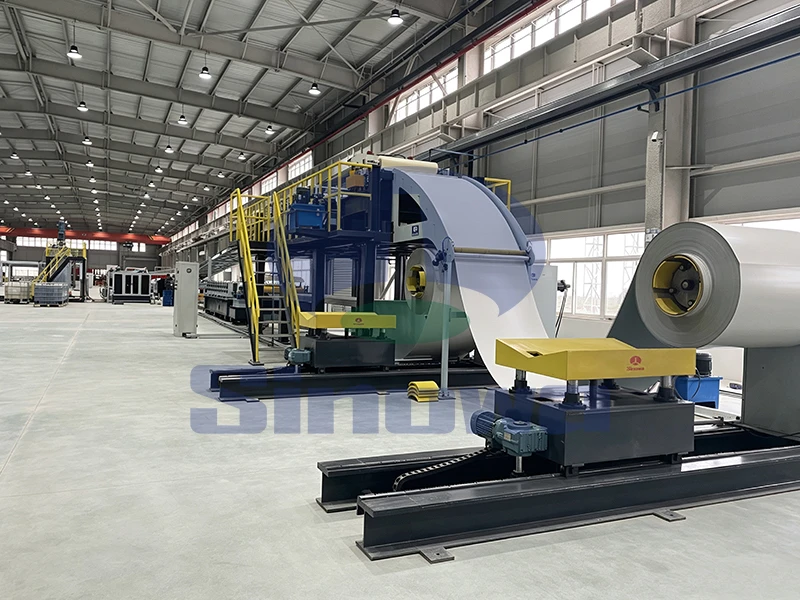
The fundamental divergence between machines designed for Polyurethane (PUR) and Polyisocyanurate (PIR) sandwich panels lies in the chemical reaction management and the specific thermal conditions required during the continuous lamination process. While both materials utilize similar base components—isocyanates and polyols—the machinery must be configured differently to accommodate the distinct stoichiometry and curing behaviors of each. A machine optimized for PUR typically operates with a focus on flexibility and adhesion, whereas a PIR configuration is engineered for high-temperature stability and rigid structural formation. This distinction dictates the design of the dosing units, the length of the heating zones, and the precision of the temperature control systems integrated into the production line.
One of the most critical differences is found in the dosing and mixing units. PIR production requires a significantly higher ratio of isocyanate to polyol compared to PUR. Consequently, PIR-capable machines often require high-precision, high-pressure metering pumps to handle this specific chemical balance accurately. The mixing heads must be designed to manage the rapid viscosity changes associated with the PIR trimerization reaction. In contrast, PUR machine configurations generally operate with a lower isocyanate index, allowing for slightly different mixing dynamics. Upgrading a standard PUR line to handle PIR often necessitates retrofitting the metering system to ensure the strict ratios required for fire-retardant properties are maintained without fluctuation.
Temperature control within the mixing head and the distribution system represents another major configuration difference. The chemical reaction to create PIR foam is highly exothermic and requires precise thermal management to prevent premature curing or "burning" within the lines. Machines configured for PIR usually feature more advanced temperature regulation systems in the dosing units to keep the reactive mixture stable before it is dispensed. PUR configurations, while still requiring temperature control, generally operate within a more forgiving thermal window. The hoses and heated lines in a PIR setup are often insulated more heavily to maintain consistent viscosity, ensuring the mixture flows smoothly onto the bottom facing sheet.
The curing profile along the double belt press differs substantially between the two configurations. PIR foam requires a higher temperature and often a longer curing zone to complete the trimerization reaction effectively. Therefore, a machine designed for PIR will typically have a longer heated platen section or more sophisticated heating zones compared to a standard PUR machine. This ensures the foam achieves its characteristic rigid, cross-linked structure. If a machine is configured primarily for PUR, the heating zones might be shorter, as the curing mechanism relies more on standard polyurethane formation which can set at slightly lower temperatures or faster rates depending on the catalyst system used.
Formulation handling capabilities also dictate machine configuration differences. PIR formulations are often more sensitive to environmental changes and require precise component conditioning. Advanced PIR machines include specialized conditioning units for the polyol and isocyanate tanks to ensure they enter the mixing head at the exact required temperature. PUR machines may have simpler conditioning requirements. Furthermore, the additives used to promote the trimerization reaction in PIR are corrosive and reactive; thus, the wetted parts of the machine—valves, pumps, and mixers—must often be constructed from specific stainless steel grades or treated materials to prevent degradation, a specification that is less critical for standard PUR lines.
The viscosity of the reacting mixture impacts the design of the distribution system on the lamination line. PIR mixtures tend to have a very fast cream time and rapid viscosity build-up. To counter this, PIR machine configurations often utilize multi-stream distribution heads or specialized oscillating nozzles that can spread the mixture evenly across the width of the panel very quickly before it begins to rise. PUR mixtures generally offer a longer cream time, allowing for different distribution head geometries. A machine that cannot switch distribution patterns or speeds effectively may struggle to produce uniform PIR panels, leading to density variations across the board width.
Pressure control within the double belt press is another area where configurations diverge. Because PIR foam generates significant expansion pressure and requires high heat, the press system must be robust enough to withstand these forces while maintaining precise thickness control. The hydraulic or pneumatic systems in PIR-capable machines are often tuned to handle higher internal pressures without deflecting the steel belts. PUR foam expansion is generally less aggressive in terms of thermal pressure. Therefore, a machine configured strictly for PUR might not have the same heavy-duty press calibration required for high-density PIR production, potentially leading to thickness inconsistencies if PIR is run on it without adjustment.
Safety and ventilation systems are also configured differently due to the chemical nature of the processes. The trimerization catalysts used in PIR and the higher operating temperatures can release different volatile byproducts compared to PUR production. Machines designed for PIR often require more powerful extraction and ventilation systems at the discharge end of the press to manage fumes and ensure a safe working environment. The exhaust ports and filtration units are sized to handle the higher thermal load and specific off-gassing characteristics of the PIR curing process, ensuring that the finished panels are free from defects caused by trapped gases.
Flexibility in machine configuration is a key consideration for manufacturers. Some modern lines are designed as "hybrid" systems, capable of switching between PUR and PIR. However, this requires complex variable frequency drives on pumps, adjustable heating zones, and interchangeable mixing heads. A dedicated PUR machine lacks the thermal capacity and metering range for PIR, while a dedicated PIR machine might be over-engineered and less energy-efficient for simple PUR runs. Understanding these configuration nuances is vital for optimizing production efficiency, as running the wrong formulation on a mismatched line leads to wasted material and subpar thermal insulation properties.
Ultimately, the choice between a PUR and PIR machine configuration depends on the intended application of the sandwich panels. PIR configurations are essential for producing panels with superior fire resistance and thermal stability, requiring machinery that prioritizes high heat and precise chemical ratios. PUR configurations are optimized for flexibility and general insulation applications, focusing on adhesion and consistent foam rise. The mechanical differences—from the hardness of the pump seals to the length of the heating tunnel—are all engineered to facilitate the specific molecular architecture of the resulting foam, ensuring the final construction material meets the rigorous demands of the building industry.
Tags: sandwich panel machine, sandwich panel machine manufacturer, sandwich panel machine supplier, china sandwich panel machine, sandwich panel machine for sale