What Is The Difference Between Continuous And Discontinuous PU Sandwich Panel Line?
Publication Date: Oct 13, 2026
Discover the key differences between continuous and discontinuous PU sandwich panel lines—from speed and output to flexibility, cost, and quality.
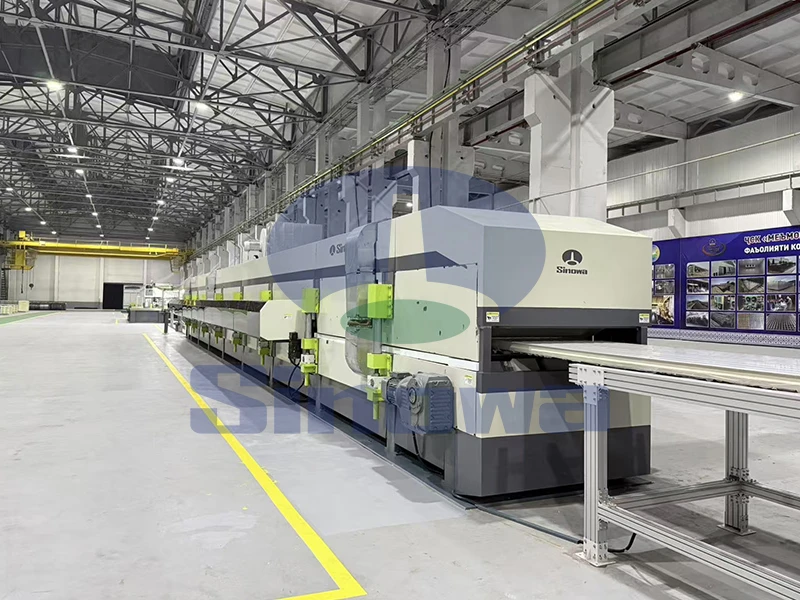
A PU sandwich panel line is the industrial system that takes two facing sheets—typically metal skins—and injects or forms a layer of rigid polyurethane foam between them, producing an insulated panel used in walls, roofs, cold storage, and clean rooms. Two fundamentally different engineering approaches dominate this field: the continuous line and the discontinuous (or batch) line. Understanding the difference between them is essential because it determines not only how many panels you can produce per shift, but also what panel types you can make, how much labor and floor space you need, how consistent your finished product will be, and what kind of order book your operation realistically supports. The continuous line is, as the name suggests, a long integrated machine in which the two metal faces are unwound, the foam is dispensed, and the whole sandwich moves through a heating or curing zone on a conveyor before being cut to length—all in one uninterrupted flow. The discontinuous line, by contrast, works like a mold press: faces are placed in an open mold, foam is poured or injected, the mold closes, and the panel cures in place before being removed. Each approach has its own logic, its own cost structure, and its own sweet spot in the market, and the choice between them is rarely a matter of one being universally better than the other.
The most immediately visible difference between the two systems is production speed and output capacity. A continuous line runs steadily at a fixed line speed that can typically reach several meters per minute, and because the panel is being formed, cured, and cut while the skins keep moving, the daily output is measured in thousands of square meters rather than hundreds. This high throughput comes from the fact that the foaming, expansion, and setting of the polyurethane happen in a controlled tunnel as the panel travels, so there is no waiting around for a mold to open or close. A discontinuous line, on the other hand, is limited by the cycle time of each press: you must load the bottom skin, apply the foam chemicals, place the top skin, close the mold, wait for the foam to rise and cure, open the mold, and remove the finished panel before the next batch can begin. Even with multiple molds running in parallel, the effective output per operator per hour is far lower than on a continuous line. For a plant that needs to supply large construction projects, distribution centers, or cold-chain warehouses where panel volumes run into tens of thousands of square meters per month, the continuous line is essentially the only economical choice. For a smaller workshop producing bespoke panels in moderate volumes, the discontinuous line can still be perfectly adequate.
The second major difference is panel consistency and dimensional accuracy. On a continuous line, the thickness of the panel is controlled by the distance between two steel belts or forming rollers, which remain fixed along the entire length of the machine. This means that every panel coming off the line has the same core thickness, the same flatness, and the same density profile, within very tight tolerances. The chemical mixing ratio, the foam injection rate, and the temperature in the curing tunnel are all tuned to a steady state, so the physical properties—thermal conductivity, compressive strength, adhesive bond between foam and metal—are reproducible panel after panel. On a discontinuous line, the foam is free to rise inside a closed mold, and the resulting density can vary depending on how evenly the chemicals are dispensed, how fast the mold closes, and how the foam flows around the perimeter. Skilled operators can compensate for much of this variation, but a small batch line will generally struggle to match the uniformity of a well-tuned continuous line. This is why projects that demand predictable thermal performance—like freezer rooms or pharmaceutical cleanrooms—often specify panels from continuous lines, even when the price is higher.
A third critical distinction is flexibility in panel geometry, thickness, and facing material. Here the discontinuous line often wins. Because each panel is formed in its own mold, you can change panel length, width, thickness, and even facing type simply by adjusting the mold spacing, swapping the skins, or pouring a different formulation. You can produce short panels, long panels, curved panels, trapezoidal profiles, or panels with special edge treatments without reconfiguring an entire kilometer-long machine. Thickness changes that might take a continuous line several hours to set up can be done on a discontinuous line in minutes. This makes the discontinuous line ideal for custom orders, prototype runs, renovations, and any situation where the customer needs an unusual size or a special insulation value. A continuous line, by contrast, is highly optimized for a limited set of standard dimensions—usually a fixed width and a narrow range of thicknesses—and changing over between products is a slow, costly process. The continuous line is efficient only when you run long production campaigns of the same panel type, whereas the discontinuous line thrives on variety and short runs.
The fourth difference is labor and operator skill. A continuous line is a highly automated integrated system that requires a relatively small crew—typically a few operators to load coils, monitor the control panel, and handle finished panels. Because the process is continuous and largely governed by automated sensors and programmable logic controllers, the skill set is more about monitoring, troubleshooting, and quality control than about hands-on molding. However, when something goes wrong on a continuous line—say, a coil splice fails or the foam ratio drifts—entire meters of panel can be wasted before the issue is caught, so the operators need to be well trained. A discontinuous line is more labor-intensive per square meter: every panel needs someone to load the mold, pour the chemicals, close the press, and unload the product. This means you need a larger workforce, and the quality of the final panel depends heavily on the experience and consistency of each individual molder. In regions where labor is inexpensive and available, a discontinuous line can remain economically attractive even at moderate volumes. In regions with higher labor costs, the automation advantage of the continuous line becomes a decisive factor.
Fifth, the two systems differ dramatically in the floor space and plant infrastructure they require. A continuous line is a long, linear machine—often sixty to over a hundred meters in length—that needs a tall, clear building with sufficient clearance at both ends for decoiling and for the cut-panel exit. It also requires dedicated systems for chemical storage, high-pressure mixing equipment, exhaust ventilation for the fumes generated during foaming, and a cooling or heating tunnel. The installation itself is a major project that involves leveling the machine, aligning the belts, and connecting all the auxiliary systems. A discontinuous line, by comparison, is compact: a few molds or presses, a foam dispensing station, and some space for loading and unloading. It can fit into a much smaller workshop, and a new mold can be added without reconfiguring the whole plant. This lower space requirement makes the discontinuous line accessible to smaller fabricators, while the continuous line is realistically only an option for medium-to-large manufacturers who already have a suitable industrial building and the capital to invest.
The sixth difference is energy consumption and environmental control. A continuous line runs its heating or curing zone continuously once it reaches operating temperature, and because it is producing at high output, the energy used per square meter of finished panel is typically lower. The high-pressure mixing head operates at a steady cycle, and the exhaust system is sized for a predictable fume load. A discontinuous line, however, cycles on and off with each mold, and each pour releases a burst of foam gases; the ventilation per square meter can be higher because the process is intermittent. Also, because discontinuous production often involves more manual handling of chemicals and open pouring, fugitive emissions can be harder to contain. Modern continuous lines are engineered with closed-loop exhaust, heat recovery, and precision dosing that reduce both energy use and chemical waste. This is an increasingly important consideration as environmental regulations and corporate sustainability expectations tighten, even though the specific regulatory requirements vary by region and are not the focus here.
Seventh, the two approaches differ in the range of foam formulations and facing surfaces they can accommodate. A continuous line is tuned for fast-reacting polyol-isocyanate systems that rise and set within the time the panel travels through the tunnel. This favors formulations that cure quickly and bond well to metal faces, but it limits the ability to use very slow, high-viscosity, or specialty foams. It also typically uses flat or lightly profiled steel coils as faces. A discontinuous line, because it allows the foam to rise at its own pace inside the mold, can use a wider range of formulations, including slower-reacting systems, higher-density foams, and even alternative facing materials such as plywood, cement boards, or plastics. This makes the discontinuous line useful for specialized applications—decorative panels, fire-rated assemblies, panels with wood or laminate faces—where the continuous line's standard metal skin and fast-cure system would not be suitable.
Eighth, the two systems differ in how they handle panel edge quality and detail work. On a continuous line, the side joints—usually a tongue-and-groove or male-female profile—are formed by the edge rollers as the panel moves, and the cut at the end is made by a flying saw. The result is a clean, repeatable joint, but the range of available edge profiles is limited to what the forming rollers can produce. On a discontinuous line, the mold itself defines the edges, so you can create more complex profiles, include edge inserts, or apply special sealants or gaskets in the mold. For projects that require custom corner details, integrated flashing, or unusual joint geometry, the discontinuous mold offers more design freedom. Conversely, the continuous line's flying cut produces perfectly square, straight ends with no additional finishing, while a discontinuous panel may need light trimming before it is ready to install.
Finally, the two systems differ in their economic logic over the full product lifecycle. A continuous line carries a much higher upfront investment and requires a steady stream of large, repeat orders to amortize that investment, but once running, its cost per square meter is low because of high speed, low labor content, and material efficiency. A discontinuous line has a much lower entry cost, but its cost per square meter is higher because of slower cycle time, more labor, and more waste from setup and trim. Over time, a continuous line is typically the more profitable option for a plant with a stable high-volume customer base, while a discontinuous line is the more resilient option for a plant that serves a varied, custom, or regional market. Many manufacturers actually start with a discontinuous line to build their customer base and product range, then add a continuous line when their volume grows large enough to justify it. In practice, the difference between the two is not so much about quality versus inferiority as it is about matching the production method to the order book: long runs of standard panels favor continuous lines, while short runs, custom sizes, and special materials favor discontinuous ones.
Tags: continuous pu sandwich panel line, continuous pu sandwich panel line manufacturer, continuous pu sandwich panel line supplier, china continuous pu sandwich panel line, continuous pu sandwich panel line for sale