Can A Single Sandwich Panel Machine Produce Different Types Of Sandwich Panels?
Publication Date: Oct 26, 2026
One flexible line can vary panel thickness, profile & skins within the same core system, but foamed core and board core panels need different equipment setups.
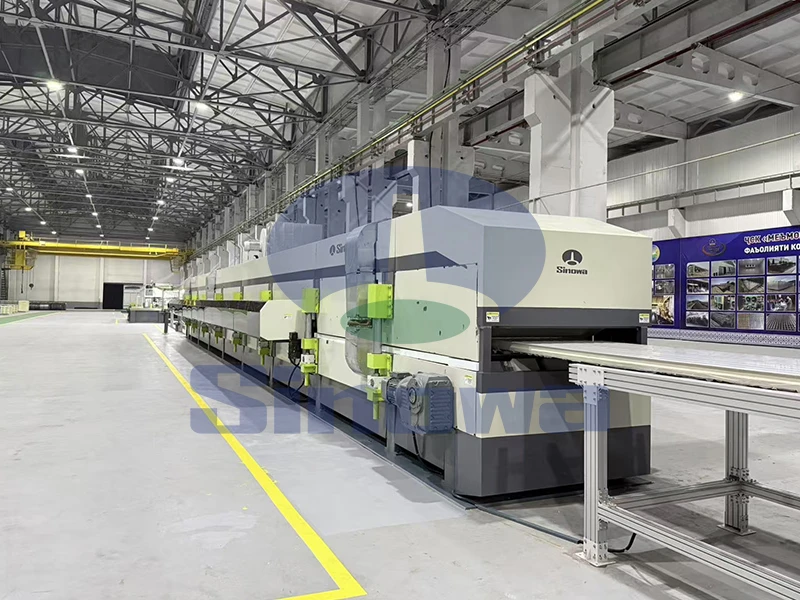
In modern building construction and cold-chain logistics, sandwich panels have become one of the most widely used enclosure materials, prized for their combination of structural rigidity, thermal insulation, and rapid installation. From factory walls and warehouse roofs to cold storage rooms and clean workshops, these composite panels dominate the landscape of contemporary industrial architecture. For manufacturers, contractors, and investors planning to enter or expand in this field, one of the most frequently asked questions is whether a single sandwich panel machine—one production line, one set of equipment—can produce multiple different types of sandwich panels. The short answer is yes, but the reality is considerably more nuanced than a simple yes or no. The versatility of a sandwich panel production line depends on a range of factors including the panel's core material, the thickness of the metal facings, the profile geometry of the surface, the width of the finished board, and the specific forming, gluing, pressing, and cutting systems integrated into the line. Understanding how these variables interact determines whether a single machine can serve as a flexible multi-product platform or remains effectively locked into a narrow range of output.
To appreciate the limits and possibilities of a single machine, it helps to first understand what a sandwich panel actually is. A sandwich panel consists of two thin, rigid outer skins—typically made of coated steel, aluminum, or occasionally stainless steel—bonded to a thicker, lighter core that provides insulation and structural depth. The core can be made of many materials, but in the industrial panel market it is most commonly polyurethane (PU) foam, polyisocyanurate (PIR) foam, expanded polystyrene (EPS), extruded polystyrene (XPS), mineral wool (rock wool), or glass wool. Each core material confers a different set of properties: PU and PIR offer excellent insulation with relatively thin profiles and strong adhesion to metal facings, which makes them ideal for continuous foaming production; EPS and XPS are lower in density and cheaper, but their adhesion to metal depends on the glue system used; mineral wool and glass wool provide outstanding fire resistance and acoustic performance but are denser, more abrasive, and require a fundamentally different production approach because they are supplied as pre-formed battens rather than injected as liquid foam. These core differences are the first and most decisive factor in determining whether one machine can handle multiple panel types, because the forming process for a foamed panel and the lamination process for a board-based core are mechanically distinct.
The most flexible single machines on the market are continuous lamination lines designed around the principle of interchangeable modules. In such a system, the steel coil is decoiled, flattened, and fed through a roll-forming station where the facings are shaped into the desired profile—micro-ribbed, flat, trapezoidal, or custom decorative patterns. After forming, the metal sheets pass through a gluing or foaming station where the core is applied, then through a double-belt or roller press where heat, pressure, and precise thickness control bond the layers together, and finally through a cutting station where the continuous board is trimmed to length. In this architecture, many components can be adjusted or swapped to accommodate different products. The width of the line is fixed by the mechanical design, usually falling within a standard range, but the thickness of the finished panel can be varied over a wide band by adjusting the gap of the press, the metering of the foam, or the thickness of the pre-formed core board. Similarly, the coil thickness of the facings can be changed by reconfiguring the feeding and forming rollers, and the profile of the surface can be altered by exchanging the forming roller sets. As a result, a well-designed continuous line can produce a family of panels that share the same core technology but differ in thickness, facing gauge, and surface profile.
However, the ability to switch core materials within a single line is the crucial dividing line between genuinely versatile machines and those that are flexible only within one material family. A continuous PU/PIR foaming line operates on the principle of injecting a liquid polyol and isocyanate mixture between the two moving metal facings, allowing the foam to expand and cure in a controlled environment. This process is efficient and creates an excellent bond because the foam adheres directly to the metal. But it is practically impossible to feed a rigid pre-formed core such as mineral wool, EPS, or glass wool through the same continuous foaming equipment, because the foam-injection hardware, the press configuration, and the heat profile are all designed for liquid chemical systems. Conversely, a lamination line built for board cores operates on a different principle: pre-formed insulation battens are laid between the two profiled metal skins, adhesive is applied to the metal surfaces, and the sandwich is consolidated under pressure. This process cannot accommodate injected foam cores, since there is no injection system and no chemical metering equipment. Consequently, in practice, most production facilities separate their lines by core type: one line for PU/PIR continuous foaming and another line for mineral wool or EPS laminating. A single machine, therefore, is rarely able to bridge the fundamental gap between foamed cores and pre-formed board cores without extensive re-engineering that would negate the economic advantage of having one line in the first place.
That said, within the foamed-core family and within the board-core family, a single machine can achieve impressive versatility through modular accessories and careful design. For example, a continuous PU/PIR line can usually be adapted to produce both standard flat-profile panels and micro-ribbed or lightly profiled panels simply by changing the forming rollers at the entrance of the line. Many manufacturers exploit this by offering a range of profiles from a single line, adjusting only the forming tooling and the associated guides. Thickness adjustment is even more straightforward: because the press gap is controlled by precision hydraulic or mechanical systems, the same line can produce panels ranging from roughly 40 millimeters to over 150 millimeters in thickness, depending on the specification of the double-belt press and the foam injection capacity. The width, by contrast, is essentially fixed once the line is built, although a small number of advanced lines can be mechanically re-gauged to shift between two or three standard widths. Even the facing material can vary, with the same line processing coated steel of different gauges and, in some configurations, aluminum skins, provided the forming tools and welding or joining systems are compatible. Thus, a single foaming line is a genuinely multi-product platform within its core-type boundary, able to supply panels for wall cladding, roofing, cold storage, and clean rooms simply by adjusting thickness, profile, and facing specifications.
For board-core lines, the versatility is somewhat different in character. Because the core is supplied as pre-formed boards from an external source, the line itself does not need to be as tightly integrated around a chemical process. This makes the equipment simpler in some ways but creates other constraints. The lamination line must accommodate the width, length, and thickness of the incoming core board, which means that changing the panel thickness requires changing the core board supplied to the line, while the metal forming and glue application systems adjust accordingly. The same machine can produce mineral wool panels, glass wool panels, EPS panels, and XPS panels, provided that the glue system is compatible with each core surface and the press can handle the varying density and compressibility of the different materials. In practice, this means a single laminating line can indeed produce multiple different types of sandwich panels across the entire board-core family, which is why such lines are often marketed as "universal lamination lines." The trade-off is that changing between core materials requires a certain amount of downtime for cleaning, tooling adjustment, and process parameter tuning, so efficient operators typically batch production by material type to minimize changeover losses.
The economic and operational implications of this flexibility deserve careful consideration, because the decision to invest in one versatile line versus several dedicated lines is not purely a technical question. A single multi-product machine reduces capital expenditure, saves floor space, and simplifies maintenance, spare-parts inventory, and operator training, since the personnel need to master only one equipment platform. For a manufacturer with moderate and fluctuating demand across several panel types, one flexible line can respond quickly to market changes, allowing the same asset to serve wall panels this month and cold-storage panels the next. On the other hand, every changeover carries hidden costs: production stops during reconfiguration, quality control must be re-established after each switch, and the risk of contamination between different core materials or adhesive systems can compromise product integrity. Moreover, a line that is optimized for one core type may deliver slightly lower output or less consistent quality when switched to another material, simply because its press parameters and heating profile represent a compromise rather than a perfect fit. For large-volume producers whose demand is stable and high for a single product, a dedicated line is almost always more economical than a jack-of-all-trades machine, because the dedicated line runs faster, more reliably, and with fewer interruptions.
There is also the matter of product quality and certification, which places a practical limit on how far versatility can be pushed. Even if a machine is mechanically capable of producing many different panel configurations, each distinct product—with its particular core material, thickness, and profile—must meet its own performance requirements in terms of insulation value, fire behavior, load-bearing capacity, and surface finish. Producing a panel that is merely dimensionally correct is not enough; it must perform reliably in service. This means that a manufacturer who wants to use one line for many product types must invest heavily in process control, testing, and quality assurance for each configuration, and must maintain disciplined changeover procedures to ensure that the adhesive bond, foam density, and thickness uniformity remain within specification across all the products the line can make. The result is that while a single machine can physically produce a wide array of sandwich panels, the practical number of products a manufacturer can offer with consistent quality and efficiency is usually more limited than the theoretical maximum, constrained by the operator's expertise, the quality-control regime, and the downtime budget allocated to changeovers.
In conclusion, the question of whether a single sandwich panel machine can produce different types of sandwich panels has a layered answer. Technically, yes: within a given core-technology family, one well-designed line can produce panels of varying thickness, facing gauge, surface profile, and, in the case of board-core lines, several different insulation materials. The principal hard boundary is the distinction between foamed cores such as PU and PIR and pre-formed board cores such as mineral wool and EPS, which require fundamentally different equipment architectures. Commercially, the answer is more qualified, because the value of a versatile line depends on the balance between capital savings and changeover costs, and between flexibility and the consistency that dedicated production provides. For many mid-sized manufacturers navigating variable demand, a single flexible machine is a rational and competitive choice; for high-volume producers of a standardized product, multiple dedicated lines often remain the better path. Ultimately, the best decision is not about whether one machine can do everything, but about matching the equipment's versatility to the manufacturer's product strategy, market demands, and quality aspirations—a calculation that rewards careful planning over simple enthusiasm for multifunctionality.
Tags: sandwich panel machine, sandwich panel machine manufacturer, sandwich panel machine supplier, china sandwich panel machine, sandwich panel machine for sale