How To Reduce Material Waste Of A Continuous PU Sandwich Panel Line?
Publication Date: Oct 26, 2026
Cut material waste on continuous PU sandwich panel production lines: practical tips for foam metering, trimming, process control, scrap recovery & operation optimization to cut raw material loss.
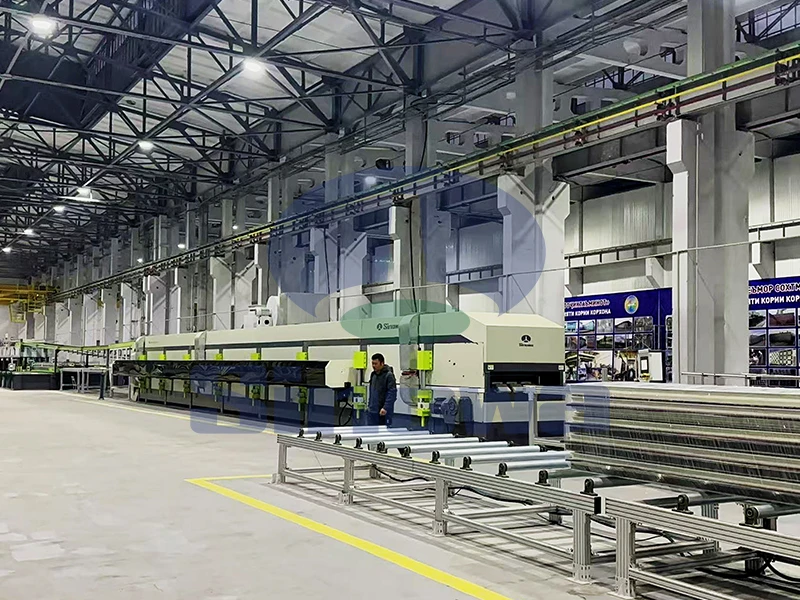
Reducing material waste on a continuous polyurethane sandwich panel line is a pursuit that touches nearly every stage of the manufacturing process, from the moment raw liquid chemicals enter the mixing head to the final trimming of a cured board. Because a continuous line operates around the clock, often producing panels of different thicknesses and widths in a single run, the difference between a disciplined operation and a lax one can be measured in tens of tons of wasted polymer per month. The opportunity is not merely economic; it is also environmental, since every kilogram of discarded polyurethane foam represents embedded energy, emitted greenhouse gases during production, and a disposal burden that grows heavier as environmental regulations tighten. The key insight is that waste reduction is not a single action but a system of interlocking controls, each reinforcing the others.
The most immediate and visible source of waste is the chemical dispensing system itself. In a continuous process, liquid polyol and isocyanate are pumped, heated, metered, and mixed at the mixing head before being laid down on the moving substrate. Small errors in ratio, temperature, or throughput accumulate over hours of production and become visible as off-spec foam, soft cores, or density variation. The first line of defense is rigorous metering accuracy, achieved through calibrated pumps and continuous flow monitoring rather than occasional spot checks. A drift of even a fraction of a percentage point in the mixing ratio, left uncorrected, can produce thousands of square meters of foam that is either too brittle or too flexible to meet functional requirements. Equally important is thermal control: if the two components are not held at their designed temperatures, the reactivity of the system changes, and the foam may rise too fast or too slowly, causing voids or collapse that force the board to be rejected. Modern metering systems with closed-loop control, backed by daily calibration against a certified reference, reduce this variability dramatically.
The mixing and dispensing stage also produces waste through purge cycles and startup and shutdown operations. Whenever a line stops, the mixing head must be purged with solvent to prevent the residual chemicals from curing and blocking the nozzles, and that purged material is almost always discarded. Similarly, every restart begins with a period during which the mixture may be off-ratio until the pumps stabilize, generating a run of unusable foam at the head of the board. Operators who understand this can take meaningful steps: scheduling stops and starts in deliberate batches, using buffer or flush recipes that are formulated to be recyclable, and capturing the off-spec head and tail sections separately so they can be reclaimed rather than mixed into general scrap. Some lines have even begun to design the purge sequence to reuse the solvent within a closed loop, and to route the initial and final meters of foam into a dedicated reclaim channel that feeds a granulation or rebonding operation.
Beyond the dispensing system, the geometry of the product itself offers substantial waste-reduction potential. Trimming the edges of a sandwich panel is a necessary step because the foam tends to overflow slightly at the sides during expansion, and the edges must be cut square and clean for proper joining at the installation site. The width of the trim, however, is a controllable variable. If the feed width and the foaming parameters are adjusted so that the excess is kept to a minimum while still guaranteeing full coverage of the facings, the amount of material cut away per panel drops noticeably. Over an entire production shift, reducing edge trim by even a few millimeters on both sides translates into a meaningful volume of saved foam and facing material. Achieving this requires careful coordination between the metering rate, the conveyor speed, and the width of the applied substrate, and it is a classic case where marginal adjustments, applied consistently, produce compound savings.
The cutting and finishing station is another area where waste commonly escapes attention. The crosscut saw trims the front and back ends of each panel to square and to length, and every cut produces sawdust and short off-cuts. Panels that must be cut to exact lengths will always generate some end trim, but the amount can be minimized through intelligent length planning. By grouping orders so that panels of similar length are produced in sequence, and by designing the cutting program to nest the required lengths within the available board without large leftover stubs, the number of wasted end sections falls. Some operations also recover the fine sawdust and feed it back as a filler into certain non-structural or rebond products, turning what was once a disposal problem into a minor raw material stream. Even the scheduling of cutting to match the natural length of the board, rather than forcing arbitrary lengths, can reduce both sawing time and scrap.
Quality control, paradoxically, is one of the most powerful waste-reduction levers. A panel that fails inspection at the end of the line has already consumed the full value of its raw materials, energy, and labor, and its loss represents the most expensive form of waste. The way to reduce this is to detect problems early, ideally while the foam is still wet, so that corrective action can be taken before an entire production run is compromised. Continuous monitoring of parameters such as rise time, gel time, density, and surface temperature gives operators an early warning of drift, allowing them to adjust the formulation or machine settings in real time rather than discovering a defect hours later. Statistical tracking of defect patterns can reveal whether failures cluster around certain times of day, certain operators, or certain raw material batches, guiding targeted improvement. In this view, waste reduction and quality improvement are the same activity seen from different angles.
Housekeeping and material handling, though less glamorous, contribute more to waste than many operators realize. Chemicals left in drums past their shelf life, partially used containers that are not resealed and degrade on exposure to moisture, and facings or substrates that are damaged in transit and handling all become waste before they ever reach the mixing head. A disciplined inventory system that rotates stock, controls temperature and humidity in the storage area, and inspects incoming materials on arrival can prevent a surprising amount of loss. Similarly, spills and leaks in the chemical area, if not caught immediately, can contaminate large areas and require expensive cleanups. Simple measures such as drip trays, secondary containment, and routine equipment inspection pay for themselves many times over by preventing both direct material loss and the safety and environmental incidents that follow.
Finally, the culture and measurement system of the plant determine whether all these technical measures are actually sustained. Waste reduction cannot be a one-time campaign; it must be embedded in how the line is run every day. This begins with a reliable measurement of waste itself, so that each shift can see its own performance and compare it against a baseline. Without accurate, timely data, improvement efforts are blind, and gains are easily lost. It continues with training, so that every operator understands not just how to run the line but why certain practices reduce waste and how their individual actions affect the totals. And it is sustained by incentives and recognition that reward prevention rather than merely punishing scrap. When the workforce is engaged and the metrics are transparent, small optimizations compound into a substantial and permanent reduction in material waste, improving both the environmental footprint of the plant and its bottom line in a way that is difficult to achieve through any single technological fix alone.
Tags: continuous pu sandwich panel line, continuous pu sandwich panel line manufacturer, continuous pu sandwich panel line supplier, china continuous pu sandwich panel line, continuous pu sandwich panel line for sale