Do PU Sandwich Panel Line Suppliers Provide Extended Warranty Services?
Publication Date: Oct 26, 2026
Many PU sandwich panel line suppliers offer extended warranty services, but coverage scope, terms and conditions vary greatly between providers.
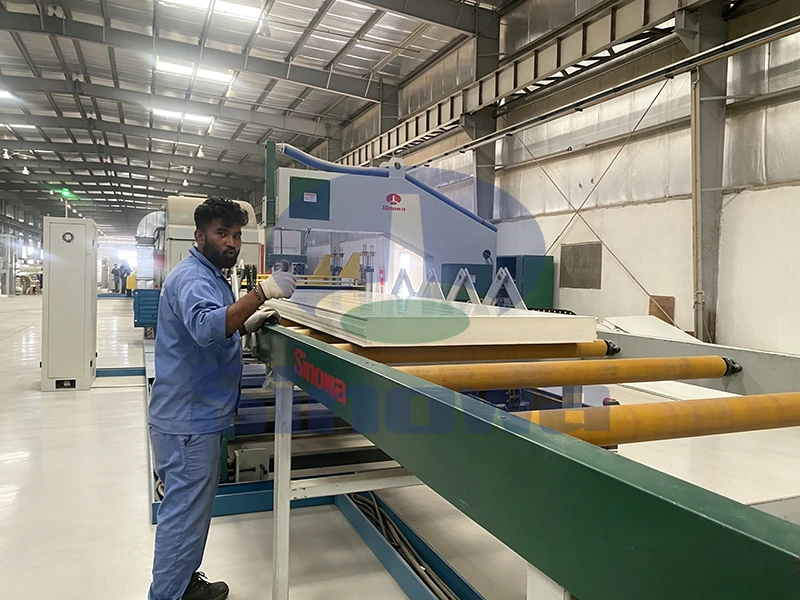
When manufacturers invest in a polyurethane sandwich panel production line, the machine itself represents only the beginning of their financial exposure. The capital cost of the equipment, the training required for operators, the integration with existing factory infrastructure, and the downtime that accompanies any major failure all combine to make the purchase a high-stakes decision. It is natural, therefore, that buyers increasingly ask a question that goes beyond specifications and throughput: will the supplier stand behind the line after the contract is signed, and does that commitment extend beyond the standard warranty period? The short answer is that many PU sandwich panel line suppliers do offer extended warranty services, but the reality of how those services are structured, priced, and delivered varies enormously across the industry. Understanding this landscape requires looking not only at whether extended warranties exist, but at what they actually cover, what they exclude, and how they compare with alternative forms of long-term protection.
At its simplest level, an extended warranty is a commercial agreement that pushes the supplier's obligation to repair or replace defective components beyond the initial coverage window. A typical new production line comes with a standard warranty that might last one to two years, during which the supplier commits to correcting manufacturing defects, replacing failed parts, and often providing on-site technical support. An extended warranty simply buys additional years of this protection, usually on a year-by-year basis or as a bundled multi-year package. In the sandwich panel industry, where lines comprise dozens of interdependent subsystems such as the uncoiling and feeding equipment, the core foaming and pressing station, the cutting and stacking units, and the electrical and control systems, the appeal of such coverage is obvious. A single failed pump or a faulty control board can halt an entire line, and the cost of emergency repairs, expedited spare parts, and lost production often dwarfs the price of the extended warranty itself.
Yet the willingness of suppliers to offer these services is not uniform. Some of the larger and more established suppliers have developed formal extended warranty programs as a standard part of their after-sales portfolio. These companies often treat the extended warranty not merely as a source of incremental revenue, but as a strategic tool for building long-term customer relationships and locking in a recurring service stream. Because a sandwich panel line is expected to operate for a decade or more, these suppliers recognize that the lifetime value of a loyal customer who continues to buy spare parts, consumables, and service visits far exceeds the margin on the original sale. For them, an extended warranty is a natural extension of a service-oriented business model, and they are usually quite open about its availability during the negotiation phase. In many cases the option is even presented proactively, alongside a menu of service-level agreements covering response times, preventive maintenance schedules, and remote diagnostics.
However, the same logic does not apply uniformly across the industry. Smaller suppliers, or those that operate on a thinner margin and treat each sale as a one-off transaction, may be far less enthusiastic. For these companies, the cost of carrying the risk of a long-term warranty obligation can be considerable, particularly if they lack the in-house engineering capacity or the regional service network to respond quickly when something goes wrong. They may decline to offer any extended coverage at all, or they may offer it only in a limited form that is restricted to certain components and excludes the most failure-prone parts of the line. In some cases, the "extended warranty" offered by such suppliers turns out, upon closer reading, to be little more than a discounted rate card for future service calls, with no meaningful guarantee of repair timelines or equipment availability. The buyer who assumes that an extended warranty is a standard, comparable product across suppliers is therefore likely to be disappointed, because the substance of what is being purchased varies far more than the label suggests.
This variation makes the fine print of any extended warranty agreement critically important. Buyers often discover, only after a failure occurs, that the coverage they believed they had purchased is substantially narrower than expected. Three areas deserve particular scrutiny. The first is the definition of what counts as a covered failure. Many agreements distinguish carefully between defects in materials or workmanship, which are covered, and failures caused by normal wear and tear, improper operation, or inadequate maintenance, which are not. Since nearly every real-world breakdown can be attributed, at least in part, to one of the excluded categories, this distinction can become a source of endless dispute. The second area is the treatment of consumables and wear items. Nozzles, seals, gaskets, cutting blades, and even certain rollers are typically classified as consumables and fall outside the warranty regardless of its duration. The third area is the supplier's obligation regarding downtime. An extended warranty that promises to repair a component but places no obligation on response time or repair duration may still leave the buyer exposed to prolonged production stoppages, which are often the most costly consequence of any equipment failure.
Another critical distinction concerns whether the extended warranty covers parts alone or parts and labor together, and whether it extends to on-site service. A parts-only warranty might cover the cost of a replacement control board but leave the buyer responsible for the technician's travel, the time spent on diagnosis, and the installation work itself. In an industry where qualified technicians are scarce and factory downtime is expensive, the difference between parts-only and full-service coverage can be substantial. Some suppliers also attach conditions to their extended warranties that limit the buyer's flexibility in unexpected ways. The coverage may be voided if the buyer uses third-party consumables, performs maintenance with personnel not certified by the supplier, or modifies any part of the line without prior approval. Buyers should therefore be careful to ensure that the maintenance and operation practices they intend to follow are compatible with the warranty's conditions, since an extended warranty that is routinely voided is worth little more than the paper it is printed on.
It is also worth recognizing that extended warranties are not the only, or even necessarily the best, way to protect a sandwich panel line over its working life. A service-level agreement that does not carry the label of an extended warranty may, in practice, provide superior protection by committing the supplier to specific response times, guaranteed uptime, and scheduled preventive maintenance. Similarly, a carefully managed spare parts inventory, maintained in collaboration with the supplier, can reduce the impact of a failure even when no extended warranty is in place. Some buyers, particularly those with strong in-house maintenance teams, conclude that the money spent on an extended warranty would be better invested in training their own technicians and stocking critical spares. Others find that the risk transfer offered by an extended warranty is worth the premium, especially when the line is operated in a remote location where qualified local support is difficult to obtain, or when the buyer has limited experience with the technology and wants the supplier to carry a share of the operational risk during the early years of operation.
The negotiation context in which extended warranties are discussed also matters a great deal. In many cases, the terms of an extended warranty are more flexible than the published price list suggests. A supplier that initially quotes a price for a multi-year extension may be willing to adjust the scope, the response-time guarantees, or the bundled price as part of a larger equipment order. Buyers who negotiate the extended warranty at the same time as the original line purchase often obtain significantly better terms than those who attempt to buy coverage later, once the equipment is already installed and the supplier's negotiating position has strengthened. Timing is therefore a practical consideration: the extended warranty is frequently far more valuable as a bundled element of the initial deal than as a standalone purchase made afterward. Buyers should also consider the supplier's financial stability and long-term presence in the market, since an extended warranty is only as reliable as the company obligated to honor it. A warranty from a supplier that may not exist in five years, or that lacks a local service presence, provides limited practical protection regardless of what the contract promises.
In the end, the question of whether PU sandwich panel line suppliers provide extended warranty services cannot be answered with a simple yes or no. Most suppliers, particularly those of significant scale, are willing to discuss some form of extended protection, and many have formal programs in place. But the quality, scope, and true value of that protection differ enormously, and the differences are rarely visible on the surface. The wise buyer treats the extended warranty not as a checkbox to be ticked, but as a substantive commercial document to be read, negotiated, and aligned with the specific risks of the operation. When approached this way, extended warranty coverage can be a genuinely valuable component of a sound equipment acquisition strategy, transferring a meaningful share of operational risk to the party best positioned to manage it. When approached carelessly, however, it can become a source of false confidence, unexpected expense, and conflict at the very moment when reliable support matters most.
Tags: pu sandwich panel line, pu sandwich panel line manufacturer, pu sandwich panel line supplier, china pu sandwich panel line, pu sandwich panel line for sale