How To Debug A New Continuous PU Sandwich Panel Line Before Formal Production?
Publication Date: Oct 22, 2026
Learn how to debug a new continuous PU sandwich panel line pre-production: test dosing, foaming, belt alignment, curing & panel quality to avoid defects and ensure stable, consistent output.
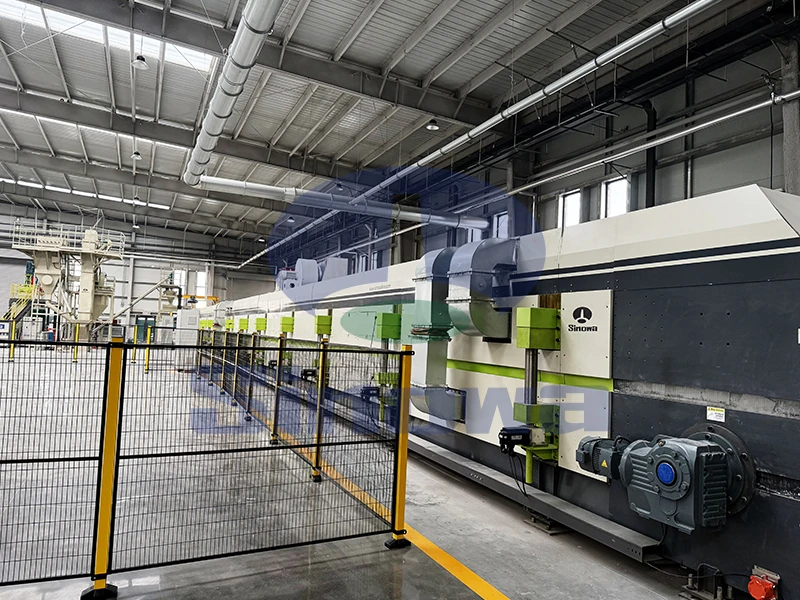
Debugging a newly installed continuous polyurethane sandwich panel production line before it enters formal production is one of the most decisive phases in the entire manufacturing cycle, yet it is also the phase most often underestimated by teams eager to hit the schedule. A continuous line is not a collection of independent machines that merely need to run; it is a single, interdependent system in which the chemistry of the foaming reaction, the mechanics of the moving platens, the precision of the dosing pumps, the geometry of the panels, and the behavior of the raw materials all interact within a matter of seconds. The debugging phase exists to find every hidden mismatch between design intention and physical reality while the consequences are still cheap to correct, because once formal production begins, every defect that slips through represents not only wasted material but a cascade of production interruptions, customer complaints, and expensive rework. The guiding principle of a successful commissioning is therefore systematic reduction of variables: change one parameter at a time, record everything, and never confuse a working line with a tuned line.
The logical starting point is not the full-speed line but the individual subsystems operating in isolation under strictly controlled conditions. This begins with the raw material preparation and storage, because the polyol, isocyanate, catalyst, and blowing agent system will determine whether any subsequent adjustment is even meaningful. Before any foam is produced, the team should verify that each component is within its specified condition—temperature, water content, and homogeneity—and that the storage and recirculation loops maintain these conditions under both idle and flow states. Following this, each dosing pump should be calibrated against an actual weighed output rather than against a dial or flowmeter reading, because the metering ratio between the isocyanate and the polyol is the single most sensitive variable in the entire process. A deviation of even one or two percentage points in the isocyanate index can shift the foam from rigid to friable, or from properly closed-cell to collapsing, and these failures are frequently misdiagnosed as problems elsewhere on the line. The calibration should be performed at the actual production temperature and at several flow rates that bracket the expected output, so that the relationship between pump speed and delivered volume is mapped rather than assumed. Only when dosing accuracy has been proven should the team proceed to the mixing head, where the residence time, the rotation speed of the mixing element, and the throughput must be tested to ensure that the components are genuinely and uniformly mixed without either excessive heat generation or incomplete blending.
Once the chemistry can be trusted, the debugging focus shifts to the heart of the continuous process: the reaction and curing zone formed by the metering, the pouring or spraying onto the bottom facing, and the movement through the heated double-belt press. Here the central challenge is matching the profile of the foam's rising reaction to the geometry and speed of the machine. The polyurethane system has its own intrinsic reaction profile—cream time, rise time, and tack-free time—and these timings must be aligned with the press length, the belt speed, and the location of the maximum pressure zones. In practical terms, the team should begin with a low belt speed and a deliberately reduced output, producing short trial panels, and should record the foam density profile and the rise curve under a controlled temperature regime. Temperature is the lever that most directly reshapes this reaction: platen temperature, facing temperature, and the temperature of the raw materials all shift the reaction kinetics, and the entire thermal envelope must be mapped across the working range rather than tuned by feel. During this stage it is essential to run the line slowly enough that a malformed panel can be stopped and examined, because the evidence of what went wrong—uneven density, voids near the edges, bubbles trapped at the interface, or surface blisters—is almost always visible in the freshly cut cross-section long before it becomes obvious in the finished product.
The geometry of the panel itself is where many commissioning problems become apparent, and this is also where the debugging effort moves from chemistry into mechanical precision. The continuous process produces a virtually endless sandwich in which the core expands between the top and bottom facings, and the quality of the final cut panels depends on uniform core density across the width, consistent overall thickness, and facings that remain flat and well-bonded to the core throughout. During debugging, the team should pay particular attention to the lateral distribution of the foam across the width of the line, because a perfectly calibrated dosing system can still produce panels that are dense in the center and hollow at the edges if the pour pattern is not tuned to the exact geometry of the press. The relationship between the amount of material fed and the final thickness is also a delicate balance: too little material produces a panel that is short of the target thickness with weak core strength, while too much material creates internal stress that can lead to warping, to blowing or delamination at the edges, and to excessive consumption that defeats the economics of the product. The cutting and trimming stations, meanwhile, deserve their own dedicated trials, because the saws and edge trimmers must produce clean, square cuts at the design line speed without burning the polymer or leaving ragged edges that will later create finishing problems for the customer.
No debugging effort is complete without a structured program of surface and structural quality inspection, because the appearance and the mechanical integrity of the panel are, ultimately, what the customer will judge. The commissioning team should establish a disciplined sampling regime in which panels are cut, weighed, measured, and visually examined on a routine basis, and the results should be recorded against the exact process parameters that produced them. Delamination between the facing and the core, which is one of the most damaging defects because it is often invisible at the surface, must be checked not only visually but also by simple destructive tests such as peel testing of a coupon, since only such a test reveals the true bond strength. Similarly, the closed-cell content and the overall density distribution of the core, which together determine both the thermal insulation value and the mechanical stiffness of the panel, should be monitored as a function of process settings. The value of this stage lies not in any single measurement but in building a correlation table that links every observable output—density, thickness tolerance, surface condition, bond quality, and edge finish—to the full set of input parameters, so that when an anomaly appears during formal production, the operator has a reference map that points toward the likely cause rather than requiring a blind search across dozens of variables.
Throughout the entire debugging campaign, the emphasis must be on documenting the process as much as on achieving a visually acceptable product, because a line that produces one good panel under the watchful eye of the commissioning team is not yet ready for production. The team should maintain a running log in which every change to temperature, belt speed, dosing, output rate, and raw material lot is recorded alongside the resulting panel quality, and this log becomes the intellectual property of the plant: it is the accumulated knowledge that separates a reproducible process from a string of lucky panels. It is equally important to prove stability rather than best-case performance, which means running the line continuously for an extended period at the intended settings and watching whether quality drifts as the line warms up, as the raw material supply transitions from one batch to another, and as the day progresses. A panel that is excellent on the first run after a careful warm-up but degrades after two hours of steady operation is not a solved problem; it is a warning that some parameter—perhaps the temperature of the raw material tank, the pressure in the dosing system, or the condition of the belt—is not being held constant. Only when the line can hold quality within the target tolerance across a full, extended trial without constant operator intervention is it legitimate to consider moving toward formal production.
Finally, the debugging phase must include a realistic ramp-up and a defined set of acceptance criteria that are agreed upon before the line is declared ready, because an endless process of small adjustments without a clear endpoint is a failure in disguise. The team should define, in advance, what constitutes an acceptable panel in terms of the key quality attributes, what level of variation is tolerable from panel to panel, and what scrap rate is considered normal during the first period of formal operation. The transition should then be made in stages rather than as a single leap: first a short production run at low speed with increased inspection frequency, then a gradual increase toward design speed while the same inspection discipline is maintained, and only then a move to the routine production that the plant manager expects. Alongside this technical progression, safety must be treated as a first-class requirement rather than an afterthought, because a continuous line brings with it high surface temperatures, moving machinery, and reactive chemicals whose fumes and residues require proper ventilation and handling procedures that should have been proven during the trials. A well-debugged line is not merely one that makes good panels; it is one that makes them consistently, that can be operated and adjusted by the production crew without relying on the commissioning experts, and that does so safely and economically over months of operation. Reaching that point is not a single milestone but the end of a methodical, evidence-driven process in which every setting on the machine has been justified by measurement and every operator understands why it is set the way it is. When that understanding is in place, the line is genuinely ready, and formal production becomes the continuation of a proven process rather than a risky leap into the unknown.
Tags: continuous pu sandwich panel line, continuous pu sandwich panel line manufacturer, continuous pu sandwich panel line supplier, china continuous pu sandwich panel line, continuous pu sandwich panel line for sale